

Why runners wear race belts for 5K: a practical guide
A race belt is an adjustable elastic strap worn around the waist that holds your race number and small essentials securely during a 5K without causing bounce or damage to your clothing. Unlike safety pins, which are the traditional method for attaching race bibs, a race belt clips on in seconds and rotates freely so your number stays visible at all times. Runners wear race belts in 5K events because they remove friction, protect expensive kit, and let you focus entirely on running. This guide covers the benefits, the features worth paying for, and how to use one correctly on race day.
Why runners wear race belts for 5K events
A race belt solves a problem that every runner with a pinned bib has felt: the slight drag, the chafing, and the nagging worry about damaging a good technical shirt. Running belts improve running economy by shifting weight to the waist, which keeps your torso stable and lets your arms swing naturally. That natural arm swing is not a minor detail. Restricted arm movement increases energy expenditure over the course of a run, even a short one like a 5K.
Pinning a bib directly to your shirt creates four puncture points in the fabric. Safety pins cause permanent damage to high-end technical apparel, and that damage is visible after just one race. A race belt eliminates this entirely. Your shirt stays intact, and the bib sits on the belt rather than the fabric.
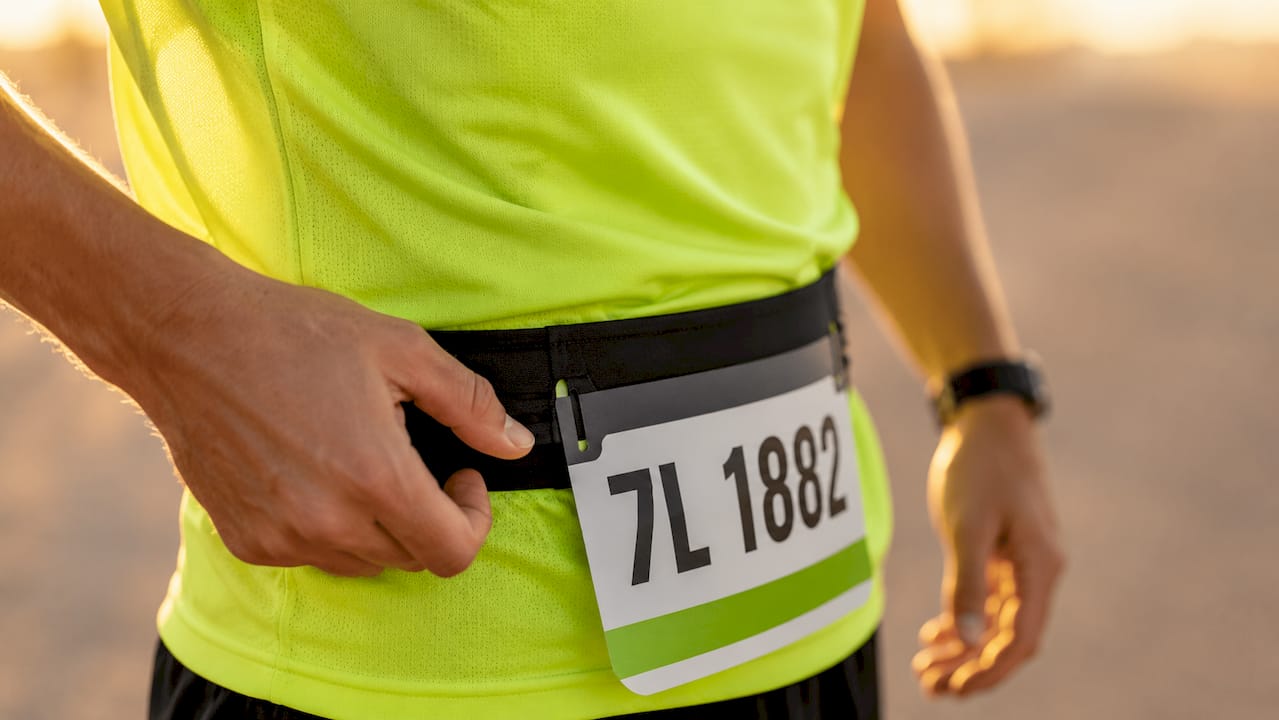
The mental side matters too. Reducing gear distractions improves focus and performance on race day. When your bib is flapping, your shirt is pulling, or your pocket is bouncing, part of your attention goes to managing those sensations rather than running. A well-fitted race belt removes all of that.
Here is what a race belt does for you in a 5K:
- Protects your kit. No pinholes in technical shirts that cost £40 or more.
- Speeds up race morning. Clip the belt on in under ten seconds rather than fiddling with four pins.
- Keeps your bib visible. The belt rotates so officials can see your number from any angle.
- Reduces chafing. No metal pins pressing against your skin or shirt during the run.
- Frees your hands. You carry nothing and adjust nothing mid-race.
Pro Tip: Wear your race belt during a training run before race day. You will immediately notice if it sits too high or too low, and you can adjust the fit before it matters.
What features matter when choosing a race belt for a 5K
Not every race belt is built the same. For a 5K, you want something light and low-profile. The features below separate a belt that works from one that causes problems.
Fit and adjustability are the most important factors. A properly fitted belt behaves like a second skin and needs no adjustment during the run. Most belts adjust across a wide range of waist sizes, so fit is rarely a sizing issue. The problem is usually tension. Too loose and the belt bounces. Too tight and it digs in.
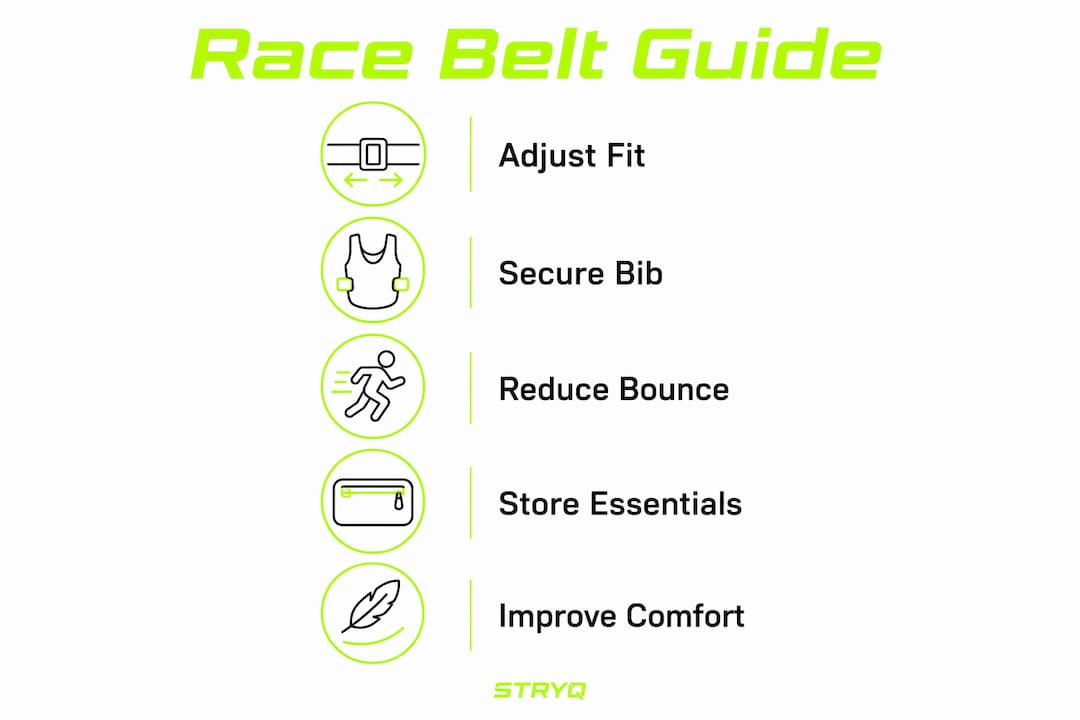
Material determines how the belt feels after 30 minutes of running. Elastic or neoprene straps offer durability and moisture resistance, but cheap elastic degrades after repeated washing. Look for a belt that specifies moisture-wicking fabric. A belt that absorbs sweat and holds it against your skin will cause irritation on longer training runs.
Bib attachment varies between belts. Some use a simple clip system where you thread the bib onto the belt. Others use loops or toggles. The clip system is fastest on race morning and the most common choice for 5K runners.
Optional extras include gel loops, a small zip pocket, and reflective detailing. For a 5K, you are unlikely to need gels, but a small pocket for a key or a card is genuinely useful. Reflective strips add safety for early morning or evening races.
Price is straightforward. Basic race belts cost under £15–£20, and that price range covers everything a 5K runner needs. You do not need to spend more unless you want additional storage.
| Feature | Why it matters for a 5K |
|---|---|
| Adjustable fit | Prevents bounce and keeps the belt stable at race pace |
| Moisture-wicking material | Reduces skin irritation during the run |
| Bib clip or loop system | Speeds up race morning preparation |
| Small zip pocket | Useful for a key, card, or emergency gel |
| Reflective detailing | Adds visibility for low-light race conditions |
Pro Tip: Before buying, check whether the belt’s bib attachment system works with your race’s bib size. Most standard bibs fit any belt, but some events use oversized bibs that need wider loops.
How to wear and use a race belt correctly on race day
Getting the most from a race belt comes down to a few simple habits. Most runners who have a bad experience with a belt made one of these mistakes.
-
Position the belt at your natural waist or hip bone. This is the most stable point on your body during running. Wearing it too high, near your ribcage, causes it to ride up. Too low, on your hips, and it can slide down on longer efforts.
-
Test the fit before race day. Put the belt on at home and do ten minutes of running at your target race pace. If you touch the belt even once during that run, the tension needs adjusting. A belt that requires mid-run adjustment signals a fit or tension problem.
-
Attach your bib the night before. Thread the bib onto the belt at home, not in the race pen. This removes one task from a stressful race morning and lets you check the bib is secure and facing outward.
-
Position the bib at the front before you start. The belt rotates, which is useful mid-race, but you want your number visible at the start line. Rotate it to the front and check it is flat against the belt.
-
Use the pocket wisely. If your belt has a small zip pocket, put only what you genuinely need in it. Heavier items cause belt bounce when the belt is not tensioned correctly. A key or a folded card adds negligible weight. A smartphone does not.
-
Care for the belt after each run. Hand wash or use a gentle machine cycle. Avoid tumble drying, which degrades elastic quickly. A well-maintained belt lasts for years of racing.
Race belts also speed up race morning preparation by removing the need for pins entirely, which reduces pre-race stress and supports sustainability by cutting down on single-use metal pins.
Race belts vs other gear options for a 5K
Runners preparing for a 5K often ask whether they need a race belt at all, or whether a hydration vest or running shorts with pockets will do the same job. The answer depends on what you are trying to carry and how far you are running.
For short urban runs under 5 miles, a belt is preferred for light gear and speed. A hydration vest suits longer distances where you need multiple water bottles and more storage. For a 5K, a vest adds unnecessary bulk and weight. You do not need 500ml of water for a 20-minute run.
Running shorts with pockets are a reasonable option for carrying a key or a phone, but they do not solve the bib problem. You still need to pin your race number to your shirt. A race belt handles both the bib and light storage in one item.
Pinning a bib directly remains the most common method at grassroots 5K events, but it carries the costs already covered: fabric damage, chafing risk, and slower race morning preparation. Race belts offer instant adjustability and can be repositioned mid-race without stopping, which pinned bibs cannot.
The one limitation of a race belt is storage. A basic belt holds a bib and perhaps a key. If you need to carry a phone, gels, and a card, a belt with a larger pocket or a lightweight running vest becomes a better option. For most 5K runners, though, a simple belt covers everything needed.
For a deeper comparison of these two options, the belt vs vest guide on the Stryq site covers the decision in detail.
Key takeaways
Race belts are the most practical 5K accessory for runners who want to protect their kit, speed up race morning, and run without distraction.
| Point | Details |
|---|---|
| Core function | A race belt holds your bib and small essentials without pins or pockets. |
| Comfort advantage | A correctly fitted belt eliminates bounce, chafing, and arm swing restriction. |
| Kit protection | Race belts prevent permanent pinholes in technical running shirts. |
| Fit is everything | Test the belt at race pace before race day to confirm it needs no adjustment. |
| Right tool for 5K | Belts suit short distances; hydration vests add unnecessary bulk for a 5K. |
What I have actually learned from using race belts
The first time I used a race belt, I wore it too loosely. It bounced for the entire run and I spent more time thinking about the belt than the race. That experience is common among beginners, and it puts people off a piece of kit that genuinely works when fitted correctly.
The lesson I took from that is simple: fit the belt at home, not on the start line. Spend five minutes getting the tension right during a training run and you will never think about it again on race day. That is the point. Good gear disappears. You stop noticing it.
The other mistake I see regularly is runners using a race belt only on race day. Wearing it in training means you arrive at the start line already comfortable with how it sits and moves. There is no adjustment period, no distraction, and no surprises.
One thing that surprised me is how much the material matters over time. A cheap belt with poor elastic loses its tension after a few washes and starts to bounce even when fitted correctly. Spending a little more on a belt with quality elastic and moisture-wicking fabric pays off across dozens of races and training runs.
If you are new to 5K racing, a race belt is one of the few pieces of kit that genuinely earns its place in your bag. It is light, affordable, and solves a real problem. Try it in training first, get the fit right, and it will be the last thing you think about on race day. That is exactly what you want.
— martin
Stryq running belts for 5K runners
Stryq builds running belts for runners who want quality without paying premium brand prices. The Stryq running belt is designed with adjustable elastic, moisture-wicking fabric, and a secure bib attachment system that works straight out of the box.
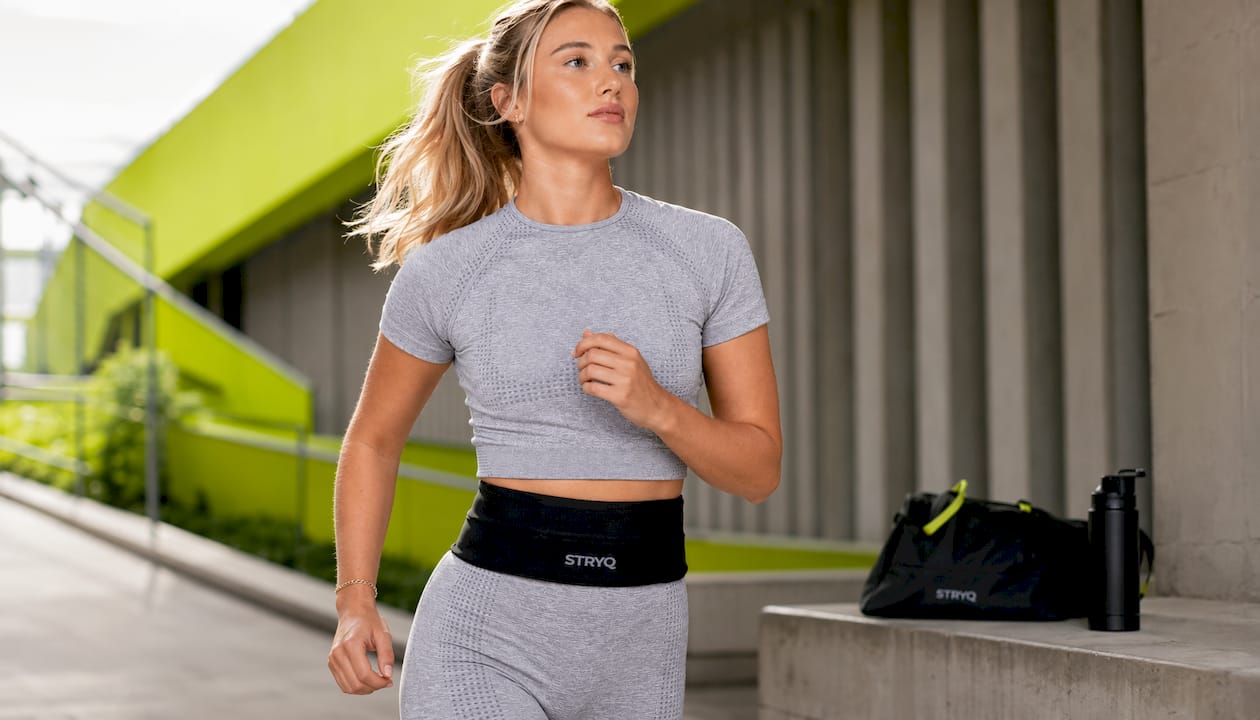
Every Stryq belt goes through multiple rounds of real-world testing before launch. The result is a belt that sits securely at race pace, handles repeated washing without losing tension, and includes a small zip pocket for a key or card. It sits between budget marketplace options and expensive premium brands, giving you the build quality that lasts without the inflated price tag. If you are putting together your runner’s gear checklist for your first 5K, the Stryq belt is a practical starting point.
FAQ
What is a race belt used for in a 5K?
A race belt holds your race bib securely around your waist without safety pins, protecting your clothing and allowing the bib to rotate for visibility. It can also carry small items like a key or card.
Do I need a race belt for a 5K or can I just use pins?
Pins work, but they cause permanent holes in technical running shirts and take longer to attach on race morning. A race belt is faster, reusable, and protects your kit.
Where should a race belt sit on your body?
Position the belt at your natural waist or hip bone for the most stable fit. Wearing it too high or too low increases the chance of bounce during the run.
How do I stop my race belt from bouncing?
Tighten the belt until it fits like a second skin with no slack. Incorrect tension is the main cause of bounce, so test it at race pace during a training run before the event.
How much does a race belt cost?
Basic race belts cost under £15–£20 and cover everything a 5K runner needs. Higher-priced options add larger pockets or more durable materials for runners who race frequently.