The essential types of running accessories for a 5K race are moisture-wicking clothing, tested running shoes, hydration tools, race belts, and anti-chafe products. Getting these right before race day separates a comfortable finish from a miserable one. Race day essentials include a race bib with four safety pins, broken-in shoes, and SPF 30+ sport-formula sunscreen applied 20 minutes before the start. These are not optional extras. They are the foundation of a confident, well-prepared first 5K. Stryq builds its entire product range around exactly these needs, from no-bounce race belts to cushioned running socks.
1. Types of running accessories for a 5K race: the full list
Every category of 5K race day gear essentials serves a specific purpose. Shoes protect your feet. Socks prevent blisters. Apparel manages sweat. Hydration tools keep you fuelled. Race belts carry your kit without slowing you down. Anti-chafe products stop skin irritation before it starts. Understanding each category helps you build a 5K gear checklist that works for your body and your race conditions, not just a generic list copied from the internet.
2. Running shoes: the single most important item
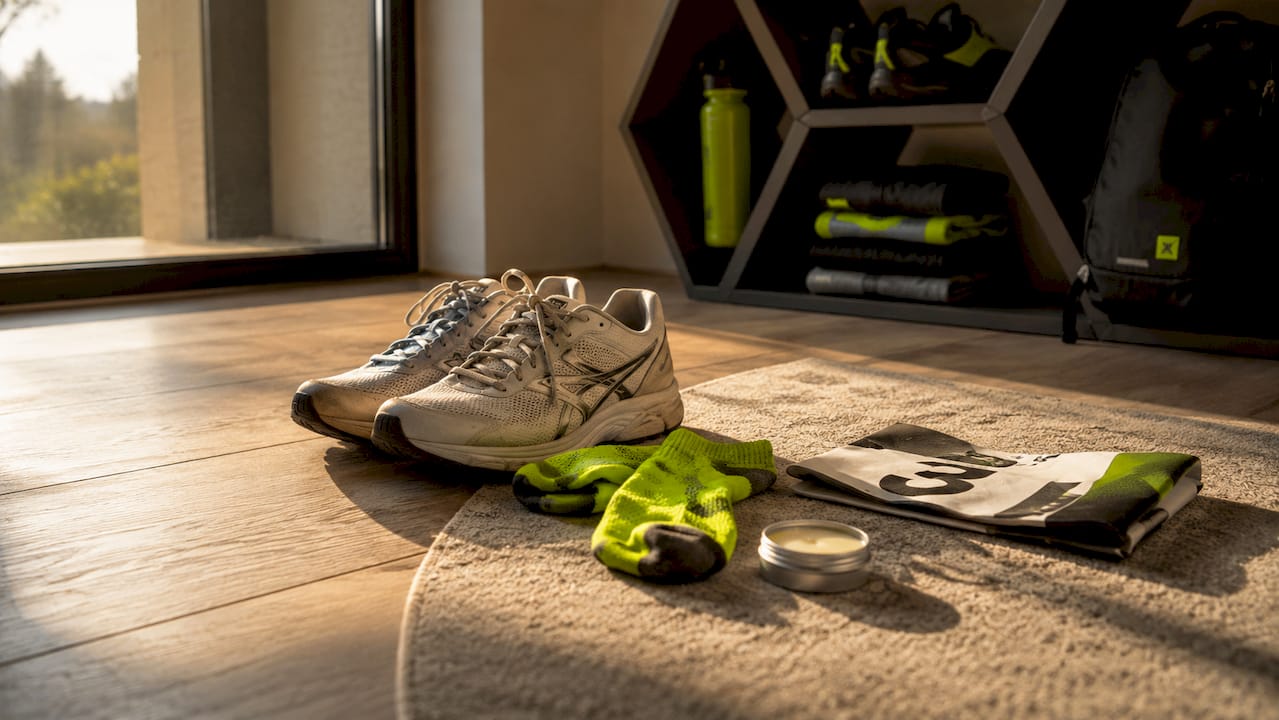
Your running shoes are the most critical piece of kit on race day. Never wear new shoes on race day. Shoes need at least several weeks of training runs to mould to your foot shape and confirm they suit your gait.
Running shoes fall into three main categories based on foot biomechanics:
- Neutral shoes suit runners with a normal arch and efficient gait.
- Stability shoes add medial support for mild overpronation.
- Motion control shoes provide maximum support for significant overpronation.
Visiting a specialist running shop for a gait analysis is the most reliable way to identify which category fits you. Most shops offer this free of charge.
Key features to look for when selecting race day shoes:
- A snug heel with no slipping
- A thumb’s width of space at the toe box
- Lightweight construction to reduce fatigue over 3.1 miles
- Breathable mesh upper to manage heat
Pro Tip: Wear your race day shoes for at least three or four training runs before the event. If they cause any discomfort in training, they will cause more on race day.
3. Running socks: the underrated blister preventer
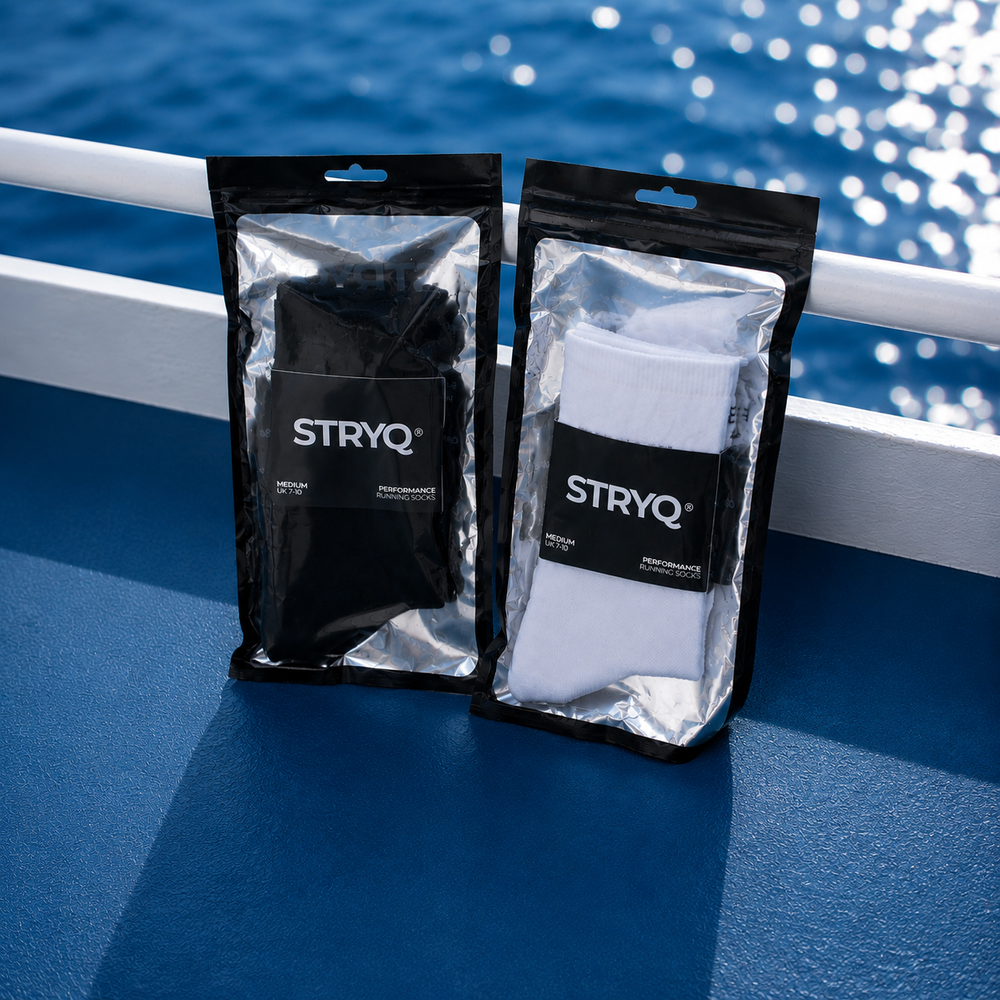
Socks are the most overlooked item on any 5K gear checklist. Synthetic or merino wool socks prevent blisters far more effectively than cotton or thick athletic socks, which trap heat and moisture against the skin. Thin, moisture-wicking running socks reduce friction at the points where blisters form most often: the heel, the ball of the foot, and the toes.
Stryq’s cushioned running socks are designed specifically for this. They use breathable construction to manage moisture and reduce hot spots during a race.
Features to prioritise in a running sock:
- Synthetic or merino wool fabric
- Flat or minimal seams at the toe
- Targeted cushioning at the heel and ball
- A snug, non-slip fit around the arch
Even minor new items like socks can cause blisters if untested before race day. Wear your race socks on at least two training runs first.
4. Moisture-wicking apparel: what to wear on race day
Cotton is the wrong choice for race day. Cotton retains sweat, increases friction, and raises chafing risk significantly. Polyester, nylon, and wool-blend technical fabrics pull moisture away from the skin and dry quickly, keeping you comfortable from the start line to the finish.
Your apparel choices depend on the weather:
- Warm conditions: A lightweight polyester singlet or vest, and short running shorts or a running skirt.
- Cool conditions: A long-sleeve technical base layer or a fitted running top, with running tights or capris.
- Cold or wet conditions: A lightweight, packable running jacket over a base layer. Avoid heavy fleece, which holds water.
Stryq’s performance running clothing covers all of these options with fabrics built for moisture management.
Additional sun protection accessories to consider:
- Running hat or visor: Ventilated hats protect your face from sun and keep sweat out of your eyes on exposed courses.
- Sunglasses: Lightweight, wraparound sport sunglasses reduce glare and eye fatigue.
- SPF 30+ sunscreen: Apply a sport-formula product 20 minutes before the race starts. Reapplication is not practical mid-race, so apply generously.
Pro Tip: The ‘throwaway layer’ strategy is worth knowing. Wear an old, cheap top over your race kit at the start line to stay warm during the wait. Drop it just before the gun goes. Many races collect these for charity.
5. Hydration gear and race belts
A 5K typically takes between 20 and 45 minutes to complete. Most courses provide water stations, so carrying a large amount of fluid is rarely necessary. That said, having a small hydration option gives you control, particularly on warm days or if you run at a slower pace.
| Hydration option | Best for | Drawback |
|---|---|---|
| Handheld bottle | Easy access, simple | Occupies one hand throughout |
| Soft flask | Lightweight, collapsible | Requires a belt or vest pocket |
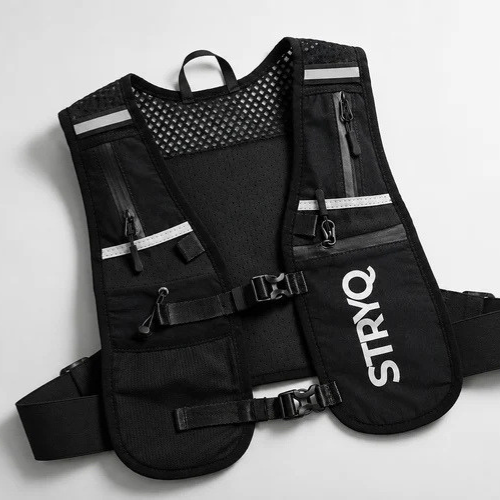
| Hydration vest | Hands-free, carries more | Heavier, more kit to manage |
| Race belt with flask pocket | Minimal, organised | Limited fluid capacity |
Soft flasks are the most practical choice for a 5K. They collapse as you drink, eliminating the sloshing sound and bounce of a rigid bottle. Stryq’s 500ml soft flasks fit neatly into vest pockets or belt pouches.
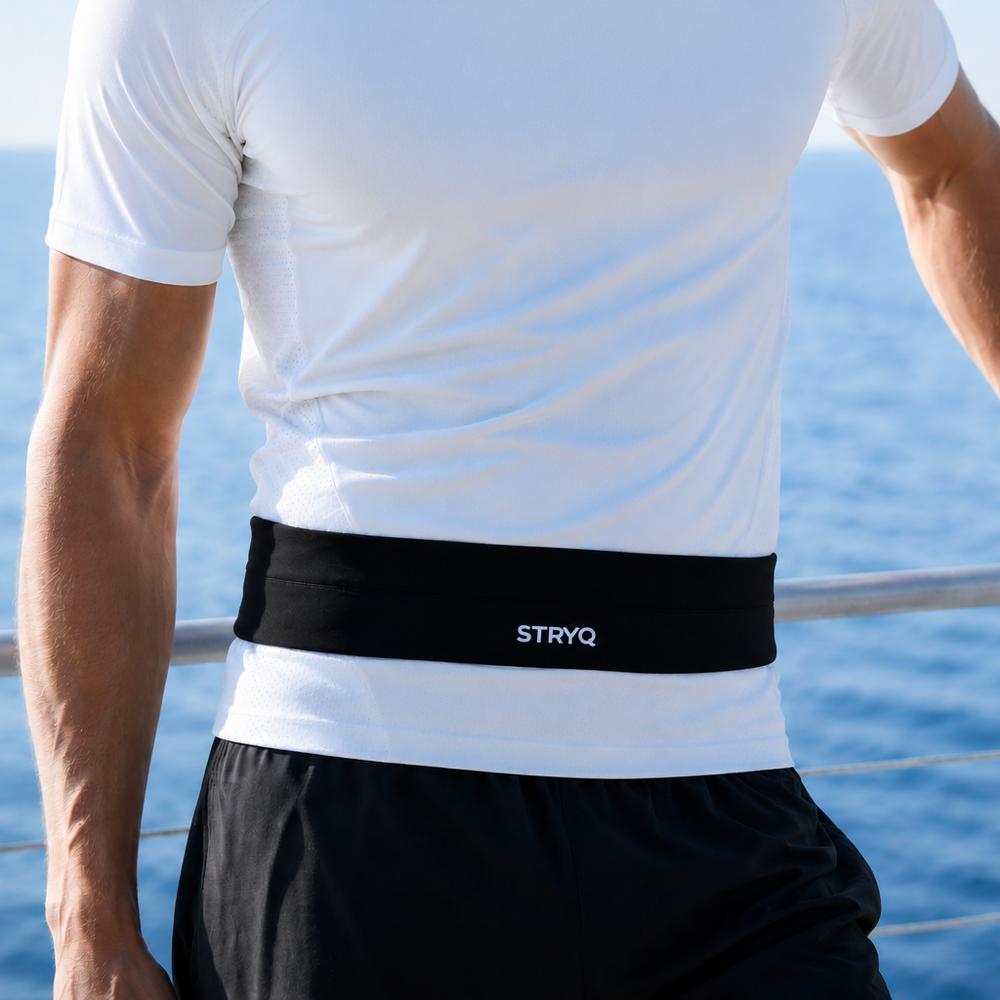
Race belts solve a different problem. Safety pins damage technical fabrics, and tucking a phone into a waistband is uncomfortable. A lightweight, no-bounce race belt carries your bib, phone, and energy gels securely without shifting during the run. Elastic race belts protect your shirt from pin holes and keep small items accessible throughout the race.
Key features to look for in a race belt:
- Adjustable elastic waistband for a secure fit
- Zip pocket for a phone or key
- Bib attachment clips or loops
- Minimal weight and profile
6. Anti-chafe products and comfort accessories
Anti-chafing is a 5K running comfort essential that most beginners overlook until they experience the problem. Chafing occurs where skin rubs against skin or fabric repeatedly. The most common problem areas are the inner thighs, underarms, nipples, and bra lines.
Anti-chafe balms and tapes are the standard solution. Apply balm generously to all high-friction areas before you dress. Body Glide is a widely used product in the UK running community. Specialist anti-chafe tape works well for areas where balm tends to rub off, such as nipples on longer efforts.
Hair management is a small but practical detail. Secure hair with a sweatband or headband to keep it off your face without relying on a hat. Avoid metal clips or grips that can dig into your scalp under a hat.
Pro Tip: Apply anti-chafe balm the night before as well as on race morning. This gives the product time to absorb and reduces the chance of it washing off if you shower before the race.
Post-race comfort accessories are worth packing in your bag drop:
- Dry clothes, including a fresh top and underwear
- A clean pair of socks
- Flip-flops or slip-on shoes
- A small towel
- A light jacket or hoodie
Post-race dry clothes prevent chills and aid recovery comfort, particularly when you are standing around after the finish. Race day involves a lot of waiting, both before and after the run.
7. Race day timing and logistics accessories
Arriving 60–90 minutes early accounts for bag drop queues, toilet stops, and walking to the start pen. This is not excessive. It is the standard recommendation from race organisers across the UK. Arriving late creates stress, and stress affects performance.
A GPS running watch or a running app on your phone gives you real-time pace data during the race. This helps first-time runners avoid going out too fast in the first kilometre, which is the most common mistake. You do not need an expensive device. A basic GPS watch or a free app like Strava or Nike Run Club does the job.
A small safety light clipped to your kit is worth carrying for early morning or late evening events. Stryq produces lightweight safety lights designed for runners, which clip easily to a belt or vest strap.
Key takeaways
The most effective 5K race day gear checklist combines tested shoes and socks, moisture-wicking apparel, a no-bounce race belt, and anti-chafe protection applied before you dress.
| Point | Details |
|---|---|
| Test all gear before race day | Wear every item, including socks, on at least two training runs before the event. |
| Avoid cotton on race day | Synthetic or wool-blend fabrics manage sweat and reduce chafing risk significantly. |
| Use a race belt for your bib | Elastic race belts protect your shirt and keep your phone and gels accessible. |
| Apply SPF 30+ sunscreen early | Apply sport-formula sunscreen 20 minutes before the start for full protection. |
| Pack a post-race bag | Dry clothes, fresh socks, and flip-flops prevent chills and speed up recovery comfort. |
What I have learned from watching first-timers get this wrong
First-time 5K runners consistently make the same mistake. They buy new gear in the week before the race because they want to look the part. New shoes, new socks, new shorts. Race day becomes a painful lesson in friction and blisters rather than a celebration of their training.
The golden rule of race day is straightforward: nothing new on race day. Every item you wear should have been tested in training. This includes socks, hair ties, and sunglasses. The psychological benefit of knowing your kit works is real. When you line up at the start, you want your only concern to be running, not whether your waistband is going to dig in.
Less is genuinely more for a 5K. You do not need a hydration vest loaded with gels and flasks for a 20-minute run. A race belt, a tested pair of shoes, and the right socks will take you further than a bag full of untested accessories. Focus your preparation on the basics, test everything, and race day becomes straightforward.
Race logistics also shape your accessory choices in ways that are easy to miss. Bag drop queues, cold start pens, and post-race standing around all affect what you need. A throwaway layer, a post-race bag, and an early arrival solve most of these problems before they become problems.
— martin
Stryq running gear for your first 5K
Stryq builds running accessories for everyday runners who want quality without paying premium brand prices. The range covers the core 5K race day gear essentials: no-bounce running belts, lightweight hydration vests, collapsible soft flasks, and cushioned running socks designed to prevent blisters from the first kilometre to the last.
Every Stryq product goes through real-world testing and multiple sample revisions before it reaches runners. If you are building your race day kit from scratch, the Stryq running socks are the place to start. They are one of the most practical upgrades a first-time 5K runner can make, and they cost far less than a blister plaster mid-race. Browse the full running gear collection to find everything you need in one place.
FAQ
What are the must-have running accessories for a 5K?
The core accessories are broken-in running shoes, moisture-wicking socks, technical apparel, a race belt, and anti-chafe balm. SPF 30+ sunscreen applied 20 minutes before the start is also a race day essential.
Should I carry water during a 5K race?
Most 5K courses provide water stations, so carrying water is optional. A lightweight soft flask in a race belt gives you control on warm days or if you run at a slower pace.
What socks are best for a 5K race?
Thin, moisture-wicking socks made from synthetic fabric or merino wool prevent blisters better than cotton. Wear your race socks on at least two training runs before the event to confirm the fit.
Can I wear a hydration vest for a 5K?
A hydration vest works for a 5K but is more kit than most runners need. A no-bounce race belt with a soft flask pocket is lighter and simpler for a race of this distance.
How early should I arrive at a 5K race?
Arriving 60–90 minutes before the start accounts for bag drop queues, toilet stops, and walking to the start pen. This is the standard recommendation from UK race organisers.