If you are searching for the best running race belt, you are likely preparing for an event and want a simple, reliable way to carry your race number and essentials.
A race belt might seem like a small piece of kit, but it plays a big role on race day. The wrong setup can cause discomfort, slow you down, or become a distraction over distance.
This guide breaks down everything you need to know about choosing, using, and getting the most out of a running race belt.
Quick Answer: What Is a Running Race Belt?
A running race belt is a lightweight elastic belt designed to hold your race bib securely without needing safety pins. Many race belts also include storage for gels, keys, or small essentials.
- Holds your race number securely
- Eliminates the need for pins
- Often includes storage for gels
- Lightweight and adjustable
Why a Running Race Belt Is Better Than Pins
Using safety pins to attach your race number is the traditional method, but it comes with problems.
- Can damage clothing
- Time-consuming to attach
- Uncomfortable over long distances
- Difficult to adjust mid-race
A running race belt removes all of these issues. You can attach your bib in seconds and adjust it easily during your run.
Real runner insight. Once you use a race belt, you will not go back to pins. It is one of the simplest upgrades you can make.

What to Look for in a Running Race Belt
Not all race belts are built the same. Choosing the right one improves comfort and performance.
1. Adjustable Fit
A good race belt should adjust easily to your waist size and stay secure without slipping.
2. Secure Bib Attachment
Toggles or clips should hold your race number firmly without tearing it.
3. Storage Options
Some race belts include loops for gels or small pockets for essentials.
For more storage, pairing your race belt with a running belt gives you a better overall setup.
4. Lightweight Design
The belt should feel almost unnoticeable during your run.
Types of Running Race Belts
There are different types of running race belt available, each suited to different needs.
Basic Race Belts
- Designed only for race numbers
- Minimal and lightweight
Race Belts with Storage
- Include gel loops or small pockets
- Better for longer races
Hybrid Belts
- Combine bib holding with full storage
- Replace the need for multiple items
This is where modern running belts blur the line between race belts and storage solutions.
How to Use a Running Race Belt
Using a running race belt is simple but should be done properly.
- Attach your race bib using toggles or clips
- Adjust the belt to fit snugly around your waist
- Position it comfortably (front or side)
- Rotate it if needed during your run
This flexibility is one of the biggest advantages over pins.

Running Race Belt vs Running Belt
A common question is whether you need both.
A running race belt is designed specifically for holding your bib, while a running belt is built for carrying items.
- Race belt = bib holder
- Running belt = storage solution
For many runners, combining both is the best setup.
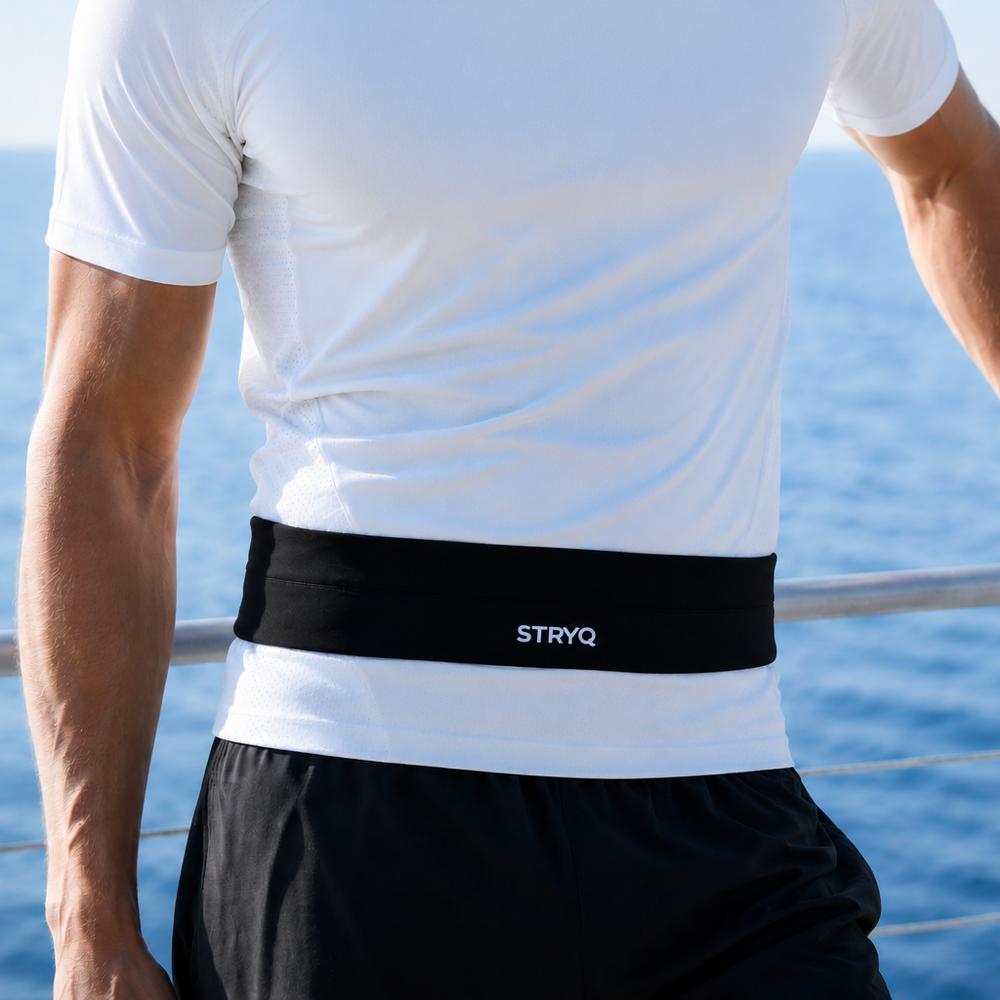
A STRYQ Running Belt allows you to carry your phone, keys, and fuel securely, while your race belt holds your bib.
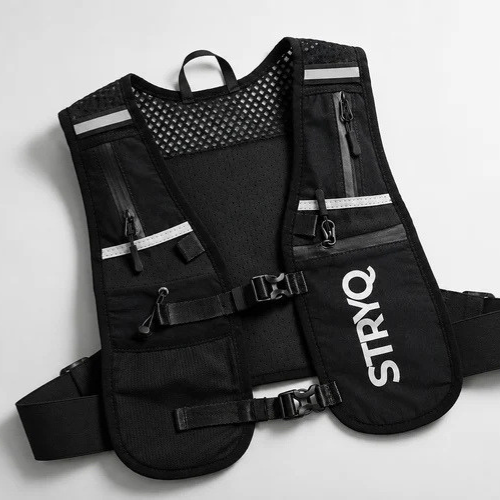
For longer races, adding a running vest provides hydration and extra storage.
Best Setup for Race Day
Relying on a single piece of gear is a mistake. The best approach is to build a system.
- Race belt for bib
- Running belt for essentials
- Running vest for hydration
This removes compromise and allows each piece of gear to do its job properly.
Common Mistakes with Race Belts
- Wearing the belt too loose
- Overloading it with items
- Choosing a belt with poor adjustability
Fixing these improves comfort immediately.
Advanced Tip: Optimising Your Race Setup
Experienced runners think beyond basic gear.
They plan:
- Where their bib sits
- How they access fuel
- How to minimise movement and distraction
This level of preparation becomes more important in longer races where small issues add up.

Final Thoughts on Running Race Belts
A running race belt is a simple but essential piece of race day gear.
It removes hassle, improves comfort, and allows you to focus on your run.
For the best experience, combine it with the right supporting gear:
Running Belt
Running Vest
Training Tips
FAQ: Running Race Belt
Do I need a race belt for running?
It is not essential, but it makes race day easier and more comfortable.
Can I carry gels on a race belt?
Some belts allow this, but a running belt is better for carrying multiple items.
Where should I wear a race belt?
Most runners wear it around the waist, positioned at the front or side.
Are race belts adjustable?
Yes, most include adjustable straps for a secure fit.
What is the best alternative to a race belt?
Using pins is the alternative, but it is less convenient.