

Running belt materials: what actually keeps you comfortable
For most runners, a breathable polyester or nylon blend with elastane and mesh panels covers most running needs. TPU laminated pockets or a DWR coating add water resistance when you carry a phone or keys, but they trade away some ventilation. Neoprene cushions your lower back well, though it traps heat on longer efforts. Match the fabric to your typical run: light and breathable for short sessions, tougher and weather-ready for long or trail miles.
TL;DR:
- Belts with a polyester-elastane blend and strategic mesh panels offer better comfort and movement, especially for longer runs, by reducing bounce and hotspots.
- Reinforced ripstop nylon and flat-lock seams enhance durability, particularly in high-wear zones like zips, straps, and pocket corners.
- Water-resistant materials like TPU-laminated pockets and DWR coatings protect electronics in wet conditions but can reduce breathability and add weight.
- Proper fit and stretch ratios are more crucial for comfort and security than the fabric weight or pocket quantity, with a quick jump test revealing fit issues.
- Maintenance with cold rinses, flat drying, and prompt cleaning after heavy sweating significantly extends belt longevity and performance.
Table of Contents
- Common materials you will find in running belts
- How material properties affect run performance and comfort
- Match materials to running use cases
- Construction details that depend on materials
- Care, longevity and common failure modes for materials
- Material sustainability and labelling to watch
- Quick buyer checklist: using materials to pick the right belt
- Stryq’s material choices and why we picked them
- How Stryq products use these materials
- Author perspective: practical tips from a runner
- Sources
Common materials you will find in running belts
Every running belt is a compromise between three things: how well it breathes, how long it lasts, and how well it protects whatever you’re carrying. The fabric choice decides which side of that compromise you land on, and manufacturers rarely use just one material. Most belts blend two or three fabrics to get strengths from each.
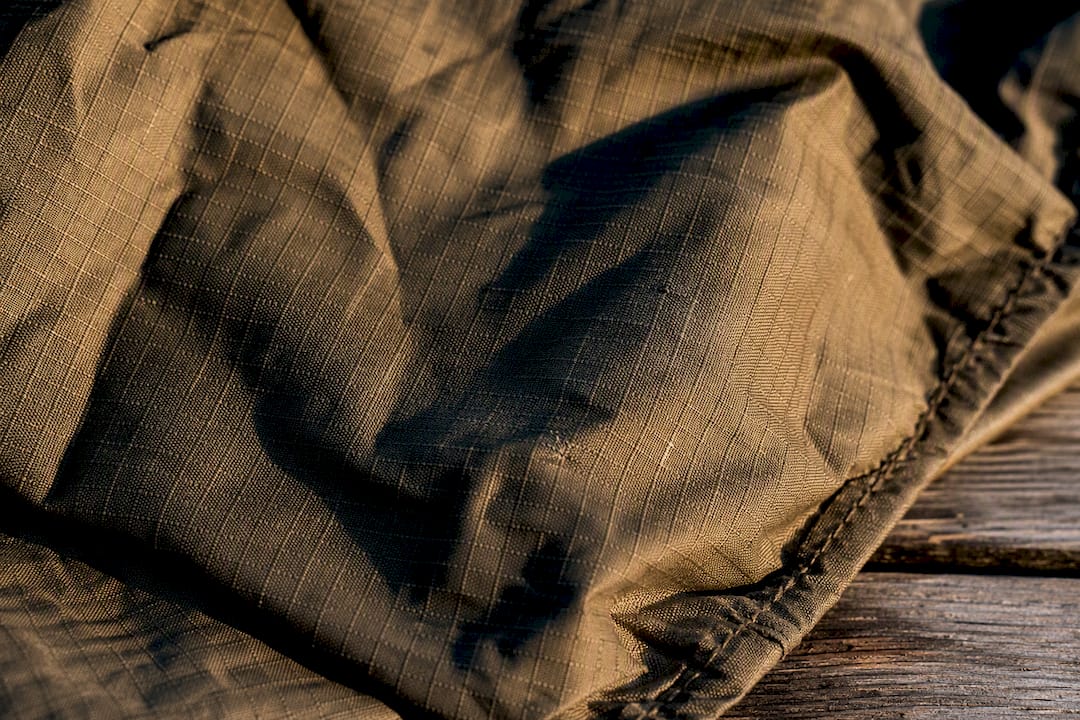
Nylon turns up constantly in belt construction, usually as ripstop nylon woven with a grid pattern that stops small tears spreading into big ones. It’s tougher than polyester gram for gram, which is why you’ll see it on the outer panels of belts built for trail use or heavier loads. Manufacturers reach for nylon when abrasion resistance matters more than moisture management.
Polyester, including recycled polyester, is the workhorse fabric of lighter belts. It dries fast, resists stretching out of shape, and takes dye well, which is why most colourful belt designs use it. Lightweight woven polyester sits flat against the body and doesn’t hold sweat the way cotton or heavier blends do, making it a sound default for road running in warm conditions.
Elastane, often branded as spandex, rarely appears alone. It’s blended into polyester or nylon at anywhere from 5% to 20% to give the fabric stretch and recovery. One wear-test breakdown found belts using a mix as specific as 60% polychloroprene, 35% nylon, and 5% spandex, which shows how deliberately these ratios get tuned. Too little elastane and the belt feels rigid; too much and it loses its grip on your waist after a few washes.
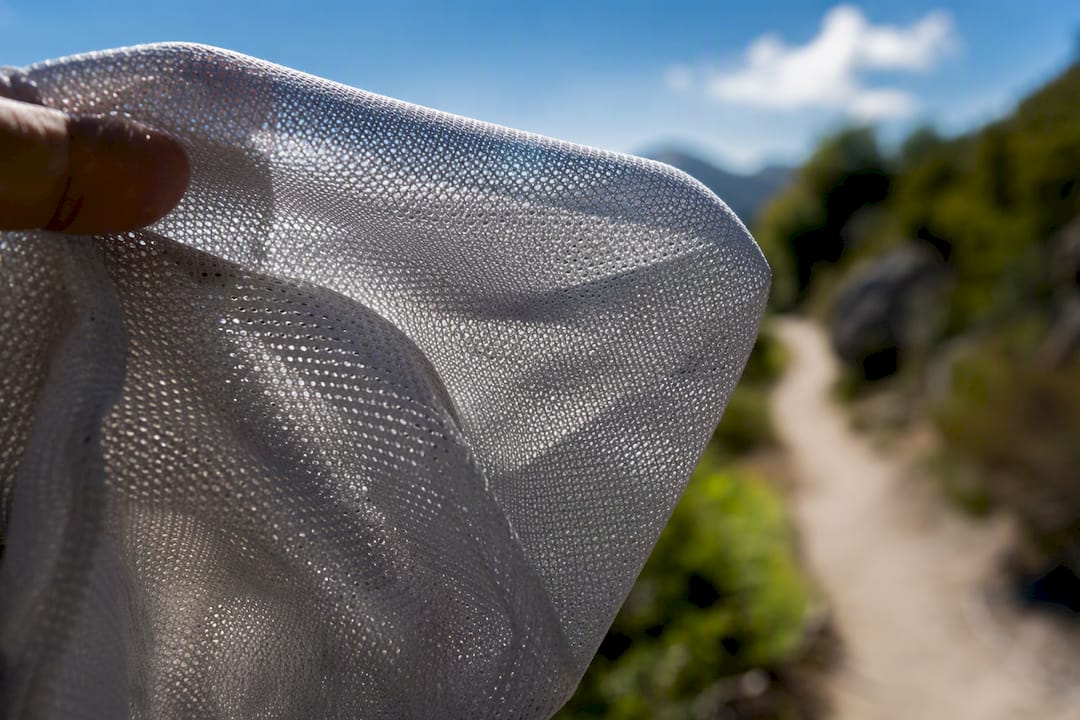
Mesh panels are usually polyester or nylon woven with an open structure that lets air pass through and sweat evaporate. You’ll find mesh on the belt’s inner face, where it sits directly against skin, or in strips along the back panel where heat builds up fastest during a run.
Neoprene, the same material used in wetsuits, shows up in some belt backings and shoulder straps. It cushions well against bouncing weight and holds its shape under repeated flexing, but it’s not breathable in the way mesh or open-weave polyester is. A neoprene-backed belt feels plush at rest and noticeably warmer twenty minutes into a run.
TPU laminates, DWR coatings, and hardware round out the picture. A thermoplastic polyurethane (TPU) layer bonded to the inside of a pocket creates a genuinely waterproof barrier for a phone, unlike a coating alone. Durable water repellent (DWR) treatments sit on the fabric surface and cause water to bead and roll off rather than soak in, though DWR wears off with washing and use over time. Zips and buckles matter here too: cheap plastic zips snag on stretch fabric, while quality YKK zips glide even under tension.
A quick reference for what each material typically brings to the belt:
- Nylon: high abrasion resistance, moderate breathability, holds shape well
- Polyester: fast drying, colour retention, lightweight
- Elastane/spandex: stretch and recovery, secure fit, degrades faster with heat exposure
- Mesh: strong airflow, low weight, less structural support on its own
- Neoprene: cushioning and shape retention, poor breathability
- TPU/DWR: water resistance, added weight and stiffness, reduced ventilation where applied
How material properties affect run performance and comfort
The fabric touching your skin decides whether you notice your belt at mile eight or forget it’s there. Breathability and moisture wicking are the biggest factors in that outcome. Mesh panels and wicking polyester pull sweat away from skin and let it evaporate, which keeps the fabric from turning heavy and sticking to you. Soft polyester-elastane blends have been compared to lightweight sports tops in how they move with the body rather than against it, which is a fair description of what good wicking fabric should feel like: present, but not intrusive.
Stretch and recovery work alongside breathability to control bounce. A belt with too little elastane sits static against your waist and either digs in when you inhale deeply or slips when you exhale. One with the right stretch ratio expands and contracts with your breathing and stride, which is the main reason fit testing rather than fabric weight predicts comfort better than most buyers assume. A stiff, low-stretch belt will always feel more secure standing still and worse moving at pace.
Durability comes down to denier, a measure of fibre thickness that roughly tracks with how much abuse a fabric can absorb before it tears. Ripstop weaves matter more in high-wear zones: where a pocket zip meets the main panel, where the belt buckle sits against fabric, and anywhere straps cross under load. Reinforced seams and ripstop nylon are consistently flagged as durability markers in belts built for trail or long-distance use, rather than being cosmetic details.
Water-resistant laminates carry a real comfort cost. A TPU-lined pocket keeps your phone dry in the rain, but that same laminate blocks airflow exactly where your body needs it most, against your lower back. It’s a fair trade on a wet winter run and unnecessary weight on a dry summer 5k.
Three practical points worth remembering when you’re weighing fabric against comfort:
- Hotspots form where fabric meets hardware. Small adjustments to seam placement and flat-lock stitching remove most common friction points where thin fabric rubs against a zip pull or buckle edge.
- Heavier fabric doesn’t mean a more secure fit. A well-cut lightweight mesh belt with the right elastane ratio will usually out-perform a bulkier, feature-loaded belt on both bounce and chafe.
- Drying speed matters more than most runners think. A belt that stays damp against skin for the last three miles of a long run is a belt built from the wrong fabric for that distance.
Pro Tip: Run your finger along the inside seam of a belt before buying it. If you can feel a raised edge or exposed stitching where it would sit against your lower back, that’s a hotspot waiting to happen at mile six.
Match materials to running use cases
The right belt fabric changes depending on what you’re actually running and where. Treating every belt as interchangeable is how runners end up with a bulky, water-resistant belt for a 20-minute lunchtime jog, or a paper-thin mesh belt that soaks through on a wet trail ultra.
- Short runs and commutes: A thin polyester or mesh belt with minimal pockets is all you need. Weight and breathability matter more than storage capacity, and you won’t be out long enough for water resistance to earn its keep.
- Race day: Low-bulk nylon or elastane blends with flat seams and a low-profile zip reduce every possible source of friction over a distance you’re running at pace, when comfort issues you’d shrug off on an easy run become genuinely distracting.
- Long runs and marathon training: A stretch chassis paired with durable woven fabric holds gels, a phone, and maybe a soft flask without sagging over three or four hours. Secure, quality zips matter here because you’ll be opening and closing pockets repeatedly, and a DWR-treated pocket is worth considering if your long runs happen regardless of forecast.
- Trail running: Ripstop nylon and reinforced seams cope with brushing past branches and scrambling over rocks in a way that standard polyester won’t. Water-resistant pockets protect a phone from stream crossings and unexpected rain, and hydration belts built for trail and longer distances typically use more robust woven fabrics and structured chassis than road-focused designs.
- Hot climates: High-vent mesh with a light elastane blend keeps airflow moving where you need it most. Skip anything with a laminated pocket here unless you’re specifically carrying electronics you can’t risk to sweat.
- Wet weather and winter: DWR coatings and laminated pockets with sealed zips keep your phone and keys dry, and a slightly heavier fabric that holds warmth against a cold lower back is a fair trade for the reduced breathability.
If your runs regularly involve carrying water rather than just a phone and gels, the calculation shifts again. Hydration belts need a different balance of chassis and fabric to reduce bounce since bottle weight moves differently to a flat phone pocket, and for some runners a vest distributes that weight better across the shoulders than any belt can.
Construction details that depend on materials
Fabric choice only tells half the story. How that fabric is joined, zipped, and reinforced decides whether a belt survives eighteen months of regular use or fails at the seams within a season. A handful of checks separate a well-built belt from one that looks fine on a store shelf and falls apart on the road.
- Seams: Look for flat-lock or taped seams anywhere fabric sits directly against skin. A standard overlock seam leaves a raised ridge that becomes a chafe point after enough miles.
- Zips: Branded zips such as YKK are a genuine quality marker, not just a label. Sealed or water-resistant zips add real protection to pockets carrying electronics, particularly where laminated construction is used to keep moisture out.
- Elastic webbing and buckles: Wherever stretch fabric meets a buckle, check the webbing feels substantial rather than thin and flimsy. This is the component most likely to fail first on a belt that otherwise looks well made.
- Reinforcement at stress points: Bar-tacks, small dense stitches at corners and pocket joins, stop tearing before it starts. Their absence at a pocket’s top corner is one of the fastest ways to spot a cheaply made belt.
- Pocket linings: The inner lining of a phone pocket should be soft and lint-free. A rough or unlined interior scratches screens and cases over time, which matters more than it sounds given how many runners carry a phone as standard.
Additional structural details like foam layers with ventilation holes, or non-stick grip strips on the inner band, also shape how a belt performs once you’re moving rather than standing still trying it on. These small touches rarely get mentioned in a product description, but they’re often the difference between a belt that stays put and one that creeps round your waist by mile three.
Care, longevity and common failure modes for materials
A running belt’s lifespan depends more on how you treat it after a run than what it’s made from. The same elastane blend that stretches beautifully out of the box will lose its recovery within months if it’s washed hot and tumble dried repeatedly.
- Wash cold, dry flat. A cold, gentle wash cycle protects both elastane fibres and any DWR coating, both of which degrade faster under heat. DWR treatments in particular lose their water-repellent properties with repeated hot washing and tumble drying, so line drying is worth the extra ten minutes.
- Rinse after hard sessions. Sweat salt and sunscreen residue break down synthetic fibres faster than plain wear does. A quick rinse after a hot, heavy-sweat run before it goes in the wash pile extends the life of both the fabric and any elastic components.
- Watch for the usual failure points. Stretched-out elastic that no longer grips your waist, seam failure at pocket corners, zip pulls that corrode or seize, and delamination where a TPU layer starts peeling from its backing fabric are the four most common ways a belt reaches the end of its useful life.
- Repair small, replace big. A loose stitch or a failing buckle can often be reinforced at home with a needle and strong thread, or a replacement buckle from a craft shop. Once elastic has genuinely lost its stretch or a laminate has started peeling away from the fabric underneath, repair rarely holds and replacement is the safer call.
Material sustainability and labelling to watch
Recycled polyester and recycled nylon appear on belt labels constantly now, and the claims are usually genuine, though the percentages are worth reading carefully. Some listings quote figures as specific as 79% recycled nylon in a particular blend, which tells you the manufacturer is tracking and disclosing content rather than using “recycled” as a vague marketing gesture.
PFC-free DWR is the other label worth understanding. Older water-repellent coatings relied on perfluorinated chemicals that resist breaking down in the environment; PFC-free alternatives avoid that problem but can wear off faster and need reapplication sooner than older formulations. It’s a fair environmental trade with a modest durability cost.
A few practical points to keep in mind when a product page leans hard on sustainability claims:
- Certifications like the Global Recycled Standard (GRS) or bluesign verify that recycled content and chemical processing meet an audited standard, rather than being self-reported.
- Recycled content is a genuine positive, but it only matters alongside solid construction. A belt with 80% recycled fabric and weak seams still fails early.
- Prioritise fit, stretch, and build quality first. Treat recycled content and PFC-free labelling as a bonus on top of a belt that already fits and performs well, not the primary reason to buy it.
Quick buyer checklist: using materials to pick the right belt
Whether you’re buying online or trying belts on in a shop, a short, focused check beats scrolling through marketing copy. Run through this before you commit:
- Identify the primary fabric and stretch content. Look for the actual blend, polyester, nylon, elastane percentage, rather than a vague “performance fabric” label.
- Check for mesh panels where the belt sits against your lower back or hips.
- Confirm whether pockets are water-resistant and how, DWR coating versus a fully laminated TPU pocket, since they offer different levels of protection.
- Look at the zip and buckle hardware for branded, quality components rather than generic plastic parts.
- Ask about denier rating or ripstop construction if you plan to use the belt on trails or for long distances.
- Check the warranty or repair policy, since a company willing to stand behind stitching and hardware is usually confident in its own construction.
Once a belt arrives, a simple dynamic fit test settles most doubts: put your phone in the pocket, jump in place a dozen times, then bend and twist as you would mid-run. Bounce, slipping, or a hotspot forming against skin will show up in thirty seconds flat.
If you’re buying online, three questions are worth sending to customer support before you click buy: What are the washing instructions? What percentage of the fabric is recycled content, if any? And what does the parts warranty actually cover, buckles and zips especially?
Pro Tip: Do the jump test with your phone in a case, not bare. Cases add bulk and shift the centre of gravity in the pocket, and a belt that feels secure with a bare phone can bounce noticeably once the case goes in.
Stryq’s material choices and why we picked them
Stryq builds every running belt around three priorities: comfort against skin, a fit that stays secure without digging in, and hardware that survives regular use rather than looking good in a single photograph. That starts with fabric selection, not as an afterthought once a design is finalised, but as the first decision made.
The STRYQ Running Belt uses a stretch chassis paired with mesh panelling specifically to solve the bounce problem most belts struggle with. A chassis with the right elastane ratio moves with your stride instead of resisting it, which is what keeps the belt from riding up or slapping against your hip on longer runs. Mesh placement matters just as much: putting it where sweat actually accumulates, rather than symmetrically across the whole belt, does more for comfort than adding mesh everywhere.
Every product Stryq makes gets developed through multiple sample rounds and real runner feedback before it reaches a shop page, material and fit decisions included. That’s true across the range: the STRYQ Hydration Running Vest uses adjustable straps and multi-pocket construction built around the same logic of reducing bounce under load, and the soft flasks and collapsible bottles designed to pair with it are sized and shaped to sit flat rather than slosh. Material specifications for each product are listed on its own product page, including fabric blend and pocket construction, so you can check the details before you buy rather than guessing from a photo.
How Stryq products use these materials
Stryq’s product range puts the fabric choices covered in this guide into practice rather than treating them as a checklist to tick. Everything below reflects the same reasoning: match the material to the job, and don’t add bulk or heat retention the run doesn’t need.
- The STRYQ Running Belt pairs a stretch chassis with mesh panelling, so the low-bounce fit comes from the fabric doing the work, not just tight strapping.
- The STRYQ Hydration Running Vest uses adjustable straps and a multi-pocket layout built from more structured woven fabric, the same approach that keeps bottle weight from bouncing on longer carries.
- Soft flasks including the Pink 500ml Soft Flask, the Purple 500ml Soft Flask, and the Green 500ml Hydration Vest Bottle are shaped to collapse flat as you drink, reducing the sloshing that stiffer bottles cause.
- The Blue Collapsible Running Bottle follows the same low-profile logic for runners who prefer a standalone bottle over a vest-mounted flask.
- STRYQ Running Socks in Black and White use cushioned, breathable knit construction with arch support, the same wicking logic applied to belts and vests, just below the ankle.
Every product listing on the running belt collection and soft flask collection sets out fabric composition and construction details in full, and Stryq’s returns and warranty policy covers hardware faults, so you’re not left guessing whether a zip or buckle is meant to last. If you’re still deciding between a belt and a vest for longer runs, the running socks collection and the belt itself are the natural starting point, ordered directly through the Stryq online store in pounds sterling.
Author perspective: practical tips from a runner
Most runners overthink fabric names and underthink fit. A mid-weight polyester-elastane blend with mesh where you actually sweat will beat almost any belt with a longer spec sheet and a worse cut.
Two things are worth doing before you commit to a belt. First, run the jump-and-twist test with your phone in its usual case, not bare, since case bulk changes how a belt sits. Second, don’t assume more pockets or a thicker fabric means better value: a bulkier belt with a poor elastane ratio bounces more, not less, and heat retention on a warm run costs you more comfort than an extra zip pocket gains you.
If you’re weighing a belt against a vest for anything beyond an hour of running, read up on how chassis structure changes the calculation before you buy either.
— martin
Sources
- Best Running Belts Based on Wear Tests — Runstreet
- Best running belts 2026 for trails, road running and longer distances | BBC Good Food
- Best Running Belts of 2026 (Runner-Tested) — Treeline Review
- REVIEW: Hydration Belts — UltraRunning