For most runners, a 10K hydration plan has three parts: drink steadily in the day before, take on 10 to 20 fl oz (300 to 590 mL) a few hours before the start, then sip to thirst and sweat loss on the course rather than chasing a fixed number. Your pace, the weather and how much you sweat change the details. This guide gives you the ranges from medical and sports-science bodies, then shows you how to turn them into a plan you can rehearse in training.
TL;DR
- Before the start: 10 to 20 fl oz (300 to 590 mL) two to three hours ahead, then 4 to 10 fl oz (120 to 300 mL) about 10 minutes before.
- During: the guideline range is 400 to 800 mL (15 to 30 fl oz) an hour, so slower runners sit at the low end and faster or hotter runs at the high end.
- Plain water is adequate for efforts under an hour. Never drink beyond your sweat losses, because overdrinking has its own risks.
- Practise your plan on a training run, including the carrying method and the exact drink.
- After: weigh yourself before and after a hard run if you can, and replace what you lost over the next few hours.
Table of Contents
- How much do you need to drink on a 10K?
- Before the race: the 24 hours and the morning
- During the race: how often to drink
- Hot weather changes the plan
- Water, sports drink or electrolytes?
- Carry your own fluid or use the aid stations?
- Carrying fluid with STRYQ
- Our view: carry what you need, and rehearse it
- After the 10K: rehydrating properly
- Signs you are too dry or have drunk too much
- A simple 10K hydration plan to rehearse
- FAQ
- Sources
How much do you need to drink on a 10K?
A 10K takes most runners somewhere between 40 and 75 minutes, which is short enough that the plan is simple but long enough that it matters, especially when it is warm. There is no single correct amount. UW Medicine says hydration strategies need to be individualised, because general recommendations may not suit every runner.
The aim is fluid balance. The National Athletic Trainers’ Association position statement recommends starting exercise adequately hydrated, keeping body-mass loss under 2%, and drinking roughly what you sweat out without gaining weight. In other words, you are not trying to replace every millilitre. You are trying to avoid arriving thirsty and avoid drinking too much.
Three things move your number up or down:
- Pace. Faster running means more heat and more sweat per minute, but a shorter time on the course.
- Weather. Heat, humidity and little wind all raise sweat loss.
- You. Sweat rate varies with fitness, body size, clothing and how used to the heat you are.
If you want your own figure, our guide on how to test your sweat rate walks through it step by step.
Before the race: the 24 hours and the morning
Good hydration starts the day before. Drink normally and regularly, with meals and between them, rather than trying to catch up in one go on race morning. Pale yellow urine is a reasonable everyday guide.
On the morning itself, UW Medicine recommends 10 to 20 fl oz (300 to 590 mL) two to three hours before the start, and another 4 to 10 fl oz (120 to 300 mL) about 10 minutes before. Spacing it out gives your body time to get rid of any excess so you are not queuing for the portable toilets at the start line.
A simple example for a 9:00 start:
- 6:00 to 7:00: breakfast you have eaten before, with 10 to 20 fl oz of water.
- 8:00: small sips only, if you are thirsty.
- 8:50: 4 to 10 fl oz, then head to the start.
Keep everything familiar. The University of Michigan Health-West race-week advice is to check what the race will offer and practise with the same fluids beforehand, rather than trying something unfamiliar for the first time on race day.
During the race: how often to drink
For longer exercise, UW Medicine gives an estimated range of 400 to 800 mL (15 to 30 fl oz) per hour, and says the real amount should come from your calculated sweat rate. That is an hourly range, not a target to finish during every 10K. A 45-minute runner does not need to drink 30 fl oz.
World Athletics’ fluid policy suggests slower runners use the lower end of that range and faster runners the higher end, especially in hot, humid conditions. The University of Michigan Health-West gives pace-linked examples you can use as a starting point:
| Your pace per mile | Suggested intake every 20 minutes |
|---|---|
| About 8 minutes | 6 to 8 fl oz |
| 9 to 10 minutes | 4 to 6 fl oz |
| Slower than 10 minutes | About 4 fl oz |
In practice, that means a few mouthfuls every 10 to 15 minutes, not one big gulp at halfway. If you run a 55-minute 10K at a 9-minute pace, the table points to roughly 4 to 6 fl oz every 20 minutes, so around 10 to 15 fl oz in total, which is easy to carry in a pair of small flasks.
For a fuller walkthrough of timing, see our running hydration guide, and for a shorter race, our 5K hydration example.
Hot weather changes the plan
World Athletics notes that heat risk depends on temperature, humidity, air movement, pace, body size, fitness and heat acclimatisation, and that the high intensity of a 10-kilometre race can raise heat-injury risk. The same policy points out that drinking alone does not prevent heat injury. Pace, heat adaptation and conditions matter too.
What that means on a warm race day:
- Move towards the higher end of your fluid range, and drink from the start rather than waiting until you feel parched.
- Slow down. Michigan Health-West advises watching the weather and adjusting your goal if it is warmer than you planned.
- Choose cool fluids where you can.
- If you wear a vest, read our advice on stopping a hydration vest overheating above 25°C.
In winter you may feel less thirsty, but you still sweat under layers. A few sips through the run is still sensible.
Water, sports drink or electrolytes?
For a 10K, plain water usually does the job. UW Medicine says water is adequate for exercise under an hour, and a sports drink with carbohydrate and electrolytes, at about 6 to 8% carbohydrate, becomes appropriate for longer efforts. If your 10K stretches well past an hour, or the day is hot and you sweat heavily, a sports drink is a reasonable choice. World Athletics also recommends cool fluids containing sodium and carbohydrate for demanding efforts.
One safety point belongs here. The NATA statement cautions that sports drinks do not remove the risk of hyponatremia (low blood sodium): exercise-associated hyponatremia can result from drinking more hypotonic fluid, sports drinks included, than you lose. The drink matters less than the volume. Sip to your plan.
For more on the choice, see when you need electrolytes and electrolytes versus sports drinks.
Carry your own fluid or use the aid stations?
Many 10Ks have a single aid station, often around the halfway point, with small cups. That works for some runners. If you do not want to carry anything, Michigan Health-West advises practising with what the race will provide, and says you do not need to drink at every station.

The station-versus-carry choice also affects how much you drink. NATA’s practical guidance explains that the number and frequency of stations influence intake, and that slower runners with lower sweat rates can drink more than they lose. Carrying your own fluid gives you a known volume, so you can match your plan sip by sip, and it means the plan is the same in training and on race day.
How to carry it comes down to what you are comfortable with:
- Handheld bottle: simple, but it occupies a hand.
- Running belt: good if you also need to carry a phone, keys or gels.
- Hydration vest with soft flasks: the most comfortable option when you want fluid, storage and no bounce.
Our overview of hydration options for runners compares them in more detail.
Carrying fluid with STRYQ
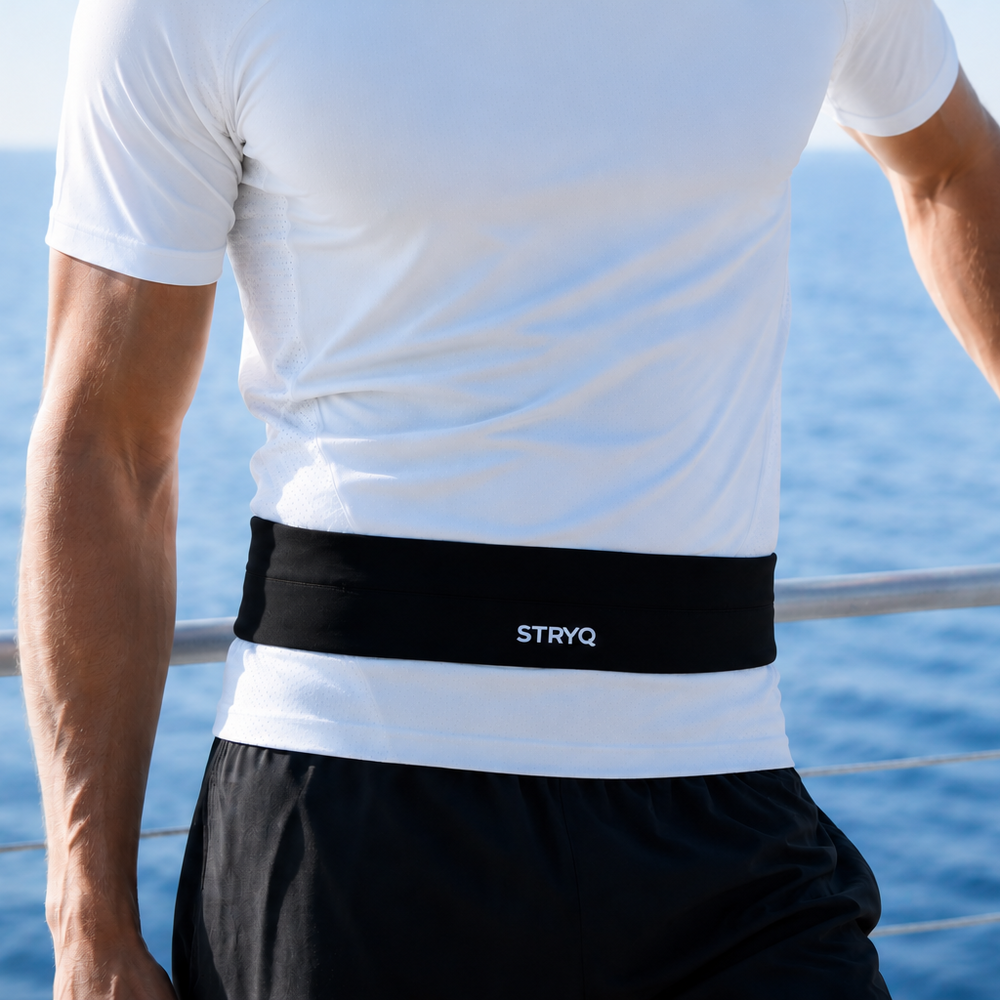
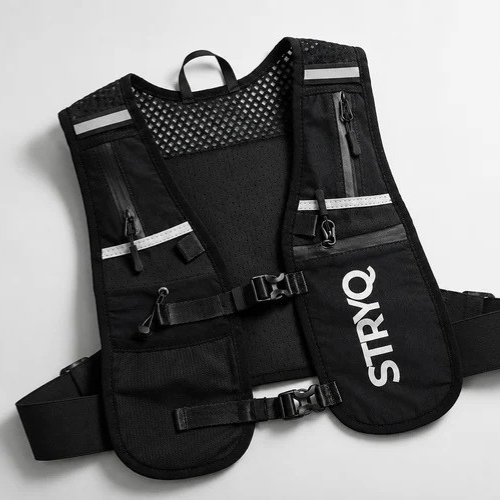
If you would rather run with your own fluid, we make two pieces of kit for exactly that. The STRYQ Hydration Running Vest has adjustable straps and multiple pockets, so flasks, a phone and a gel stay secure. The STRYQ 500ml Running Soft Flask is a lightweight way to carry your pre-planned amount, and 500 mL is more than most runners need for a 10K. If you only need to carry essentials, the STRYQ Running Belt has 360° storage. You can see all three on our running gear collection.

Prices are shown in pounds on the product pages, so check the current figure there before you order.
Our view: carry what you need, and rehearse it
Most hydration mistakes on a 10K are not about knowing the right number. They come from doing something new on race day: a different drink, a bottle that bounces, a vest that rubs.
That is why we design our gear around real runner feedback, with several sample revisions and plenty of testing before anything launches. A vest or flask should disappear once you are running. If the straps are adjustable, the pockets sit where your hands can reach them and the flask is easy to drink from, you will actually follow your plan.
Our advice is simple. Work out roughly how much you need using the ranges above, carry that amount in a setup you have trained with at least twice, and keep your race-day routine boring. Performance without unnecessary complexity is what we aim for in every product.
martin
After the 10K: rehydrating properly
If you will eat and drink normally over the next many hours, thirst and food will restore balance for most runners. NATA says that with more than 12 hours to recover, drinking and eating to appetite can restore balance. With under four hours, it recommends replacing 100 to 150% of calculated losses.
If you weigh yourself, the figures differ slightly between sources:
- The Korey Stringer Institute says each 2.2 lb (1 kg) lost corresponds to about 1 L of fluid, and suggests rehydrating to 150% of the loss within two hours.
- Mayo Clinic Health System suggests 16 to 20 fl oz for every pound lost.
Spread it over a couple of hours, with food. Drinking all of it at once is not the goal. The U.S. Department of Homeland Security hydration chart warns against more than 1.5 L an hour without medical supervision.
Signs you are too dry or have drunk too much
Thirst, a dry mouth, dark urine and a headache after the finish point towards too little fluid. Too much can be more serious. UW Medicine identifies the runners at higher risk of hyponatremia as those who drink too much before or during the race, and slower runners who have longer to keep drinking. The rule is not to drink beyond your sweat losses.
NATA lists nausea, dizziness, confusion, altered mental status and seizures among signs of hyponatremia. Research from Harvard-affiliated McLean Hospital found that excess drinking can lower blood sodium in marathoners. If you or another runner become confused, very nauseous or faint after a race, stop drinking more and find the medical team at the finish area, or call emergency services.
A simple 10K hydration plan to rehearse
Use this as a template, and adjust it after a long training run:
- Week before: drink regularly, and try your race-morning breakfast and fluids on a long run.
- Race morning: 10 to 20 fl oz two to three hours before, then 4 to 10 fl oz about 10 minutes before the start.
- On course: a few sips every 10 to 15 minutes, using the pace table above as a starting range, and the higher end in heat.
- After: water and food within the first two hours, replacing losses gradually.
- Next time: note how you felt, and adjust the volume or the drink.
FAQ
Do you need to hydrate during a 10K?
It depends on pace, weather and how much you sweat. In warm weather, and for runs near or beyond an hour, taking small sips is a sensible part of the plan. Cool, shorter runs need less, so base your amount on your own sweat rate and use the pace ranges above as a start.
How much water should I drink before a 10K?
UW Medicine suggests 10 to 20 fl oz (300 to 590 mL) two to three hours before the start, and 4 to 10 fl oz (120 to 300 mL) around 10 minutes before. Drink steadily through the previous day too, so you are not relying on one big drink on the morning.
Can I run a 10K without carrying water?
Yes, if the course has aid stations and you have practised with what they serve. You do not have to drink at every one. If you would rather control exactly what and how much you drink, a hydration vest with a soft flask lets you do that.
Do I need a sports drink for a 10K?
For efforts under an hour, UW Medicine says water is adequate. A sports drink with electrolytes and carbohydrate makes more sense in the heat, on slower 10Ks lasting over an hour, or when you sweat heavily. Either way, keep to your planned volume.
Sources
- How to Hydrate on Race Day, UW Medicine
- National Athletic Trainers’ Association Position Statement
- Practical Hydration Solutions for Sports
- Race Week Do’s and Don’ts, University of Michigan Health-West
- IAAF Policy on Fluid Replacement, World Athletics
- Hydration, Korey Stringer Institute
- Post-race recovery tips for runners, Mayo Clinic Health System
- Hydration Scale, U.S. Department of Homeland Security
- Too much water can be life-threatening for marathoners, Harvard Gazette