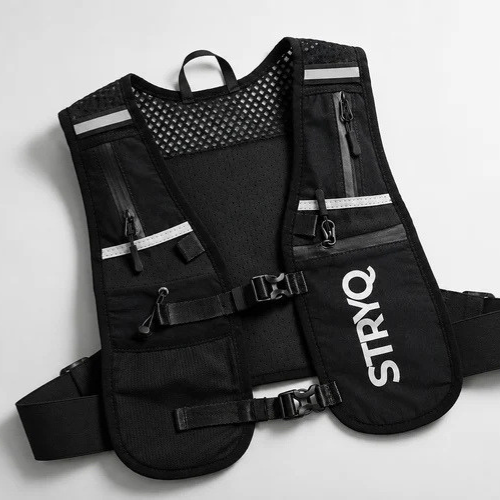
Every long-distance or trail run needs six things in your vest: 1 to 2 litres of fluid depending on distance, accessible fuel (gels, chews or bars), a basic emergency kit (foil blanket, whistle, blister patches), a packable weather layer, your phone, ID and keys, and simple repair items like tape. Nothing more, nothing less, and nothing buried where you can’t reach it mid-stride.
The one rule that trips up most runners is fluid volume. Carry too little on a warm trail marathon and you’re rationing sips by mile 15. Carry too much on an easy 8K and you’re bouncing under dead weight. As a working baseline, most vests split fluid between two front soft flasks or a rear bladder, and which you choose changes how the rest of your pack fits together.
- Hydration: soft flasks (front) or bladder (rear), scaled to distance
- Fuel: gels, chews or bars, timed to roughly one per 45 to 60 minutes
- Safety kit: foil blanket, whistle, blister patches, basic tape
- Weather layer: packable windproof or waterproof shell
- Phone, ID, keys, small cash
- Simple tools: mini repair kit, spare lace or cord
Get those six categories right and the rest of this guide is about refinement: where each item lives in the vest, how much to actually carry, and how brands like Stryq build vests and flasks around exactly this list.
Key Takeaways
A hydration vest works best when fluid, fuel, safety kit and valuables each have a fixed, distance-appropriate home rather than a random pocket.
| Point | Details |
|---|---|
| Scale fluid to distance | Carry 0.5 to 1 litre for short runs, 1.5 to 2 litres for marathon distances, 2 litres or more for ultras. |
| Fuel every 45 to 60 minutes | Stow gels and chews in front stretch pockets for grab-and-go access past 75 minutes running. |
| Never skip the safety kit | Foil blanket, whistle, blister patches and tape cost little weight but cover real risk. |
| Pack heavy items low and central | Bladder and jacket go rear and low; phone, flasks and gels go in chest pockets. |
| Choose kit built for the setup | Stryq’s socks and soft flasks are designed around front-pocket hydration and blister prevention. |
Table of Contents
- What to carry in your hydration vest, category by category
- Soft flasks vs bladder: choosing your hydration setup
- Packing and fitting your vest to stop the bounce
- Building your emergency kit and safety plan
- What to pack by run type and duration
- The packing mistake most runners only fix once
- Kit that matches how you actually pack
- Frequently asked questions
- Sources
What to carry in your hydration vest, category by category
A hydration vest only works if you load it with intention. Toss everything into whichever pocket is closest and you’ll spend the run digging for a gel while your blister kit rattles around somewhere near your shoulder blade. Sort by category first, then assign each one a home.
Hydration: flasks, bladders, and where they go
Front soft flasks and rear bladders solve the same problem in different ways. Most vests use either two 500ml front flasks or a rear bladder holding 1.5 to 2 litres, and the choice affects your whole packing strategy, not just your water supply. Flasks sit in dedicated chest pockets for quick access and collapse as you drink, cutting down on slosh. A bladder rides in a rear sleeve, out of the way, feeding you through a hose clipped to a shoulder strap.
If you run with a pack or vest, keep bottles somewhere you can reach without stopping, or use the rear reservoir if your priority is total volume over quick access. Our guide to choosing a lightweight running vest with a bladder breaks down which setup suits which type of run.
Fuel and electrolytes: how much and where
Plan on roughly one gel, chew packet, or equivalent every 45 to 60 minutes once you’re past the 75 minute mark. For a three-hour trail run, that’s 3 to 4 servings minimum, more if you’re running warm or at altitude. Front stretch pockets are built for this. You want fuel you can grab, tear, and stow the wrapper of, all without breaking stride or unclipping anything.
Statistic callout: Vest capacity should scale with effort, not just distance. Kit Authority recommends 0.5 to 1 litre for short outings, 1.5 to 2 litres for half marathon to marathon distances, and 2 litres or more for all-day ultras, with fit taking priority over feature count.
Safety items and why each one earns its place
A foil blanket weighs almost nothing and prevents a twisted ankle from becoming a hypothermia risk if you’re stuck waiting for help. A whistle carries further than your voice when you’re exhausted or the wind’s up. Blister patches and a strip of tape stop a hot spot from ending your run early. None of these get used on a good day. All of them matter on a bad one.
Clothing layers: pack light, place centrally
A packable windproof or lightweight waterproof shell belongs in the rear compartment, close to your back where it won’t shift the vest’s balance. A hat and gloves, if conditions call for them, can go in the same spot or a side pocket. The goal is keeping bulk centred so it doesn’t pull the vest to one side as you move.
Electronics and valuables: zip it or stash it
Your phone, ID, and any cash go in a zipped pocket, not an open stretch pocket. Zippered pockets for valuables paired with stretchy pockets for nutrition is the layout most vest designers settle on, and for good reason: you don’t want your ID working its way loose on a technical descent.
Tools and repairs: small, light, out of the way
A mini multi-tool, a strip of tape, and a spare cord or lace cover most trail mishaps, from a snapped shoelace to a rubbing strap. Keep these in whichever pocket you access least often. You won’t need them until you do, and then you’ll need them fast.
Soft flasks vs bladder: choosing your hydration setup
Front soft flasks give you fast access and visual feedback. You can see exactly how much water is left without stopping, and an empty flask flattens down rather than sloshing about. The trade-off is capacity. Two 500ml flasks caps you around a litre before you’re refilling.
A rear bladder solves the volume problem. You can carry 1.5 to 2 litres hands-free, sipping through a hose without breaking your rhythm. The downside is you can’t see your remaining volume at a glance, and a half-full bladder slaps against your back with every stride unless you manage the air pocket properly.
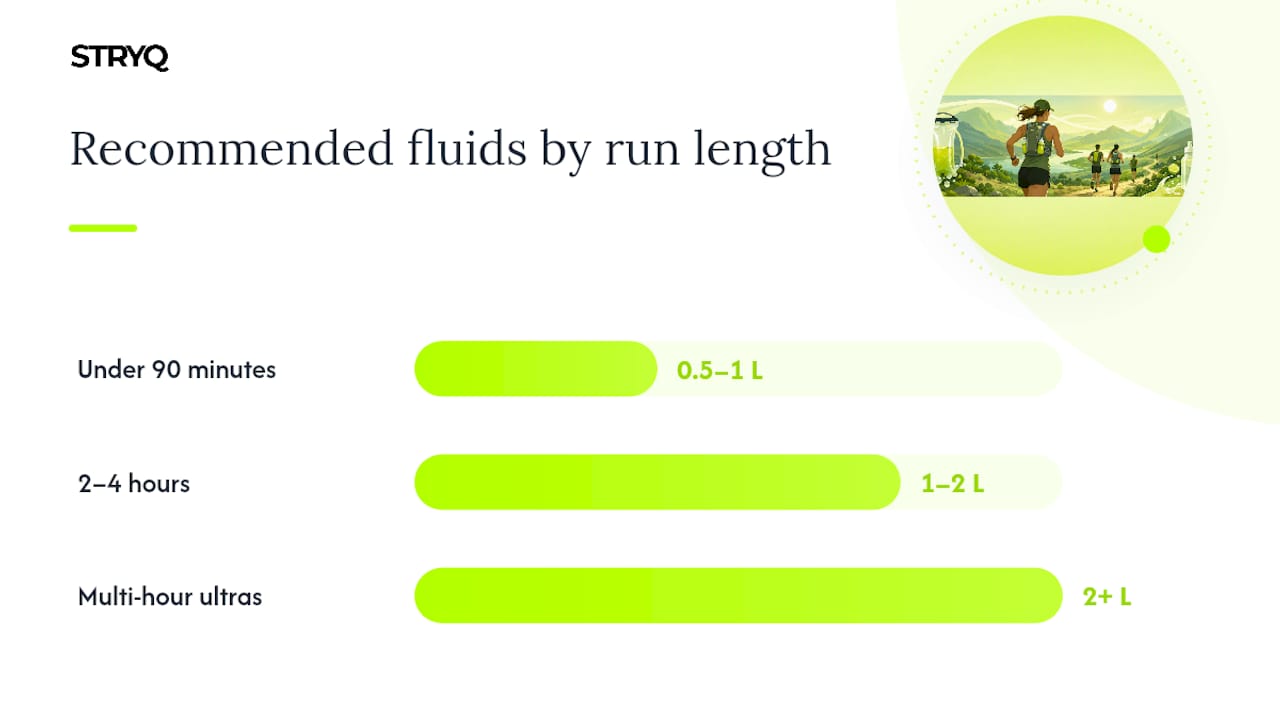
- For runs under 90 minutes, 0.5 to 1 litre in front flasks alone is usually enough.
- For long training runs or trail marathons lasting 2 to 4 hours, aim for 1 to 2 litres, often split between front flasks and a rear bladder.
- For multi-hour ultras or fastpacking efforts, 2 litres or more, combined with a clear refill plan at aid stations or known water sources.
Some experienced ultra runners run a two-flask system: one flask of plain water, the other loaded with a concentrated electrolyte mix, giving you control over intake without pre-mixing everything into one bottle. Our comparison of soft flasks versus bottles covers which setup suits different running styles in more detail.
Pro Tip: Squeeze the air out of a soft flask before sealing it to cut slosh and noise, and if you’re running with a bladder, blow a short burst of air back down the hose after each sip. That clears warm, stagnant water from the bite valve so your next mouthful isn’t lukewarm.
Packing and fitting your vest to stop the bounce
Load order matters more than most runners realise. A vest packed randomly bounces, chafes, and shifts weight to one side over a long run.
- Put heavy or rarely used items, your bladder and packable jacket, low and central, close to your back.
- Fill the rear compartment next with mid-weight items you’ll only need occasionally.
- Reserve chest pockets for what you’ll use constantly: gels, a soft flask, your phone.
- Tighten the side cords first, then the sternum straps, then jump on the spot to check for bounce before you set off.
If you’re between sizes, sizing down usually gives a more secure fit than sizing up. A thin technical tee under the vest and a dab of anti-chafe balm at contact points solves most rubbing complaints before they start. Our step-by-step fit guide walks through the full bounce test.
Pro Tip: Zippered pockets protect valuables, but they cost you a second or two every time you reach for them. Keep gels in open stretch pockets and save the zips for your phone and ID.
Building your emergency kit and safety plan
A hydration vest doubles as a safety system once you’re more than 20 or 30 minutes from help, and that changes what “essential” means.
- Emergency foil blanket, for rapid heat loss if you’re stopped for any length of time
- Whistle, audible far beyond a shout when you’re exhausted
- Small first-aid kit: blister patches, plasters, an antiseptic wipe
- Strip of tape for wraps or repairs
- Headlamp for early starts, late finishes, or unplanned delays
- Paper map or compass as backup, plus a satellite communicator for remote or backcountry terrain
Statistic callout: Carrying a lightweight base layer or windproof shell is treated by experienced trail runners as a critical safety measure, not an optional extra, because exposure risk climbs fast once you’re wet, stationary, and losing daylight.
On genuinely remote routes, a phone alone isn’t reliable; signal drops out, and battery drains faster in cold weather. Carry a power bank on longer efforts and keep critical safety items in a zipped rear pocket where they won’t fall out on technical terrain.
What to pack by run type and duration
Your kit should scale with time on feet, not habit. Here’s a quick template for four common scenarios.
Short runs (under 90 minutes): phone or key, a gel if you want one, a small soft flask or no water at all depending on the weather.
Long training runs (2 to 4 hours): 1 to 1.5 litres of fluid, 3 to 6 gels or equivalent, a lightweight jacket, basic first-aid, phone, and keys.
Trail marathons and long technical routes: 1.5 to 2 litres, 6 or more food servings, a headlamp if you’re starting early or finishing late, and the full emergency kit plus a navigation backup.
Ultra and multi-hour efforts: a dual hydration system (flasks plus bladder), the complete safety kit, extra layers for temperature swings, a power bank, and spares of anything prone to failure.
- Match hydration volume to distance, not habit.
- Scale fuel servings to time, roughly one every 45 to 60 minutes past 75 minutes.
- Add navigation and communication backups as remoteness increases.
Our marathon long run essentials list expands on the middle two categories if you’re building toward race day.
The packing mistake most runners only fix once
The most common error isn’t forgetting an item. It’s burying it. I’ve watched runners carry a perfectly good blister kit that might as well not exist because it’s zipped into the one pocket they never open mid-run. The fix is boring but effective: pack by frequency of use, not by what fits where.
Small comfort details compound over distance too. A seam in the wrong place or a sock that bunches at mile 18 turns into a genuine problem, which is part of why kit like Stryq’s running socks and soft flasks gets built around reducing exactly those friction points before they start.
Kit that matches how you actually pack
Stryq builds accessories around the packing priorities this guide just walked through, not the other way round. That’s the practical difference: gear designed to sit where you already need it, rather than gear you have to work around.
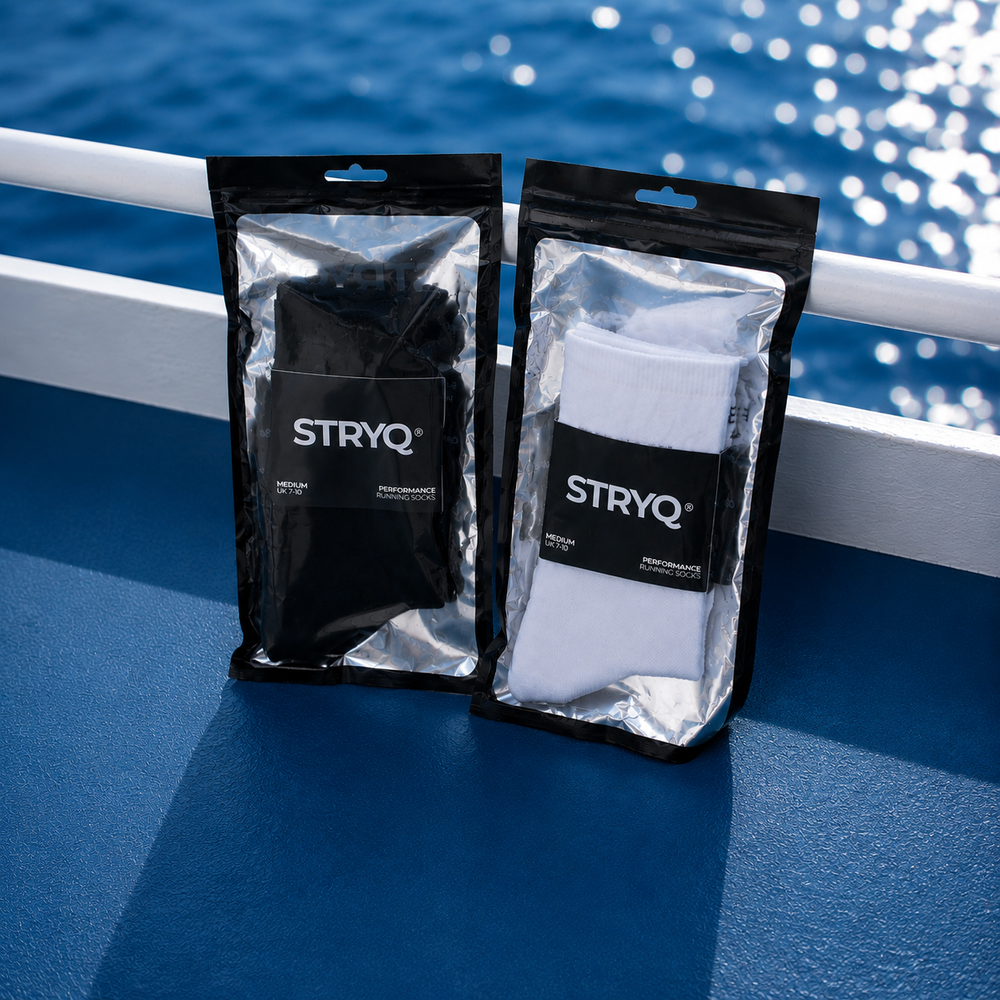
The STRYQ Running Socks in Black and White are built with arch support and cushioning specifically to reduce the blister risk that sends most runners digging for tape mid-run. A few reasons they earn a place in your long-run kit:
- Low-profile fit that won’t bunch under a vest’s leg strap or gaiter
- Quick-dry fabric that manages moisture on multi-hour efforts
- Arch support that holds its shape past the point cheaper socks give out
- Cushioning placed where hot spots actually form, not just underfoot
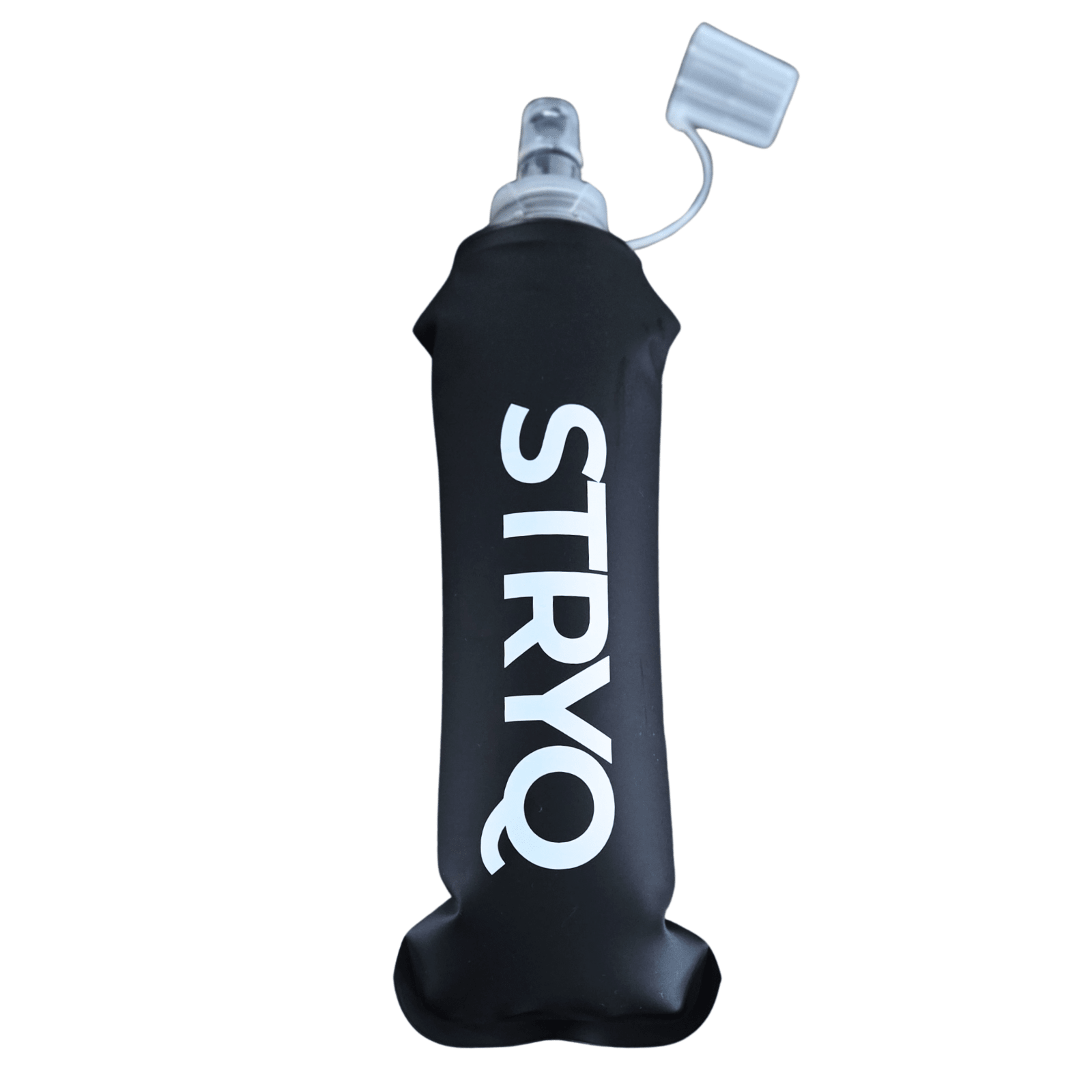
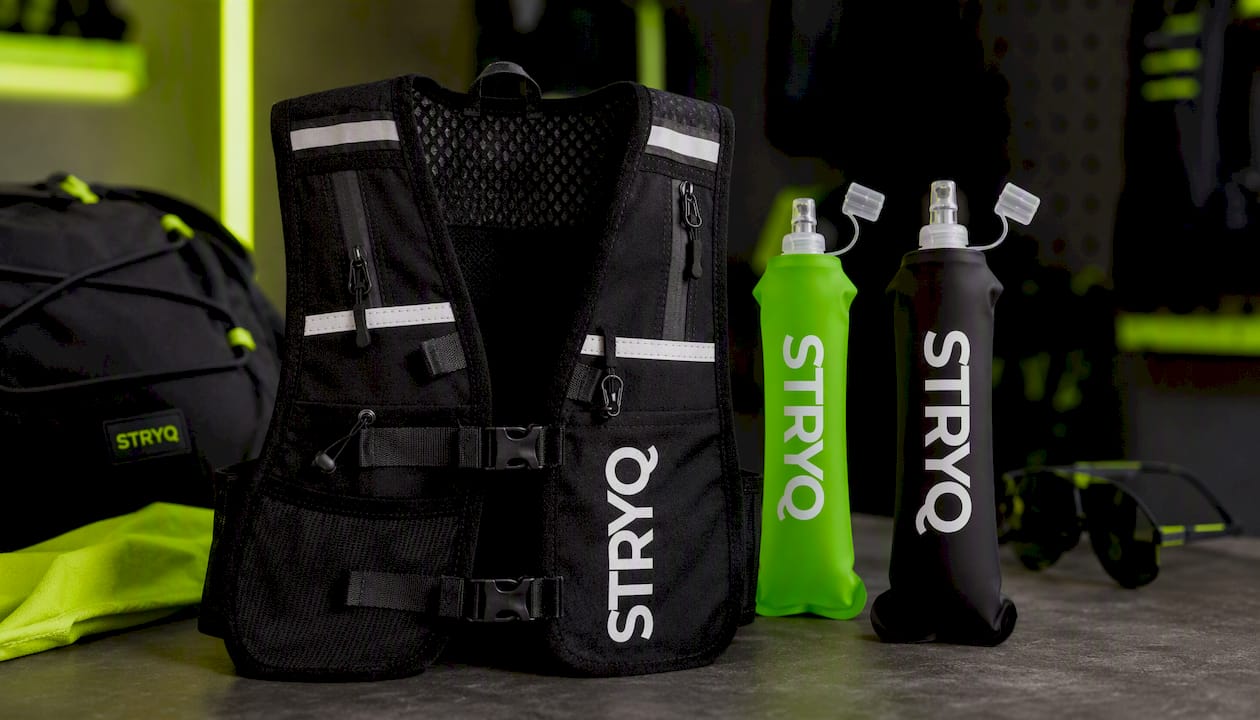
For hydration itself, the STRYQ soft flasks collection is built for exactly the front-pocket setup this guide recommends: collapsible, low-slosh, and sized to fit standard vest chest pockets without bulging. Browse the wider running gear collection if you’re assembling a full kit from scratch, and check product pages for sizing before your next long run.
Frequently asked questions
How much water should I carry in a hydration vest for a long run? For runs of 2 to 4 hours, carry 1 to 1.5 litres; for trail marathons, 1.5 to 2 litres; for ultras, 2 litres or more, adjusted for heat and available refill points.
Should I use soft flasks or a bladder? Soft flasks suit shorter runs where quick access and low slosh matter most; a bladder suits longer efforts where total volume outweighs the convenience of visual fluid tracking.
What safety items should every hydration vest carry? A foil blanket, whistle, blister patches, basic tape, and a packable weather layer, with a headlamp and navigation backup added for remote or technical terrain.
Where should I put my phone in a hydration vest? In a zipped pocket rather than an open stretch pocket, ideally toward the front where it’s protected but still reachable.
How many gels should I carry on a long run? Roughly one gel or equivalent every 45 to 60 minutes once you’re past 75 minutes of running, adjusted upward for heat or altitude.
Sources
- What should you pack in your running vest? | Advnture
- Best running vests of 2026 – iRunFar
- Ultra running nutrition | Alex Larson Nutrition