A drop bag is a bag of your own gear that race organisers transport to a designated aid station so you can restock mid-race without a support crew. It matters most on ultramarathons over 50K, races with overnight sections, or courses with unpredictable weather and long gaps between checkpoints. One rule overrides everything else: mandatory safety kit stays on you at all times, never packed away where a marshal cannot check it.
TL;DR:
- Drop bags are essential for ultramarathons over 50K or races with long gaps, overnight sections, or unpredictable weather, and must stay accessible for safety checks.
- Proper organization with labeled, waterproofed inner pouches for each station can significantly reduce time lost rummaging at aid stations.
- Over-packing is a common mistake; pack only tested, necessary items such as nutrition, extra socks, a waterproof layer, and spare electronics for each station.
- Essential gear includes calorie-dense foods, foot care supplies, appropriate clothing, a headlamp with spare batteries, and a small first aid kit, all arranged for quick access.
- Using recommended gear like STRYQ running socks, soft flasks, and running belts can streamline packing and improve race performance without unnecessary weight.
Table of Contents
- What is a drop bag and how race drop bags work
- When to use a drop bag: which races and which stations
- Core packing checklist: nutrition, foot care and essential kit
- How to organise drop bags for speed and clarity at aid stations
- Common packing mistakes and a quick final checklist
- STRYQ recommendations: tested kit and race-ready packing tips
- A simple pre-race drop-bag routine
- How STRYQ kit fits your drop-bag strategy
- Sources
What is a drop bag and how race drop bags work
A drop bag is simply your own kit, handed to race organisers before the start and driven or carried to a specific aid station further along the course. It differs from crew support, where a friend or family member meets you directly with whatever you need on the fly. Drop bags are the standard option when you have no crew, or when the course is too remote or logistically awkward for anyone to reach.
Most races publish clear rules in the race guide: a hand-in deadline, a maximum bag size or weight, and a labelling format (bib number, station name, sometimes a colour code). Miss the labelling and volunteers cannot find your bag in a marquee holding two hundred identical holdalls. Waterproofing matters too, since bags often sit outdoors for hours before you arrive, and a soaked spare layer defeats the point of packing one at all.
When to use a drop bag: which races and which stations
Drop bags earn their place in races of 50K and beyond, on courses with overnight running, on routes with sharp temperature swings between valley and summit, or wherever aid stations sit more than two or three hours apart. Below that distance, most runners manage fine carrying everything on a hydration vest or belt.
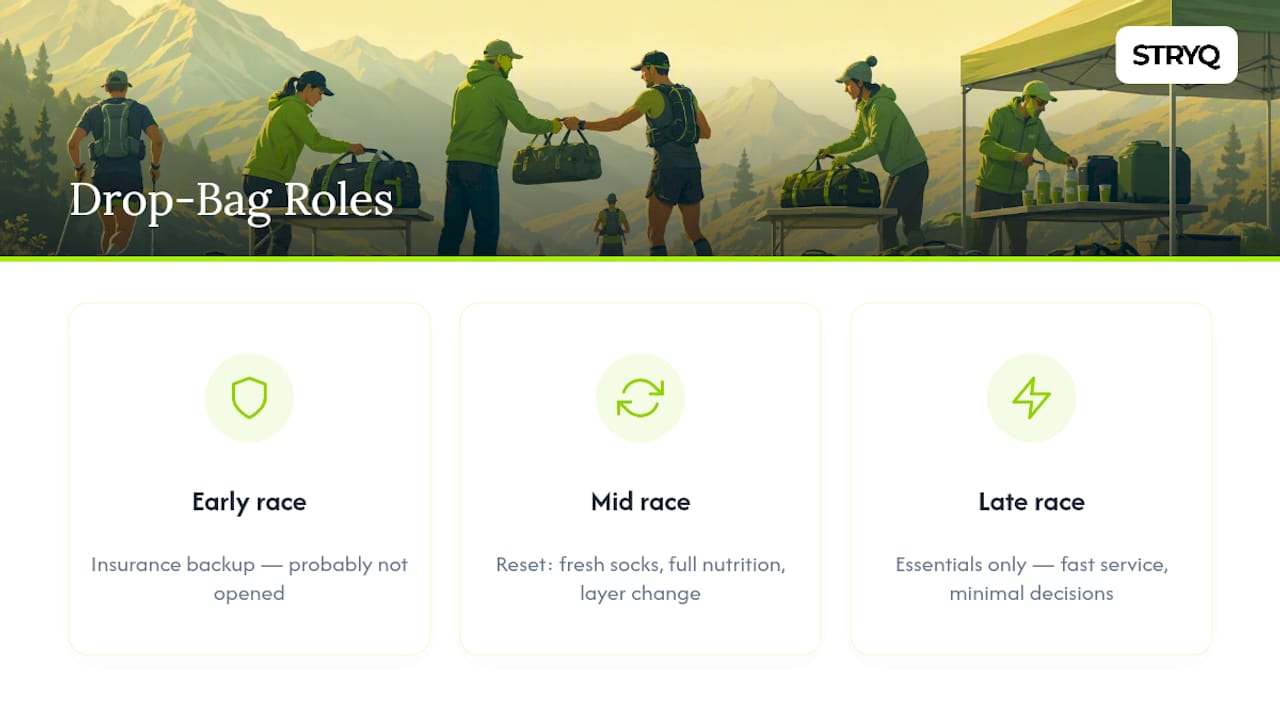
Different stations play different roles. Early in the race, a drop bag is mostly insurance, a backup you probably will not open. Mid-race stations are where a proper reset happens: fresh socks, a full nutrition top-up, maybe a layer change. Late-race bags should carry only the essentials that keep you moving, because by then you want speed at the table, not decisions. Always check the race guide for permitted items and size limits before you pack, since restrictions vary widely between events and some prohibit certain fuel types or aerosol items outright.
Core packing checklist: nutrition, foot care and essential kit
Build each bag around what that specific station needs to solve, not a generic everything-list. Four categories cover almost every situation.
Nutrition. Race-day appetite swings unpredictably, so pack a variety of calorie-dense and easily digestible options, plus salty snacks and electrolyte tablets. Include both sweet and savoury, because flavour fatigue is real by hour twelve, and stable foods that will not melt or turn to mush in a hot drop bag hold up better than anything delicate. Pack slightly more than you think you will eat.
Foot care. This is the category runners skip and regret. Fresh socks, barrier cream and a blister kit belong in every bag beyond 25 miles. Carry two spare pairs of socks if you are racing past 50 miles, along with a needle, tape and small scissors for blister management.
Clothing. A dry technical shirt, a lightweight insulating layer, a waterproof shell, gloves and a buff cover most conditions. Stick to synthetic or wool, never cotton, since wet cotton chills you fast and dries slowly.
Lighting, first aid and electronics. Verify headlamp batteries well before race week and pack a spare headlamp or fresh battery set in any bag that covers night hours. Add antiseptic wipes, adhesive dressings, sports tape and any personal prescription medication. For electronics, a waterproof phone pouch, a power bank and a spare cable round out the bag.
Pro Tip: Pack one small item you will almost certainly never use, like a spare shoelace or a safety pin. The one time you need it, nothing else in the bag will do.
How to organise drop bags for speed and clarity at aid stations
Pack each station’s bag as a self-contained unit, not a scoop from one big pile of gear. A repeatable system saves real time when you are exhausted and thinking slowly.
- Use an inner pouch for each station, labelled with the station name, your bib number and a short list of contents.
- Put the most-needed items on top and heavier things like spare shoes at the bottom, where they will not crush a soft food item.
- Choose transparent pouches so you and any volunteer can see contents at a glance rather than digging.
- Waterproof the outer bag and label it brightly, keeping shoes in a separate compartment if you are carrying a spare pair.
- Work through stations in a fixed order on arrival: nutrition first, then foot care, then clothing, then battery swap, then phone and power bank last.
Organised bags with labelled inner pouches cut down significantly on the minutes lost to rummaging, and that time adds up across a hundred-mile race with a dozen checkpoints. A fixed arrival routine does the same job your body does on autopilot during the run itself, removing the need to think under fatigue.
Common packing mistakes and a quick final checklist
Over-packing is the single most common error. A bag stuffed with food you have never eaten mid-run or a jacket you have never actually run in under race conditions is dead weight and an unknown risk. Test everything on your longest training runs before race day, from the gels to the socks to the exact jacket you plan to wear at 3am.
Never pack mandatory safety kit into a drop bag unless the race guide explicitly allows it; items like a whistle, foil blanket or GPS tracker usually need to stay on your body for spot checks. Label clearly, pack a spare set of small essentials such as blister plasters, and double-check battery charge and food expiry dates the night before.
A minimal per-station checklist:
- Two nutrition items you have already tested in training
- One pair of fresh socks and barrier cream
- One spare battery or headlamp for night stations
- One waterproof layer
- Phone charging cable and a small first aid kit
STRYQ recommendations: tested kit and race-ready packing tips
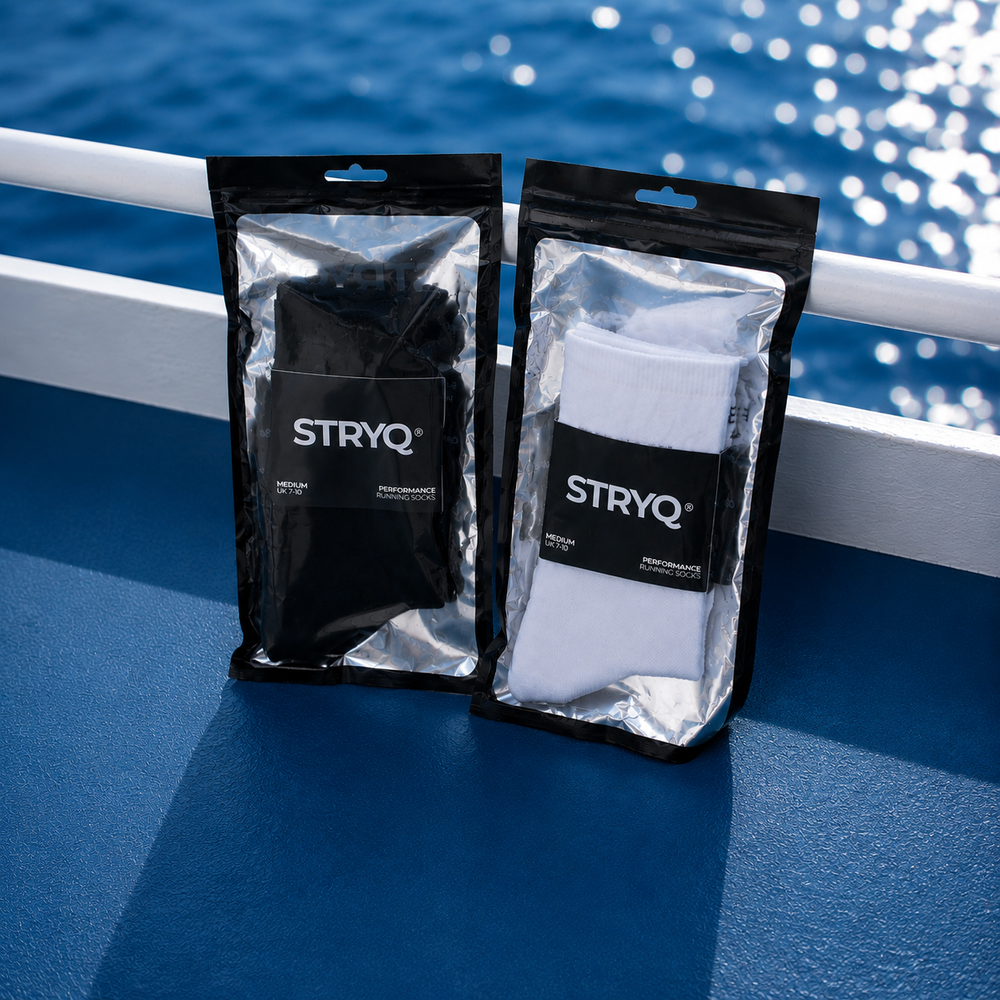
Certain gear roles keep coming up bag after bag, and matching the right product to the right role saves both weight and hassle. STRYQ Running Socks are built for the foot-care swap at mile 40 or 60, where a dry, well-fitted pair matters more than almost anything else in the bag. For hydration, a STRYQ soft flask pre-filled and sealed inside a station pouch means no fumbling with a funnel under a gazebo at 2am.
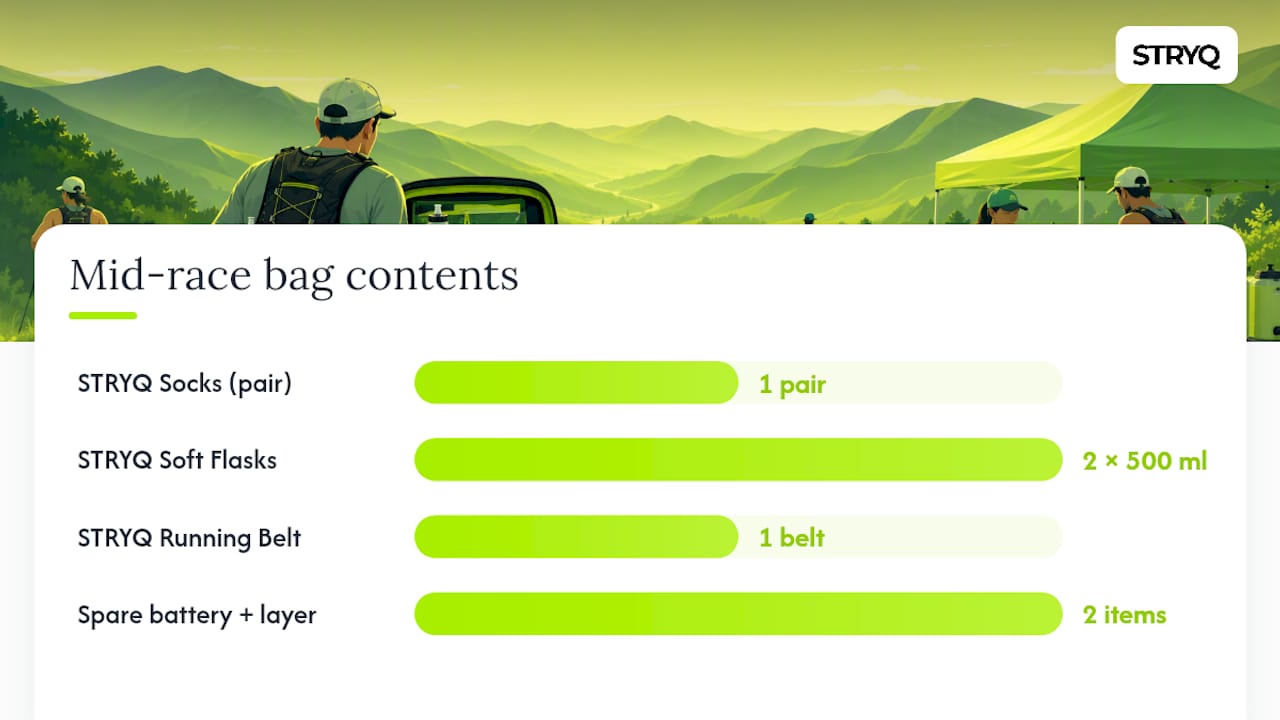
A practical mid-race bag might include:
- One pair of STRYQ Running Socks, plus barrier cream and a blister kit
- Two pre-filled 500ml STRYQ soft flasks, ready to swap straight into your vest
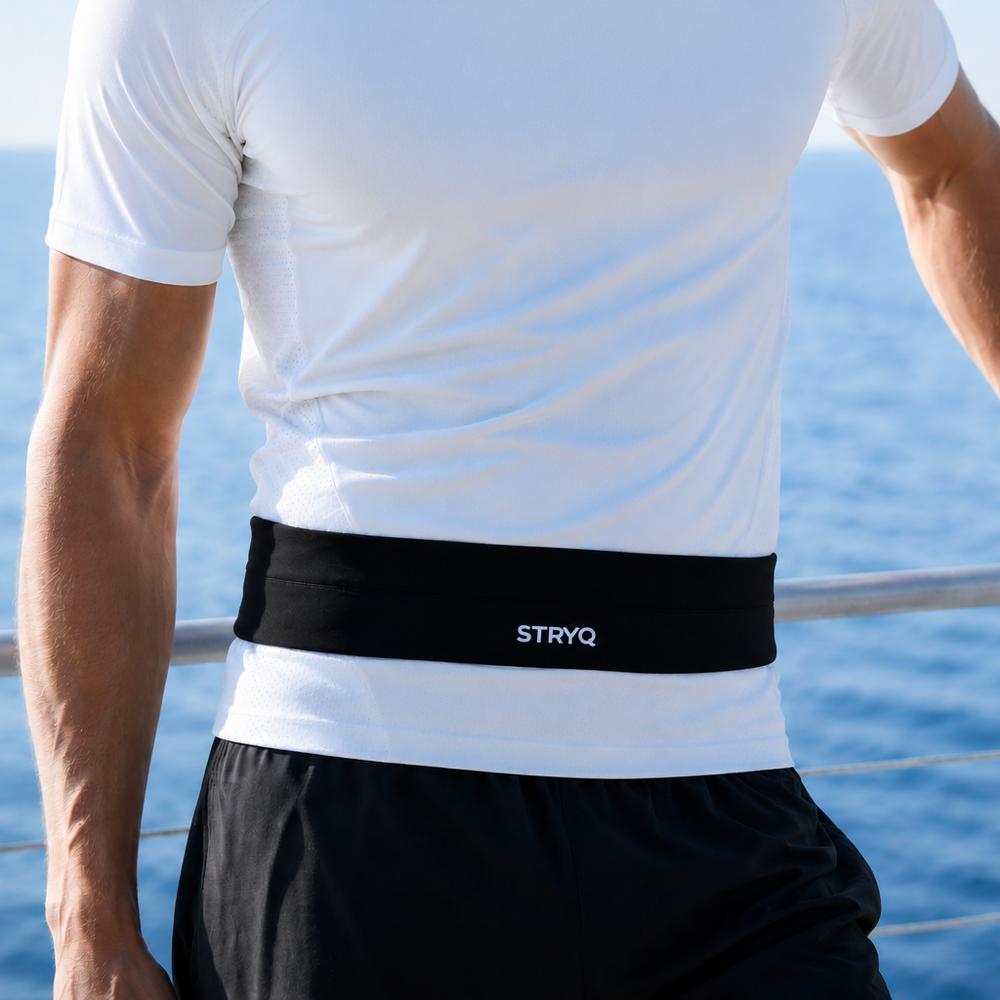
- A STRYQ Running Belt for the next short stretch, holding gels and a phone within easy reach
- A spare headlamp battery and a waterproof layer
Pro Tip: Pre-fill soft flasks the night before and store them in the fridge if the race allows early hand-in. A cold drink at hour 14 is a small, genuine lift.
For more on organising what stays on your vest versus what goes in the bag, see how to organise hydration vest storage for race-ready runs.
A simple pre-race drop-bag routine
The night before, martin lays every item out on the floor by station before anything goes into a bag, so nothing gets forgotten in a drawer. One race was salvaged entirely by a spare pair of dry socks sitting untouched for eighteen hours until they were needed most. The only way to trust a bag on race day is to have carried the same contents on a long training run first.
— martin
How STRYQ kit fits your drop-bag strategy
Stryq is built around the exact problem drop bags solve: getting comfortable, reliable gear to the right place at the right moment without adding bulk. The STRYQ Running Socks give you a genuine foot-care reset for the late stages of a race, with arch support that still feels fresh after fifty miles of abuse.

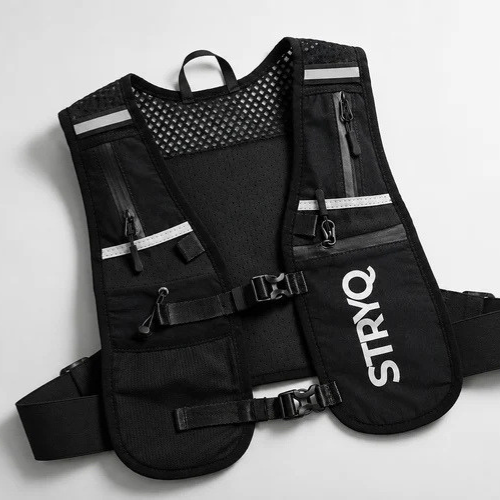
For hydration, STRYQ soft flasks collapse flat when empty, so a drop bag full of them takes up almost no space, while the STRYQ Green Hydration Vest Bottle is the easier option if you want a rigid bottle you can pour from at speed. A STRYQ Running Belt is worth packing into a mid-race bag too, useful once your vest pockets are worn out and you need a lighter way to carry gels for the closing stretch. Each piece is developed with UK runners and tested on real long runs before it ever reaches a bag. Browse the running belt collection and build your own station kit ahead of race day. All STRYQ products are priced in £ only.
Sources
- The beginner’s guide to packing an ultramarathon drop bag | Relentless Forward Commotion
- The complete ultramarathon checklist – what to pack for race day | TrainingPeaks (TrainRight)
- Trail running drop bags: how to plan race support - Trail Running Movement
- What should be in my drop bag? | Ultra Runner Magazine