The gel you planned to take at mile 16 is no help if it is buried under your mobile phone, leaking into your pocket or left in the car. Knowing how to pack race nutrition is a small part of race prep, but it can make a big difference when you are tired, cold or running faster than expected.
The goal is simple: carry enough fuel and fluid to follow your plan, then make every item easy to reach without stopping, searching or fighting with your kit. No bounce. No bulk. Just the right nutrition in the right place.
Start with your race-day fuelling plan
Pack nutrition after you have worked out what you intend to eat and drink, not before. Your long runs should have already shown you which gels, chews, drink mix or real-food options sit well with your stomach. Race day is not the time to add an unfamiliar caffeine gel because it is being handed out on course.
For many runners, a 10K may need little more than breakfast and perhaps water. A half marathon can call for one to three fuel servings, depending on pace, conditions and what you ate beforehand. Marathon and ultra runners usually need a more detailed plan, often taking carbohydrates regularly from the early stages rather than waiting for a dip in energy.
Write your plan in plain terms: what you will take, how often, and where it will come from. For example, you might take a gel every 30 minutes, carry the first three, then collect more from your supporter or drop bag. This turns packing into a practical task rather than a last-minute guess.
Your needs will vary with your body size, race duration, weather and tolerance. The numbers on a gel packet are useful, but your training is the better guide. If a product has caused cramps, nausea or an urgent loo stop in training, leave it out.
How to pack race nutrition by distance
5K, parkrun and 10K
For a shorter event, keep things minimal. Most runners will not need to carry fuel during the race. If it makes you more comfortable to have an emergency gel, carry one in a secure pocket or belt compartment, but do not let it bounce around in your hand.
If the weather is warm, a small flask can be useful where water stations are limited. Otherwise, drinking before the start and using an on-course station may be enough. The main packing job is often keeping breakfast, a post-race snack and a drink ready in your bag for afterwards.
Half marathon
A half marathon is where accessible storage starts to matter. You may want gels at set intervals, particularly if you expect to run for more than 90 minutes. Put the first gel where you can reach it without looking. Keep the next one beside it or in the same pocket, in the order you will use them.
If you carry a mobile phone, avoid placing gels directly against it. Sticky packets can split, especially after repeated movement or when you are squeezing items into a tight space. A separate zipped compartment protects both your fuel and your essentials.
Marathon and ultra
Longer races reward a more organised approach. Divide your nutrition into sections: what you will consume before the first aid station, what you will collect later, and what you need as a backup. Carrying every gel for a marathon can work, but it may be unnecessary if you know the event stocks a product you have already tested.
For ultras, variety can become as important as carbohydrate totals. Sweet gels alone may stop appealing after several hours. Pack savoury options, chews, electrolyte tablets or tolerated real food according to your plan. Keep the items you want most often in front or side pockets, not at the bottom of a vest behind your waterproof.
Choose where each item goes
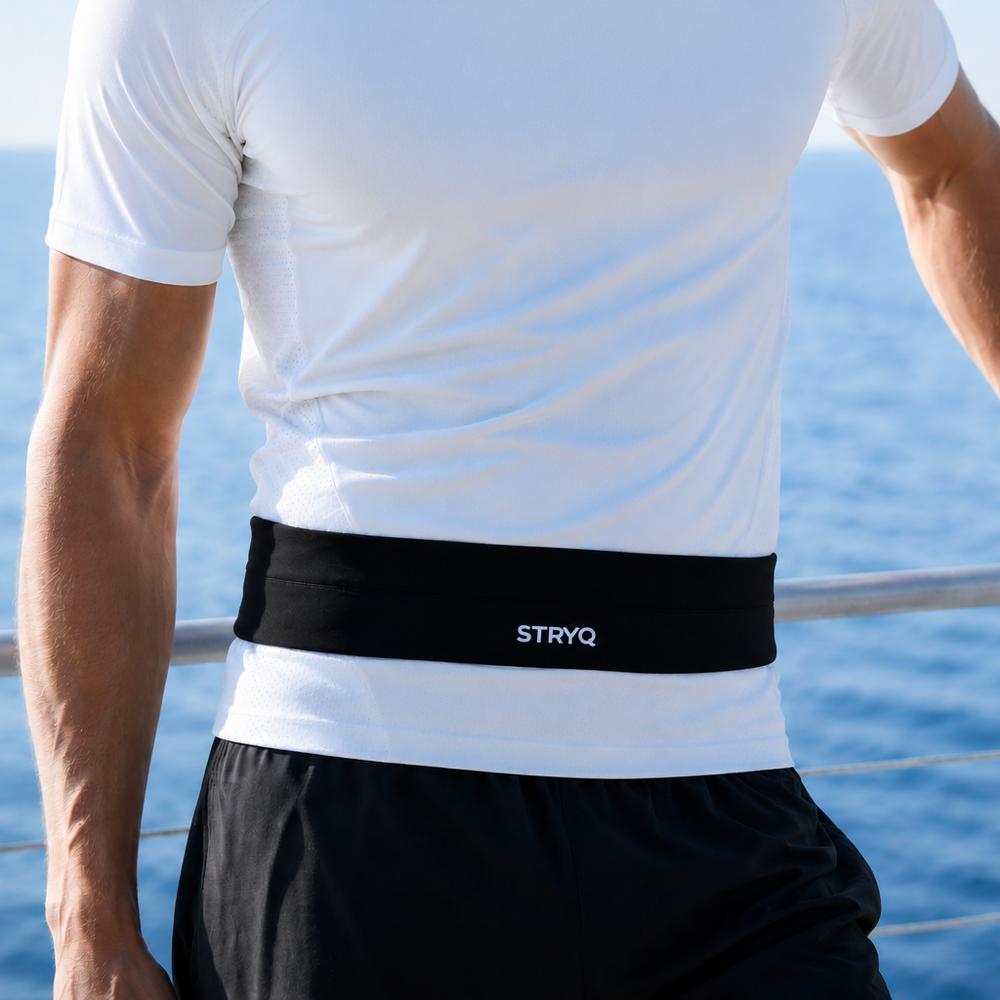
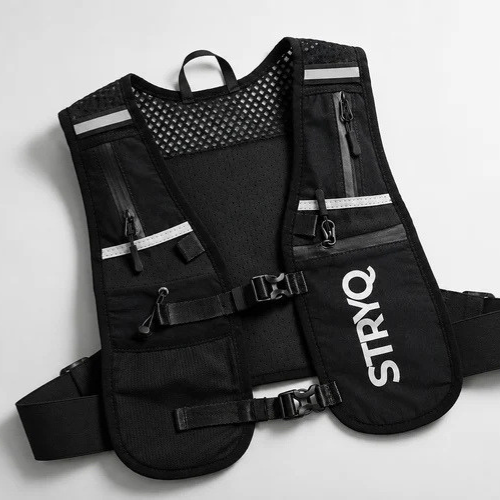
The best place for nutrition is the place you can reach while moving. A running belt suits runners carrying a few gels, keys and a mobile phone. A hydration vest is more useful when you need multiple flasks, extra layers and enough food for a long stretch between support points.
Front pockets are usually best for frequent fuel. You can see what is left, grab an item quickly and avoid twisting round mid-race. Put less urgent items, such as spare electrolyte tablets or a backup gel, in a rear pocket or secure compartment.
Think about weight as well as capacity. Four gels weigh very little, but two full flasks, a mobile phone, keys and a jacket soon add up. A loose belt or poorly adjusted vest can bounce, making fuel annoying to access and increasing the chance of chafing. Fit your carrying kit with the same clothing and bottles you will use on race day, then test it on a run.
STRYQ running belts and hydration vests are designed around this everyday problem: keeping essentials close and stable, rather than letting them shift with every stride. Whatever kit you use, it should feel settled within the first few minutes.
Pack gels, chews and food so they stay usable
Do not simply stuff everything into one pocket. Put gels in the order you plan to take them, with the top of each packet facing the same way. It sounds minor, but it helps when your hands are sweaty and your concentration is fading.
If you use caffeinated and non-caffeinated gels, separate them clearly. A simple approach is to keep caffeine gels in a different pocket, or place them after your non-caffeinated gels in a set sequence. Check the label before the race too. Different flavours in the same range can have very different caffeine amounts.
For chews or sweets, use the original packaging unless you know they will not survive it. Loose food can become sticky, crushed or difficult to handle. If you decant anything into a small reusable pouch, practise opening it while running and make sure the pouch closes securely.
Some runners tape gels together in pairs or use elastic bands. This can keep them tidy, but only if it does not make them harder to separate. Avoid safety pins through gel packets. One puncture can leave you with a pocket full of syrup.
Plan hydration alongside your fuel
Nutrition and hydration work together. Many gels are easier on the stomach when taken with water, while stronger carbohydrate drinks may mean you need less solid fuel. Check what the race provides and decide whether it matches what you have trained with.
If you are carrying soft flasks, label them in your mind as well as on the bottle. One might contain water for gels, the other an electrolyte drink. Mixing them up is not disastrous, but it can disrupt a plan you have practised for weeks.
In warm conditions, do not try to solve every hydration concern by overfilling every pocket. More fluid means more weight and more movement. Look at the course spacing, expected temperature and your likely finish time. Carry enough to bridge the gaps comfortably, then refill when needed.
Use a simple pre-race packing check
Lay everything out the evening before: race number, kit, nutrition, fluids and post-race food. Then load your belt or vest as it will be used. This is the point to notice that you have six gels but planned for seven, or that your flask lid is missing.
Before leaving, check four things:
- Your first fuel is easy to reach.
- Your fluids are filled or your refill plan is clear.
- You have a small backup in case of a dropped gel or missed station.
- Your mobile phone, keys and race number are secure and separate from anything likely to leak.
Rehearse the full set-up in training
A race belt that feels fine with keys may behave differently with four gels and a full flask. A vest that sits perfectly on an easy run can rub once you add a waterproof and run for three hours. Use at least one long training run to test your complete race set-up.
Practise taking a gel from the exact pocket you will use. Practise opening it, drinking after it and putting the empty wrapper somewhere secure. Never drop litter, even accidentally. An empty pocket, a small rubbish compartment or the original gel pocket can all work.
Also test your plan when you are running at effort. It is easy to eat neatly while jogging, but a gel can be much harder to open with cold fingers at marathon pace. Small adjustments now prevent avoidable frustration later.
Race nutrition does not need to be complicated. Pack what you have trained with, keep it stable and place the next item within easy reach. When the hard miles arrive, you should be thinking about your running, not searching for a gel.