The fastest way to stop hydration vest chafing is a three-part pre-run protocol: map your contact zones under a fully loaded vest, fit the harness with your actual race-day fluid weight, then apply a durable, film-forming barrier to your skin and the underside of every strap. Do all three and most chafing stops before it begins. Some running vest brands build vests around this exact logic, and the steps below walk through the mapping, fitting, and barrier work in detail.
TL;DR:
- Fully load your vest with race-day water and gear before fitting and mapping contact zones, as an unloaded vest does not reflect actual fit.
- Applying a durable, film-forming balm to skin and strap undersides at mapped pressure points prevents irritation during extended runs.
- Proper load testing, including chest circumference and strap tension, is essential because an empty vest can feel comfortable yet shift when loaded.
- Early signs of rubbing, such as tingling or warmth, can be quickly alleviated by repositioning straps or reapplying balm to prevent severe chafing.
- Vests designed with soft-edge straps, recessed seams, and stable chest clips reduce hardware-related chafing risks and improve fit durability.
Table of Contents
- Quick checklist: preventing hydration vest chafing before you run
- Why hydration vests chafe: the mechanics behind the rub
- How do you map and pre-treat vest contact zones?
- Fitting and loading a hydration vest to stop it moving against you
- What to do when a vest starts rubbing mid-run
- Which vest materials and hardware actually cause chafing?
- Stryq perspective: what good vest design actually looks like
- Choosing a hydration vest built to reduce chafing
- Sources
- FAQ
Quick checklist: preventing hydration vest chafing before you run
Most chafing gets solved in the ten minutes before you leave the house, not during the run itself. Here’s the sequence that actually works, in order.
- Load the vest fully with the water, gels, and gear you’ll carry on race day, then put it on. An empty vest sits completely differently on your body than a loaded one.
- Map your contact zones by feeling around your collarbones, sternum, and underarms for where the straps press hardest.
- Apply a film-forming balm to those mapped zones, plus a thin layer to the underside of the straps themselves, not just your skin.
- Fit the vest to that load and test a few deep breaths before locking the tension down.
- Clip the chest strap snugly so it can’t migrate sideways as you move.
- Pack backups: a small tin of balm, a strip of adhesive tape, and a lightweight long-sleeve top for exposed skin on longer efforts.
Pro Tip: Do your barrier prep at home, fully dressed in race kit, not standing in a changing room in your underwear. Straps sit differently over a shirt than against bare skin, and that difference is exactly where most people get their mapping wrong.
Skipping any one of these steps tends to show up around mile eight or nine, right when you’re least able to do anything about it. The order matters too: mapping before balm, balm before fitting, fitting before you lock the straps down for good.
Why hydration vests chafe: the mechanics behind the rub
Chafing from a hydration vest is rarely one single cause. It’s the product of three separate mechanical processes happening at once, which is why a single fix like “just tighten the straps” so often falls short.
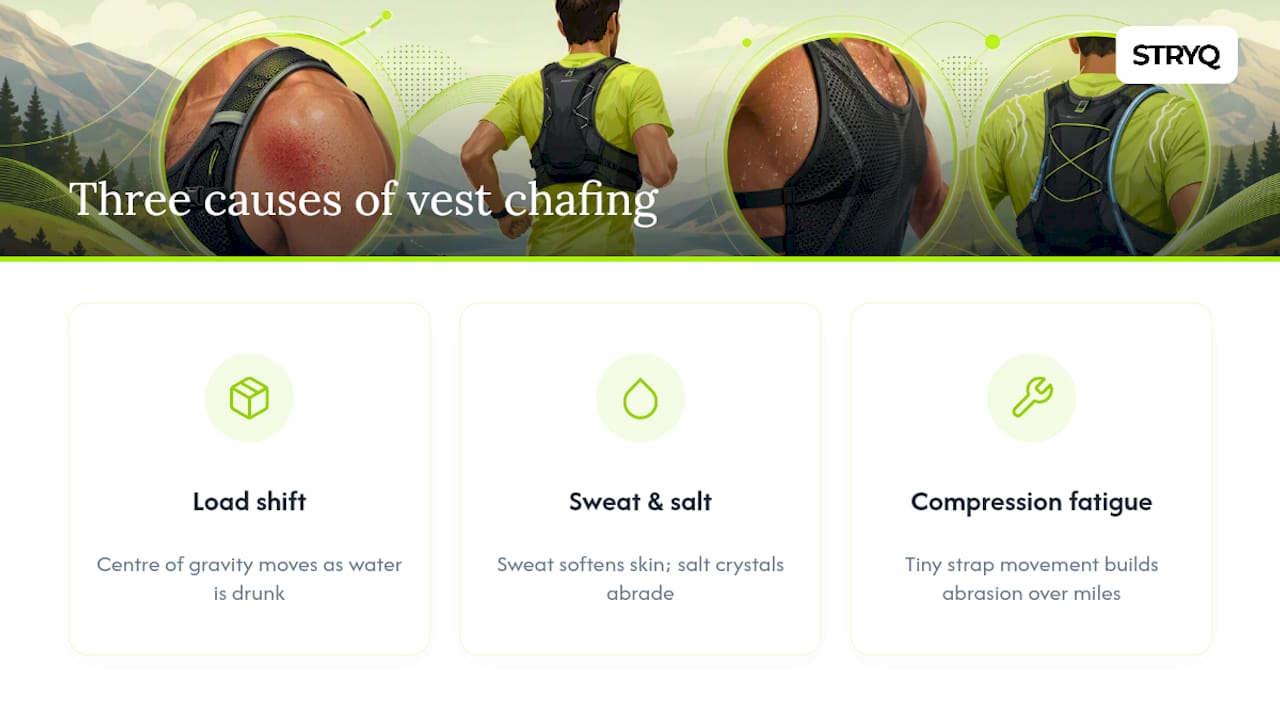
The first is dynamic load shift. A vest carrying two litres of fluid sits and moves completely differently from the same vest three hours later, once you’ve drunk most of that water. As the load lightens, the vest’s centre of gravity changes, and straps that felt snug at the start begin to shift into new positions against your skin. You end up chafing in a spot that felt perfectly comfortable at the start line.
The second is sweat and salt. Sweat softens the outer layer of skin over time, making it more vulnerable to friction, and as sweat evaporates it leaves salt crystals behind on both the strap and your skin. Those crystals act like fine sandpaper with every stride, and this effect compounds the longer you run, which is exactly why chafing tends to appear in the second half of a long run rather than the first.
The third is compression fatigue combined with lateral migration. Even a well-fitted strap moves slightly with every stride, typically only a few millimetres, but over tens of thousands of strides in a marathon that small movement adds up to real abrasion. Add strap migration and compression to sweat saturation, and you get the perfect storm for a raw patch by mile 15.
This is why the collarbone and underarm areas take the worst of it. They sit directly under the strap’s natural resting line, they flex constantly with arm swing and breathing, and they get minimal airflow compared with the rest of your torso. Runners reporting chafing on forums consistently point to these two zones above all others, which lines up with what the mechanics actually predict.
How do you map and pre-treat vest contact zones?
Mapping is the step most runners skip, and it’s the one that makes the biggest difference. Guessing where a vest will rub is unreliable. Feeling for it under real load is not.
- Load your vest with the exact fluid and kit weight you’ll carry on race day. An empty vest tells you almost nothing useful about fit.
- Put it on and fasten it normally, then run your fingers along the strap lines across your collarbones, down towards your sternum, and around into your underarms. Note anywhere you feel pressure, a ridge, or friction against skin.
- Choose a tin or solid-format balm rather than a soft stick. Stick balms tend to compress and migrate under sustained strap pressure over several hours, while a film-forming, solid-format balm holds up far better across a long run.
- Apply it generously to every mapped zone and let it sit for around 60 seconds before you get dressed. That pause matters. It gives the balm time to form a proper film on the skin instead of smearing straight off onto your first layer.
- Apply a thinner layer to the underside of the straps themselves, particularly across the sternum area where the chest strap crosses. Treating only your skin and ignoring the strap material itself is the single most common mistake runners make.
- Re-fit the vest and test your breathing with a few deep breaths before you head out the door, to confirm the barrier hasn’t shifted anything.
Pro Tip: Carry a small reapplication tin and a short strip of narrow adhesive tape in an accessible pocket. If you feel early rubbing at hour two of a long race, thirty seconds spent reapplying balm or taping over a hot spot can save you from a genuinely painful last ten kilometres.
Fitting and loading a hydration vest to stop it moving against you
Fit is the single biggest lever you have, and it has to be tested under load, not on an empty vest in a shop mirror. A vest that feels perfect empty can bounce and dig in once it’s carrying two litres of water and a race vest’s worth of kit.
- Always fit fully loaded. REI’s guidance on hydration vest fitting is unambiguous on this point: load-test with your actual planned water and gear, because an unloaded fit check tells you almost nothing about how the vest will behave on a real run.
- Treat chest circumference as your primary sizing measurement, not shoulder width or overall vest volume. Most fit problems trace back to the wrong chest size, not the wrong brand.
- Set chest-clip height and tension so the straps physically cannot walk outward, while still allowing a full, unrestricted breath. Over-tightening to stop migration often backfires by restricting your chest, which then forces you to loosen everything anyway mid run.
- Pack pockets symmetrically and lock down your flasks properly. An unevenly loaded vest tilts and shifts its centre of gravity as fluid depletes on one side faster than the other, which drags straps into new positions you didn’t map or treat.
- Run a finger under each strap and feel for a hard ridge or ledge where the material meets a seam or hardware edge. If you find one, that’s your highest-risk chafe point, and it needs either a fabric guard or a different harness entirely.
Testing the vest loaded, the way REI recommends, reveals problems an empty fit check simply cannot show you. Stryq’s own fit guidance for no bounce walks through this loading process step by step if you want a more detailed routine to follow before a big race.
What to do when a vest starts rubbing mid-run
Early detection saves you from a genuinely bad chafe. The trick is knowing what early friction actually feels like before it becomes a burning, obvious problem.
- Watch for a warm, tingling sensation rather than sharp pain. That’s usually the first sign of friction building, often around 40 to 60 minutes into a run, well before any visible damage.
- Pinch the strap between two fingers and shift it slightly the moment you notice that warmth. A small repositioning, even a centimetre or two, can move the friction point away from already-irritated skin.
- Loosen and re-fasten the chest clip if the strap has visibly walked outward towards your shoulder. This is one of the fastest fixes and takes seconds without breaking stride significantly.
- Reapply a small dab of balm from your emergency tin directly to the hot spot, working it in as best you can while moving.
- Use tape or pull a lightweight sleeve down over an exposed hot spot as a physical shield if balm alone isn’t holding.
- Stop or shorten the run if you develop clear blistering, persistent bleeding, or a deep abrasion. No training session or race split is worth turning a manageable rub into a wound that needs a week to heal. Stryq’s guidance on avoiding vest rubbing covers more on-course fixes if you want a fuller reference to keep in mind before a long event.
Which vest materials and hardware actually cause chafing?
Not every part of a vest carries equal risk, and a lot of chafing traces back to specific hardware choices rather than fit alone.
- Soft-edge straps with recessed seams distribute pressure more evenly across skin than straps with a hard, exposed seam edge. Run your finger along the underside of any strap before buying or before a big race; a ridge you can feel is a ridge that will eventually rub.
- Chest clip design matters more than most runners assume. A clip that flexes or twists under load lets straps shift laterally with every stride, which is exactly the migration that causes collarbone chafing. A rigid, stable clip holds its position and keeps the strap geometry consistent for hours.
- Fabric choice affects moisture retention directly. Neoprene and poorly ventilated materials trap sweat against the skin, which increases both softening of the skin barrier and salt build up, while breathable mesh sheds moisture faster and reduces both effects.
- If you find a ridge or rough seam on an existing vest, a thin adhesive-backed fabric guard over the strap underside is a reasonable stopgap. If the roughness is a manufacturing fault rather than a design feature, a warranty repair or replacement is the better long-term fix.
Stryq perspective: what good vest design actually looks like
Most chafing advice online treats the vest itself as a fixed variable and puts all the responsibility on the runner: tighten this, tape that, apply more balm. That framing misses half the picture. Some hydration vest brands develop their vests through repeated sample revisions and testing with runners, specifically because so much chafing traces back to hardware decisions made at the design stage rather than user error on race day.
Soft-edge straps and recessed seams exist because a strap with a hard edge will eventually rub, no matter how well you’ve mapped and treated your skin. A stable chest clip exists because a clip that twists under load undoes even a perfect fit within the first hour. These aren’t marketing details. They’re direct responses to the mechanical causes covered earlier in this article, and they’re the reason fit-testing under full load matters as much for a vest’s design as it does for how you wear it.
If you want deeper fitting guidance beyond this article, Stryq’s running vest chafing guide goes further into fit fixes and barrier prep for specific vest problems.
— martin
Choosing a hydration vest built to reduce chafing
Some hydration running vests are designed around the mechanics covered in this article, not as an afterthought bolted onto a generic pack.
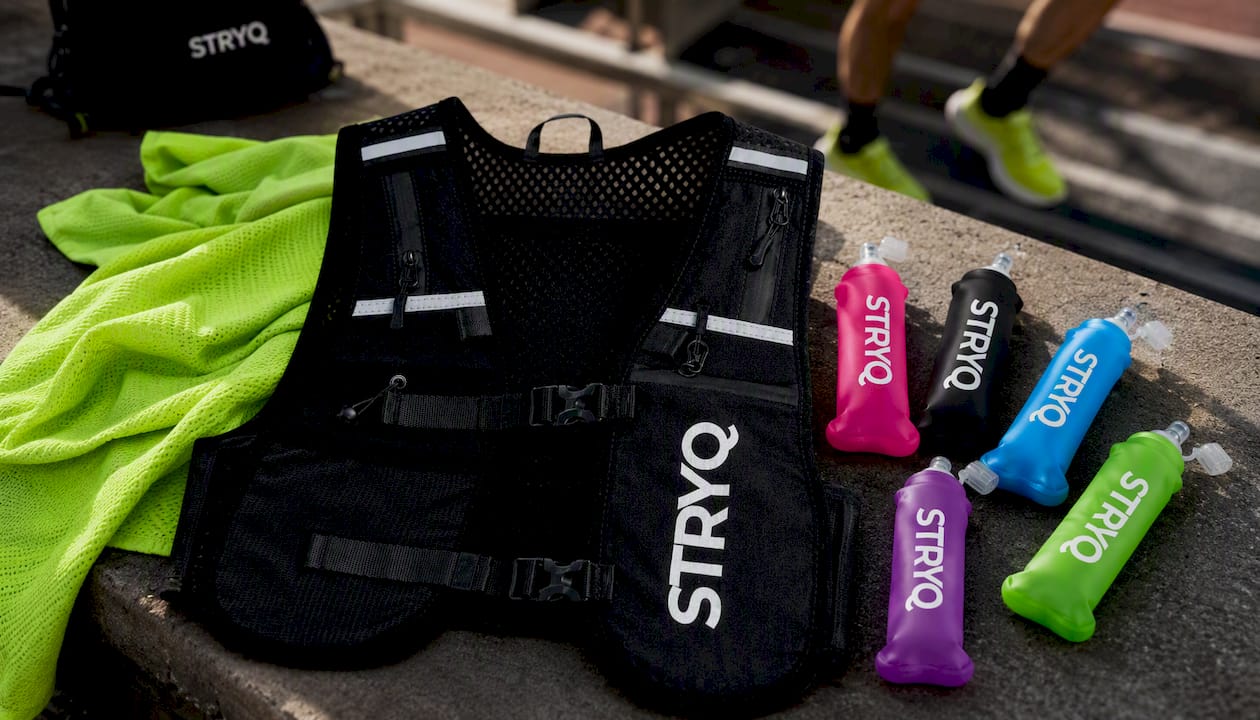
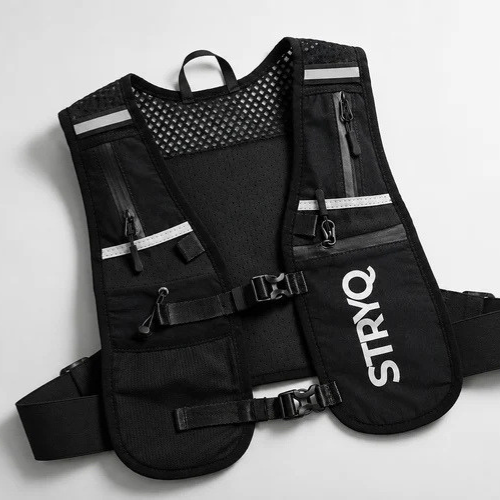
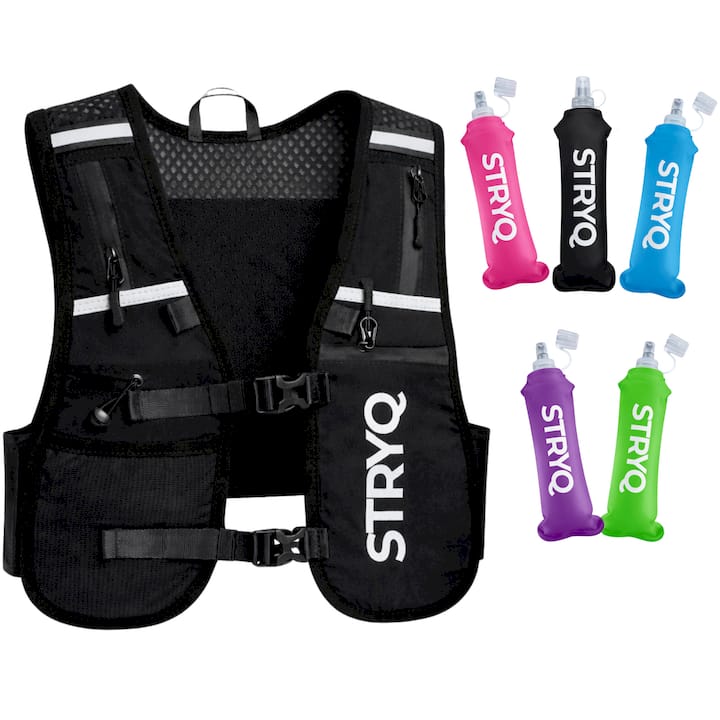
Soft-edge straps and recessed seams reduce the pressure points that cause collarbone and underarm rubbing, and the chest clip is built for stability rather than flex, so it holds its position instead of letting straps migrate outward as your fluid load lightens. Every version went through sample revisions and testing with real runners before release, which is exactly the load-tested fitting approach this article recommends. Pair the vest with the mapping and barrier protocol above: load it fully, mark your contact zones, treat both skin and strap underside with a durable balm, then fit and lock the tension while checking your breathing. Used together, the vest and the protocol are built to get you through a multi-hour effort without the mid-run strap adjustments that ruin a good pace. Symmetrical packing also helps keep the load stable as you drink, and Stryq’s guide to organising vest storage covers that in more detail. If you’re ready to try a vest built around this approach, the Stryq hydration running vest is available now, priced in pounds sterling, with sizing guidance on the product page to help you pick the right fit before your next long run.
Sources
- Running Vest Strap Chafing: Why It Happens & How to Fix It
- How to Choose a Running Hydration Vest | REI expert advice
- 10 Best Running Vests | Tested & Ranked
FAQ
Why is my running vest rubbing my neck?
Neck rubbing usually means the shoulder straps sit too high or have migrated upward as your fluid load lightened during the run. Check strap length and routing, and confirm the vest was fitted while loaded rather than empty.
Why do some marathons not allow hydration vests?
Some races restrict certain vest styles or sizes for crowd safety and course-width reasons at aid stations, not because of chafing concerns specifically. Always check the specific race’s kit rules well before race day rather than assuming your usual vest is permitted.
When should you wear a hydration vest?
A hydration vest makes sense for longer runs, hot-weather sessions, or any effort where you can’t rely on aid stations for fluid. For most shorter, well-supported runs, a handheld flask or belt causes far less strap-related friction.
Can moisturiser stop chafing?
Ordinary moisturiser is not a substitute for a proper anti-chafing balm. It lacks the film-forming, sweat-resistant properties needed to hold up under strap pressure for several hours, and it tends to break down quickly under sustained friction and sweat.