A hydration vest that feels fine for the first mile can become a painful distraction by mile six. Learning how to avoid vest rubbing is less about toughening up and more about getting the fit, layers and load right before you head out. A good vest should stay close to your body, carry what you need and let you focus on your running.
Rubbing usually starts when fabric moves repeatedly against damp skin. Sweat, rain, salt and poorly placed seams all make that movement worse. The good news is that most hot spots can be fixed with a few simple adjustments.
Start with the right vest fit
A running vest should feel secure without restricting your breathing. If it slides up and down, swings from side to side or shifts when you reach for a flask, it is too loose or poorly adjusted. That movement is what creates friction around the neck, collarbones, underarms and lower ribs.
Put the vest on over the clothing you normally run in, then adjust the chest straps while standing tall. It should sit high on your torso, with the back panel close to your body. You should be able to take a full breath, but the vest should not bounce when you jog on the spot.
Do not assume tighter is always better. Over-tightening can pull the edges of the vest into your skin and make chafing worse, particularly around the armholes. Aim for firm, even contact rather than compression. If the vest has two chest straps, adjust both so the pressure is spread across the front instead of concentrated in one place.
Test the fit with a realistic load
An empty vest often feels perfect. Add two full soft flasks, your mobile phone, keys, nutrition and a light layer, and it can sit very differently. Before a long run or race, load the vest exactly as you plan to use it and run for ten minutes close to home.
Listen and feel for movement. Sloshing flasks, loose items in a pocket and a bouncing jacket can all pull the vest out of position. Pack heavier items close to your back or high on the chest where the vest is most stable. Use smaller pockets for gels and keys so they cannot move around.
Choose a top that works with the vest
The layer beneath your vest matters as much as the vest itself. A soft, close-fitting technical top creates a smoother surface and is usually less likely to bunch than a loose cotton T-shirt. Cotton holds moisture and can turn rough when wet, which is a common cause of rubbing on longer runs.
Look at the seams on your running top. Raised seams at the shoulder, underarm or side of the chest can sit directly beneath vest straps. That might not matter on a short easy run, but it can become sore after an hour of repetitive movement. A seamless or flat-seam top is often the better choice for long-distance running.
Fit is personal. Some runners prefer a snug base layer under a vest, while others are happier in a lightweight, slightly looser technical tee. The key is that the fabric does not fold, ride up or gather beneath the straps. Test the exact combination you will wear on race day rather than relying on a new top at the start line.
Protect known hot spots before they start
If you have had rubbing before, treat those areas before the run. Waiting until you feel discomfort is usually too late. Common trouble spots include the base of the neck, collarbones, underarms, lower back, ribs and the front of the chest.
An anti-chafing balm creates a barrier between skin and fabric. Apply it generously to clean, dry skin, especially for warm weather, long runs and events where you expect to be out for several hours. Some runners also use sports tape or fabric patches over a recurring hot spot. This can work well, but make sure the tape edges do not become a new source of friction when wet.
Nipple chafing deserves a mention too. It is common, uncomfortable and very preventable. Use suitable tape, plasters designed for sport or anti-chafing protection before longer runs. A vest can increase friction across the chest, even if you have never had an issue running without one.
Manage sweat, rain and salt
Moisture is not always avoidable, especially during a British summer run or a wet trail race. But you can reduce the effect it has on your skin. Technical fabrics that dry quickly are a better choice than cotton, and a vest with breathable contact areas is more comfortable when conditions warm up.
Salt from dried sweat can make fabric feel abrasive. Wash your vest and running tops regularly, even if they do not look dirty. Rinsing a vest after a sweaty run is a simple habit that helps remove salt, drink residue and body oils from the areas that sit against your skin.
In rain, avoid adding a waterproof layer beneath the vest unless the conditions truly require it. A jacket trapped under a loaded vest can bunch and create pressure points. If you do need waterproof protection, test whether your jacket is more comfortable over the vest, under it or packed until needed. There is no universal answer because vest and jacket shapes vary.
Stop flasks and straps from causing friction
Soft flasks are comfortable because they shrink as you drink, but that can change how your vest sits. A nearly empty flask may fold, move in its pocket or leave uneven pressure on one side. Make sure each flask is pushed fully into its pocket and secured by any elastic retainers before you run.
If you carry one flask only, try to balance the load elsewhere. Put your mobile phone, gels or another small item on the opposite side where possible. On longer runs, two smaller flasks often feel more stable than one large bottle, provided the vest is designed for them.
Check the ends of chest straps too. Loose elastic, toggles or buckles can rub if they sit against bare skin. Tuck away excess strap where the vest allows it, and make small adjustments during your first mile rather than trying to ignore an obvious pressure point.
Build up your vest time gradually
A new vest needs the same sensible approach as new shoes. Start with a short, easy run and use it for a few sessions before relying on it for a half marathon, marathon or trail event. This gives you time to identify where it moves as you sweat, climb, descend and reach for nutrition.
Do not judge a vest only while standing still. Your posture changes as you tire, and the way a vest feels at kilometre two may not be how it feels at kilometre 18. Include hills if your event includes hills. Uphill running can pull a vest into the shoulders, while descents often reveal bounce and side-to-side movement.
If rubbing starts mid-run, slow down and deal with it. Reposition the vest, smooth your top, tighten or loosen the chest straps slightly and apply more balm if you carry it. A thirty-second adjustment can prevent a raw patch that takes days to settle.
When the vest itself may be the problem
Not every rubbing issue is fixable with adjustment. If the armholes are too narrow for your build, the back length is wrong, or the chest straps sit directly on a sensitive area, a different size or design may suit you better. Runners come in different shapes, and a vest that works brilliantly for a friend may not work for you.
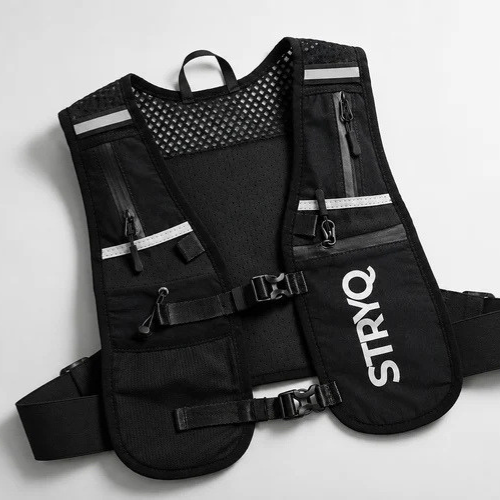
A well-designed running vest should feel like part of your kit rather than something you constantly notice. STRYQ running accessories are built around that practical goal: secure storage, stable hydration and less distraction when the miles add up.
Give your vest a proper trial run, use the layers and load you will actually wear, and make changes early. Once the fit is right, you can get on with the useful part of carrying a vest - going further with what you need close at hand.