

Distance and Terrain Decision Map for Runners' Hydration Vest Fit Tests
Wear a vest once your runs regularly push past 90 minutes, head onto trail or remote routes, or demand mandatory kit like a phone, layers or extra fluid. Under an hour, on road loops with aid stations, or when cooling matters more than capacity, a belt or handheld does the job better. Whatever you choose, test it on a training run long before race day.
TL;DR:
- Use a hydration vest for runs longer than 90 minutes, on remote or trail routes, or when carrying mandatory safety gear.
- Capacity should match for duration and conditions, with 2 liters suitable for under two hours, and 4 to 6 liters for up to three hours.
- Fit is crucial; the vest should be snug, properly adjusted, and tested during training runs to prevent bounce and chafing.
- Soft flasks are ideal for short to mid-length runs, while bladders suit longer unsupported efforts, often used together.
- Test new gear in training over at least 10 to 20 kilometers to ensure comfort and proper function before race day.
Table of Contents
- When to use a hydration vest: the decision checklist
- How many litres do you need for your run?
- How do you fit a hydration vest without bounce?
- Soft flasks or a bladder: which hydration delivery works best?
- What should you pack for different run lengths?
- When should you skip the vest for a handheld or belt?
- How do you test a vest before race day?
- Why fit comes before features when choosing a vest
- Which STRYQ kit matches your next long run?
- Sources
When to use a hydration vest: the decision checklist
Before you leave the house, run through four questions: how long, how remote, how hot, and how much kit. That order matters, because distance alone doesn’t decide the answer.
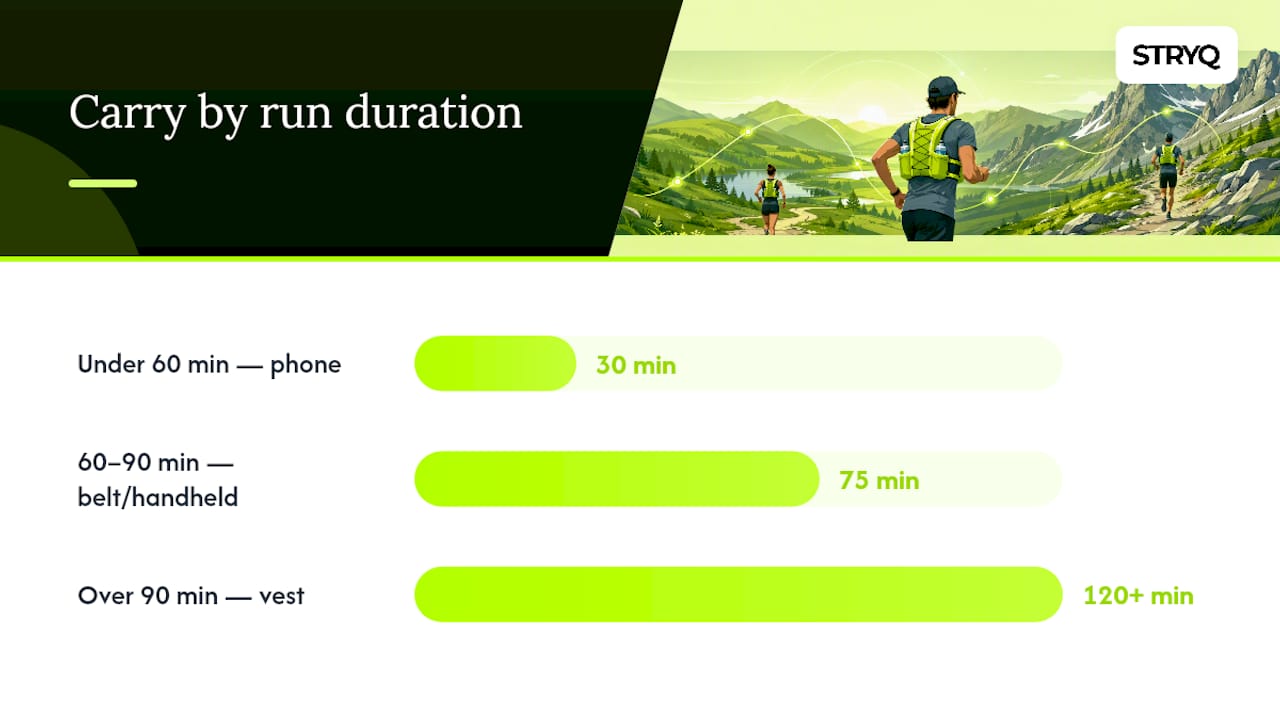
Distance thresholds set the starting point. Under 60 minutes, you rarely need to carry anything beyond a phone. Between 60 and 90 minutes, a belt or single handheld usually covers you. Past 90 minutes, most runners start feeling the pull towards a vest, and runner-focused guidance backs that threshold as the common tipping point.
Terrain overrides distance. A 75-minute trail run with no water source and patchy phone signal calls for more self-sufficiency than a 90-minute road loop past three drinking fountains. Outside’s testing frames this as “total self-sufficiency”: if the run demands you carry water, food and safety kit yourself, a vest earns its place regardless of the clock.
Weather shifts the calculation again. Heat and humidity increase how much fluid you need to carry, which pushes towards higher capacity. Cool, overcast road days tip the other way, since a high-coverage vest traps heat you don’t want.
Kit needs close the loop. If your run requires a phone, fuel, a spare layer, a headlamp, first-aid supplies or race-mandated items, a vest has the pockets a belt doesn’t.
Run this checklist before you head out:
- Is the run longer than 90 minutes?
- Is it on trail, remote, or without reliable water access?
- Is it hot, humid, or otherwise fluid-heavy?
- Do you need to carry mandatory or safety kit?
Two or more “yes” answers means reach for the vest.
How many litres do you need for your run?
Capacity should match duration and conditions, not guesswork. REI’s testing sets out a useful baseline: around 2 litres of carrying space for runs under two hours, 2 to 6 litres up to three hours, 4 to 12 litres for three to six hours, and 6 litres or more once you’re out beyond six hours.
A practical hourly guideline helps translate that into bottles: aim for roughly 450 to 700ml per hour, adjusted for heat and how much you sweat. Two 500ml soft flasks comfortably cover a two-hour run in moderate conditions; hot, humid days push you towards the higher end or a supplementary bladder.
| Run duration | Typical capacity | Common setup |
|---|---|---|
| Under 90 minutes | Handheld or up to 4L | Single soft flask or handheld bottle |
| 1 to 3 hours | 4 to 6L | Two 500ml soft flasks, light snacks |
| 3+ hours / ultras | 8 to 12L+ | Bladder plus flasks, full nutrition and kit |
Runner-focused advice puts 4 to 5 litres as a solid mid-ground for long training runs, with ultras often demanding 8 to 12 litres once mandatory kit gets added. REI’s expert testing similarly flags a mid-capacity vest around 5 litres as the sweet spot for marathon training. It carries enough without ever feeling like luggage strapped to your chest.
Aid-station spacing changes the maths too. A 3-hour trail loop with aid every 15K needs less capacity than a 50K training day with 25K between refills, even though both runs sit in similar time brackets. When race rules mandate specific safety items, capacity requirements can jump a full category regardless of distance.
How do you fit a hydration vest without bounce?
A vest that bounces is a vest that’s the wrong size or badly adjusted, not a bad design. Fit is what separates “invisible” from “irritating.”
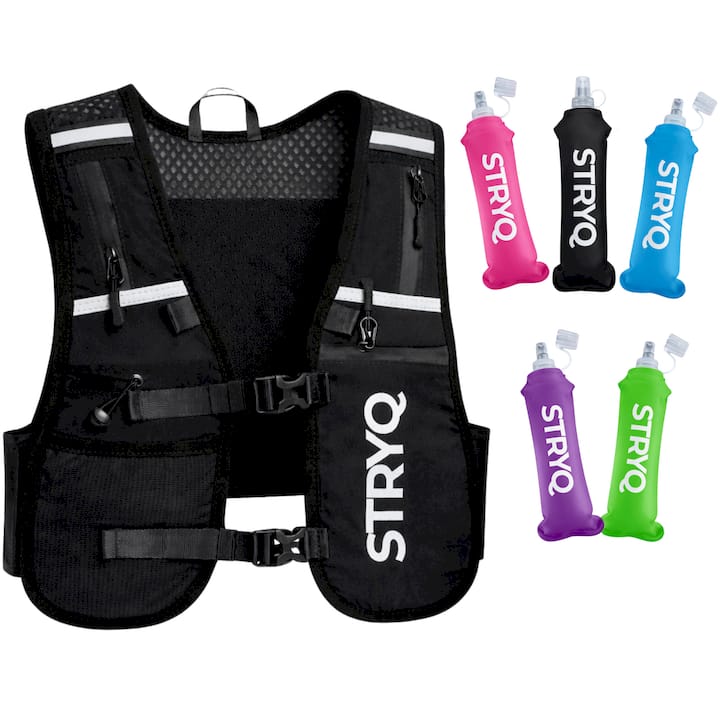
Start by measuring your chest at its widest point and choosing the size that matches. If you sit between two sizes, size down rather than up. A slightly snug vest moves with you; a loose one bounces independently of your stride.
Adjustment follows a sequence, not a guess:
- Pull the side cords first to bring the vest close to your torso.
- Set the sternum strap next, snug but not restrictive.
- Fine-tune the shoulder straps last, once the body of the vest is already sitting correctly.
Load the vest exactly as you would on race day, then run 10 to 15 minutes and watch for bounce points, usually around the lower pockets or bottle holders. If flasks shift as they empty, tightening the side cords again usually solves it.
Pro Tip: Run your first fit test in the exact top you’ll race in. Fabric thickness changes how snug “snug” actually feels, and a vest that’s perfect over a t-shirt can chafe over a jacket.
Chafing shows up most at the underarm seams and lower back, so anti-chafe balm and a well-fitted base layer solve more problems than a different vest size ever will. Stryq’s own fit guide walks through this adjustment order in more depth if you want a step-by-step reference before your next long run.
Soft flasks or a bladder: which hydration delivery works best?
The vest’s capacity matters less than how you access what’s inside it. Soft flasks and bladders solve different problems, and many long runs need both.
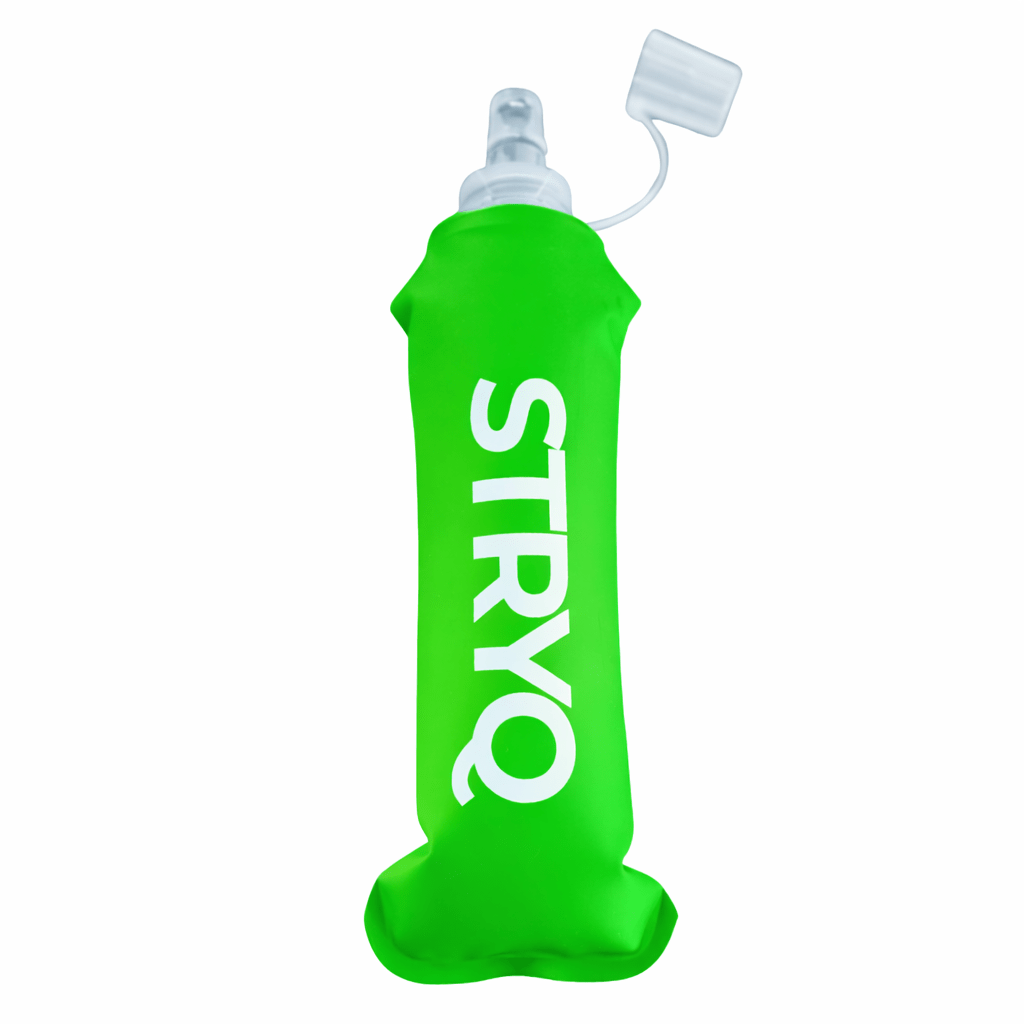
Soft flasks, usually mounted on the front straps, refill faster at aid stations and let you mix water, electrolytes and gels separately rather than diluting one big reservoir. They also slosh less once squeezed down, which matters more than people expect once you’re past the two-hour mark.
Bladders hold more volume in one place and encourage steady sipping without stopping to unclip anything, but refilling mid-run is fiddly and cleaning them properly takes more effort than rinsing a flask.
- Choose flasks for shorter runs, mixed nutrition, or frequent aid-station access.
- Choose a bladder for long, unsupported stretches where volume matters more than refill speed.
- Combine both for hot, long or remote days: flasks for electrolytes and gels, bladder for bulk water.
- Watch bladder tubes in cold weather; they can freeze at the mouthpiece on winter long runs.
Stryq’s soft flasks come in 500ml sizes precisely because that volume fits the front-strap slots most vests use without adding bulk you’ll notice at mile 15.
What should you pack for different run lengths?
The gear you need decides the carriage method more than the distance does on its own. Three brackets cover most training calendars.
- 60 to 90 minutes: phone, keys, a small soft flask or handheld bottle, one or two gels. A belt or single flask usually handles this without a vest at all.
- 2 to 4 hours: two soft flasks or a 1.5 litre bladder, several gels, a light packable jacket, basic first-aid supplies, and electrolyte tablets or powder. This is where most runners cross from belt to vest.
- Ultra or remote days: everything above, plus spare layers, a headlamp, an emergency blanket or whistle, backup fluids, and a power bank for your phone or watch.
Once your list runs past four or five items, a belt’s pockets simply run out of room, and that’s the real signal to switch to a vest, not the mileage number itself.
When should you skip the vest for a handheld or belt?
Road races with aid stations every few kilometres rarely need a vest. Handhelds and waist belts do the job with less bulk and better cooling.
- Handhelds suit runs under 90 minutes where you’re carrying one bottle and nothing else; they’re the lightest option but tire your grip on longer efforts.
- Waist belts can match a vest’s capacity for many day runs and layer more easily in changeable weather, though Outside’s comparison testing notes vests still win when you’re using poles or need front-access pockets.
- For mixed routes, pick the vest only if the remote or exposed sections genuinely demand it; otherwise a belt keeps you cooler.
Stryq’s running belt covers exactly this middle ground for road sessions and shorter long runs.
How do you test a vest before race day?
Never wear a new setup for the first time on race morning. Test it properly, at least once, ideally twice.
- Load the vest exactly as planned and run 10 to 20 kilometres, practising at least one refill.
- Watch for bounce, chafe points, and how quickly you can reach fuel or your phone mid-stride.
- Adjust straps and pocket layout afterwards, then repeat the test if anything felt wrong.
- Treat persistent chafe or a strap that won’t hold tension as a red flag. Fix it or replace the vest, don’t hope it improves on race day.
Why fit comes before features when choosing a vest
Most vest reviews obsess over litres and pocket counts. The number that actually determines whether you’ll hate your vest by mile 20 is how well it sits still.
Stryq builds hydration vests through repeated runner feedback and fit testing rather than starting from a spec sheet, because bounce and chafe are what actually get vests abandoned in a drawer. A vest with generous capacity and a sloppy fit will always lose to a slightly smaller one that moves with you. If you take one thing from this article, test the setup on a real training run, not race morning.
— martin
Which STRYQ kit matches your next long run?
Once you know your run type, matching gear is straightforward. For long training runs and trail sessions where self-sufficiency matters, the Stryq Hydration Running Vest is built with the fit sequence covered above already baked into its strap design, so bounce isn’t something you’re fighting from the first kilometre.

For shorter road sessions or when you’re prioritising cooling over capacity, the Stryq Running Belt carries what you need without the extra coverage. Either way, hydration delivery comes down to the same flasks: Stryq’s 500ml soft flasks fit both the vest’s front straps and most standard belt holsters, so you’re not buying separate bottles for separate gear. All prices on the Stryq store are listed in £, with no hidden conversion.
Before your next long run, read through the fit guide, then load your vest as you would on race day and take it out for a proper test run. That single session will tell you more about whether the setup works than any spec sheet.
Sources
- The 4 Best Running Hydration Vests of 2025: Tested | REI Expert Advice
- Best hydration vests (Outside)
- Do I really need a hydration vest?
- Hydration options for ultrarunning: vest vs bottle