Most running socks wear out over a period ranging from a few months to about a year of regular use before they stop protecting your feet properly, but that range varies widely. The real rule is simple: replace socks by condition, not by age. Watch for thinning at the heel and toe, flattened cushioning, and a cuff that no longer springs back, then inspect your pairs and hold your newest ones back for long runs and races.
TL;DR:
- Running socks typically last between three and twelve months, with lifespan heavily influenced by material, mileage, and care habits.
- Key signs for replacement include thinning fabric, loss of cushioning, elastic failure, persistent odor, and new hotspots during runs.
- Proper inspection involves checking transparency, seams, cuff recovery, and testing sock fit through short runs before race day.
- Using a rotation of six to eight pairs and reserving newer socks for long runs and races extends overall lifespan and performance.
- Expect durability improvements from reinforced heel and toe zones, nylon blends, and careful wash and drying practices to prevent elastic and cushioning breakdown.
Table of Contents
- How long do running socks last? Material and use change everything
- Five signs it’s time to replace a pair
- How to inspect and test your socks properly
- Care and washing habits that extend sock life
- Rotation strategy and race-day rules
- What to look for when buying replacements
- What Stryq looks for in sock construction
- Why the mileage question is the wrong one to ask
- Where to find durable running socks
- Sources
- FAQ
How long do running socks last? Material and use change everything
There’s no single number that works for every runner, and anyone who tells you otherwise hasn’t accounted for how differently people actually run. A jogger running short distances on soft trails wears through socks much more slowly than a marathon trainer running many miles weekly on harder surfaces in warm conditions.
Cushioning and fibre loft flatten with repeated compression long before fabric actually tears, which is why technical running socks commonly last somewhere between three and twelve months rather than years. Holes are the last stage of failure, not the first sign of it.
Material makes a measurable difference too. Cotton socks retain moisture, lose shape quickly, and tend to break down fastest under running conditions. Synthetic blends built with nylon and spandex resist abrasion better and hold their structure longer, while merino wool and quality synthetic blends often outlast cotton by a wide margin for most runners, particularly when merino is reinforced with nylon at the heel and toe.
A few factors accelerate wear regardless of material:
- Weekly mileage — more miles means more compression cycles on the same fibres.
- Sweat and moisture — damp fabric abrades faster and loses elasticity sooner.
- Hotspots and friction zones — repeated rubbing at the same point thins fabric locally, well before the rest of the sock shows wear.
- Shoe interior texture — rough linings or worn insoles accelerate sock wear from the inside, which is worth checking alongside when your shoes themselves need replacing.
- Toe length and shape — ill fitting socks bunch and rub, wearing through the toe box faster than a well fitted pair.
Fixed mileage figures fail because they ignore all of this. A sock’s lifespan in miles can vary greatly between runners depending on conditions and use. Convert your own weekly distance and conditions into a rough expectation, then let inspection confirm it.
Five signs it’s time to replace a pair
Rather than waiting for a hole, watch for these five signals. Any one of them is reason enough to retire a pair, especially before a race.
- Thinning fabric, particularly at the heel and toe, where you can see or feel the material has become noticeably thinner than the rest of the sock.
- Loss of cushioning in the zones that used to feel padded. Once that padding compresses flat, the sock stops absorbing impact even if the fabric looks fine.
- Elastic failure, shown by a cuff or arch band that no longer grips and instead sits loose or slides down mid run.
- Persistent odour that survives a full wash cycle, which usually signals that bacteria have worked into fibres the detergent can no longer reach.
- New hot spots appearing in runs where you’ve never had friction problems before, often the earliest sign that cushioning has thinned unevenly.
Picture a runner ten miles into a half marathon build who suddenly feels a hot spot forming at mile eight, in a spot that’s never bothered them before. That’s not bad luck. It’s usually a sock quietly telling you it’s done, and the fix is prevention, not painkillers at mile ten. If any of these five signs shows up in the week before a race, swap the pair rather than risk blisters on the day that matters most.
How to inspect and test your socks properly
Run this check on clean, dry socks. Dirt and dampness hide exactly the damage you’re looking for, so wash the pair first and let it dry fully before judging it.
- Hold it up to the light. Thinning fabric at the heel and toe often turns slightly translucent before it visibly wears through.
- Feel along the seams. Roughness, fraying, or lumps where cushioning has bunched up are early failure signs your fingers catch before your eyes do.
- Compare cuff recovery to a new pair. Stretch the cuff and let it go. If it springs back slower than a fresh sock, the elastic is degrading.
- Wear it for a short run or brisk walk. Note any slipping, bunching, or new hot spots. Socks that feel fine on the sofa sometimes fail within a mile.
Pro Tip: Once a pair fails any part of this test, retire it from long runs immediately rather than “saving” it for race day. A sock that slips on a five mile jog will slip worse over 20.
Care and washing habits that extend sock life
How you wash your socks matters almost as much as how far you run in them. Turn socks inside out before washing to protect the outer fibres, use a cold or delicate cycle, and stick to a mild detergent. Skip fabric softener and bleach entirely, since both break down the elastic fibres and synthetic coatings that give performance socks their grip and cushioning.
Heat is the bigger enemy. Tumble drying on high heat is one of the fastest ways to degrade elastic and cushioning, so line drying or a low heat setting will noticeably extend usable life. A few other habits worth building in:
- Trim toenails regularly. Sharp edges wear through toe fabric from the inside, often before you notice any external sign of damage.
- Check your shoe linings periodically for rough patches or worn insole edges that grind against sock fabric with every stride.
- Avoid wearing running socks around the house. Casual wear adds compression cycles that count against their running lifespan for no real benefit.
A rough rule worth following: if you run four times a week, six to eight rotating pairs will typically outlast a smaller rotation of two or three by a wide margin, simply because no single pair takes repeated damp, compressed wear day after day. Rotation gives fibres time to fully dry and recover their shape between runs, which is one of the simplest ways to add months to a pair’s working life.
Rotation strategy and race-day rules
Keep one or two newer, proven pairs reserved strictly for long runs and race day. Everything else in your rotation handles shorter, easier sessions where a slightly worn sock poses less risk if it underperforms.
Never wear the same pair on consecutive damp days. Socks need a full day to dry out completely and regain their shape, and skipping that recovery time accelerates elastic fatigue faster than mileage alone. As a rough guide:
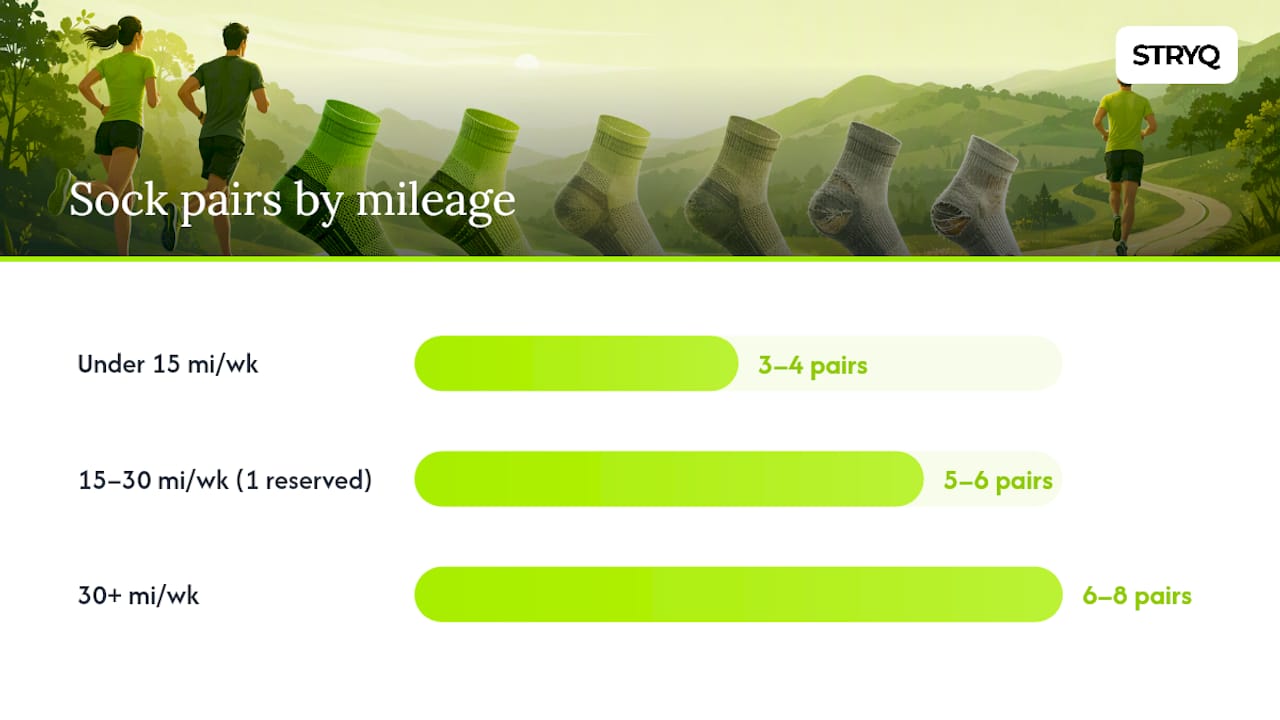
- Under 15 miles a week: three to four pairs in rotation is usually enough.
- 15 to 30 miles a week: aim for five to six pairs, with at least one reserved purely for long runs.
- 30 miles or more a week: six to eight pairs, replaced on a rolling basis as older ones fail inspection.
Before any key session or race, run the full inspection checklist on your reserved pair. Reserving a proven pair for long efforts rather than grabbing whatever’s clean is one of the simplest habits that separates runners who finish comfortably from those nursing blisters at mile 20. If a sign of wear turns up, even a small one, swap it out immediately rather than hoping it holds.
What to look for when buying replacements
Not all running socks age the same way, and the construction details you choose upfront do a lot of the durability work for you. Prioritise a few specific features:
- Reinforced heel and toe zones, where abrasion concentrates hardest and where thinning shows up first.
- Stronger nylon blends over pure cotton, since nylon resists abrasion and holds elastic recovery far longer through repeated wash cycles.
- Clean seam finishing, which reduces friction points that cause both blisters and premature fabric wear.
- Good cuff recovery straight out of the packet. A cuff that’s already loose new will only get worse with washing.
Match cushioning to purpose. A heavily cushioned sock suits long runs and recovery days, while a lower profile, snugger fit tends to perform better for tempo sessions and faster efforts where precision matters more than padding. Brand testing claims and warranties are worth a glance, but they’re no substitute for checking construction quality yourself and running your own condition checks once the pair is in regular use.
What Stryq looks for in sock construction
Stryq develops its running socks through repeated sample revisions shaped directly by feedback from UK runners logging real weekly mileage, not lab conditions alone. That process focuses on reinforcing high-abrasion zones at the heel and toe, balancing cushioning so it supports impact without adding bulk, and tuning fit so the cuff holds its recovery wash after wash. The practical takeaway for any runner buying new socks: look for reinforcement where you actually wear through fabric, not just marketing language about durability in general.
Why the mileage question is the wrong one to ask
Runners keep asking “how many miles should a sock last?” and it’s the wrong question. Mileage is a proxy for wear, not a measurement of it, and two runners covering identical distances can retire the same sock model at wildly different points depending on gait, sweat rate, shoe fit, and how often they rotate pairs.
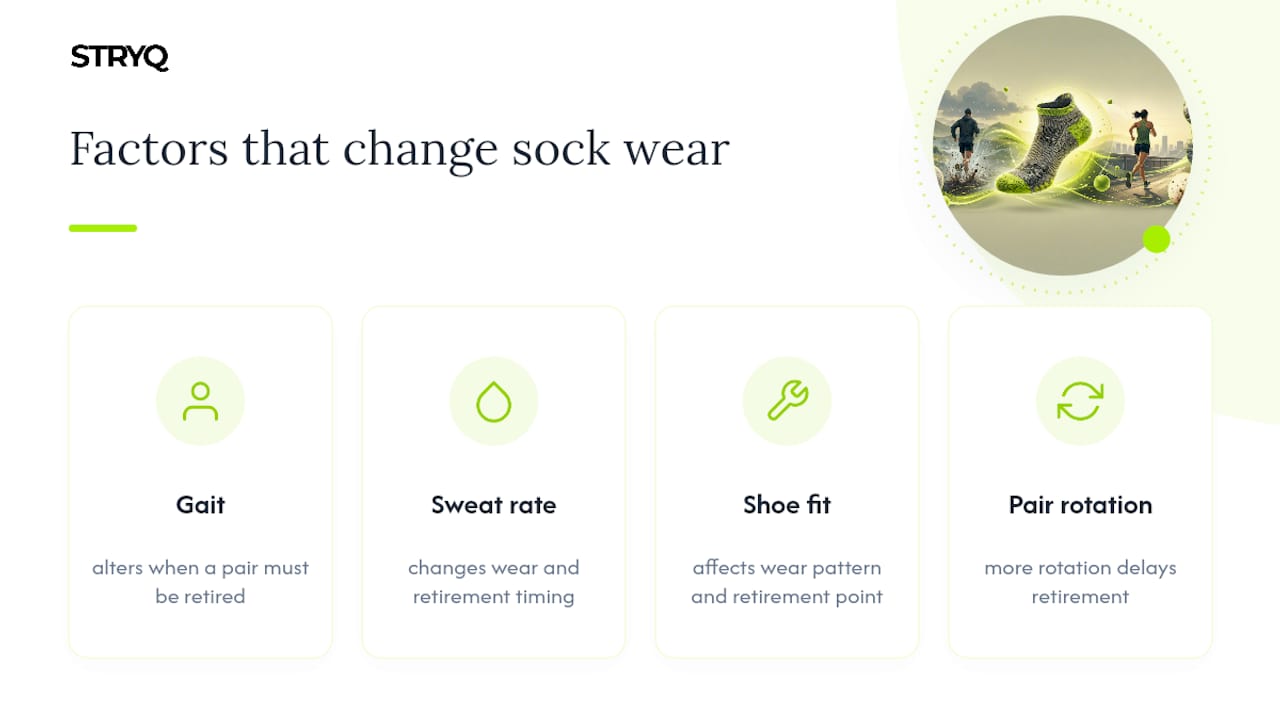
What the evidence actually supports is a shift in mindset: stop tracking sock age and start tracking sock condition. That’s a small change in habit, but it’s the one most runners skip because checking cushioning and cuff recovery takes thirty seconds and replacing on a vague “every few months” schedule takes none at all.
Where I think most advice falls short is treating race-day sock choice as an afterthought. Reserving a tested, newer pair for your longest and most important efforts deserves the same discipline runners already apply to shoe rotation. If you inspect nothing else before a race, inspect your socks. A worn shoe rarely ends a race in the first ten miles. A failing sock regularly does.
— martin
Where to find durable running socks
Some running socks are built specifically around the wear points covered above, with reinforced heel and toe zones, balanced cushioning, and a cuff designed to hold its recovery through repeated washing, rather than chasing the lowest possible price point.
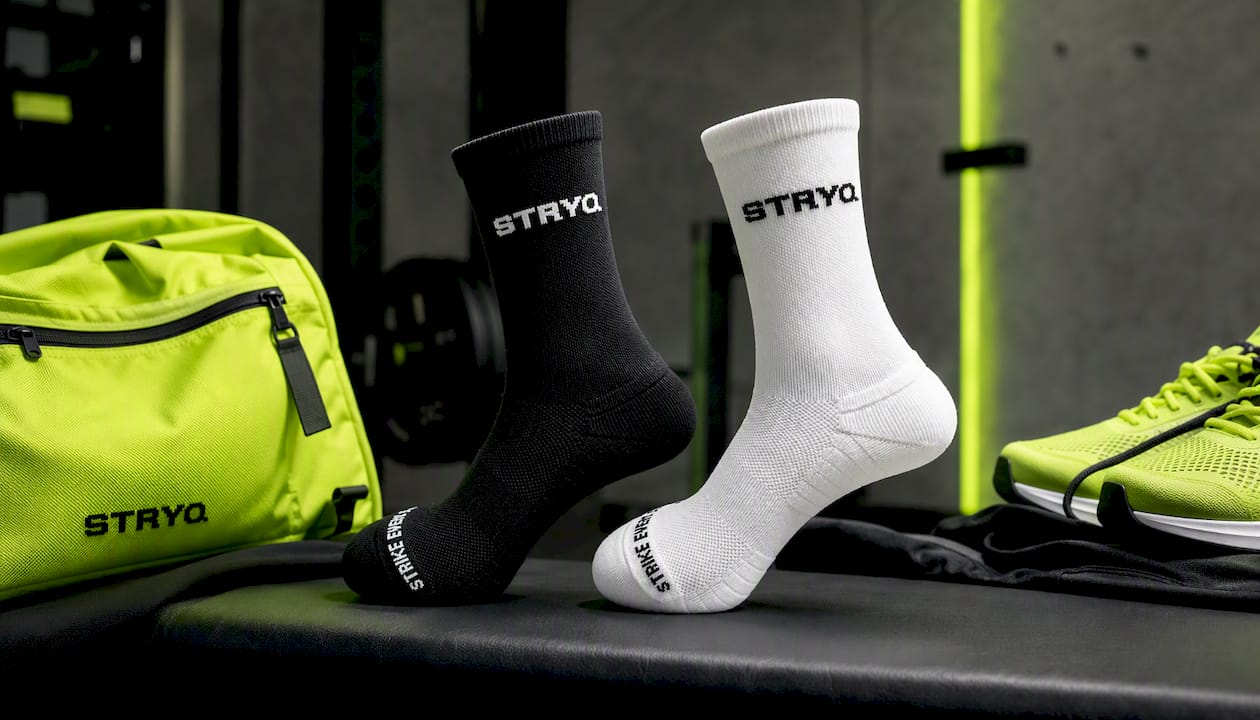
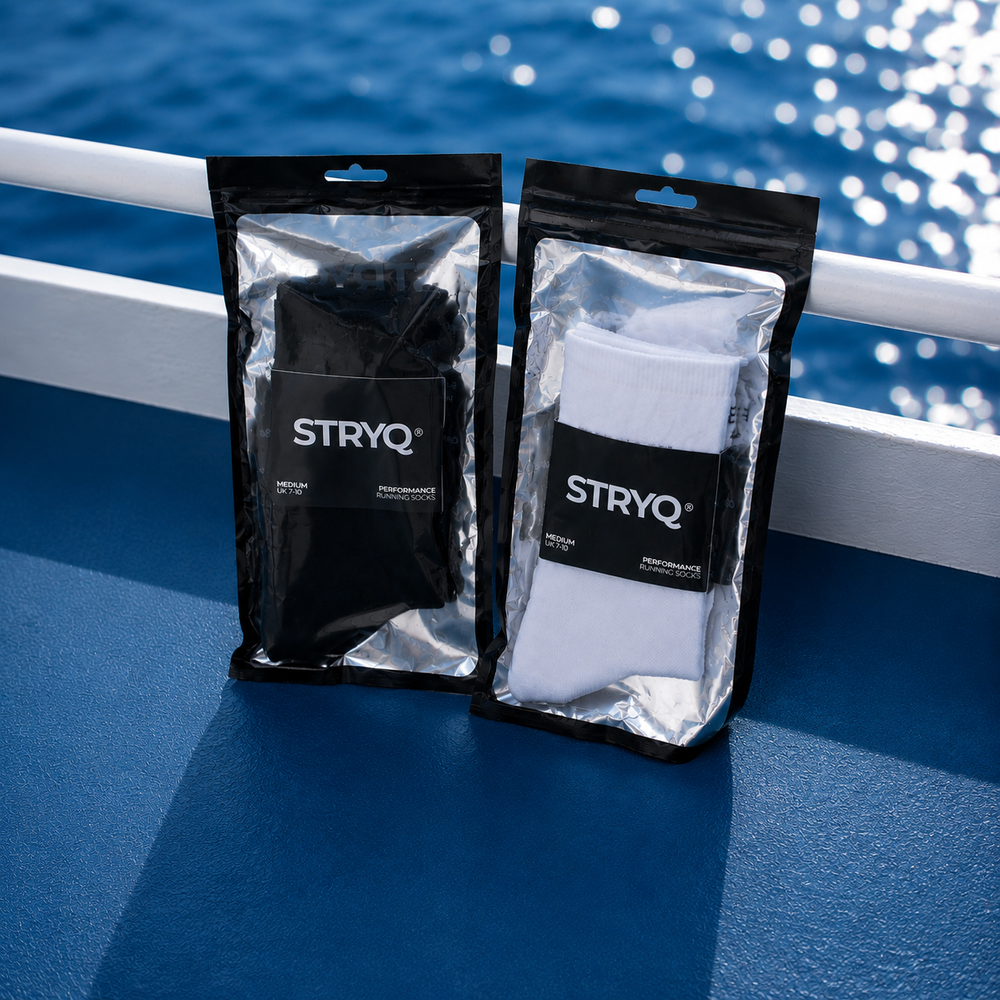
The STRYQ Running Socks in Black and STRYQ Running Socks in White are both priced at £17 a pair, built for arch support and cushioning across long runs and shorter sessions alike. If you’re building a proper rotation, browse the full running socks range to compare cushioning levels and pick pairs suited to both race day and recovery runs. Some running gear is developed and tested by UK runners rather than designed around marketing claims, which is exactly the condition-first approach this article has been advocating. Visit the range, check your current rotation against the inspection checklist above, and replace anything that’s already failing before your next long run.
Sources
FAQ
How long do running socks last?
Most performance running socks last somewhere between three and twelve months of regular use, depending on material, weekly mileage, and how well they’re cared for. Condition, not a fixed date, tells you when a pair is actually done.
How often should I replace my running socks?
Replace socks as soon as they show thinning, flattened cushioning, loose elastic, or persistent odour, rather than on a fixed schedule. Check your rotation every few weeks and swap out any pair that fails the light and cuff recovery test.
How long can I wear the same pair of running socks?
A single pair should be worn once before washing, since sweat and compression during a run start breaking down cushioning and elastic immediately. Wearing running socks repeatedly without washing accelerates odour build up and fabric fatigue.
Are 10 year old running shoes still good, and does the same logic apply to socks?
No. Shoe foam and sock cushioning both degrade with age and use regardless of how they look externally, which is why ageing running shoes need replacing on a similar condition-first basis to socks rather than by calendar age alone.
Do Stryq running socks cost more than standard running socks?
Stryq Running Socks are priced at £17 a pair, positioned between budget marketplace options and expensive premium brands, with reinforced heel and toe zones built for durability.