If you're looking for the best running socks, you're already thinking beyond just your running shoes—and that's a smart move. While shoes often get all the attention, your socks are one of the few pieces of kit in direct contact with your feet for every single step. Over the course of a 5K, you'll take around 5,000 steps. During a marathon, that number climbs to well over 40,000. Choosing the wrong socks can quickly turn an enjoyable run into a painful experience.
Whether you're training for your first Couch to 5K, chasing a marathon personal best, or simply enjoying weekend parkruns, the right running socks help reduce blisters, improve comfort, regulate temperature and keep your feet feeling fresher for longer.
In this complete guide, you'll discover everything you need to know about choosing the right running socks, how they compare with normal sports socks, what materials actually perform best, and why serious runners rarely wear ordinary cotton socks anymore.
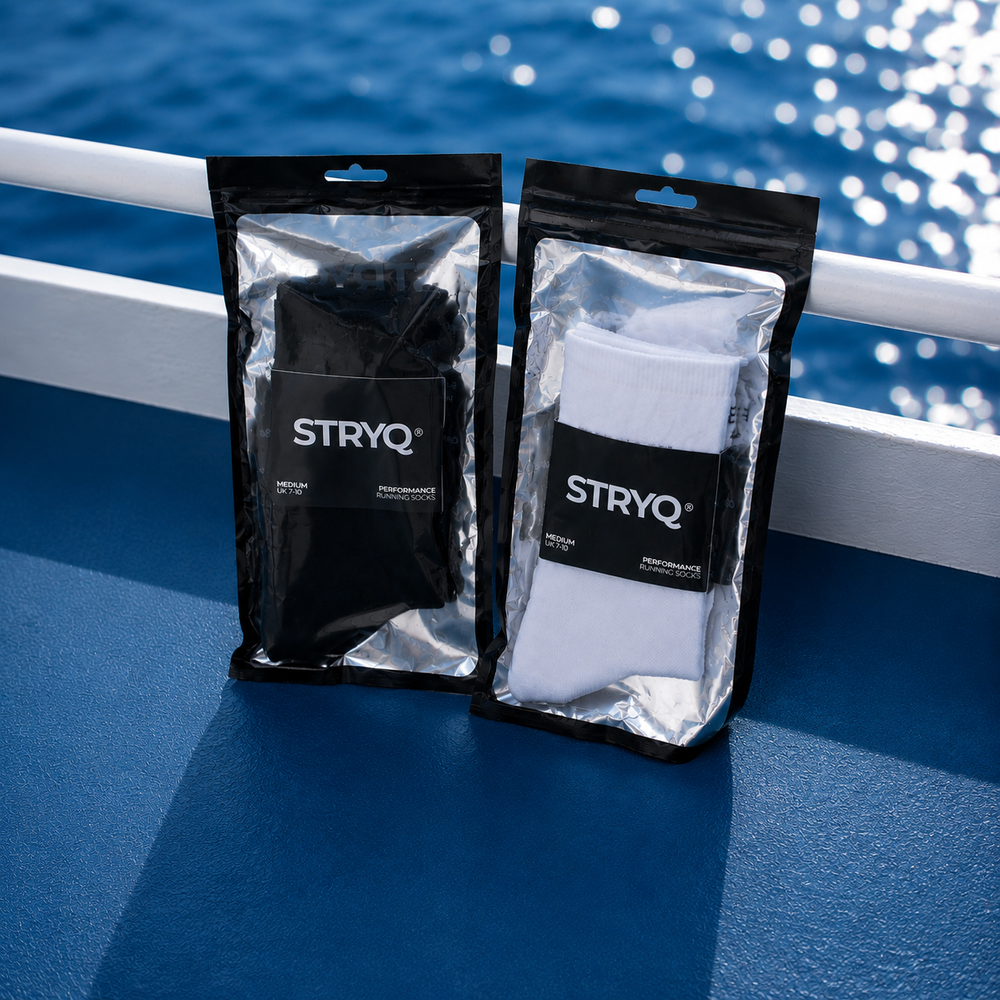
If you're ready to upgrade your running kit, explore the complete STRYQ Running Socks Collection, available in both Black Running Socks and White Running Socks.

Quick Answer: Are Running Socks Worth It?
Yes. Proper running socks are specifically designed to reduce friction, manage moisture, improve breathability and provide cushioning exactly where runners need it. Compared with ordinary sports socks, they dramatically reduce the chances of blisters and improve comfort over every distance.
- Reduce blister risk
- Keep feet cooler and drier
- Improve comfort on long runs
- Provide targeted cushioning
- Designed specifically for repetitive running movement
Why Running Socks Matter More Than Most Runners Think
Ask experienced runners what causes races to fall apart and very few will mention socks. Yet sore feet, hotspots and blisters regularly ruin races, particularly over longer distances.
The average runner sweats significantly through their feet during a run. When that moisture stays trapped inside ordinary socks it creates friction. Friction creates hotspots. Hotspots become blisters.
That entire chain can often be prevented simply by wearing proper running socks.
Unlike everyday socks, running socks are engineered around movement. They use technical fibres that move sweat away from the skin, breathable knitting patterns that improve airflow and reinforced zones around high-impact areas like the heel and forefoot.
The result isn't just comfort—it allows you to stay focused entirely on your running instead of constantly noticing your feet.
Running Socks vs Normal Socks
This is probably the biggest misconception among newer runners.
Many people believe any sports sock is good enough. While that may be true for walking or casual gym sessions, running creates thousands of repetitive impacts that expose weaknesses very quickly.
| Feature | Running Socks | Normal Sports Socks |
|---|---|---|
| Moisture management | Excellent | Average |
| Blister protection | High | Limited |
| Breathability | Engineered mesh zones | Basic knit |
| Cushion placement | Targeted | General |
| Durability | Designed for high mileage | Lower |
Over shorter distances you may never notice the difference.
Over 10K, half marathon and marathon distances, the difference becomes very obvious.
What Makes a Great Pair of Running Socks?
Not every pair marketed as running socks performs well. There are several key features you should look for before buying.
1. Moisture-Wicking Materials
Perhaps the most important feature.
Your feet naturally sweat while running. Good running socks pull that moisture away from your skin instead of absorbing it.
This helps reduce friction while keeping your feet feeling cooler.
2. Breathability
The best running socks use mesh ventilation panels across the top of the foot.
This increases airflow and helps regulate temperature during warmer runs.
3. Targeted Cushioning
More cushioning isn't always better.
Quality running socks place cushioning exactly where impact occurs:
- Heel
- Forefoot
- Toe box
This keeps weight low while improving comfort.
4. Secure Fit
Socks should never bunch up inside your shoe.
A secure anatomical fit prevents movement, reducing rubbing and improving stability.
5. Durable Construction
Running socks take a huge amount of punishment.
A runner covering 25 miles every week will easily exceed one million foot strikes in a year.
Good socks are designed to cope with that workload.
Best Materials for Running Socks
Material choice makes a huge difference.
Modern running socks rarely use traditional cotton because cotton absorbs moisture rather than moving it away.
Instead, technical blends dominate.
Nylon
Excellent durability, lightweight and dries quickly.
Spandex
Adds stretch and helps socks maintain their shape after repeated washing.
Elastane
Provides compression around the arch and ankle without feeling restrictive.
The STRYQ Running Socks use a carefully selected blend designed specifically for distance running, balancing comfort, breathability and durability.
Should You Wear Compression Running Socks?
Compression socks are often marketed as essential for runners, but they aren't always necessary.
For everyday training, most runners benefit more from high-quality performance socks than heavy compression.
Compression may help some runners during recovery or very long events, but for general running comfort, breathable technical socks remain the better all-round option.
Running Socks for Different Types of Runs
Different runs place different demands on your feet.
5K Runs
Lightweight socks prioritising breathability and minimal bulk work best.