Running Gels Explained: How and When to Use Gels for Running
Running gels are one of those things that seem slightly unnecessary until your runs start getting longer. For a short 5K, most runners will never think about them. Start training for a half marathon or marathon, though, and suddenly everyone seems to have gels stuffed into belts, pockets and running vests.
If you are new to them, the whole thing can feel more complicated than it needs to be. When should you take one? Do you actually need them? How many should you carry? Do you need water with them? And what exactly is inside a little packet that makes runners rely on them for long runs and races?
This guide explains gels for running from the ground up. No complicated nutrition jargon and no suggestion that every runner needs to spend a fortune on sports nutrition. The aim is simply to understand what running gels do, when they are useful and how to practise using them properly before race day.

What Are Running Gels?
Running gels are small packets of concentrated carbohydrate designed to give runners an easy way to take on energy while exercising.
They are popular because they are light, portable and quick to consume. Instead of trying to eat a sandwich halfway through a marathon, you can carry several gel packets and take them while moving.
Most energy gels for running provide somewhere around 20g to 45g of carbohydrate per serving, although the exact amount varies considerably between products.
That difference matters because two gels from different brands might look almost identical but provide very different amounts of carbohydrate.
For example, Veloforte currently has standard gels around the 22g carbohydrate mark, while its Rosso energy gel provides 30g and its higher-carbohydrate Limon gel provides 45g.
That does not make one format better than another. It simply means you need to know what is actually inside the packet when planning how much fuel you are taking.
What Do Running Gels Actually Do?
The main job of a running gel is to provide carbohydrate during exercise.
Your body stores carbohydrate as glycogen in the muscles and liver. During prolonged running, those stores are gradually used as fuel. Taking carbohydrate during longer exercise provides another source of energy and helps maintain carbohydrate availability while you continue running.
This becomes increasingly relevant as the duration of the run increases.
That is why you see far more gels at marathons than you do at your local 5K.
Running Gels Are Fuel, Not a Magic Boost
A common mistake is waiting until you feel completely drained and then taking a gel expecting it to rescue the run instantly.
That is not really how good fuelling works.
The better approach is usually to start fuelling before you feel empty and then continue at sensible intervals throughout the run.
Think of it like topping up the tank rather than waiting until the car has stopped at the side of the road.
When Do You Need Running Gels?
You probably do not need a gel every time you put your trainers on.
For many shorter runs, your normal meals and stored carbohydrate will comfortably support the session.
Running gels start becoming more useful as exercise gets longer, particularly once sessions push beyond roughly an hour and especially during long endurance runs.
You Probably Do Not Need a Gel For:
- A short easy 5K.
- A 20 or 30-minute recovery run.
- A short treadmill session.
- Most brief low-intensity runs where you have eaten normally beforehand.
Running Gels May Be Useful For:
- Long runs lasting over an hour.
- Half marathon training.
- Marathon training.
- Marathons and other endurance races.
- Long trail or ultra-distance sessions.
- Hard sessions where carbohydrate demand is higher.
The exact point where you personally benefit depends on the session, your pre-run nutrition, pace, experience and overall fuelling strategy.
When Should You Take Running Gels?
There is no single timing rule that every runner must follow.
You will often hear runners say things like "take a gel every 30 minutes". That can be a useful reminder, but it ignores the fact that different gels contain different amounts of carbohydrate.
A 22g gel every 30 minutes provides around 44g of carbohydrate per hour. A 45g gel every 30 minutes provides around 90g.
Those are completely different fuelling strategies.
Instead of thinking only about the number of gels, think about how much carbohydrate you are consuming across the hour.
Start Before You Feel Empty
One mistake we see a lot with newer runners is leaving the first gel far too late.
If you are doing a long session where you know you will need fuel, it usually makes more sense to begin early rather than waiting until your energy has noticeably dropped.
Veloforte, for example, advises runners using its gels on longer sessions to begin fuelling early and then continue regularly, while its marathon training hub places the same emphasis on practising a consistent race-day strategy in training.
Should You Take a Gel Before Running?
You can, but it depends on the situation.
If you have eaten a proper meal or snack before your run, an additional gel may not be necessary.
If you are heading into a long or hard session and have not had much opportunity to eat beforehand, some runners use a gel shortly before starting as a convenient source of carbohydrate.
Again, this is something to test.
Do not suddenly decide at the start of a marathon that you are going to eat three gels before the gun because somebody on TikTok told you to.
How Much Carbohydrate Do Runners Need?
This is where things can get unnecessarily technical.
General sports-nutrition guidance commonly recommends carbohydrate during prolonged exercise, with around 30g to 60g per hour often suggested for exercise lasting roughly one to two and a half hours. Longer endurance events may involve higher carbohydrate intakes where they are appropriate and well tolerated.
That does not mean every runner should immediately aim for the highest number they can find online.
If you currently take no fuel at all, jumping straight to a very high carbohydrate intake can be a quick way to discover that your stomach has its own opinion on the matter.
Build gradually and test it.
Why Gel Size Matters
This is where newer high-carbohydrate gels become useful.
Veloforte's Rosso provides 30g of carbohydrate per packet, while Limon provides 45g.
For runners targeting higher carbohydrate intakes, larger servings can mean fewer packets to carry and open.
On the other hand, some runners prefer smaller gels taken more frequently.
Neither approach is automatically better. The right answer is the one that fits your stomach and your race plan.
Do You Need Water With Running Gels?
Sometimes.
This is product-specific, so always check the manufacturer instructions rather than assuming every gel works the same way.
Some isotonic or more fluid gels are designed to be taken without additional water. Other concentrated gels are intended to be taken alongside water.
Veloforte states that its energy gels can be taken without water, although taking small sips may make them easier to consume.
That does not mean the gel replaces your hydration.
It only means the product itself does not necessarily require water at the exact moment you take it.
Caffeinated vs Non-Caffeinated Running Gels
Some running gels contain caffeine and some do not.
Caffeine can be useful for endurance performance, but that does not mean every gel you carry needs caffeine.
The main thing is knowing how much you are consuming.
If you have a coffee before the race, then take several caffeinated gels without checking the label, your total intake can climb surprisingly quickly.
Some runners keep caffeinated gels for later in races. Others avoid them completely.
Whichever approach you choose, practise it first.
Why Running Gels Can Upset Your Stomach
This is probably the biggest concern runners have when they start experimenting with gels.
And yes, gels can cause stomach problems for some people.
Common complaints include:
- Bloating.
- Nausea.
- Stomach cramps.
- Feeling overly full.
- Needing the toilet urgently.
Sometimes the product simply does not suit you. Other times the problem is how the gel is being used.
Taking Too Much Too Quickly
If you suddenly throw a large amount of carbohydrate into your stomach while running hard, it may not react particularly well.
Increase your intake gradually across training.
Not Drinking Enough
If the manufacturer recommends taking the gel with water and you ignore that instruction, the concentrated carbohydrate may be harder to tolerate.
Trying Something New on Race Day
This one is completely avoidable.
Never make your marathon the first time you try a new gel.
The Veloforte marathon training hub makes the same point: race nutrition should be rehearsed during training so you know exactly what your stomach tolerates.
Train Your Gut Like You Train Your Legs
This phrase gets used a lot in endurance sport, but the idea is simple.
Your fuelling strategy is something you practise.
If you want to consume more carbohydrate during a marathon, gradually introduce that amount during your long runs rather than suddenly attempting it on race day.
Use training to work out:
- How much carbohydrate you tolerate.
- Which textures you prefer.
- Which flavours become unpleasant after several hours.
- Whether caffeine works for you.
- How often you prefer to fuel.
- How much water you need alongside your gels.
The Veloforte Perform hub also goes deeper into its approach to performance nutrition if you want to understand how gels fit into a broader fuelling strategy.

How to Carry Running Gels Comfortably
One gel is easy.
Five or six gels, a phone and keys are a completely different problem.
This is something people rarely think about until their long runs start reaching serious distance.
Trying to cram everything into shorts pockets can lead to bouncing, sagging and spending half your run wondering whether something is about to fall out.
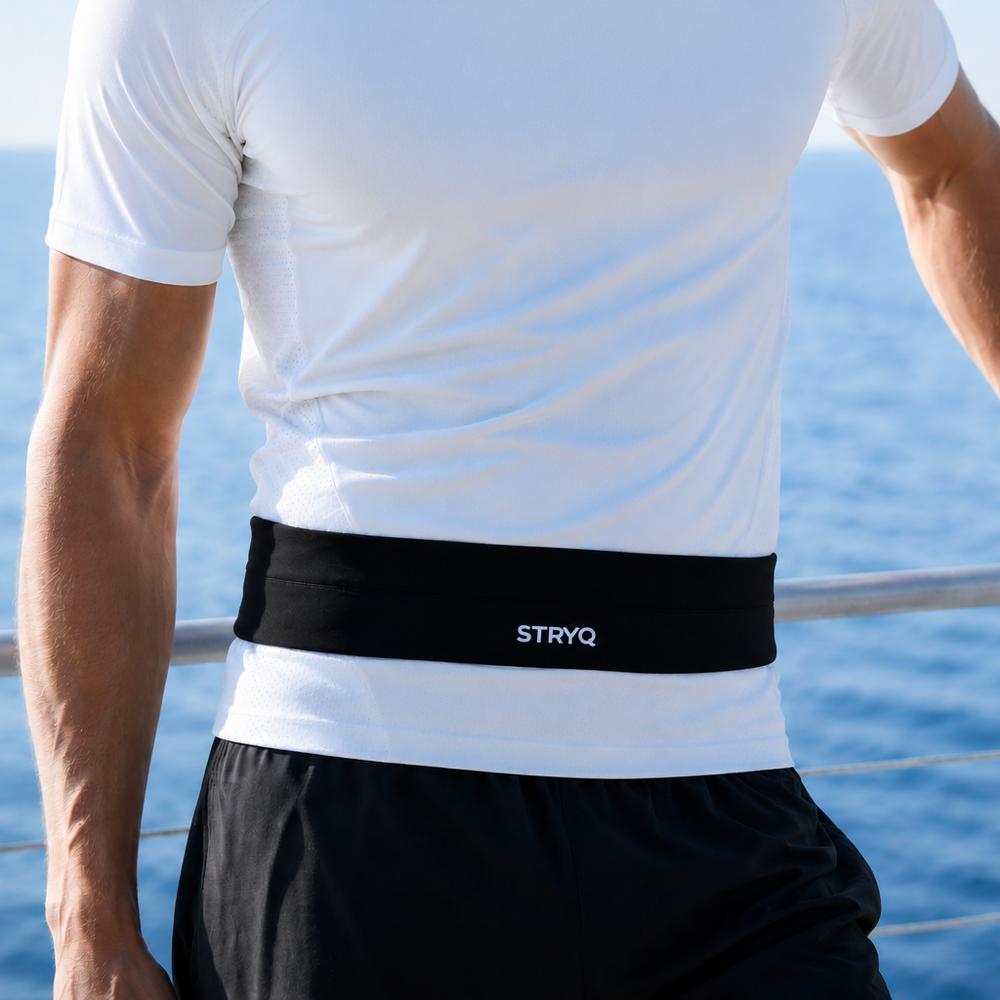
For runners carrying several gels, a running belt gives you a simple way to spread your nutrition around your waist while keeping your phone and keys secure.
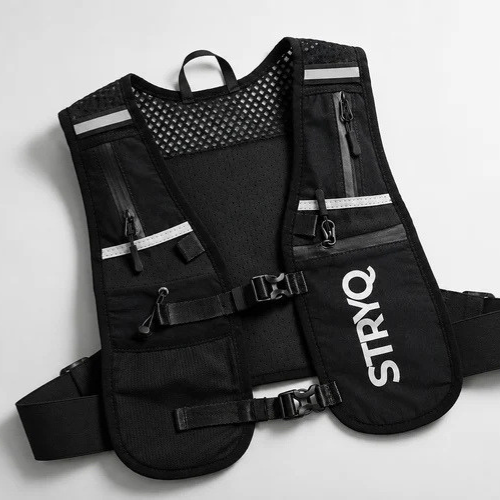
For longer unsupported sessions where you are also carrying water, extra layers or more food, a running vest can make more sense because it gives you significantly more storage.
Practise Carrying Them Too
Do not only practise eating gels.
Load your race kit properly on long runs.
Make sure you can:
- Reach the gel while running.
- Open it with sweaty hands.
- Put the empty wrapper somewhere afterwards.
- Tell caffeinated and non-caffeinated gels apart.
- Carry enough without your kit bouncing.
These things sound tiny until you are doing them at mile 20.
What Should You Do With Empty Gel Wrappers?
Keep them.
Do not drop gel wrappers on the road, trail or race course.
The easiest option is to fold the empty packet and put it back into your belt, vest or pocket until you reach a bin.
Packaging design is starting to improve too. Veloforte's Limon, for example, uses a tear-and-save top designed to keep the tab attached to the packet rather than leaving a small piece of plastic behind.
It is also worth checking your gel manufacturer's recycling policy rather than automatically putting used wrappers in general waste. Some brands now offer specialist recycling schemes for packaging that can be difficult to recycle through normal household collections. Veloforte offers a freepost return scheme for its used gel wrappers, while HIGH5 provides prepaid recycling envelopes with its gel products and Rawvelo operates its own freepost wrapper recycling scheme in partnership with First Mile.
Running Gels vs Chews and Bars
Gels are convenient, but they are not the only way to consume carbohydrate during running.
Energy Chews
Chews let you take smaller amounts at a time and can feel more like eating normal food.
They can work well on slower long runs where chewing is easy.
Energy Bars
Bars are more substantial and are often better suited to lower-intensity endurance sessions where you are comfortable chewing and digesting solid food.
For harder running, many runners prefer gels simply because they are quicker to consume.
Veloforte's broader running nutrition range includes gels alongside other formats, which is useful if you prefer mixing textures rather than eating the same thing for several hours.
Should You Use Gels During a Race?
If you have used them successfully in training and the race is long enough to benefit from fuelling, absolutely.
The important part is having a plan before the start.
Know:
- Which gels you are carrying.
- How much carbohydrate each one contains.
- Which contain caffeine.
- When you roughly plan to take them.
- Whether you need water alongside them.
And if the race supplies gels at aid stations, find out which ones.
If you have trained for four months with one product, grabbing a completely different gel from a race station at mile 18 is a gamble you do not need to take.
Should You Practise Using Running Gels Before Race Day?
Yes.
If there is one thing to take away from this entire guide, make it that.
Your long runs are not only training your legs and lungs. They are rehearsals for race day.
Test your shoes.
Test your clothing.
Test your pace.
And test your nutrition.
By race week, there should be very little left to guess.
Our Take on Running Gels
Running gels are not something every runner needs for every run.
But once your sessions become longer, they are one of the simplest ways to take on carbohydrate without carrying bulky food.
The important thing is to stop thinking of gels as an emergency fix.
Use them as part of a plan.
Start gradually.
Check how much carbohydrate is actually in the packet.
Pay attention to caffeine.
Follow the manufacturer's water instructions.
And above all, practise everything before race day.
FAQ
What do running gels do?
Running gels provide carbohydrate during exercise. They are commonly used during longer runs and endurance races where maintaining carbohydrate intake becomes more important.
When should I start using running gels?
They are generally more relevant during longer sessions rather than short runs. Many runners begin experimenting with fuelling once runs extend beyond roughly an hour.
How often should I take running gels?
Do not rely only on a fixed time interval. Check how much carbohydrate your gel provides and plan your total intake across the hour. Different gels can contain very different amounts.
Do I need running gels for a 5K?
Most runners do not need a gel during a 5K.
Do I need running gels for a half marathon?
That depends on your finishing time, pre-race nutrition and individual strategy. Many runners use gels during half marathons, but you should practise your approach during training.
Do I need running gels for a marathon?
Most marathon runners use some form of carbohydrate during the race. Gels are popular because they are easy to carry and consume, but other options such as drinks and chews can also form part of the strategy.
Can you take a running gel without water?
It depends on the product. Always check the manufacturer's instructions. Some gels are designed to be consumed without additional water, while others are intended to be taken alongside fluids.
Can running gels upset your stomach?
Yes. Individual tolerance varies, especially when runners consume unfamiliar products or suddenly increase carbohydrate intake. Build your strategy gradually during training.
Are caffeinated running gels better?
Not automatically. Caffeine may be useful for some runners, but it should be planned and tested rather than added randomly.
Are gels better than chews?
Neither is universally better. Gels are quick and easy to swallow, while chews allow smaller bites and a different texture. Personal preference matters.