Best Running Gels UK: 6 Leading Energy Gels Reviewed by STRYQ
Finding the best running gels sounds straightforward until you actually start using them.
On paper, most gels appear to do roughly the same job. They give you carbohydrate in a small packet that you can carry while running. But once you start taking them on long runs, half marathons and marathon training sessions, the differences become much more obvious.
Some are thick. Some are almost liquid. Some taste great for the first hour and become difficult to stomach later. Some need water. Some contain caffeine or electrolytes. Some use fairly conventional sports-nutrition ingredients, while others take a completely different approach.
And then there is probably the most important question of all: how does your stomach actually react to them while you are running?
That is why we wanted this to be more than another comparison based entirely on nutrition labels.
For this STRYQ review, we have compared six brands that UK runners are likely to come across when looking for running gels and energy gels for running:
- Veloforte
- Science in Sport (SiS)
- HIGH5
- Maurten
- GU
- TORQ
We have compared carbohydrate content, ingredients, sodium, caffeine options, consistency, packet size, whether water is required, how practical they are to carry and, importantly, what we actually think of them from a runner's point of view.
Our overall pick is Veloforte Rosso.
There are areas where other gels win. SiS is incredibly easy to consume if you prefer a thinner isotonic gel. HIGH5 makes a strong argument on price. Maurten has a completely different texture and neutral taste. GU offers huge flavour choice, while TORQ gives you plenty of carbohydrate from a single packet.
But Rosso was the gel that stood out most to us overall.
I personally found it gentle on my stomach compared with some gels I have used, I liked the raspberry flavour, and its combination of 30g carbohydrate and 150mg sodium suited what I want from a gel during longer efforts.
I am also someone who pays attention to cramp during longer runs, so having some sodium included within the gel was something I personally valued. That does not mean a gel containing sodium prevents cramp, because cramp is far more complicated than that, but from a practical fuelling point of view it was a feature I liked having.
There is also something genuinely different about Veloforte's approach to ingredients, which we will get into properly below. The comments about taste, texture and stomach comfort are based on our own experience, and where another gel has a particular advantage, we have said so.
Because ultimately the best running gel is not necessarily our favourite. It is the one that works with your stomach, your race distance and your fuelling strategy.
So use this guide to narrow down your options, then test your choices properly during training before trusting them on race day.
Best Running Gels UK: Our Quick Recommendations
If you do not want to read the entire comparison before deciding what to try, these are the gels we would look at first depending on what matters most to you.
- STRYQ's overall pick: Veloforte Rosso – our favourite balance of carbohydrate, sodium, compact size, ingredients, flavour and stomach comfort.
- Best for runners who prefer a thinner gel: SiS GO Isotonic – very easy to consume while moving and designed to be taken without additional water.
- Best value: HIGH5 Energy Gel – particularly attractive if marathon training means you are getting through a lot of gels every week.
- Best for a neutral taste: Maurten Gel 100 – useful for runners who become sick of strong, sweet flavours later in long events.
- Best for flavour choice: GU Original Energy Gel – loads of different flavours and a compact packet.
- Best alternative for higher carbohydrate per gel: TORQ Gel – around 30g carbohydrate from a standard packet makes fuelling maths straightforward.
We would still strongly recommend buying individual gels before committing to a full box.
A gel can have perfect nutritional numbers and still be completely wrong for you.
The real test is how it tastes and feels after an hour, two hours or three hours of running.
Best Running Gels Compared
Here is a quick comparison of the six options before we get into our individual reviews.
We have used representative products rather than cherry-picking whichever variant makes each brand look best. Most of these companies also offer alternative carbohydrate levels, caffeine options and flavours.
| Gel | Carbs | Calories | Pack Size | Sodium / Electrolytes | Caffeine Option? | Water? | STRYQ Take |
|---|---|---|---|---|---|---|---|
| Veloforte Rosso | 30g | 121 kcal | 45g | 150mg sodium | Other caffeinated Veloforte gels available | Not required | Our overall pick |
| SiS GO Isotonic | 22g | 87 kcal | 60ml | Varies by product | Yes | No additional water required | Excellent if you prefer a thinner gel |
| HIGH5 Energy Gel | Approx. 23g | Approx. 91 kcal | 40g | Product dependent | Options available | Hydration recommended | Strong value for regular training |
| Maurten Gel 100 | 25g | 100 kcal | 40g | Check individual product | Yes, Gel 100 CAF 100 | Not essential | Distinctive hydrogel texture and neutral taste |
| GU Original Energy Gel | Approx. 21–23g | Approx. 100 kcal | 32g | Varies by flavour | Yes, flavour dependent | Take with water | Huge flavour choice and compact packaging |
| TORQ Gel | Approx. 30g | Approx. 114 kcal | 45g | Varies by product | Selected flavours | Hydrate according to fuelling plan | Strong higher-carbohydrate option |
Nutritional information and formulations can vary between flavours and product variants and manufacturers can update recipes. Always check the individual packet or manufacturer's current information before building a product into your race nutrition strategy.
Our Favourite: Veloforte Rosso Natural Energy Gel
Let's start with the gel we would personally choose from this comparison.
Veloforte Rosso Natural Energy Gel was the standout for us because it managed to tick several boxes at once without feeling like it was trying too hard to be a traditional sports gel.
Each 45g packet provides 30g carbohydrate, 121 kcal and 150mg sodium.
That 30g carbohydrate serving immediately makes Rosso interesting for longer-distance running because it gives you a useful amount of carbohydrate without requiring an enormous packet.
But the nutritional numbers were not actually what made it our favourite.
It was how easy I found it to use.
Rosso Felt Gentler on My Stomach
This was probably the biggest thing for me personally.
I have used gels before where the first one is absolutely fine, the second becomes less enjoyable and by the time you are several hours into a run you really do not want another one anywhere near you.
Rosso felt much gentler on my stomach.
That is obviously personal experience rather than a guarantee that everybody will react the same way. Stomach tolerance is incredibly individual, which is exactly why runners should test nutrition during training.
But when we are recommending a gel, stomach comfort matters enormously.
A gel could theoretically have the perfect carbohydrate profile, but if you dread taking it or it leaves your stomach feeling rough, none of that matters.
For me, Rosso was one I would happily take again.
We Liked Having 150mg Sodium Built In
Rosso also provides 150mg sodium per gel.
I am someone who becomes conscious of cramp on longer efforts, so having sodium included alongside the carbohydrate was a feature I personally liked.
We need to be careful not to oversimplify this. Exercise-associated muscle cramp has multiple possible contributing factors and eating a gel containing sodium does not suddenly make you immune to cramp.
But runners still need to think about hydration and electrolyte intake across longer events, particularly depending on conditions, duration and individual sweat losses.
From my perspective, having a sodium contribution already built into something I was taking for carbohydrate anyway made Rosso a useful part of the wider fuelling setup.
The Ingredients Are Genuinely Different
This is probably where Veloforte energy gels separate themselves most clearly from several traditional sports gels.
Rosso uses ingredients including unrefined brown rice syrup, concentrated apple, raspberry and date juices, maple syrup, cinnamon extract and pink Himalayan salt.
It does not use maltodextrin.
Compare that with products such as SiS, HIGH5, GU and TORQ, where maltodextrin or other conventional sports-nutrition carbohydrate sources feature prominently, and Veloforte is clearly taking a different approach.
That does not mean a natural-sounding ingredient list automatically makes a gel perform better.
We would actually be suspicious of anyone making that claim.
What it does mean is that runners who care about what goes into their sports nutrition have an option that looks quite different when they turn the packet over.
For us, the combination of that ingredient approach with the fact that Rosso actually tasted good and sat well on the stomach was much more meaningful than simply being able to say the ingredients sounded nicer.
What Does Veloforte Rosso Taste Like?
Rosso is raspberry based, and this was another area where we liked it.
One of the problems with running nutrition is flavour fatigue.
A really sweet gel might taste brilliant when you try one before a run. Try eating several sweet products over three or four hours and your opinion can change dramatically.
We found Rosso much easier to take than some of the aggressively sweet gels we have used.
Again, flavour is completely subjective. Someone else might prefer cola, citrus or something almost flavourless.
But if you tend to struggle with very artificial or overly sweet gels, Rosso is one we think is worth trying.
Rosso Is Compact Enough for Race Day
Packet size becomes much more important as distances increase.
If you are carrying one gel for a run, almost anything works.
If you are carrying five or six gels, a phone, keys and perhaps other nutrition, suddenly every bit of space matters.
Rosso comes in a 45g packet while still providing 30g carbohydrate.
That is one reason we think it works particularly well as a potential marathon gel.
You can get a meaningful amount of carbohydrate into a relatively compact format rather than carrying lots of low-carbohydrate packets.
If you are carrying several gels, storing them securely also matters. A running belt can be much more practical than stuffing multiple packets into shorts pockets alongside your phone and keys.
Who Would We Recommend Veloforte Rosso To?
- Runners wanting around 30g carbohydrate from a single gel.
- Half marathon and marathon runners developing a structured fuelling plan.
- Runners who value having sodium included within their gel.
- Anyone who finds some traditional gels difficult on the stomach.
- Runners who dislike very artificial or aggressively sweet flavours.
- People who pay closer attention to ingredient lists.
- Runners who want a compact higher-carbohydrate gel for long runs and races.
We would still recommend trying one before buying a large quantity.
Our stomach is not your stomach.
But based on our experience, Rosso is the gel we would personally choose first from the six brands in this comparison.
You can see the individual product here: Veloforte Rosso Natural Energy Gel.
Veloforte Has More Than One Type of Running Gel
Another thing we think Veloforte gets right is not treating every run as though it requires exactly the same gel.
The wider Veloforte energy gel collection includes different carbohydrate and caffeine options, which means runners can potentially adjust their nutrition around the session rather than simply changing flavours.
Veloforte Limon: The 45g High-Carbohydrate Option
If Rosso's 30g carbohydrate is not enough for what you are trying to achieve, Veloforte Limon takes things considerably further with 45g carbohydrate per gel.
That is particularly interesting as runners increasingly think about fuelling in terms of grams of carbohydrate per hour rather than simply counting how many gel packets they have consumed.
A higher-carbohydrate gel can potentially mean fewer packets to carry to reach the same overall carbohydrate intake.
That does not automatically mean everybody should choose the biggest serving possible. Some runners prefer smaller servings taken more frequently.
Again, training is where you work that out.
Veloforte Tempo: A Smaller 22g Option
Tempo sits at the other end of the range with around 22g carbohydrate.
That can make sense when you want smaller amounts more frequently rather than a larger hit from one packet.
It also demonstrates why comparing brands purely on one product can be misleading.
Veloforte now gives runners options ranging from smaller servings through Rosso and into higher-carbohydrate products such as Limon.
What About Caffeine?
Veloforte also offers caffeinated gels within the wider range, including Doppio and Desto.
That means you can potentially use non-caffeinated fuel earlier in a race and introduce caffeine later without needing to switch to an entirely different style of gel.
If you use caffeine, though, keep track of it.
Do not forget about the coffee you had before the race, caffeinated drinks or any other caffeine sources you are consuming.
If you want to compare the formats rather than jumping straight into Rosso, browse the full Veloforte energy gel range.
SiS GO Isotonic Energy Gel Review
Science in Sport is probably one of the most familiar running gel brands in the UK.
You see SiS gels in running shops, at race expos and in plenty of runners' marathon kit.
And there is a reason they remain popular.
SiS GO Isotonic is incredibly straightforward to consume.
A standard 60ml serving provides around 22g carbohydrate and 87 kcal, with maltodextrin as the primary carbohydrate source.
But the biggest difference is not the carbohydrate.
It is the consistency.
SiS Is Much Thinner Than a Traditional Gel
SiS GO Isotonic is considerably more fluid than many conventional running gels.
If you have ever tried forcing down a thick, sticky gel while breathing hard during a race, you will immediately understand why this matters.
The thinner consistency makes SiS one of the easiest gels in this comparison to consume while moving.
It is also designed to be taken without additional water.
That gives you more freedom around when you fuel rather than having to perfectly match every gel with a water station.
Where We Think SiS Beats Veloforte
If your number-one priority is simply finding the thinnest, easiest gel to swallow, we would probably point you towards SiS GO Isotonic before Rosso.
That is exactly why this comparison should not pretend Veloforte wins absolutely everything.
SiS has nailed this particular format.
For runners trying gels for the first time, particularly anyone who dislikes thick textures, it is a very sensible place to start.
The Downside Is Size
The trade-off for that thinner consistency is a larger packet.
One SiS gel is easy to carry.
Five or six of them are noticeably bulkier.
That may not matter during a shorter event, but it becomes more relevant when you are carrying your own nutrition for a marathon.
Who Is SiS GO Isotonic Best For?
- Runners who hate thick gels.
- Beginners trying energy gels for the first time.
- Runners who want a gel that does not require additional water.
- People who value widespread UK availability.
- Shorter events where packet bulk is less important.
We would still happily recommend SiS.
It did not replace Rosso as our overall favourite, but if texture is the thing that normally puts you off gels for running, SiS deserves to be high on your shortlist.
HIGH5 Energy Gel Review
HIGH5 makes a very strong case for runners who need to think about something that premium sports nutrition sometimes ignores: cost.
A standard HIGH5 Energy Gel provides roughly 23g carbohydrate and around 91 kcal, although exact values depend on the particular product and flavour.
It uses a more conventional sports-nutrition formulation, with glucose syrup and maltodextrin featuring prominently in products we researched.
The consistency is relatively light and the range includes several flavour and caffeine options.
HIGH5 Makes Sense During a Big Training Block
One expensive gel does not matter much.
Buying gels every week for a four-month marathon block does.
Imagine you are testing race nutrition every weekend and using three, four or five gels on your longer sessions.
The difference between a budget-friendly gel and a premium option starts adding up very quickly.
That is where HIGH5 becomes difficult to ignore.
If it works well with your stomach, there is absolutely nothing wrong with deciding that value matters.
Paying more does not automatically make you a better runner.
Where HIGH5 Makes Most Sense
- Runners who want good value.
- Marathon runners using lots of gels throughout training.
- People who prefer familiar fruit flavours.
- Runners wanting roughly 23g carbohydrate per serving.
- Anyone who has already tested HIGH5 successfully and sees no reason to spend more.
Compared with Veloforte, HIGH5 does not have the same distinctive ingredient story, and Rosso's 30g carbohydrate serving gives you more carbohydrate per packet than the standard HIGH5 gel considered here.
But if your stomach likes HIGH5 and you are buying large quantities, the value argument is difficult to dismiss.
Maurten Gel 100 Review
Maurten is probably the product in this comparison that you most need to try for yourself.
The reason is simple.
The texture is completely different.
Maurten Gel 100 uses the company's hydrogel format and feels much closer to a soft jelly than the syrup-like consistency many runners associate with energy gels.
Each 40g packet provides 25g carbohydrate and 100 kcal using glucose and fructose.
It also has a remarkably short ingredient list compared with many sports nutrition products.
The Neutral Taste Is Maurten's Big Strength
There are no big fruit or dessert flavours here.
Maurten is deliberately much more neutral.
That can be a massive positive during a marathon.
Sweetness fatigue is real. Something that tastes brilliant at mile five can become absolutely revolting at mile twenty.
If you know you become sick of strong flavours, Maurten deserves serious consideration.
But You Need to Like the Texture
This is where opinions split.
Some runners absolutely love the hydrogel texture.
Others try it once and know immediately that it is not for them.
Neither group is wrong.
This is precisely why we would never recommend buying a box of unfamiliar gels based purely on somebody else's review.
Maurten Gel 100 CAF 100
Maurten also offers Gel 100 CAF 100, which retains the 25g carbohydrate serving while adding 100mg caffeine.
That is a meaningful amount of caffeine.
We would therefore treat it as part of a planned race strategy rather than simply thinking of it as another flavour.
Who Is Maurten Best For?
- Runners who become sick of strong sweet flavours.
- Those who enjoy the hydrogel consistency.
- Marathon runners developing a structured carbohydrate strategy.
- Runners who want a 25g carbohydrate serving.
- Those willing to pay more for a format they know works for them.
Would we choose it over Rosso?
Personally, no. We preferred Rosso's flavour and I preferred how Rosso felt on my stomach.
But if you hate traditional sweet gels and love Maurten's hydrogel texture, your answer could easily be the opposite.
GU Original Energy Gel Review
GU is another brand that has been around long enough that most runners will have either tried one or seen them at races.
The standard GU Original Energy Gel generally provides around 21–23g carbohydrate and approximately 100 calories per packet, although the exact nutritional profile varies by flavour.
GU uses maltodextrin and fructose as carbohydrate sources, and one of the biggest advantages of the range is choice.
There are loads of flavours, from relatively straightforward fruit options through to much sweeter dessert-style flavours, and caffeine content varies across the range.
GU Wins on Flavour Choice
If you get bored easily with your race nutrition, GU probably offers more variety than anything else in this comparison.
That can sound trivial, but over marathon training it really is not.
When you are taking gels every weekend, eating exactly the same flavour repeatedly can become tiring very quickly.
Being able to rotate flavours can make fuelling considerably more tolerable.
GU Has a Thicker Consistency
GU is much closer to what most people picture when they hear the words "energy gel".
It is thicker and more concentrated than something like SiS GO Isotonic.
Some runners like that because the packet is compact and you are not carrying as much liquid.
Others find thick gels harder to consume when breathing heavily.
GU recommends taking its gels with water, and we think that is important when comparing it with products designed to be consumed without additional fluid.
That can influence when you take one during a race.
If you are relying on aid stations for water, it makes sense to time your gel around them rather than taking one randomly between stations.
Watch the Caffeine
Some GU flavours contain caffeine while others do not.
That gives runners flexibility, but it also means you should actually read the packet rather than assuming every flavour is nutritionally identical.
If you are mixing caffeinated gels with coffee, energy drinks or other caffeinated sports nutrition, keep track of your overall intake.
Who Is GU Original Best For?
- Runners who want plenty of flavour choice.
- Those who prefer compact packets.
- Runners already comfortable taking thicker gels with water.
- People who want both caffeinated and non-caffeinated options.
- Anyone who likes rotating flavours during a long training block.
GU would not be our first recommendation for somebody who already knows they struggle with thick gels.
But if you like the consistency, the sheer amount of choice is a genuine advantage.
TORQ Gel Review
TORQ is another strong option for runners looking for more carbohydrate from each packet.
A standard TORQ Gel provides roughly 30g carbohydrate in a 45g packet, putting it much closer to Veloforte Rosso in terms of carbohydrate per gel than the standard SiS, HIGH5 or GU options in this comparison.
TORQ uses a maltodextrin and fructose carbohydrate blend and offers a wide selection of flavours, with caffeine available in selected products.
30g of Carbohydrate Makes the Maths Easy
This is probably TORQ's biggest practical strength.
Once you start planning nutrition around carbohydrate per hour rather than simply saying "I'll take a gel every now and again", a 30g serving is incredibly easy to work with.
For example, two 30g gels provide 60g carbohydrate.
That does not mean every runner should automatically consume two TORQ gels every hour. Your complete fuelling strategy could also include carbohydrate drinks, chews, bars or other foods.
But from a planning point of view, 30g packets make the calculations straightforward.
TORQ vs Veloforte Rosso
This is actually one of the more interesting comparisons in the article because both provide around 30g carbohydrate from similarly sized packets.
If we were choosing between the two, we would personally take Rosso.
We preferred Rosso's raspberry flavour, its ingredient profile was more interesting to us, it includes 150mg sodium, and most importantly I found it particularly comfortable on my stomach.
But TORQ remains a very credible alternative if you already know its carbohydrate formulation and flavours work well for you.
Who Is TORQ Best For?
- Runners wanting around 30g carbohydrate per packet.
- Marathon runners who want straightforward fuelling calculations.
- Runners who like a wide range of flavours.
- Those comfortable with a maltodextrin and fructose formulation.
- Runners who want caffeinated options within the same wider range.
Which Running Gel Is Best? Our Category Winners
After comparing all six, we do not think simply ranking them from one to six is particularly useful.
Different gels solve different problems.
Instead, these are the products we would choose for the most common situations.
Best Running Gel Overall: Veloforte Rosso
Our choice: Veloforte Rosso.
This was the one we personally came away wanting to use again.
We liked the 30g carbohydrate serving, 150mg sodium, compact 45g packet and the fact that the ingredient list genuinely differs from many traditional sports gels.
But ultimately our recommendation came down to something much simpler.
It worked well for me while running.
The raspberry flavour was easy to take, it did not feel excessively sweet and I found it gentler on my stomach than some other gels I have used.
That personal experience matters more to us than simply declaring a winner from a spreadsheet.
You can see it here: Veloforte Rosso Natural Energy Gel.
Best Running Gel for Easy Consumption: SiS GO Isotonic
If you struggle to swallow thick gels while running, SiS would be our first alternative.
Its thinner isotonic consistency makes it incredibly easy to consume, and the ability to take it without additional water is useful during races.
The compromise is that the packets are larger and provide less carbohydrate than some more concentrated options.
Best Value Running Gel: HIGH5
Marathon training can become expensive quickly.
If HIGH5 works with your stomach, buying a reasonably priced gel that you can practise with throughout training is arguably more useful than buying an expensive gel you are reluctant to use until race day.
Consistency in training wins.
Best Running Gel for Neutral Flavour: Maurten Gel 100
Maurten is the one we would look at if strong flavours become unbearable during longer races.
The hydrogel texture will divide opinion, but its relatively neutral taste can become increasingly appealing as the hours pass.
Best Running Gel for Flavour Variety: GU Original
GU wins this category comfortably.
If you need variety to stop flavour fatigue during marathon training, the range gives you plenty to experiment with.
Best Alternative 30g Gel: TORQ
TORQ is a strong option if you want around 30g carbohydrate from each packet but prefer a more conventional sports-gel formulation.
The serving size also makes carbohydrate calculations particularly easy.
Best High-Carbohydrate Option: Veloforte Limon
This is where the wider Veloforte range gets particularly interesting.
Veloforte Limon provides 45g carbohydrate per gel.
For runners building higher-carbohydrate fuelling strategies, that can reduce the number of packets required compared with gels containing around 20–25g.
That does not automatically make 45g better. Some runners will prefer smaller servings more frequently, and anything you intend to use during a race should be tested properly in training.
But it gives Veloforte something meaningfully different within its energy gel collection.
What Should You Look for in the Best Running Gels?
There is a danger with running nutrition reviews that everything becomes about which packet contains the biggest number.
Real-world fuelling is more complicated.
We would look at six things before choosing a gel.
1. Carbohydrate Per Gel
Carbohydrate is the main reason you are taking an energy gel.
The products in this comparison range from roughly the low 20s to 30g carbohydrate per standard serving, while higher-carbohydrate options such as Veloforte Limon go considerably higher.
This matters because runners increasingly plan fuelling around grams of carbohydrate per hour rather than simply counting packets.
A 20g gel and a 45g gel are not interchangeable just because both are called energy gels.
Look at the actual nutrition information.
2. Carbohydrate Sources
Different manufacturers use different carbohydrate formulations.
Maltodextrin, glucose, fructose, syrups and fruit-derived carbohydrate all appear across the products we researched.
Veloforte takes a particularly distinctive approach here, using ingredients such as brown rice syrup, fruit juices, maple syrup and dates across products within its range.
You can explore the wider approach through Veloforte's performance nutrition information.
Do not assume that an ingredient sounding more natural automatically means your body will tolerate it better.
Your stomach gets the final vote.
3. Texture
This is massively underestimated.
SiS is thin and fluid.
GU is considerably thicker.
Maurten feels more like a jelly.
Veloforte sits somewhere closer to a traditional gel but with its own consistency.
None is objectively correct.
The only way to know what you prefer is to try them while actually running.
4. Water Requirements
Some gels are designed to be taken without additional water, while manufacturers recommend water alongside others.
That can completely change how convenient a product feels during a race.
If your gel needs water and aid stations are every few miles, your fuelling strategy should account for that.
Do not wait until race morning to discover this.
5. Caffeine
Caffeine can be useful within endurance nutrition strategies, but more is not automatically better.
Some ranges include both caffeinated and non-caffeinated gels, which makes it easier to control when caffeine enters your race plan.
Always check individual packets because caffeine content can vary between flavours within the same brand.
6. Stomach Tolerance
This is our biggest one.
You can analyse carbohydrate ratios and ingredients for hours, but none of it matters if the gel makes your stomach feel awful after 15 miles.
This is also why our recommendation of Rosso is personal rather than pretending to be universal.
I found Rosso particularly gentle on my stomach.
Another runner could respond differently.
Practise your nutrition on the long runs where you can actually discover what happens after several servings.
What Are the Best Gels for Marathon Running?
If you are specifically looking for the best gels for marathon training or race day, the answer becomes slightly different.
A marathon gel needs to do more than taste nice when you try one at home.
You need to consider:
- How much carbohydrate each packet provides.
- How many packets your strategy requires.
- Whether you can physically carry them all.
- Whether they require water.
- Whether they contain caffeine.
- Whether they still taste acceptable several hours into the race.
- Most importantly, whether your stomach tolerates repeated servings.
This is another reason Rosso stood out to us.
A 30g carbohydrate serving gives you a useful amount of fuel from a 45g packet, while the 150mg sodium was an additional feature I personally valued during longer efforts.
Veloforte's higher-carbohydrate Limon also becomes interesting when you start calculating how much fuel you physically need to carry.
For runners specifically building towards 26.2 miles, Veloforte also has a dedicated marathon training and fuelling hub covering its approach to marathon nutrition and recovery.
The most important rule, regardless of brand, is simple:
nothing new on race day.
Your long runs are where your marathon fuelling strategy gets tested.
What Is the Best Gel for a Half Marathon?
Half-marathon fuelling varies considerably because finishing times vary considerably.
A runner finishing close to 90 minutes is dealing with a very different fuelling problem from somebody who will be running for two and a half or three hours.
Do not blindly copy the person next to you.
Work out your expected duration, consider your complete carbohydrate intake and practise the strategy beforehand.
For a runner who does use gels during a half marathon, compact packets are particularly convenient because you may only need to carry a relatively small number.
Rosso's 30g serving works nicely in that situation for us, but SiS may be preferable if you value fluid consistency above packet size.
Running Gels for Sensitive Stomachs
We need to be careful with the phrase "sensitive stomach".
No gel can guarantee that it will not cause gastrointestinal problems.
What works perfectly for one runner can be a disaster for another.
But if stomach problems are something you have experienced before, we would pay particular attention to:
- Serving size.
- Carbohydrate concentration.
- Ingredients.
- Whether the gel should be taken with water.
- How frequently you are taking it.
- What else you are eating or drinking.
- How hard you are running.
This was one of the biggest reasons Rosso won our personal recommendation.
I found it noticeably gentle on my stomach compared with some other gels I have used.
That is an experience, not a medical claim.
If you regularly suffer significant gastrointestinal problems during exercise, it is worth looking at your whole nutrition strategy rather than assuming changing one gel will automatically fix everything.
How Many Running Gels Should You Carry?
This is where runners often make the mistake of thinking in packets rather than carbohydrate.
Five gels tells us very little if we do not know how much carbohydrate each contains.
Five 20g gels provide 100g carbohydrate.
Five 30g gels provide 150g.
Five 45g gels provide 225g.
That is an enormous difference.
Your gel requirements therefore depend on your expected race duration, the carbohydrate content of the product and whatever else you are consuming.
We have a separate guide dedicated to calculating how many gels you need for a marathon or half marathon, rather than trying to squeeze that entire subject into this comparison.
The important point here is to read the packet rather than assuming every gel is nutritionally interchangeable.
How Do You Carry Running Gels?
Once you have worked out what you are taking, there is a much more practical question:
Where are you actually putting all of it?
For a short run with one gel, a shorts pocket might be completely adequate.
For marathon training, things quickly become messier.
You might have:
- Four, five or six gels.
- Your phone.
- House or car keys.
- Earbuds.
- Other nutrition.
- Possibly hydration.
Trying to squeeze all of that into your shorts is not particularly comfortable.
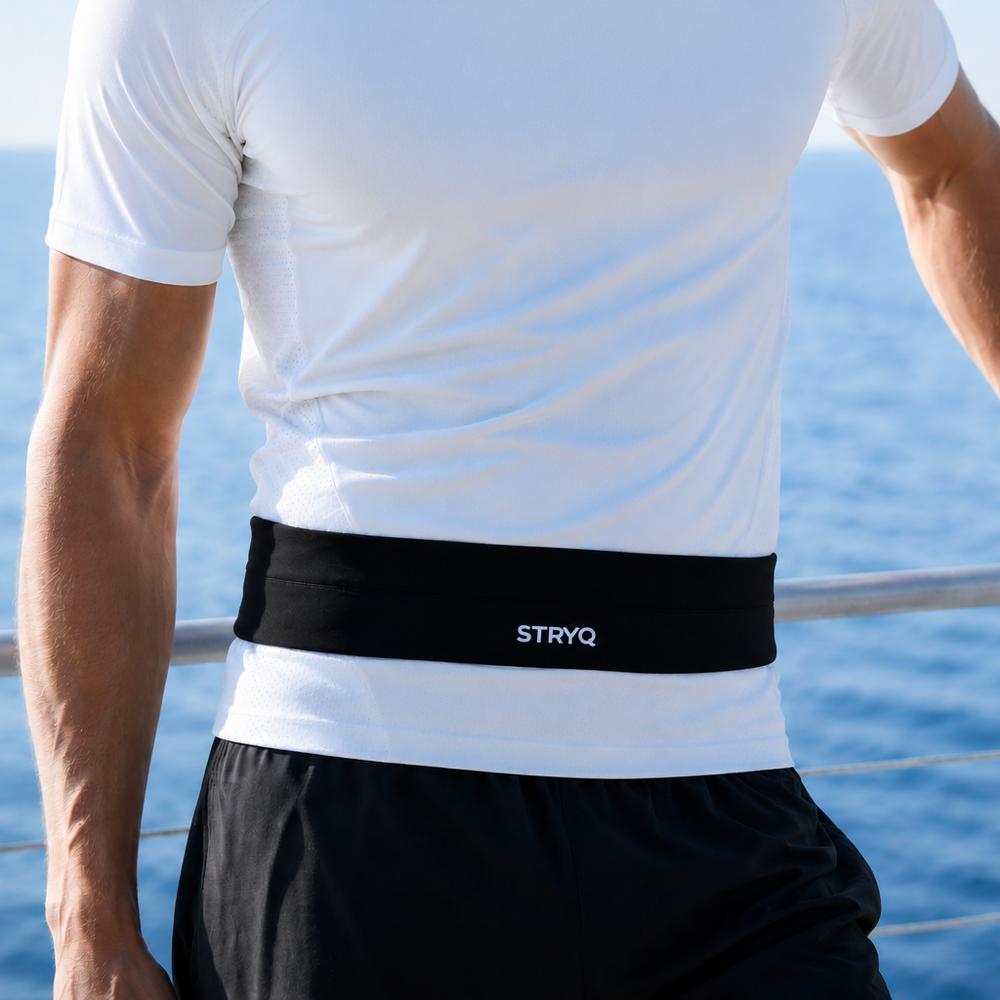
Running Belt
For most road runners, a running belt is probably the simplest solution.
It keeps your phone, keys and gels together without requiring a full vest.
The important thing is fit.
A belt carrying several gels needs to sit snugly enough that the additional weight does not bounce as you run.
We also prefer separating gels around the belt rather than putting every packet in exactly the same place. It spreads the bulk and makes individual gels easier to reach.
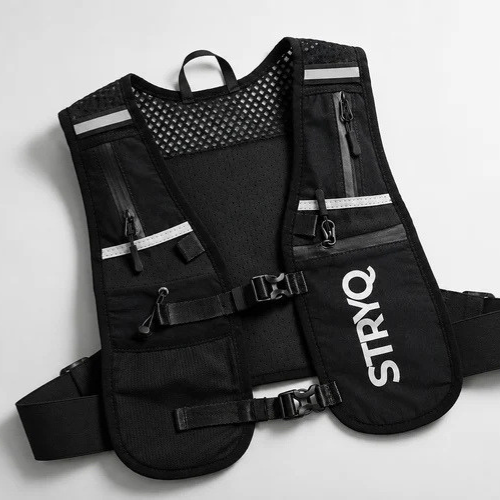
Running Vest
For longer unsupported runs, a running vest becomes more useful.
If you are carrying hydration, nutrition, a phone and extra clothing, the additional storage makes far more sense.
Front pockets also make it easier to reach gels without stopping.
Whichever method you choose, test the complete setup during training.
There is no point finding the perfect gel and then discovering at mile eight that your storage setup bounces every time you move.
Should You Mix Different Running Gels?
You can, provided you understand what you are consuming and you have tested the combination.
There can actually be practical reasons to mix products.
You might prefer one flavour early in a race and something more neutral later.
You might use non-caffeinated gels initially and introduce caffeine later.
You might use a higher-carbohydrate gel at one point and smaller servings elsewhere.
But mixing products makes it even more important to stop counting packets and start looking at actual nutrition.
If one gel contains 22g carbohydrate and another contains 45g, "one gel" no longer means the same thing.
Should You Use the Same Running Gels in Training and Racing?
Yes, at least often enough to properly test your intended race nutrition.
Race day should not be a nutrition experiment.
Use long runs to learn:
- Which flavours you still like after several hours.
- How much carbohydrate you tolerate.
- How often you prefer to fuel.
- How caffeine affects you.
- Whether you need water with your chosen gel.
- How your stomach reacts to repeated servings.
- How many packets you can comfortably carry.
That final point gets overlooked.
Run your dress rehearsal with your actual running belt, vest, gels, phone and hydration rather than testing each piece of kit separately.
What About Energy Chews and Bars?
Gels are convenient, but they are not the only way to fuel a run.
Some runners simply do not enjoy consuming gel after gel.
Chews, carbohydrate drinks and bars can all form part of a broader endurance nutrition strategy.
Solid foods tend to make more sense when intensity is lower and chewing is comfortable, while gels become particularly convenient when you want carbohydrate quickly without carrying much bulk.
Veloforte's wider running nutrition range includes gels alongside other fuelling formats, which is useful if you prefer mixing textures rather than relying entirely on gels.
The brand also has a separate cycling nutrition collection, although plenty of the fundamental endurance-fuelling principles naturally cross over between running and cycling.
Our Final Verdict: What Are the Best Running Gels in the UK?
After comparing Veloforte, SiS, HIGH5, Maurten, GU and TORQ, there is one important conclusion.
There is no running gel that will be best for absolutely everybody.
But this is a review, and sitting on the fence would not be particularly useful either.
If I was choosing one of these gels for my next long run, I would take Veloforte Rosso.
It gave us the best overall combination of the things we actually care about.
- 30g carbohydrate from one compact packet.
- 150mg sodium, which I personally liked having within my longer-run fuelling setup.
- A genuinely different ingredient profile.
- A raspberry flavour that did not feel excessively artificial or sweet.
- A compact 45g packet that is easy to carry.
- And most importantly, I found it particularly gentle on my stomach.
That last point was what pushed it ahead for me.
Nutrition labels matter, but when you are several hours into a run, whether you actually want to take the next gel matters just as much.
Rosso was one I would happily put into my running belt again.
That does not make the other products bad.
Choose SiS if you want something particularly fluid and easy to swallow.
Choose HIGH5 if value is your priority during a heavy training block.
Choose Maurten if you prefer neutral flavours and like its distinctive hydrogel texture.
Choose GU if flavour variety matters most.
Choose TORQ if you want a conventional 30g carbohydrate gel with plenty of flavour options.
And try Veloforte Rosso if your priorities look similar to ours: useful carbohydrate, sodium, compact packaging, a less conventional ingredient list and a gel that we found genuinely pleasant to use while running.
You can see Rosso directly at Veloforte Rosso Natural Energy Gel, or compare the wider Veloforte energy gel range if you want different carbohydrate or caffeine options.
If you are currently training for a marathon rather than simply comparing products, Veloforte's marathon training hub is also worth exploring alongside your wider training and fuelling plan.
Whatever you choose, test it properly before race day.
Your favourite gel is not the one with the fanciest packet or the biggest marketing claim.
It is the one you can carry, tolerate and keep taking when the run gets difficult.
Best Running Gels FAQs
What are the best running gels in the UK?
There is no single best gel for every runner, but our overall choice from the products compared was Veloforte Rosso. We liked its 30g carbohydrate serving, 150mg sodium, compact packet and ingredient profile, and I personally found it gentle on my stomach. SiS, HIGH5, Maurten, GU and TORQ each have advantages depending on what you value most.
What is the best energy gel for marathon running?
For marathon running, look beyond the brand and consider carbohydrate per serving, how many packets you need, caffeine, water requirements, stomach tolerance and how easy the gels are to carry. Veloforte Rosso was our overall preference from this comparison, while higher-carbohydrate options such as Veloforte Limon can also be interesting when planning carbohydrate intake over longer events.
How many carbohydrates should a running gel contain?
There is no requirement for every gel to contain the same amount. Products in this comparison range from roughly the low 20s to around 30g carbohydrate per standard packet, while some higher-carbohydrate products provide considerably more. What matters is how the gel contributes to your overall fuelling strategy.
Are running gels worth using?
Running gels can be useful during longer endurance sessions because they provide carbohydrate in a compact format that is easy to carry. They are unlikely to be necessary for every short or easy run. Their usefulness increases as duration and fuelling requirements increase.
Do you need water with running gels?
It depends on the product. Some gels, such as SiS GO Isotonic, are designed to be consumed without additional water. Other manufacturers recommend taking their gels with water. Always check the instructions for the specific gel rather than assuming they all work the same way.
Which running gels are easiest on the stomach?
There is no universal answer because gastrointestinal tolerance varies significantly between runners. In our experience, I found Veloforte Rosso particularly gentle on my stomach, but that does not guarantee the same result for everyone. Test your intended race nutrition repeatedly during training.
Are Veloforte gels good for running?
We were impressed with the Veloforte gels we tried, particularly Rosso. The range offers different carbohydrate quantities and caffeine options, while its ingredient approach is noticeably different from many conventional sports gels. Rosso was our personal standout because of its 30g carbohydrate, 150mg sodium, flavour and how comfortable I found it on my stomach.
What is the difference between Veloforte Rosso and Limon?
One of the main differences is carbohydrate quantity. Rosso provides 30g carbohydrate per gel, while Limon provides 45g carbohydrate. That means they can play different roles within a fuelling strategy depending on how much carbohydrate you want from each serving.
Are caffeinated running gels better?
Not automatically. Caffeinated gels provide carbohydrate plus caffeine, while non-caffeinated gels allow you to fuel without adding caffeine. Some runners deliberately combine both during longer events. If you use caffeinated gels, remember to account for caffeine from coffee, drinks and other nutrition too.
Should I use running gels during a half marathon?
That depends partly on how long you expect to be running and your overall fuelling strategy. A 90-minute runner and a three-hour runner have very different requirements. Practise your intended strategy during training rather than copying another runner's gel schedule.
Should I try a running gel before race day?
Absolutely. Race day is the worst time to discover that you hate the flavour, cannot tolerate the texture or your stomach does not react well to a particular product. Test your gels during long training runs, ideally using the same timing, hydration and carrying setup you plan to use during the race.
How do runners carry multiple energy gels?
Some runners use shorts or tights pockets, but once you are carrying several gels alongside a phone and keys, storage can become uncomfortable. A running belt works well for road running, while a running vest gives you more storage when you also need hydration or additional equipment.
Can I mix different brands of running gels?
Yes, provided you have tested the combination and understand what each product contains. Different gels can contain substantially different amounts of carbohydrate, caffeine and sodium, so calculate your nutrition based on the actual products rather than simply counting packets.