A blister can turn an easy 5K into a painful shuffle surprisingly quickly. If you are working out how to stop sock blisters, start by treating them as a friction problem, not just a skin problem. Your socks, shoes, sweat and running technique all play a part.
The good news is that most running blisters are preventable. Small changes to fit and foot care can make a major difference, whether you are building towards your first parkrun or spending hours on your feet during marathon training.
Why sock blisters happen when running
A blister forms when repeated rubbing separates layers of skin and fluid fills the gap. Heat and moisture make this easier. Once your foot is damp, the skin becomes softer and the sock is more likely to move against it.
The usual trouble spots are the heel, ball of the foot, toes, arch and the sides of the forefoot. The exact location gives you a useful clue. A blister on the back of the heel often points to heel slip in the shoe. Blisters between toes may mean your toes are crowded or your socks hold too much moisture. A blister under the forefoot can come from a sock that bunches, a worn insole or a shoe that is too small for longer runs.
Do not assume a more expensive shoe will fix everything. The right shoe matters, but a well-fitting pair can still cause problems with poor socks or wet feet.
How to stop sock blisters with better sock fit
Your running socks should fit close to the foot without feeling restrictive. Loose fabric folds under the foot and creates friction. Socks that are too small can pull tightly across the toes and heel, while socks that are too large can slide down or bunch around the arch.
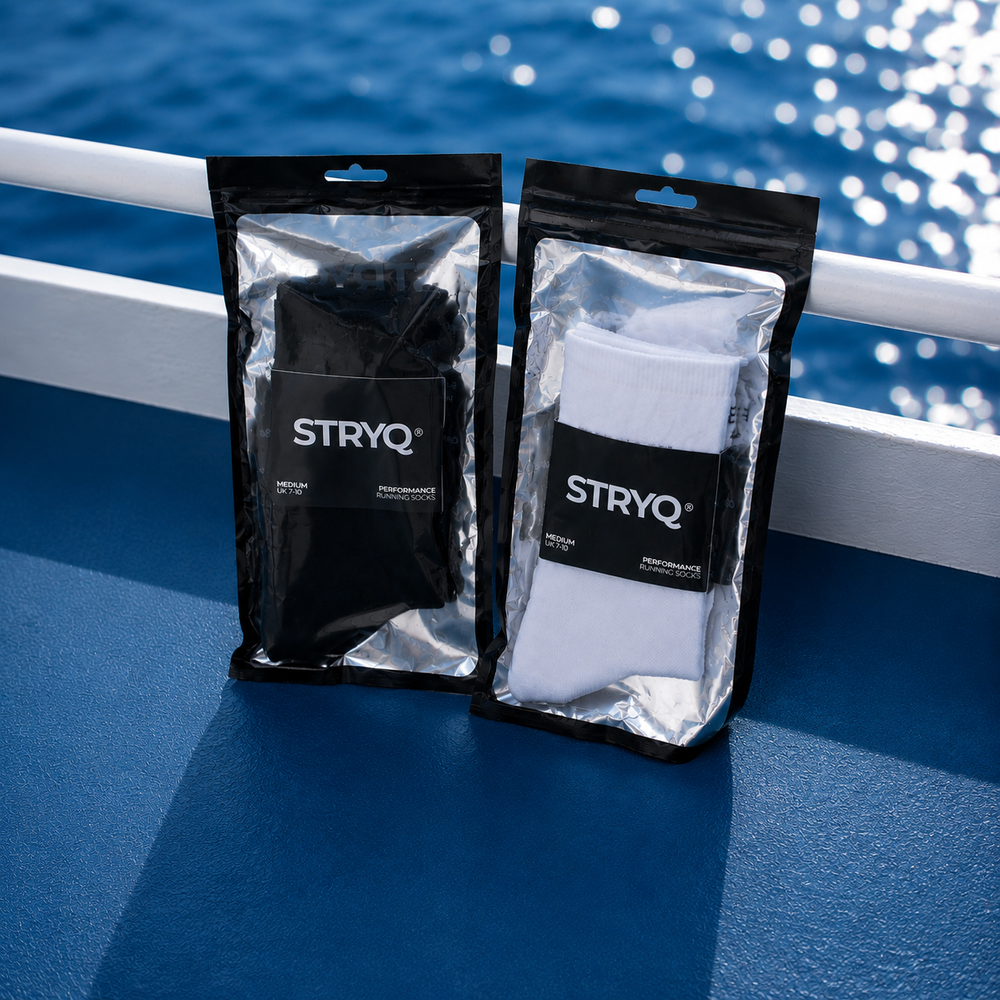
Choose socks designed for running rather than everyday cotton socks. Cotton absorbs sweat and stays damp, which is the perfect setup for rubbing. Technical fibres move moisture away from the skin and usually dry faster. Merino blends can also work well, particularly in cooler conditions, because they manage moisture while staying comfortable over longer distances.
Pay attention to construction as well as fabric. A smooth toe seam reduces rubbing at the front of the foot. Targeted cushioning can help under the heel and forefoot, but more padding is not always better. Thick socks take up extra room in the shoe. If your trainers already fit snugly, a heavily cushioned sock may make pressure and toe rubbing worse.
For long runs, it is worth testing a few sock thicknesses. Some runners prefer thin, close-fitting socks in summer. Others need a little more cushioning for road miles. The best option is the one that stays put, keeps your feet dry and leaves no hot spots.
Check your shoe fit before blaming your socks
A sock can only do so much if your shoes are moving around. Your heel should feel secure when running, without being squeezed. There should also be enough room in the toe box for your feet to swell slightly as the miles build.
Try your shoes on with the socks you actually run in, ideally later in the day when your feet are a little larger. You should have roughly a thumb's width between your longest toe and the end of the shoe. This is especially useful for downhill routes and longer races, where your feet repeatedly slide forwards.
If your heel slips, try a runner's knot or heel-lock lacing pattern before replacing the shoes. It can hold the heel more securely without over-tightening the forefoot. If your toes feel cramped, loosening the lower laces may help, but persistent pressure usually means the shoe shape or size is wrong for you.
Also check the inside of the shoe. A wrinkled insole, worn lining or small piece of grit can create the same rubbing point every run. Empty your shoes after wet or muddy sessions and let them dry fully before wearing them again.
Keep your feet dry, but do not ignore sweat
Wet feet are not always avoidable in the UK. Rain, puddles and summer heat can all leave your socks soaked. The aim is to reduce how long your skin stays wet and how much the sock moves once it is damp.
Start with dry socks and dry feet. It sounds obvious, but putting socks on straight after a shower or pulling on a pair that is not fully dry can be enough to cause trouble. On very long runs, carrying a spare pair of socks can be worthwhile, particularly for trail events or wet-weather training.
Some runners use anti-chafing balm on known hot spots, such as heels and between toes. This reduces friction, but it is not a substitute for correct fit. Use a small amount and test it during training, as too much can make the foot feel as though it is sliding inside the shoe.
Foot powder can help some runners with sweaty feet, although results vary. If it clumps inside the sock, it may create its own irritation. Again, trial it on a shorter run first.
Deal with hot spots before they become blisters
A hot spot is the early warning sign: a patch of skin that feels warm, tender or rubbed before a blister has formed. Ignoring it is how a manageable issue becomes a painful one.
If you notice a hot spot during a run, stop when it is safe to do so. Smooth the sock, remove any grit and check whether the shoe is laced too tightly or too loosely. A small piece of blister tape or a purpose-made friction patch can protect the area for the rest of the session.
For long runs and race day, carry a small amount of foot care kit if you know you are prone to blisters. A strip of tape weighs almost nothing and can save a run. Do not wait until the skin has broken. Tape adheres and protects far better on clean, dry skin than on a fully formed blister.
Build up gradually and notice patterns
Blisters often appear when training changes suddenly. A new pair of shoes, a first long run, warmer weather or a faster pace can alter how your foot moves. Your skin needs time to adapt, just like your calves and lungs do.
Keep a simple note of where blisters occur and what you wore. Record the distance, weather, socks, shoes and whether the route included hills or trails. After two or three runs, patterns usually become clear. If the same spot repeatedly rubs, change one variable at a time so you can identify the real cause.
Avoid saving new socks or shoes for race day. Wear the full combination on several runs first, including at least one session close to race distance. This is not about chasing perfect gear. It is about removing uncertainty when you want to focus on your pacing and enjoyment.
What to do if you already have a blister
If the blister is small, unbroken and not too painful, keep it clean and protect it with a blister dressing or padding. The skin over the blister acts as a natural cover, so avoid removing it.
For a large or painful blister, reduce running until it settles if you can. Draining a blister yourself carries a risk of infection, particularly if the skin is already damaged. Seek advice from a pharmacist or healthcare professional if you are unsure, or if you have diabetes, poor circulation or reduced sensation in your feet.
Watch for increasing redness, heat, swelling, pus or worsening pain. Those signs need medical attention. A couple of missed runs is far better than turning a small friction injury into an infection.
A simple pre-run blister check
Before heading out, make sure your feet are clean and dry, your socks sit flat with no folds, and your shoes feel secure without squeezing the toes. Check that there is no grit inside the shoe and that your laces match the session ahead. For a longer run, take tape or a friction patch if you have a known problem area.
Good running socks are not an afterthought. They are the layer directly managing heat, sweat and friction on every stride. Get that layer right, give your feet enough space, and those irritating blisters stop taking attention away from the miles you set out to enjoy.