The eight running essentials every beginner and regular runner needs are: shoes, socks, moisture-wicking clothing, hydration, storage, safety and tech, weather layers, and basic care. Buy in that order. Shoes first, always. Then some performance socks and a technical outfit. After that, a hydration solution and a way to carry it. Safety kit and tech come next, followed by weather layers as your mileage builds.
Here is the core checklist:
- Running shoes — correctly fitted, right surface, right cushioning
- Performance socks — synthetic or merino, cushioned, arch-supported
- Moisture-wicking clothing — top, bottoms, sports bra where needed
- Hydration solution — soft flask, handheld bottle, or vest depending on distance
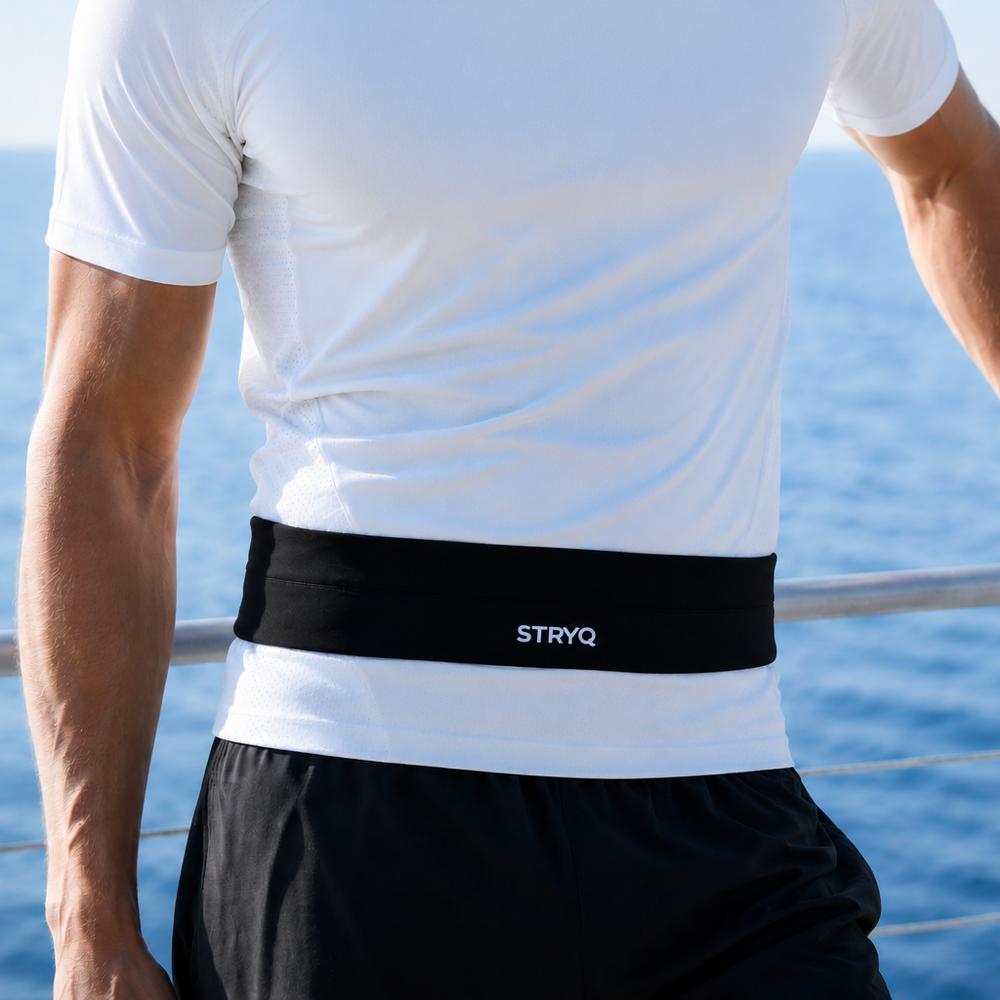
- Storage — waist belt or vest pockets for keys, phone, gels
- Safety and visibility — clip lights, reflective kit, headtorch for UK low-light
- Weather layers — packable jacket, base layer for cold months
- Fit, break-in and care — test everything short before going long
Durable performance gear that outlasts cheaper alternatives reduces both irritation and injury risk over time. That principle applies to every category on this list, but it matters most for shoes and socks.
Table of Contents
- 1. How to choose your first pair of running shoes
- 2. Running clothing: what fabrics and fits actually work
- 3. Why running socks and technical underwear matter more than you think
- 4. Hydration and carrying solutions: which option suits your run?
- 5. Storage and small accessories: how to carry things without the bounce
- 6. Safety, visibility and tech for UK runners
- 7. How to layer for UK weather across all four seasons
- 8. What to buy first and realistic cost ranges
- 9. Fit, break-in and care: how to make your kit last
- 10. Why Stryq accessories are built for everyday UK runners
- Key takeaways
- The kit choices that actually matter
- Stryq running gear: practical kit for UK runners
- Useful sources and further reading
1. How to choose your first pair of running shoes
A correctly fitted pair of running shoes is the single most important purchase on this list. The right shoe reduces injury risk, improves comfort, and makes running feel noticeably easier. The wrong one does the opposite.
What to look for:
- Fit: a thumb’s width of space between your longest toe and the end of the shoe. Feet swell on runs.
- Heel counter: firm enough to hold the heel without slipping.
- Midsole cushioning: more cushioning suits beginners and heavier runners; less suits those who prefer ground feel.
- Stability vs neutral: overpronators (feet roll inward) often benefit from a stability shoe; neutral runners typically do fine in a neutral shoe.
- Outsole pattern: road shoes for pavement; trail shoes for off-road or muddy UK paths.
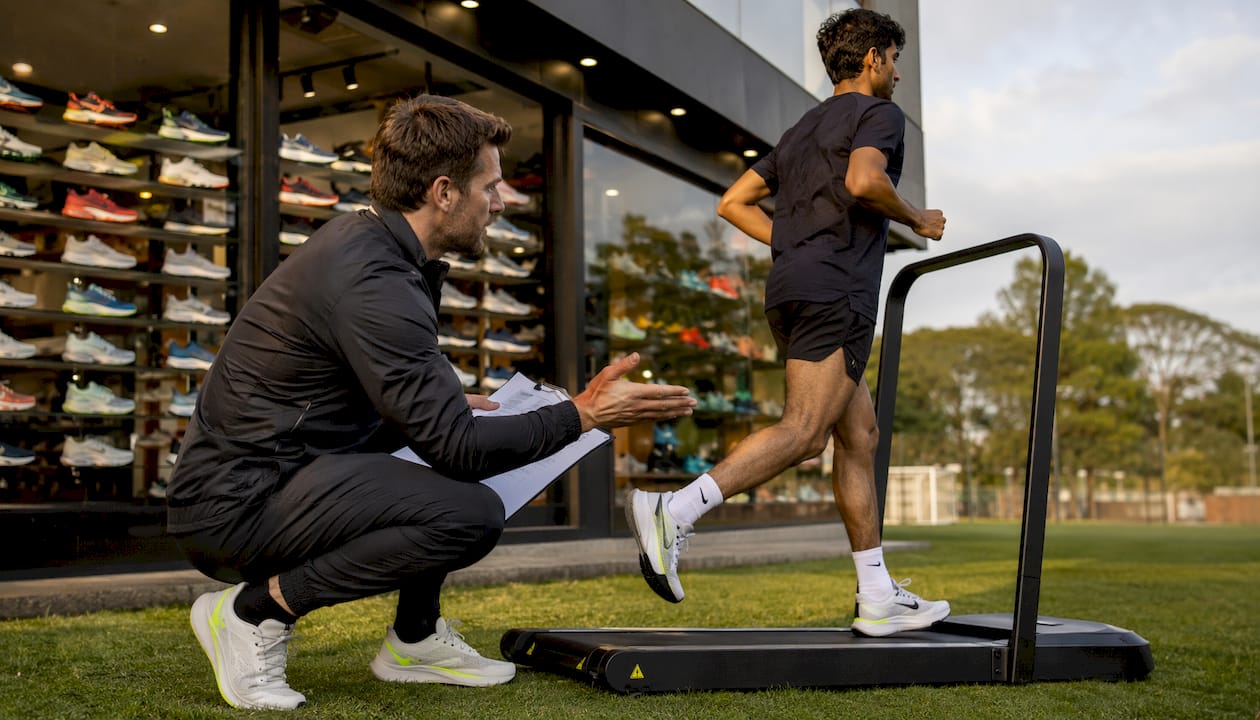
Visit a specialist running shop for a gait assessment. Most will put you on a treadmill and watch how your foot lands. Bring the socks you intend to run in. According to UCSF Health, the best time to shop for running shoes is in the afternoon, when feet are at their largest after daily activity.
Cost in the UK runs from around £60 for entry-level road shoes to £160 or more for premium cushioned models. You do not need to start at the top of that range.
Pro Tip: Rotate between two pairs of shoes if your weekly mileage is above 25 miles. Each pair gets time to decompress, which extends both their lifespan and their cushioning performance. Always debut a new shoe on a short run, not a long one.
2. Running clothing: what fabrics and fits actually work
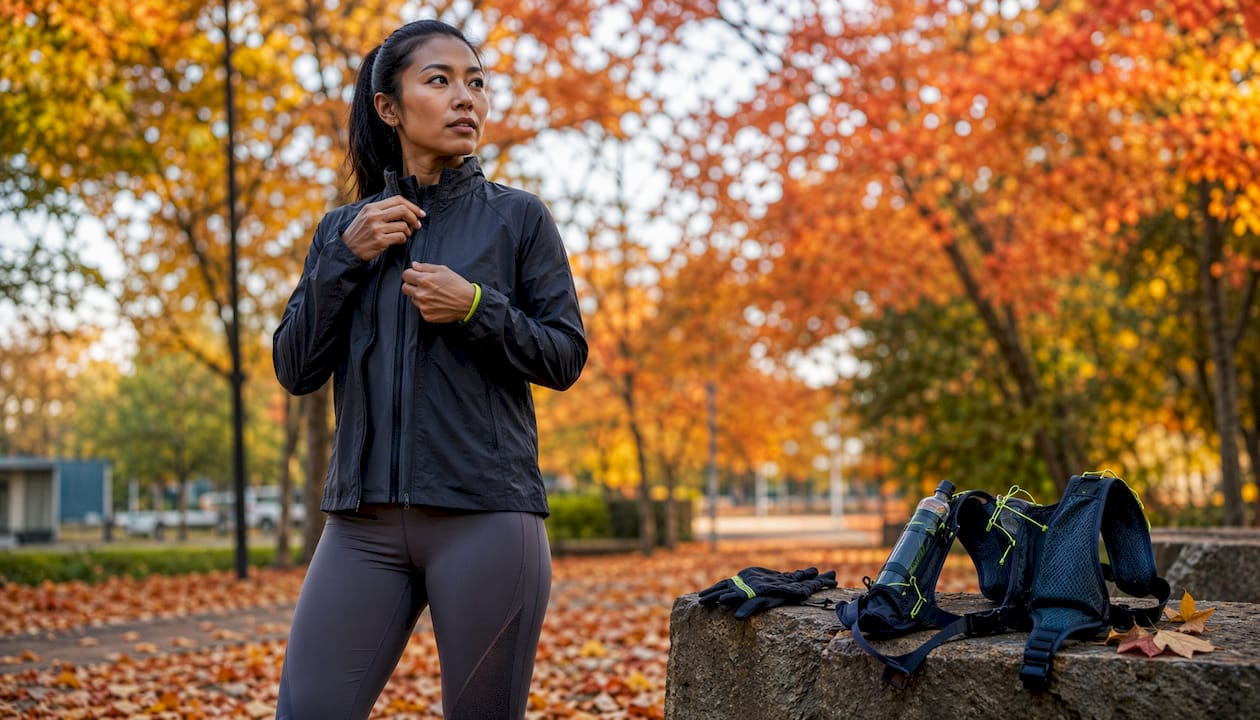
Choose moisture-wicking fabrics. That means synthetic blends (polyester, nylon) or merino wool. Cotton traps sweat against the skin, increases friction, and is one of the most common causes of blisters and chafing on longer runs. Avoid it entirely for running.
The core wardrobe for a beginner is small:
- 1–2 technical tops — lightweight, breathable, quick-drying
- 1–2 pairs of shorts or tights — with a small zip pocket for a key or gel
- A supportive sports bra — for those who need one; look for encapsulation support for higher-impact distances
- A lightweight jacket — for UK weather, this is not optional
When sizing, go close-fitting but not restrictive. Baggy fabric bunches and rubs. Test shorts and tights with the socks you plan to run in, because sock height affects where fabric sits at the ankle.
For summer, pick ventilated mesh panels and lighter colours. For autumn and winter, a breathable insulating mid-layer under a wind-resistant outer shell covers most UK conditions. More on layering in section 8.
Pro Tip: Turn technical tops and tights inside out before washing. It protects the outer surface and keeps moisture-wicking fibres working longer.
For a deeper look at what to wear running, Stryq’s clothing guide covers seasonal choices in more detail.
3. Why running socks and technical underwear matter more than you think
Running socks are a small buy with a disproportionate effect on comfort. Moisture-wicking running socks in synthetic or merino blends manage sweat, reduce hot spots, and help prevent blisters in a way that cotton socks simply cannot.
Look for:
- Targeted cushioning under the heel and ball of the foot
- Arch support to reduce foot fatigue on longer runs
- Flat or minimal seams at the toe box — raised seams cause blisters
- Correct thickness matched to your shoe volume (thicker socks in roomier shoes, thinner in snug fits)
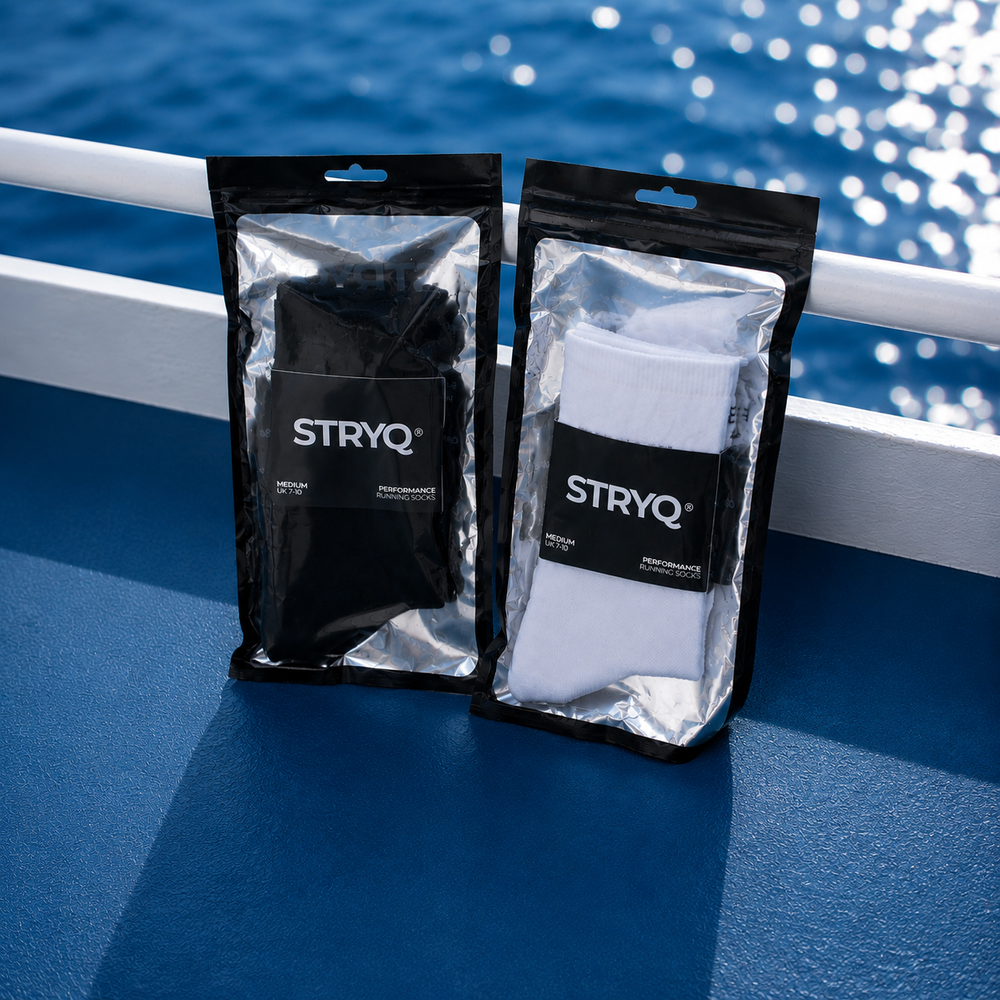
Stryq’s performance running socks are built around these principles, with cushioning and arch support designed specifically for UK runners. Available in black and white, they sit between budget supermarket socks and expensive specialist brands.
Technical underwear follows the same logic: synthetic or merino, minimal seams, close fit. Avoid anything with raised waistbands or thick seams at the inner thigh.
Pro Tip: Replace running socks when the cushioning flattens or the heel starts to thin. Worn socks offer almost no blister protection. Check seam placement each time you put them on — a twisted seam causes a blister within a mile.
4. Hydration and carrying solutions: which option suits your run?
Choose the simplest option that reliably gets fluid to you for your typical run length. For most UK runners, that means a soft flask or a waist belt with a bottle holder for runs up to 90 minutes, and a hydration vest for anything longer or more remote.
| Option | Best for | Capacity | Pros | Cons |
|---|---|---|---|---|
| Handheld bottle | Short runs, up to 60 min | 300–500ml | Simple, cheap | Occupies one hand |
| Soft flask | Short to medium runs | 300–500ml | Lightweight, collapsible | Less stable in a pocket |
| Waist belt with bottle | Medium runs, 60–120 min | 500ml–1L | Hands-free, storage pockets | Can bounce if poorly fitted |
| Hydration vest | Long runs, 120+ min | 1.5–2L+ | High capacity, even weight distribution | Bulkier, warmer |
Hydration trade-offs between capacity, comfort and bounce are real. A vest that fits well barely moves; one that doesn’t fit bounces on every stride.
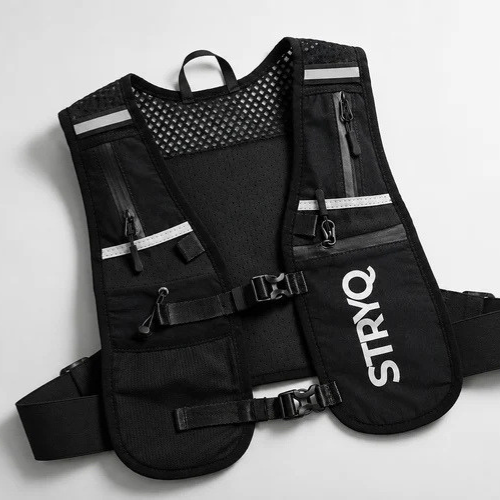
For everyday UK runs, a Stryq soft flask paired with a waist belt covers most distances without the bulk of a full vest. For longer training runs or races, Stryq’s hydration vests offer adjustable straps and multiple pockets.
Capacity guidance by run length:
- Up to 60 minutes: 300–500ml is sufficient in most UK conditions
- 60–120 minutes: 500ml–1L, depending on temperature and effort
- 120+ minutes: 1.5L minimum; consider a vest with gel storage
5. Storage and small accessories: how to carry things without the bounce
Secure storage that doesn’t bounce or rub makes runs more comfortable and removes a persistent distraction. The options range from a slim waist belt to integrated vest pockets.
Practical storage options:
- Slim waist belts — carry a phone, keys, a gel or two; best for shorter runs
- Stretch pockets in shorts or tights — useful for a key or a single gel; no extra kit needed
- Lightweight hydration vests — multiple pockets, front and back; suited to longer efforts
- Gel carriers — clip-on or integrated; useful for half marathon and marathon training
- Zippered pockets — for coins, ID, or a card; look for waterproof zips on outer layers
A Stryq running belt with 360° storage is a practical everyday option. The low-profile design distributes weight evenly and reduces bounce on road runs.
Anti-chafe accessories and well-fitted belts make a measurable difference on long runs and race day. Always test your carrying setup on a short run before relying on it for a long effort or a race.
6. Safety, visibility and tech for UK runners
For low-light UK running, lights and reflective kit are not optional extras. Dawn and dusk runs are common for most working runners, and UK autumn and winter conditions mean you will often be running in the dark.
Safety kit:
- Clip-on safety lights — front white, rear red; clip to clothing or a belt
- Headtorch — hands-free, illuminates the path ahead; useful for trail or unlit roads
- Reflective garments — reflective strips on jackets, vests and shoes; visible to drivers at distance
- Hi-vis vest or jacket — for road running in low-light conditions
Stryq produces safety lights designed for everyday UK runners. For a full breakdown of visibility kit for new runners, the Stryq safety guide covers clip lights, headtorches and reflective choices.
Tech:
A GPS watch tracks pace, distance and heart rate without needing a phone. Entry-level options start around £100–£150 in the UK. For beginners, a running app on a smartphone (Strava, Nike Run Club) is a free and functional alternative. Heart-rate chest straps give more accurate data than wrist-based sensors if training by heart rate matters to you.
Pro Tip: Keep headphone volume low enough to hear traffic and other runners. On busy urban routes, open-ear or bone-conduction headphones are a safer choice than in-ear models that block ambient sound.
7. How to layer for UK weather across all four seasons
Use a three-layer principle: base layer for moisture control, mid-layer for insulation, outer layer for wind and water protection. Adjust the weight of each layer to the temperature and your effort level.
| Conditions | Base layer | Mid-layer | Outer layer |
|---|---|---|---|
| Cool and dry (8–14°C) | Lightweight synthetic tee | Not needed | Lightweight wind shell |
| Wet and mild (8–14°C) | Lightweight synthetic tee | Not needed | DWR-treated packable jacket |
| Cold and dry (0–8°C) | Long-sleeve thermal top | Lightweight fleece or gilet | Wind-resistant jacket |
| Cold and wet (below 5°C) | Long-sleeve thermal top | Lightweight fleece | Waterproof breathable jacket |
Breathable DWR-treated jackets suit most UK running conditions better than fully waterproof hardshells. A hardshell traps sweat on effort; a DWR jacket sheds light rain while still breathing.
Practical layering tips:
- Pack a lightweight jacket even on dry days in spring and autumn — UK weather changes fast
- Use removable layers on variable-effort runs (intervals, hills) so you can strip back when working hard
- Merino base layers regulate temperature better than synthetics in cold, dry conditions
- Avoid heavy cotton hoodies as outer layers; they absorb rain and add weight
8. What to buy first and realistic cost ranges
Prioritise shoes, then socks and one technical outfit, then hydration and storage, then safety and tech. That order reflects both impact on comfort and injury risk.
Approximate UK cost ranges:
- Running shoes: £60–£160 (invest here; this is not where to save)
- Performance socks (2 pairs): £10–£20
- Technical top: £20–£50
- Shorts or tights: £20–£60
- Sports bra: £25–£60
- Waist belt or soft flask: £15–£35
- Clip lights (pair): £10–£25
- Packable jacket: £40–£100
A minimalist starter kit — one good pair of shoes, two pairs of technical socks, and one or two moisture-wicking outfits — is enough to begin a run-walk routine without excessive cost. Add hydration and storage once you are running consistently for 30 minutes or more.
Where to spend vs save: invest in shoes and socks. Save on optional extras like GPS watches and specialist jackets until you know you need them. A £15 pair of clip lights does the same safety job as a £50 pair for most road runners.
For a full gear checklist by distance, the Stryq 10K runner gear checklist breaks down exactly what to carry as mileage increases.
9. Fit, break-in and care: how to make your kit last
Correct fit and simple care practices make gear more comfortable and extend its lifespan. The two most common mistakes are skipping the break-in process and washing technical fabrics incorrectly.
Break-in and testing checklist:
- Debut new shoes on a run of 20–30 minutes maximum; check for pressure points before going longer
- Test a new vest or belt on a short run with the load you intend to carry; adjust strap tension before the run ends
- Wear new socks on a short run first; check for seam placement and any hot spots
- Never use new kit for the first time on a long run or race day
Care checklist:
- Wash technical fabrics at 30°C or as the label states; higher temperatures degrade moisture-wicking fibres
- Skip fabric softener entirely; it coats fibres and kills breathability
- Check seams and zips after every few washes; repair small issues before they become larger ones
- Rinse soft flasks after every use; dry fully before storing to prevent mould
- Replace running shoes after typical extensive use, or when cushioning visibly compresses.
Pro Tip: Log the date of first wear for shoes and socks in your phone notes. It takes the guesswork out of knowing when to replace them. Worn cushioning in a shoe is not always visible but is one of the most common contributors to overuse injuries in runners.
For common errors and quick fixes, the Stryq guide on running gear mistakes covers the most frequent problems new runners encounter.
10. Why Stryq accessories are built for everyday UK runners
Stryq accessories are designed and tested for everyday UK runners, with a focus on low bounce, secure storage, moisture control and durability. Every product goes through multiple sample revisions and real-world testing before launch, based on feedback from actual runners rather than lab assumptions alone.
What that process looks like in practice:
- Products are tested across multiple distances and conditions by UK runners
- Sample revisions address fit, bounce, chafing and material performance before a product reaches the shop
- Strict quality control checks are applied at each stage of production
- Customer feedback after launch feeds directly into product updates
Stryq products matched to core needs:
- Running socks (black / white) — cushioned, arch-supported, moisture-wicking; designed to reduce blisters and foot fatigue
- Waist belts — 360° storage, low-bounce design, fits phone, keys and gels
- Soft flasks — lightweight, collapsible, compatible with Stryq vests and belts
- Hydration vests — adjustable straps, multiple pockets, suited to longer UK training runs
- Safety lights — clip-on, lightweight, designed for road and trail visibility
Stryq sits between budget marketplace products and expensive premium running brands. The aim is honest quality at an accessible price — gear that performs, lasts, and solves real problems for runners who run regularly rather than occasionally.
Key takeaways
The single most important principle in building a running kit is this: buy shoes and socks first, test everything on short runs before relying on it, and add items only as your mileage and needs grow.
| Point | Details |
|---|---|
| Shoes are the priority purchase | Invest in a correctly fitted pair from a specialist shop before buying anything else. |
| Socks and clothing come second | Two pairs of performance socks and one technical outfit are enough to start. |
| Test before you trust | Always debut new shoes, belts, vests and socks on short runs before long efforts or race day. |
| Layer for UK conditions | A DWR packable jacket covers most UK weather; add a thermal base layer for cold months. |
| Stryq for socks and carry kit | Stryq running socks, waist belts and soft flasks are practical first purchases for UK runners. |
The kit choices that actually matter
Most running guides spend too much time on gear that makes marginal differences and not enough on the two things that genuinely change the experience: shoes and socks. Get those right and almost everything else is adjustable.
The tendency for new runners is to over-buy early. A GPS watch, a full hydration vest, a specialist trail shoe and a waterproof jacket all seem necessary when you are starting out. In practice, most beginners run for three months before they know what they actually need. Buying minimal at the start and upgrading based on real usage is not a budget compromise. It is the smarter approach.
What I find consistently true, working with Stryq’s product development and testing process, is that the problems runners report are almost always the same: blisters from poor socks, chafing from ill-fitted belts, and shoes that were never properly tested before a long run. None of those problems require expensive solutions. They require the right solution, fitted and tested correctly.
The Stryq approach is to make that straightforward. Fewer products, better made, tested by people who actually run in them.
Stryq running gear: practical kit for UK runners
Gear that solves real problems without unnecessary complexity is what Stryq is built around. For runners starting out or building mileage in the UK, the most practical first purchases are a pair of performance socks and a reliable carry solution.
Stryq’s cushioned running socks are available in black and white, with arch support and targeted cushioning designed to reduce blisters on road and trail. For carrying essentials, the Stryq running belt handles phone, keys and gels without bounce, and the soft flask range covers hydration for runs from 5K to half marathon distance.
All Stryq products are developed and tested by UK runners, with multiple revisions before launch. Browse the full range at stryq.co.uk and pick up the two items that will make the most immediate difference to your next run.
Useful sources and further reading
- Choosing the right running shoe — UCSF Health
- Essential running gear for beginners — Twenty One Run
- The best running accessories 2026 — The Run Testers
- Best running gear — OutdoorGearLab
- Running gear for beginners — Running Warehouse
- Injury healing best practices — The Regen Store