The most effective approach to your first week of running is a structured run-walk schedule, three sessions per week, with rest days between each one. That single decision, choosing intervals over continuous running, is what separates beginners who stay injury-free from those who quit by day five.
Table of Contents
- Your first week running plan to build fitness safely
- How to prepare your body and mind for running
- Tips for safe gradual progression after week one
- Injury prevention and recovery strategies for beginners
- How Stryq supports beginner runners in the UK
- Key takeaways
Your first week running plan to build fitness safely
NHS Couch to 5K recommends three runs per week with at least one rest day between each session. That spacing is not optional padding. Your cardiovascular system adapts faster than your tendons and ligaments, so the rest days are doing structural work your lungs simply cannot.
For week one, keep each session to 20–30 minutes. The goal is time on feet, not distance covered, following expert recommendations for new runners.
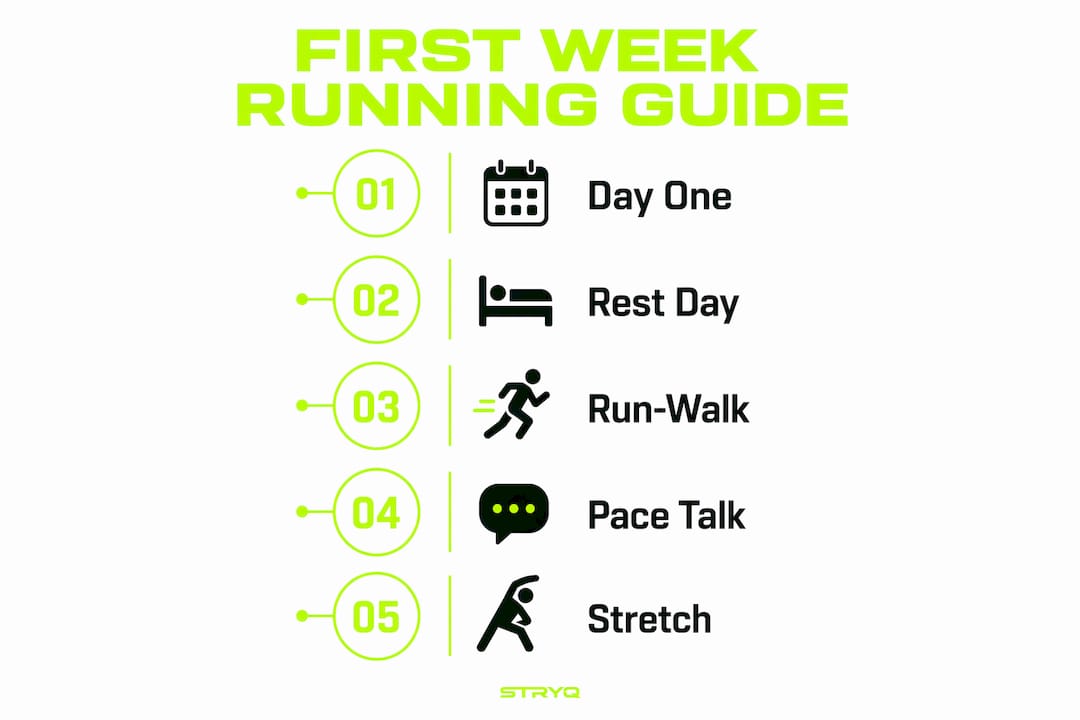
Session structure (repeat for all three runs):
- 5-minute brisk walk to warm up
- 1-minute run / 1-minute walk cycles, repeated for 20 minutes
- 5-minute easy walk to cool down
| Day | Activity | Duration |
|---|---|---|
| Monday | Run/walk session | 30 min |
| Tuesday | Rest or light walk | — |
| Wednesday | Run/walk session | 30 min |
| Thursday | Rest or light walk | — |
| Friday | Rest | — |
| Saturday | Run/walk session | 30 min |
| Sunday | Rest | — |
Run at a pace where you can hold a conversation. If you cannot get a full sentence out, slow down. That rule, simple as it sounds, prevents most of the mistakes beginners make in week one.

Pro Tip: If the 1-minute run intervals feel too hard, drop to 30 seconds of running and 90 seconds of walking. The exact ratio matters less than completing the session, as long as total time on feet remains within the 20–30 minute window.
How to prepare your body and mind for running
Good preparation before your first session reduces soreness, lowers injury risk, and makes the whole experience less of a shock. Most beginners skip this entirely and pay for it by day three.
Physical preparation:
- Do dynamic stretches before each run: leg swings, walking lunges, and hip circles for 3–5 minutes
- After your run, hold static stretches for 30–90 seconds each, targeting calves, hamstrings, and quads
- Get a gait analysis at a specialist running shop before you buy shoes. It takes 15 minutes and prevents blisters, shin splints, and chronic knee pain
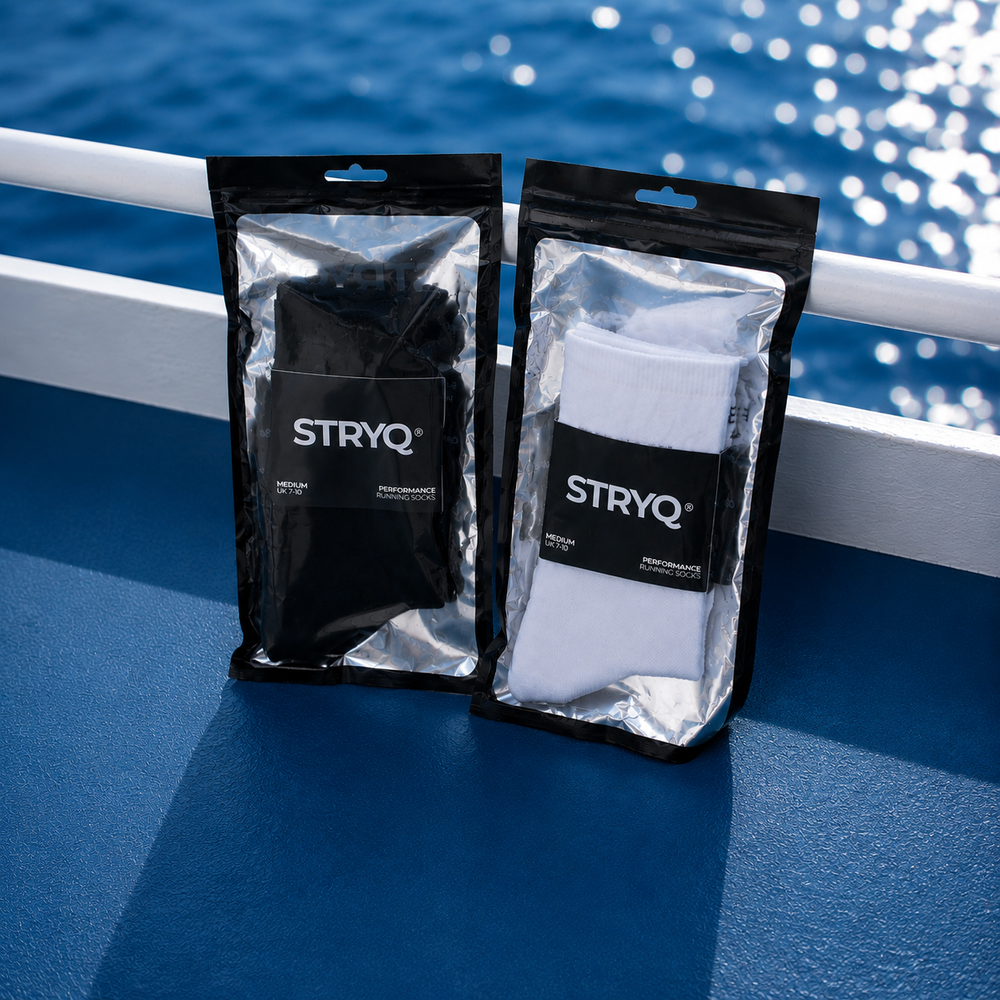
- Wear moisture-wicking socks to reduce friction. A poor sock choice causes blisters faster than almost anything else
- Dress in layers for British weather. Light and loose in summer, removable layers in winter, and always something reflective if you run in low light
Hydration and nutrition basics:
- Drink water before, during, and after your run. For sessions under 30 minutes, a bottle of water beforehand is usually sufficient
- Eat a light carbohydrate-based snack 60–90 minutes before running if you feel hungry. Avoid heavy meals immediately before
- Within 30 minutes of finishing, have a small carbohydrate and protein snack to support recovery
Mental strategies for week one:
- Set a time goal, not a distance goal. Chasing kilometres in week one leads to frustration
- Tell someone you are starting. Accountability is a simple and underrated motivator
- Accept that the first two or three sessions will feel uncomfortable. That discomfort is normal and temporary
Check Stryq’s guide on what to wear on your first run for a practical breakdown of beginner gear essentials.
Tips for safe gradual progression after week one
The most common mistake after a successful first week is doing too much too soon in week two. Your legs feel better, your confidence is up, and suddenly a 5K seems achievable. Resist that impulse.

Increase your running intervals by small increments, around 30 seconds to 1 minute of additional running time per week. That rate of progression gives connective tissue time to catch up with your improving cardiovascular fitness.
Progression rules that prevent burnout:
- Never increase both distance and frequency in the same week. Change one variable at a time
- Keep your conversational pace throughout. If you cannot speak in full sentences, you are running too fast
- During walk intervals, keep moving at a decent clip rather than stopping completely. A brisk walk keeps your heart rate elevated and makes the transition back to running feel easier
- Log each session, even briefly. Note how long you ran, how you felt, and whether the intervals felt manageable. Patterns in that log tell you when to push and when to hold back
- If a week feels hard, repeat it rather than advancing. Progress is not linear, and repeating a comfortable week builds a stronger foundation than grinding through a difficult one
Stryq’s starting running tips cover the progression mindset in more detail, including how to read your body’s signals as the weeks build.
Injury prevention and recovery strategies for beginners
Most beginner running injuries are not bad luck. They follow a predictable pattern: too much volume, too soon, before the body’s connective tissue has adapted. Your heart and lungs improve within days. Your tendons and ligaments take weeks.
Run-walk intervals protect against this by limiting the continuous load on joints and soft tissue. They are not a crutch for unfit beginners. They are the structurally correct way to introduce running stress to a body that has not run before.
Recognising good fatigue versus warning signs:
- Good fatigue: tired legs, mild breathlessness, general muscle heaviness after a session
- Warning signs: sharp pain in knees, hips, or lower back during a run; pain that persists on rest days; swelling or tenderness around a joint
Stop running if you feel sharp or persistent pain. Walking through discomfort is acceptable. Running through pain is not.
Recovery practices that actually work:
- Sleep is the most effective recovery tool available. Aim for 7–9 hours on nights after a run
- Adequate sleep, hydration, and stretching combined with active rest days reduce soreness and maintain consistency
- On rest days, a 20-minute walk or light swim keeps blood flowing without adding stress
- Cross-training alongside rest days improves endurance and reduces overuse injury risk in new runners
Proper footwear is the single most controllable injury variable. A specialist running shop gait analysis costs nothing at most UK retailers and takes the guesswork out of shoe selection entirely. Read Stryq’s full guide on preventing running injuries for a complete breakdown of what to watch for in the early weeks.
How Stryq supports beginner runners in the UK

Stryq builds running gear around one principle: solve real problems for everyday runners without overcomplicating things. Every product in the range goes through multiple sample revisions and real-world testing before it reaches a customer.
For beginners, the most practical starting point is getting the basics right. Poorly fitted socks cause blisters on run one. A running belt that bounces becomes a distraction by run three. These are not minor inconveniences. They are the reasons people quit.
What Stryq offers new runners:
- Cushioned running socks designed to reduce friction and manage moisture across varied British weather conditions
- Lightweight running belts that carry your phone and keys without shifting during run-walk intervals
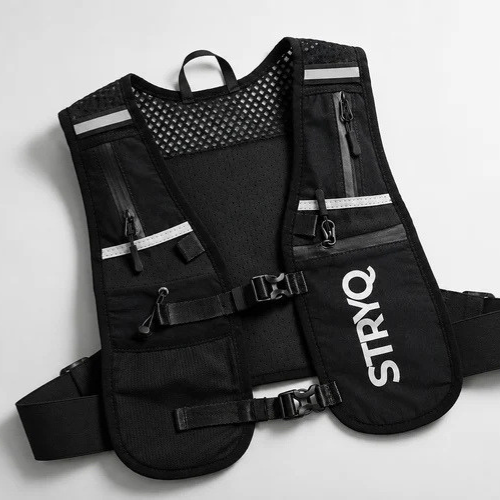
- Hydration vests and soft flasks for when your sessions extend beyond 30 minutes and you need water on the move
- Running gloves and safety lights for early morning or evening runs in autumn and winter
Stryq sits between budget marketplace products and expensive specialist brands, which means you get durable, well-tested gear without paying a premium for a logo. The blog also carries practical, experience-based advice for new runners at every stage of the first few months.
Key takeaways
A structured run-walk schedule, three days per week with rest days between, is the safest and most effective way to build running fitness in your first week.
| Point | Details |
|---|---|
| Run-walk intervals | Alternate 1-minute running with 1-minute walking for 20–30 minutes per session, as supported by leading beginner running plans. |
| Three sessions per week | Space runs with at least one rest day between to allow connective tissue to recover. |
| Conversational pace | If you cannot speak in full sentences while running, slow down immediately. |
| Progress one variable | Never increase both distance and frequency in the same week after week one. |
| Recovery matters | Sleep, hydration, and active rest days reduce soreness and keep you consistent. |