

Running gear mistakes new runners make (and how to fix them)
Most running gear mistakes new runners make come down to two things: buying the wrong fit and spending too much too soon. Neither a £200 GPS watch nor a carbon-plated racing shoe will make you a better runner if your socks are giving you blisters by kilometre two. The real foundation of good running kit is comfort, fit, and necessity. Get those three right and everything else follows naturally.
1. Buying the wrong running shoes
The single most damaging beginner equipment error is choosing shoes based on looks rather than fit. Beginners regularly buy shoes because they look good, then suffer blisters and injuries within weeks. That pattern discourages running before a habit even forms.
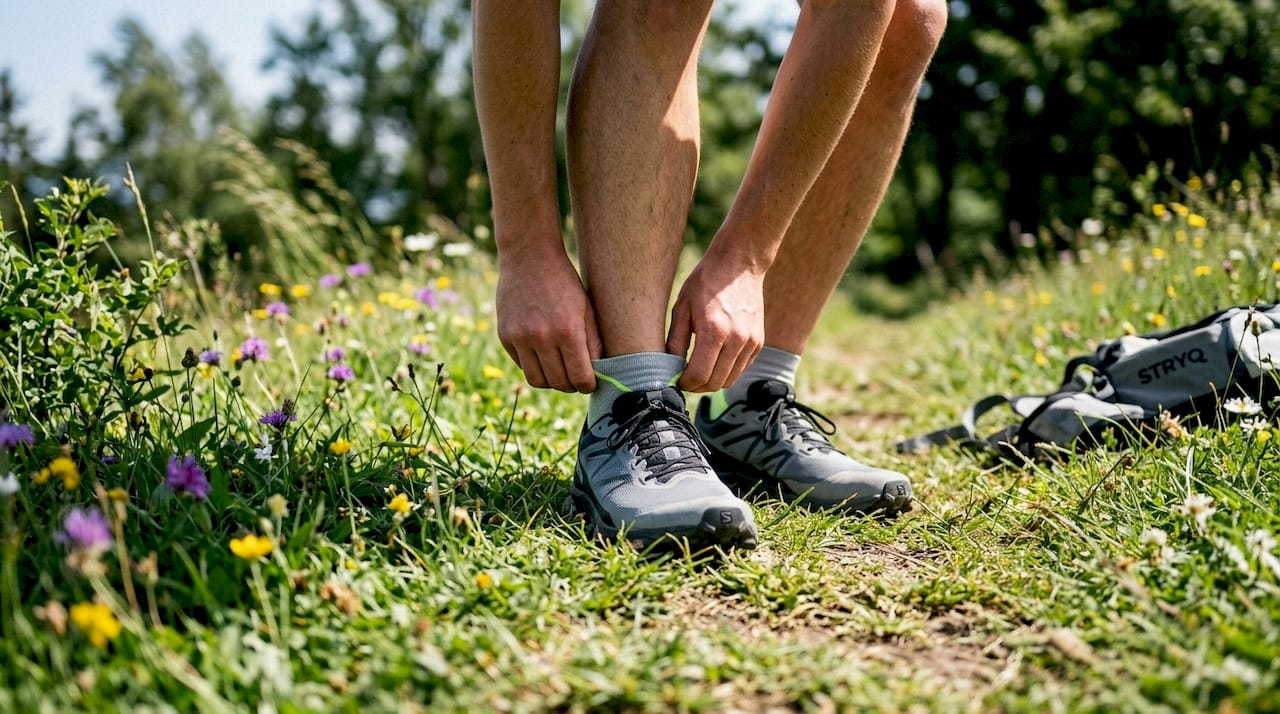
Daily trainers in the £45–£90 range offer the best balance of comfort, durability, and value for new runners. Carbon-plated racing shoes are built for race-day speed, not the slow, repetitive mileage of a beginner’s training block.
A professional gait analysis at a specialist running shop costs nothing and takes about ten minutes. The staff will watch you run, assess your foot strike, and recommend models suited to your mechanics. That ten minutes prevents months of avoidable injury.
- Try shoes on in the afternoon when feet are slightly swollen from daily activity.
- Leave a thumb’s width of space between your longest toe and the shoe’s end.
- Run a short distance in the shop before committing to a purchase.
- Replace shoes every 300–500 miles, as worn midsoles lose cushioning before the upper shows obvious wear.
Pro Tip: If a shoe feels merely “okay” in the shop, it will feel worse on a 5k. Only buy a shoe that feels immediately comfortable.
2. Wearing cotton clothing
Cotton is the most common clothing mistake beginners make, and it is entirely avoidable. Cotton absorbs sweat and holds it against the skin, causing chafing, irritation, and discomfort that worsens with every kilometre. Technical fabrics and merino wool blends wick moisture away from the skin and dry quickly.
The fix does not require an expensive wardrobe overhaul. Two or three moisture-wicking shirts and one pair of technical shorts or tights cover almost every training scenario for a new runner. Start with that and add items only when a specific gap appears.
Layering errors are equally common. New runners either overdress for mild weather or underdress for cold mornings. A general rule: dress as though it is 10°C warmer than the actual temperature, because your body heat rises fast once you are moving.
- Avoid cotton T-shirts, cotton underwear, and cotton socks.
- Choose polyester, nylon, or merino wool for base layers.
- In cold weather, a lightweight technical long-sleeve under a windproof gilet covers most conditions.
- Check the what to wear when running guide for a full breakdown by weather type.
3. Skipping proper running socks
Running socks are the most underrated item in a beginner’s kit. Good running socks reduce moisture and friction, substantially lowering blister risk. That improvement costs far less than a GPS watch and delivers far more immediate comfort.
The mistake most new runners make is wearing standard cotton ankle socks from a multipack. These bunch, slip, and hold sweat. A dedicated running sock uses targeted cushioning, a snug arch band, and moisture-wicking fibres to stay in place and keep feet dry.
Fit matters here too. A sock that is too loose will fold inside the shoe and create pressure points. A sock that is too tight restricts circulation on longer efforts. Check the sizing guide and match the sock to your shoe size precisely.
4. Ignoring visibility and safety gear
Running in low light without reflective gear is one of the few beginner errors that carries genuine safety consequences. Reflective vests, safety lights, and bright clothing improve runner visibility during early morning or evening runs. This is not optional kit for anyone running outside of daylight hours.
A simple clip-on safety light weighs almost nothing and costs very little. Attach one to the front and one to the back of your kit and drivers can see you from a significant distance. Reflective strips on shoes and jackets add passive visibility without any effort.
The error is not knowing this matters. Most new runners think about shoes and clothing but overlook the fact that a large proportion of beginner runs happen before sunrise or after sunset, particularly in the UK’s autumn and winter months.
5. Over-buying tech gadgets too early
GPS watches, recovery tools, and advanced gadgets are useful but often unnecessary and distracting for runners who have not yet established a consistent habit. A free running app on your phone tracks distance, pace, and time accurately enough for the first several months of training. Spending £300 on a GPS watch before your first 5k is a common 5k runner training gear mistake that adds complexity without adding fitness.
The problem with buying too much tech early is that it shifts focus from running to managing equipment. You end up fiddling with settings, charging devices, and reading data rather than simply going out and running. Consistency beats data at the beginner stage.
Add a GPS watch when you have a specific training goal that requires precise pace monitoring, such as preparing for a 10k or half marathon with structured intervals. Until then, your phone and a free app are sufficient.
6. Mismanaging hydration gear
Hydration is one area where beginners make errors in both directions. Some carry a full hydration vest on a 20-minute jog. Others run for 90 minutes in summer heat with nothing to drink. Neither approach serves you well.
For runs under 60 minutes in moderate conditions, water before and after is generally sufficient. For runs exceeding 60 minutes, runners should consume 350–700ml of fluids per hour to maintain performance and avoid dehydration. That is when a handheld bottle, a running belt with a bottle loop, or a lightweight hydration vest becomes genuinely useful.
A running belt solves the phone and key problem at the same time. Rather than buying a belt, a bottle, and a vest separately before you know what you need, start with a belt and add a soft flask when your runs extend beyond an hour. That sequence matches gear to actual need rather than anticipated need.
Pro Tip: Practise drinking on the move during training runs. Race day is not the time to discover you cannot open a soft flask without stopping.
7. Neglecting fuel and nutrition gear for longer runs
Nutrition gear mistakes are particularly common among runners preparing for their first 10k, half marathon, or marathon. The error is not practising race-day nutrition during training. Practising nutrition strategies at race pace during training reduces the risk of nausea and energy crashes on race day. Trying a new gel or drink for the first time at kilometre 15 of a half marathon is a reliable way to have a very bad afternoon.
For runs over 60 minutes, the body needs carbohydrate to sustain effort. The recommended intake is 30–60 grams of carbohydrate per hour. That translates to one or two energy gels, a handful of chews, or a banana depending on your preference.
- Test your chosen fuel on long training runs, not on race day.
- Carry fuel in a running belt or vest pocket so it is accessible without stopping.
- Avoid over-investing in expensive nutrition gadgets. A simple belt with a gel loop covers most needs.
- Check the runner’s nutrition guide for specific pre and post-run eating advice.
8. Buying too much gear before establishing a habit
Over-investing in gear before a running habit is established leads to frustration and wasted money. A drawer full of expensive kit does not make you more likely to run. It makes you more likely to feel guilty about not running.
“The best beginner running gear is boring, multipurpose, and easy to use frequently without thinking.” Gear that requires setup, charging, or a learning curve adds friction to a habit that is still fragile.
Gear should address specific problems you have actually encountered, not problems you imagine you might encounter. Chafing on your inner thighs after a long run is a real problem. Buy anti-chafe balm. Struggling to carry your phone is a real problem. Buy a running belt. Speculative purchases rarely get used.
- Start with: one pair of running shoes, two technical shirts, one pair of running shorts or tights, and proper running socks.
- Add items only when a specific discomfort or gap appears in your training.
- Keep the setup simple enough that going for a run requires no more than two minutes of preparation.
- Read the running gear essentials guide before making any additional purchases.
Key takeaways
The most effective way to avoid beginner running gear errors is to prioritise fit, comfort, and necessity over price, brand, and speculation.
| Point | Details |
|---|---|
| Shoes: fit over price | Daily trainers in the £45–£90 range outperform expensive racing shoes for beginner training. |
| Avoid cotton fabrics | Technical or merino wool fabrics prevent chafing and keep you comfortable on every run. |
| Socks matter more than gadgets | Good running socks reduce blisters and moisture at a fraction of the cost of tech accessories. |
| Match hydration gear to run length | Add a bottle or vest only when runs exceed 60 minutes or conditions demand it. |
| Buy gear to solve real problems | Purchase new items only when a specific discomfort or gap appears in your training. |
What I have actually seen work for new runners
New runners consistently overestimate how much gear they need and underestimate how much fit matters. I have watched runners quit within a month because blisters made every session miserable, and in almost every case the cause was either the wrong shoes or cotton socks. Neither problem costs much to fix.
The runners who build lasting habits tend to start with the minimum and add gear deliberately. They run in a basic technical shirt, a decent pair of shoes, and proper socks. They notice what bothers them after a few weeks and fix that specific thing. That approach is far more effective than buying everything at once and hoping it all works.
The gear industry does a good job of making new runners feel underprepared. The truth is that a well-fitted pair of shoes and moisture-wicking socks will take you further than any gadget. Confidence in running comes from consistency, not from equipment. Get the basics right, run regularly, and let real-world experience tell you what to add next. That is the approach that actually works.
— martin
Gear that solves real beginner problems
New runners who focus on the essentials spend less, run more comfortably, and build habits that last. Stryq designs gear around that exact principle: practical products that solve specific problems without unnecessary complexity.

Stryq’s cushioned running socks are built for moisture control and blister prevention, which are the two problems that stop most new runners in their tracks. The running belts keep your phone, keys, and gels secure without bouncing, and the lightweight hydration vests are there when your runs grow long enough to need them. Every Stryq product goes through extensive real-world testing before launch, so you get kit that actually works rather than kit that merely looks good on a product page.
FAQ
What are the most common running gear mistakes new runners make?
The most common errors are buying shoes based on appearance rather than fit, wearing cotton clothing, and over-investing in gadgets before a running habit is established. Fixing shoe fit and fabric choice alone removes the majority of beginner discomfort.
Do new runners need a GPS watch?
A GPS watch is not necessary for beginners. A free running app on a smartphone tracks distance and pace accurately enough for the first several months of training. Add a watch when structured interval training or precise pace targets become relevant.
When should a beginner start using a hydration vest?
Add a hydration vest when your runs regularly exceed 60 minutes or when you are training in warm conditions. For shorter runs, water before and after is sufficient. A running belt with a bottle loop is a practical first step before committing to a full vest.
How often should new runners replace their running shoes?
Running shoes should be replaced every 300–500 miles. The midsole cushioning degrades before the upper shows visible wear, so tracking mileage is more reliable than judging by appearance alone.
Are expensive running socks worth buying?
Yes. Quality running socks reduce friction and moisture, which directly lowers blister risk. They cost far less than most running accessories and deliver a more noticeable improvement in comfort than many higher-priced items.