Joining or starting a running community is the fastest way to make running social, safer, and more consistent. Search for a parkrun near you, or find an England Athletics-affiliated club, and you can be running with others within 48 hours. Stryq’s kit guides and accessories are there when you need reliable gear to show up confidently.
Table of Contents
- Why does joining a running community make such a difference?
- What types of running groups will you find in the UK?
- Where can you find and join running groups in the UK?
- How do you choose the right running community for you?
- How do you build an inclusive running community from scratch?
- What safety rules and etiquette should every group follow?
- Which apps help running communities stay connected?
- How does the right kit remove barriers to joining?
- Key takeaways
- Why community is what actually makes running stick
- Stryq kit for your first group run
- Useful UK resources
Why does joining a running community make such a difference?
The benefits are practical, not just motivational. Runners in groups tend to stay consistent longer than those training alone, because the social commitment creates accountability that solo goal-setting rarely matches. Group running also supports mental health in ways that solo miles often do not: reduced anxiety, improved mood, and a sense of belonging that keeps people returning week after week.
- Accountability: a scheduled group run is harder to skip than a solo session.
- Safety: running with others reduces risk, particularly on early-morning or evening routes.
- Faster progress: peer pacing and informal coaching from more experienced runners accelerates improvement.
- Social connection: post-run conversations build friendships that extend beyond running.
- Inclusion: well-run groups actively welcome beginners, slower runners, and underrepresented communities.
UK club leaders report that the biggest barrier to joining is psychological, not physical. The most inclusive groups use a clear cultural message, such as “everybody is welcome,” to shift the focus away from personal bests entirely. That single framing change tends to double the number of first-timers who return for a second session.
What types of running groups will you find in the UK?
The terminology varies, and knowing what each label means helps you choose the right fit.
| Type | Structure | Typical frequency | Best for |
|---|---|---|---|
| Running club | Formal, often England Athletics-affiliated | 2–3 sessions per week | Runners wanting structured training and race support |
| Social run | Informal, no membership required | Weekly | Beginners and those prioritising fun over pace |
| Running crew | Loose collective, often urban | Weekly or fortnightly | Sociable runners who prefer a relaxed, cultural vibe |
| parkrun group | Community event, timed 5K | Every Saturday | All abilities; free, volunteer-led |
| Strava/online club | Digital, no fixed location | Ongoing | Remote accountability and tracking |
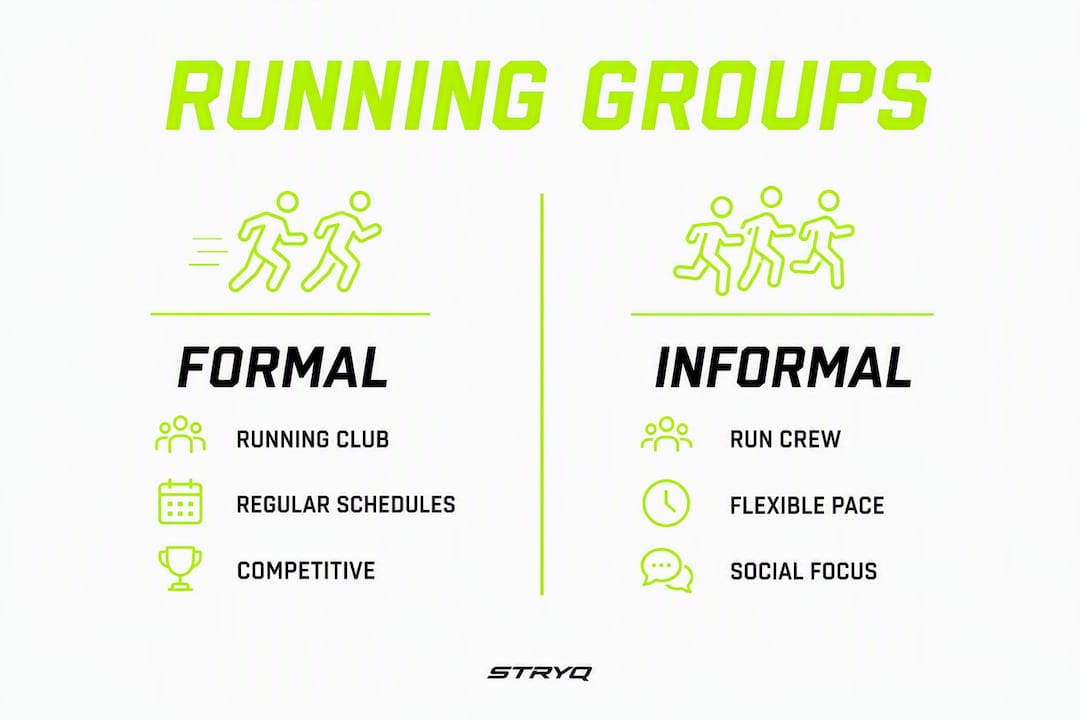
Running clubs, crews, and parkrun groups each imply different levels of formality, pace, and goals. A running club usually has a committee, affiliated status, and structured sessions. A crew is more likely to meet at a coffee shop and run at a conversational pace. Neither is better; they suit different runners at different stages.
Slow AF Run Club is a good example of a community built specifically for back-of-the-pack runners, offering moderated social spaces and virtual meet-ups alongside in-person sessions. Groups like this signal that there is a community for every pace.
Where can you find and join running groups in the UK?
The main channels
- Tooting Run Club: — a UK grassroots example using the motto “Move, Connect, Belong,” with free, bookable sessions and England Athletics affiliation.
How to join, step by step
- Search parkrun or the England Athletics club finder for groups within 5 miles.
- Read the group’s social media or website for pace guidance and session times.
- Message the run leader or simply turn up to a social run; most groups welcome drop-ins.
- Arrive 10 minutes early, introduce yourself, and mention your current pace or experience level.
- Run at your own pace; do not feel obliged to keep up with faster runners on your first session.
Pro Tip: Ask the run leader before your first session whether the group has a no-drop policy. Groups that wait for every runner at junctions are significantly more welcoming for beginners.
| Channel | Cost | Ease of entry | Pace options | Inclusivity |
|---|---|---|---|---|
| parkrun | Free | Very easy | All paces | Very high |
| England Athletics club | £20/year typically | Moderate | Multiple pace groups | High |
| Social run / crew | Free | Easy | Usually one pace | High |
| Strava club | Free (app optional premium) | Very easy | Self-selected | Moderate |
| Meetup group | Free or small fee | Easy | Varies | Varies |
How do you choose the right running community for you?
Five questions cut through most of the noise:
- Does the group have multiple pace options, or one fixed pace?
- How often do sessions run, and do the times fit your schedule?
- Is there a clear safety policy (route sharing, run leader ratios, night-run visibility)?
- What is the culture around personal bests and race times?
- Are there any costs, and is there support for runners who cannot afford kit?
Pro Tip: Check the group’s social media tone before attending. A feed full of podium photos and race times signals a competitive culture; a feed of group photos and post-run coffees signals a social one.
Watch for red flags: closed cliques where newcomers are ignored, aggressive pace expectations with no beginner option, and no named run leader or safety contact. The 80/20 training principle (roughly 80% easy effort, 20% hard) is a useful benchmark: a good club should offer sessions that allow most runners to stay in the easy zone most of the time.

How do you build an inclusive running community from scratch?
Step-by-step for organisers
- Define your mission: write one sentence stating who the group is for and what it values (e.g. “free, welcoming runs for all abilities in [town]”).
- Pick a time and place: Saturday mornings or weekday evenings at a central, well-lit location work for most communities.
- Set simple rules: no-drop policy, route shared in advance, run leader present at every session.
- Recruit volunteer leaders: aim for one qualified run leader per 10 runners. England Athletics affiliation gives access to run-leader training and potential grant funding.
- Promote locally: running shop noticeboards, local Facebook groups, and Strava are the fastest channels.
- Build in a social pause: five minutes after every run for conversation is what converts a one-time visitor into a regular.
Black Girls Do Run UK demonstrates how targeted inclusion works in practice: free sessions, qualified run leaders, and a run-kit library that removes equipment barriers for members who cannot afford gear upfront.
Inclusivity checklist
- Offer at least two pace groups from the start.
- Keep sessions free or low-cost; explore community chest grants for funding support.
- Create a kit loan library (socks, belts, soft flasks) for new members.
- Consider women-only or targeted sessions where local need exists.
- Share routes in advance so runners with accessibility needs can plan.
Pro Tip: Volunteer retention is the single biggest risk for new groups. Rotate responsibilities so no one person carries the whole administrative load, and thank volunteers publicly after every session.
| Session element | Duration | Notes |
|---|---|---|
| Warm-up | 5 minutes | Dynamic stretches; run leader leads |
| Main run | over 45 minutes | Pace groups split here |
| Cool-down | 5 minutes | Static stretches together |
| Social pause | 5–10 minutes | Coffee, chat, announcements |
What safety rules and etiquette should every group follow?
Safety checklist
- Share the route with all runners before the session starts.
- Maintain a minimum of one run leader per 10 participants.
- Use high-visibility kit or safety lights for any session in low light.
- Apply a no-drop rule: no runner is left alone on a route.
- Carry a basic first-aid kit and ensure at least one leader holds a current first-aid certificate.
- Cancel or reroute if weather or lighting conditions make the planned route unsafe.
Group etiquette
- Call out hazards (kerbs, potholes, oncoming cyclists) for runners behind you.
- Do not surge ahead without checking the group is together at junctions.
- Keep phones accessible but avoid running with headphones at full volume in a group.
- Communicate before the run if you need to leave early or run a shorter distance.
Volunteer-led community groups that embed these habits from their first session report far fewer incidents and significantly higher retention among newer runners.
Which apps help running communities stay connected?
- Strava: best for community segments, club leaderboards, and social kudos. Free tier covers most group needs.
- Garmin Connect / Apple Fitness+: best for individual training data shared within a group context.
- WhatsApp or Telegram groups: best for logistics, route sharing, and last-minute cancellations.
- Meetup: best for discoverability; new runners searching locally will find your group.
- Facebook Groups: best for longer-form announcements, photo sharing, and event sign-ups.
App reviews highlight that Strava-style platforms lead on community engagement features (segments, clubs, leaderboards), while dedicated coaching apps focus on structured training plans. For most grassroots groups, a free Strava club combined with a WhatsApp group covers 90% of organisational needs.
For online groups, set clear moderation rules from day one: who can post, how disputes are handled, and what content is off-topic. A brief pinned message covering these points prevents most conflicts before they start.
How does the right kit remove barriers to joining?
Practical barriers matter as much as psychological ones. Runners who arrive without appropriate kit often do not return. A simple loan library costs very little to set up and signals immediately that the group is genuinely welcoming.
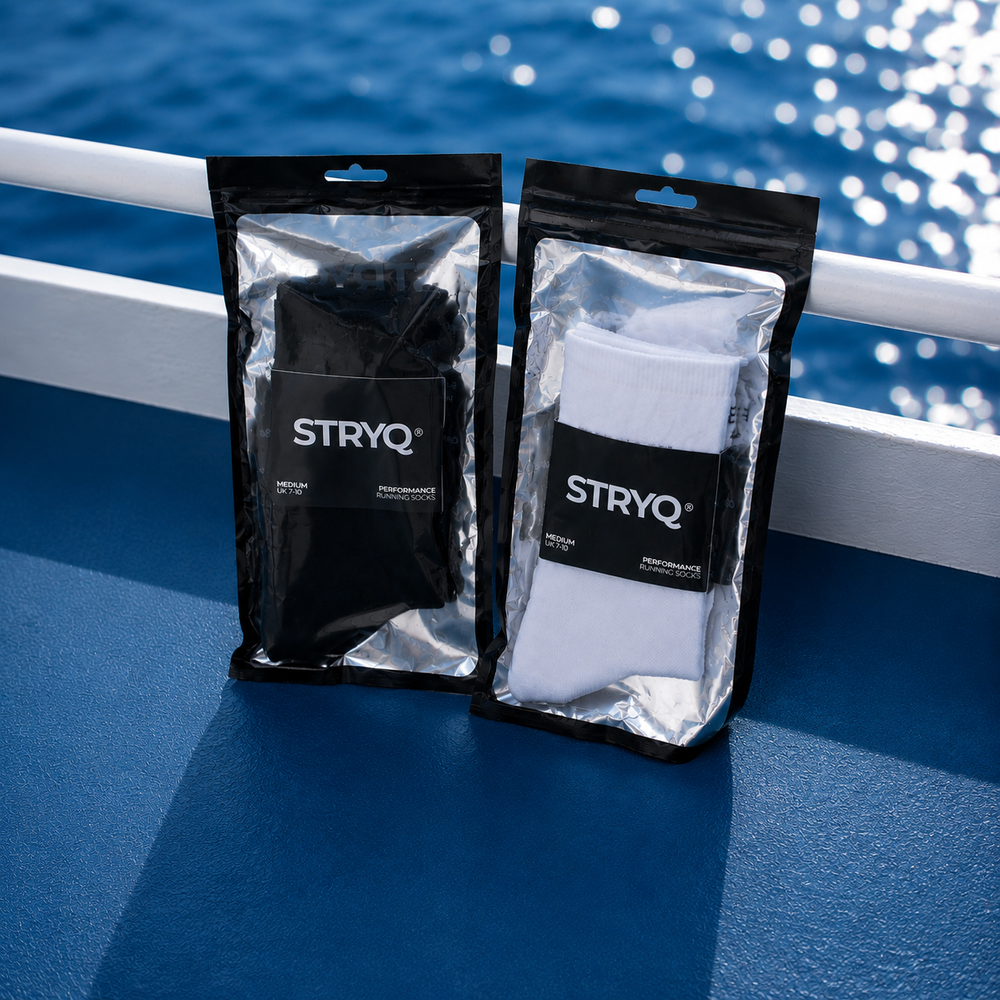
- Running socks: blisters are the most common reason new runners drop out early. Cushioned, moisture-wicking socks such as Stryq Running Socks in Black or White address this directly and are low-cost enough to include in any loan kit.
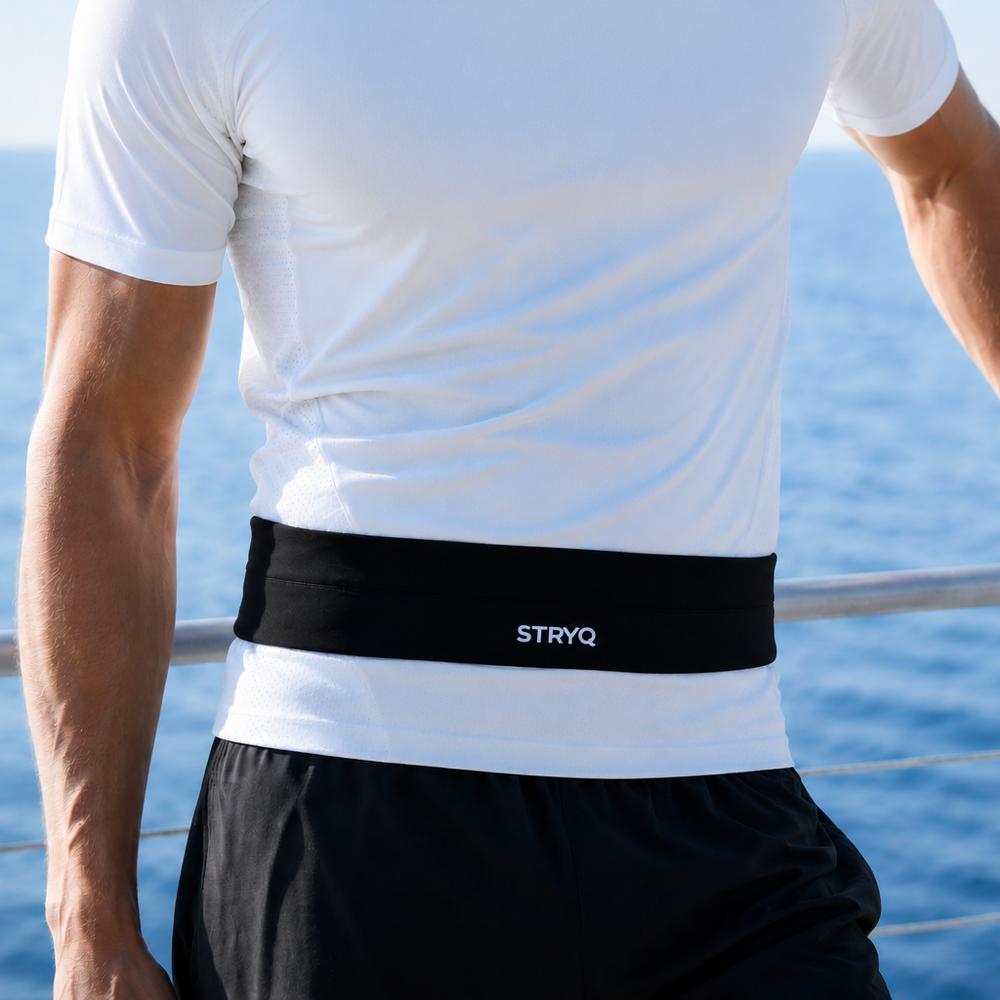
- Running belt: a lightweight running belt lets runners carry a phone and key without holding them, which matters for safety and comfort on longer group runs.
- Soft flask: for runs over 45 minutes, a soft flask removes the need to carry a rigid bottle. Stryq’s soft flasks are compact and fit most vest pockets.
Pro Tip: When building a loan kit, prioritise socks first. They are the highest-impact, lowest-cost item, and a poor-fitting sock causes more drop-outs than almost any other single factor.
| Loan kit item | Why it matters | Approx. cost to organiser |
|---|---|---|
| Running socks (cushioned) | Prevents blisters; improves comfort immediately | — |
| Running belt | Secure phone and key storage; safety essential | — |
| Soft flask | Lightweight hydration for runs over 45 minutes | £10 |
| Safety light (clip-on) | Visibility for evening or early-morning runs | — |

For a broader look at what to pack, Stryq’s running gear guide covers the minimal kit list for new runners clearly and without unnecessary complexity. Organisers building group fitness programming structures will also find useful guidance on volunteer management and session design.
Key takeaways
A running community succeeds when it removes barriers, prioritises inclusion, and gives every runner a clear next step from their very first session.
| Point | Details |
|---|---|
| Join within 48 hours | Attend a local parkrun or message an England Athletics club this week. |
| Ask five questions first | Check pace options, session times, safety policy, culture, and cost before committing. |
| Organisers: offer kit support | A loan library of socks, belts, and soft flasks removes the most common practical barriers. |
| Safety is non-negotiable | Share routes in advance, apply a no-drop rule, and use visibility kit for low-light runs. |
| Stryq starter kit | Stryq’s cushioned running socks and lightweight running belt are practical first items for any loan library or new runner. |
Why community is what actually makes running stick
The conventional wisdom says motivation gets you started and discipline keeps you going. After looking at how the most successful UK grassroots groups actually operate, that framing misses something. The groups with the best retention are not the ones with the most structured training plans. They are the ones where someone noticed you were missing and sent a message.
That is what the “Move, Connect, Belong” model at groups like Tooting Run Club gets right. The run is almost secondary. The social pause after, the WhatsApp thread, the run leader who remembers your name on your third visit: those are the retention mechanisms. Training plans and pace groups matter, but they are the scaffolding, not the foundation.
For anyone hesitating: the first session is the hardest. Show up once, and the group does most of the work from there.
Stryq kit for your first group run
The simplest way to show up to a new group feeling prepared is to sort the basics first. Stryq builds running accessories specifically for UK runners who want reliable kit without paying premium brand prices. The cushioned running socks are the place to start: arch support, moisture control, and a fit that stays in place across a full session. Pair them with a lightweight running belt for your phone and key, and you have covered the two most common comfort complaints before your first group run begins.
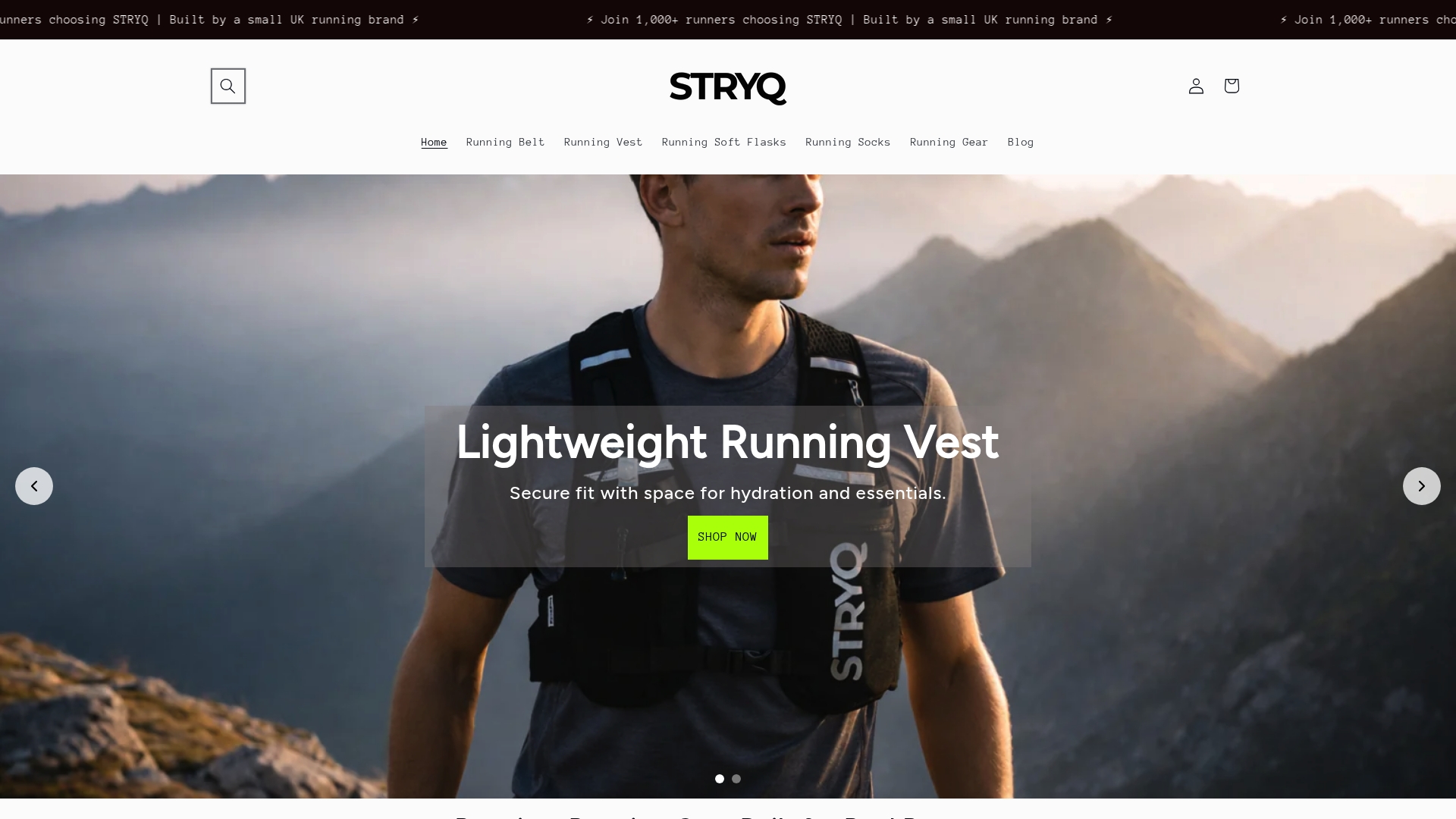
Browse the full Stryq running gear range and pick up what you need before your next session.
Useful UK resources
- parkrun UK — find a free, weekly 5K near you; no cost, all abilities welcome.
- England Athletics club finder — search for affiliated clubs with qualified run leaders and structured sessions.
- Tooting Run Club — UK grassroots example of inclusive, free, volunteer-led community running.
- Lions Running Community — England Athletics-listed community group; useful model for new organisers.
- Stryq running gear guide — minimal kit list for new runners and loan-library organisers.
- Stryq mental health and running — evidence on the psychological benefits of group running.