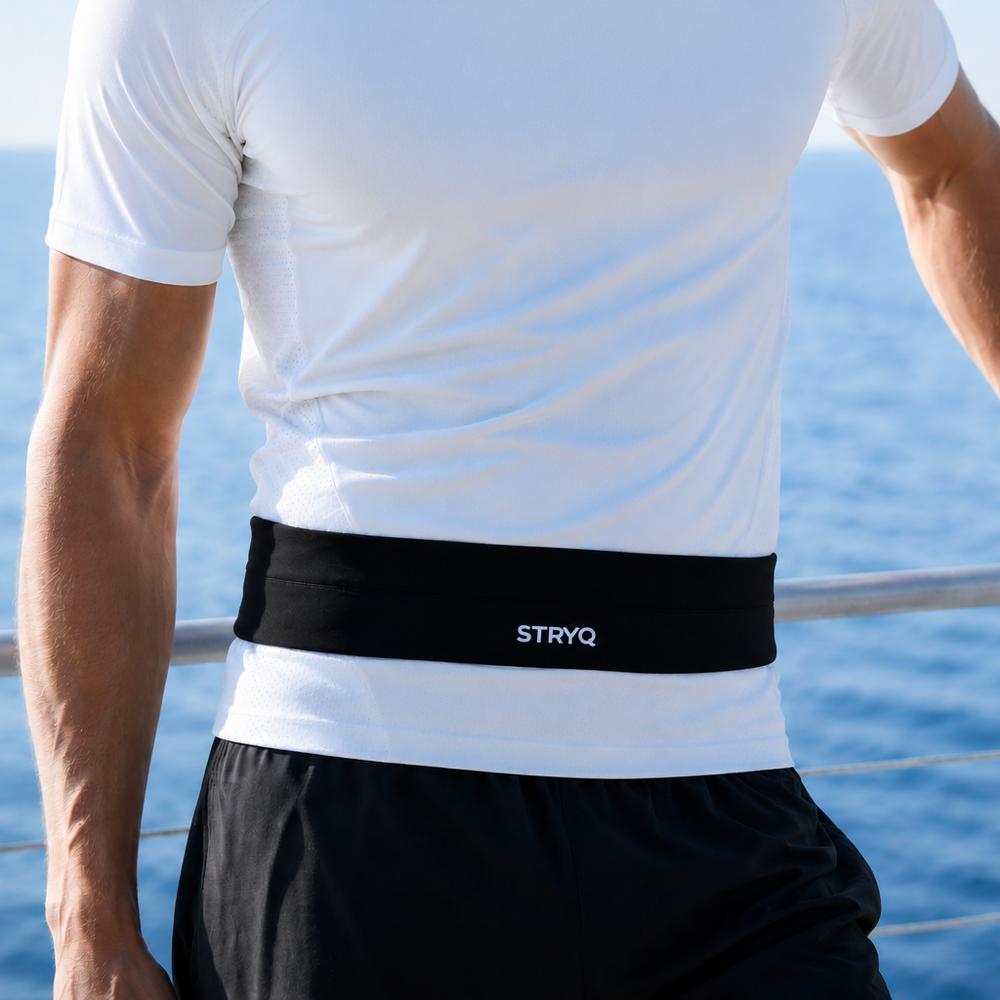
Wear your running belt low on the hips, just above the pelvis, for the most stable fit. This is the general default. Torso shape, clothing and how much you carry can shift that by an inch or two. Fit and tension matter as much as placement: a belt in the right spot but too loose will still bounce.
TL;DR:
- A low-hip position provides the most stability, but fit and tension are crucial to prevent bouncing or sliding during runs.
- The belt should be tight enough to stay secure without pinching or restricting breathing, confirmed through jog tests before heading out.
- Carrying soft, flat items reduces movement, while rigid objects or heavier loads should be evenly distributed or shifted to a vest for longer runs.
- Wearing the belt under clothing is ideal for cold weather and racing, but over the shirt works better in warmer conditions and for easy pocket access.
- A quick 30-second belt check before each run helps prevent mid-run adjustments, promoting steadier pacing and preventing skin chafing.
Table of Contents
- Practical positions: low hips, waist and small of back
- How tight should a running belt be
- What to carry and how to place it
- Wearing the belt: over or under clothing, and which way round
- Simple run tests to confirm a good fit
- STRYQ testing insights on position and fit
- A 30-second habit that saves distraction
- How STRYQ kit solves common fit problems
- Sources
- FAQ
Practical positions: low hips, waist and small of back
Low hip placement sits the belt on the bony part of the pelvis, below the natural waistline. This spot stabilises the belt because the hip bones give it something firm to rest against, and it keeps the belt clear of the ribs during breathing and clear of the thighs during leg swing.
Waist or high placement puts the belt closer to the navel. Pockets and zips are easier to reach at this height, but the waist narrows and softens compared with the hips, so the belt has more room to slide and bounce, especially on faster efforts.
Small-of-back or diagonal placement works for some runners on long runs or with bulky layers, since it moves the load away from a sensitive stomach area. It can also reduce interference with hydration vest straps.
A few notes for specific cases:
- Pregnant runners often find a low, loose fit under the bump more comfortable than anything resting on the abdomen.
- High-waisted leggings or shorts give the belt a built-in ledge to sit on, which helps with grip.
- Shorter torsos may need the belt nudged slightly higher to avoid it riding onto the hip joint.
- Longer torsos usually have more room to experiment between hip and waist height.
How tight should a running belt be
Tighten the belt until it feels secure without pinching skin or restricting a deep breath. Too loose and it will slide and bounce with every stride; too tight and it can leave marks or dig in in on longer runs.
Two checks confirm the fit before you commit to a run:
- Stand up straight and take a few deep breaths; the belt should stay put without digging in.
- Jog gently for one to two minutes and watch for bounce, rubbing or the belt creeping upward or downward.
If it slides during the jog test, tighten one notch and repeat. If it pinches when seated, loosen slightly and retest standing, since the fit changes with posture.
Pro Tip: Do the jog test on the pavement outside your door before a longer run. Thirty seconds tells you more than any amount of standing around in the kitchen.
Small adjustments while running are normal. A belt that needs constant retightening after the first mile, though, is usually the wrong size rather than the wrong position.
What to carry and how to place it
What you load into the belt affects how well it stays put. Soft, flat items sit closer to the body and move less than bulky or rigid ones.
- Keys, gels and a soft flask are light and shape to the body; they rarely cause bounce.
- Rigid items such as a hard phone case or a large battery pack tend to shift and knock against the hips.
- Spread heavier items across two or three small pockets rather than one large one, and keep the heaviest centred or towards the back to balance the load.
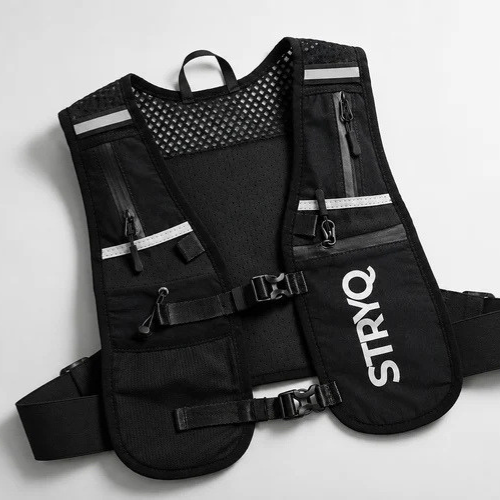
- For runs beyond about 90 minutes, or when carrying more than a phone and a gel, a hydration vest such as the STRYQ HYDRATION RUNNING VEST distributes weight across the shoulders and chest instead of the hips alone.
- A phone sits most securely in a pocket with a zip or elastic closure positioned front or side, away from the arm swing.
Wearing the belt: over or under clothing, and which way round
Wearing the belt under a shirt gives a streamlined line and less flap in cold or windy conditions. Over the shirt is easier to adjust mid-run and lets pockets breathe on warmer days.
- Under the shirt suits cold-weather runs and racing, where a tucked-in look matters.
- Over the shirt suits summer runs and any run where you expect to reach into a pocket often.
- Most belts are designed with the main pocket or zip facing forward or to one side, so check the label or seam line rather than guessing.
- Keep buckles and hardware away from hip bones and the spine, since these are the spots most likely to develop pressure points on longer efforts.
Simple run tests to confirm a good fit
A short sequence on your usual route will tell you more than standing in front of a mirror.
- Start with five minutes of easy running to settle the belt into place.
- Add a short pickup to a faster pace and notice any sliding or bounce.
- Include a couple of turns and, if your route has one, a short hill to test the belt under a changing stride.
Watch for sliding, rubbing at the same spot each time, or any tightness across the ribs. A quick fix mid-run is usually one notch of tension or a slight rotation of the belt. If problems persist after two or three runs, the issue is more likely size or design than position, and a vest may suit better for longer distances.
STRYQ testing insights on position and fit
The running belt has gone through multiple sample revisions, with in-field bounce testing and runner feedback shaping the final strap angle and pocket layout. Testers found that shifting the main pocket slightly off-centre, rather than dead centre on the spine, reduced rubbing during arm swing on longer runs. Soft flask orientation also mattered: angling the flask opening inward kept it from catching on the arm during faster strides.
A belt only earns its place if you forget you’re wearing it by the second mile.
Pro Tip: If a belt still shifts after several fit adjustments, the strap length or pocket layout, not your technique, is usually the problem.
The author drew on this testing process when writing the fit guidance above.

A 30-second habit that saves distraction
I check my belt standing still, then jog ten steps before I properly start, every single run. It takes thirty seconds and it means I’m not fiddling with a pocket zip half a mile in. Fewer mid-run adjustments means steadier pacing and fewer patches of rubbed skin by the finish.
— martin
How STRYQ kit solves common fit problems
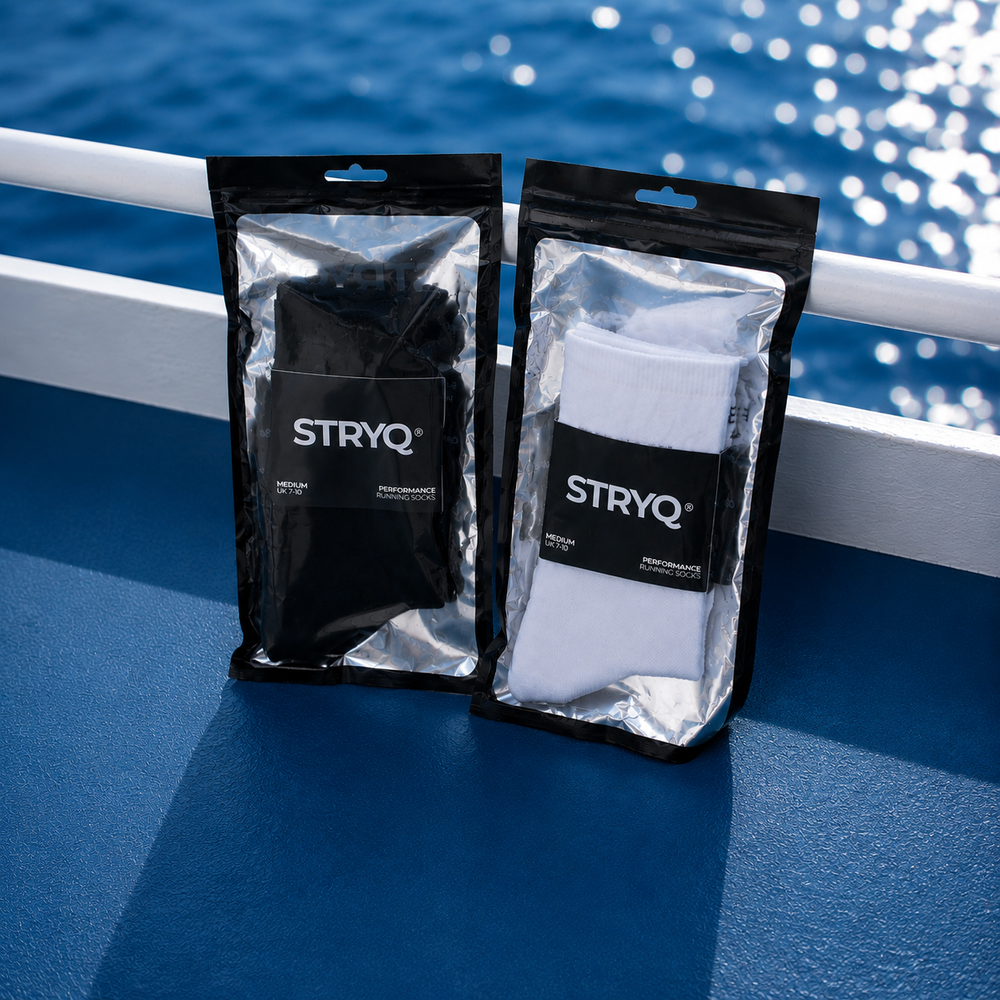
A belt that bounces or digs in usually needs a different product, not just a different position. The STRYQ RUNNING BELT is built for everyday training runs, with a low-hip fit and pocket layout refined through the sample testing described above. For long runs or hot weather where you need more capacity, the STRYQ HYDRATION RUNNING VEST shifts the load to the shoulders and chest instead of the hips. And since rubbing often starts at the ankle rather than the waist, STRYQ Running Socks - Black add cushioning and arch support that reduce friction over longer distances.

- STRYQ RUNNING BELT: everyday runs, low-hip stability.
- STRYQ HYDRATION RUNNING VEST: long runs, higher carry capacity.
- STRYQ Running Socks: comfort and reduced rubbing over distance.
Browse the full running gear collection to find the combination that suits your usual route and distance.
Sources
- The 80/20 Rule: Why 80% of training should be easy — TrainingZones
- What Is the 80/20 Rule for Running? — Lifehacker
FAQ
What is the 80% rule in running?
The 80/20 rule means spending roughly 80% of weekly training time at an easy, conversational intensity and the remainder at moderate to high intensity, measured by time rather than distance, as TrainingZones explains. Many recreational runners actually train closer to a 50/50 split without realising it, according to Lifehacker’s coverage.
Do you wear a running belt on the front or back?
Most runners keep the main pocket at the front or side, where it’s easiest to reach while moving. The belt itself sits low on the hips all the way round, with heavier items balanced towards the back or centred to avoid bounce.
Is there a correct direction to put a belt on?
Check the label or seam line, since most belts are designed with the pocket or zip facing a specific way, usually forward or to one side. Wearing it backwards can put the opening in an awkward spot to reach mid-stride.
Should I wear my running belt under or over my shirt?
Under the shirt gives a streamlined fit that suits cold or windy runs and races. Over the shirt makes pockets easier to reach and suits warmer conditions where breathability matters more than a tucked-in look.