The Brighton Marathon is the kind of race that can feel friendly, fast and brilliantly supported - right up until a headwind, an early pacing mistake or an unfamiliar gel turns the final miles into hard work. Good Brighton marathon race preparation is not about chasing a perfect training block. It is about arriving with a plan you have practised, kit you trust and enough energy left to enjoy the day.
Build your Brighton marathon race preparation around consistency
A marathon is rarely won or lost by one long run. It is built through the ordinary weeks: easy miles completed at an easy effort, a long run that fits around real life, and enough recovery to repeat the work next week.
If this is your first marathon, resist the temptation to make every run a test. Most runs should feel controlled enough that you could speak in short sentences. That steady aerobic work is what allows you to keep moving when your legs are tired late in the race.
Your long run matters, but it should not leave you unable to train for several days. Many runners do well building gradually towards a longest run of roughly 18 to 22 miles, depending on their experience, training history and plan. More experienced runners may need less distance but more quality within their long runs. Newer runners often benefit more from time on feet and a sensible run-walk strategy than from forcing a single huge session.
Practise marathon pace without racing your training
Marathon pace should feel purposeful, not frantic. Add sections at your intended race pace into selected long runs once you have a base of consistent mileage. Start small. A few steady miles towards the end of a long run can teach you far more than trying to run the whole session at race effort.
Use recent training, not an old personal best, to set your target. If you cannot hold the pace comfortably in controlled blocks during training, it may be too ambitious for race day. Brighton's atmosphere can make the opening miles feel easier than they are. A conservative first 10K gives you options later. Starting too quickly removes them.
Train for the conditions, not just the distance
Brighton's seafront setting is part of the appeal, but exposed coastal stretches can bring wind. The route profile and details can also change, so check the official race information closer to the event rather than relying on a previous year's map.
Wind does not need a special training plan. It does need a sensible mindset. Include some runs in ordinary British weather instead of waiting for a perfect calm morning. Learn how your effort feels when the pace on your watch is slower than expected. On race day, run to effort where the wind is strongest and avoid wasting energy trying to force a number.
If possible, practise on gently rolling roads too. Even a course that appears mostly flat can make your calves and quads work differently through turns, slight changes in gradient and uneven pacing. Strong legs are useful, but fresh legs are better. Keep strength work simple and consistent: squats, lunges, calf raises and single-leg balance can support your running when introduced well before the taper.
Make fuelling a trained skill
The wall is not always dramatic. Often it begins with a slower stride, fading concentration and the growing sense that every small decision is difficult. Under-fuelling makes all of that more likely.
Start taking on carbohydrate early in long runs, before you feel depleted. The exact amount depends on your body size, pace, stomach tolerance and the products you use, but many marathon runners work towards 60g to 90g of carbohydrate per hour. That range is not a target to force immediately. If you currently take very little, build up over several weeks.
Practise the same routine you expect to use in Brighton: when you take gels, how you carry them, what you drink with them and what happens if you miss a water station. A gel that works perfectly during a 10K may feel very different after two hours of running.
For race morning, keep breakfast familiar. Eat a meal you have tested before long runs, allowing enough time to digest it. There is no prize for copying another runner's porridge, bagel or coffee routine. Your job is to arrive at the start line comfortably fuelled, not overly full.
Carry what keeps you consistent
Water stations are useful, but they do not replace a personal hydration plan. Some runners are happy relying mainly on the course. Others prefer to carry fluid so they can sip little and often, especially if it is warm or they have a sensitive stomach.
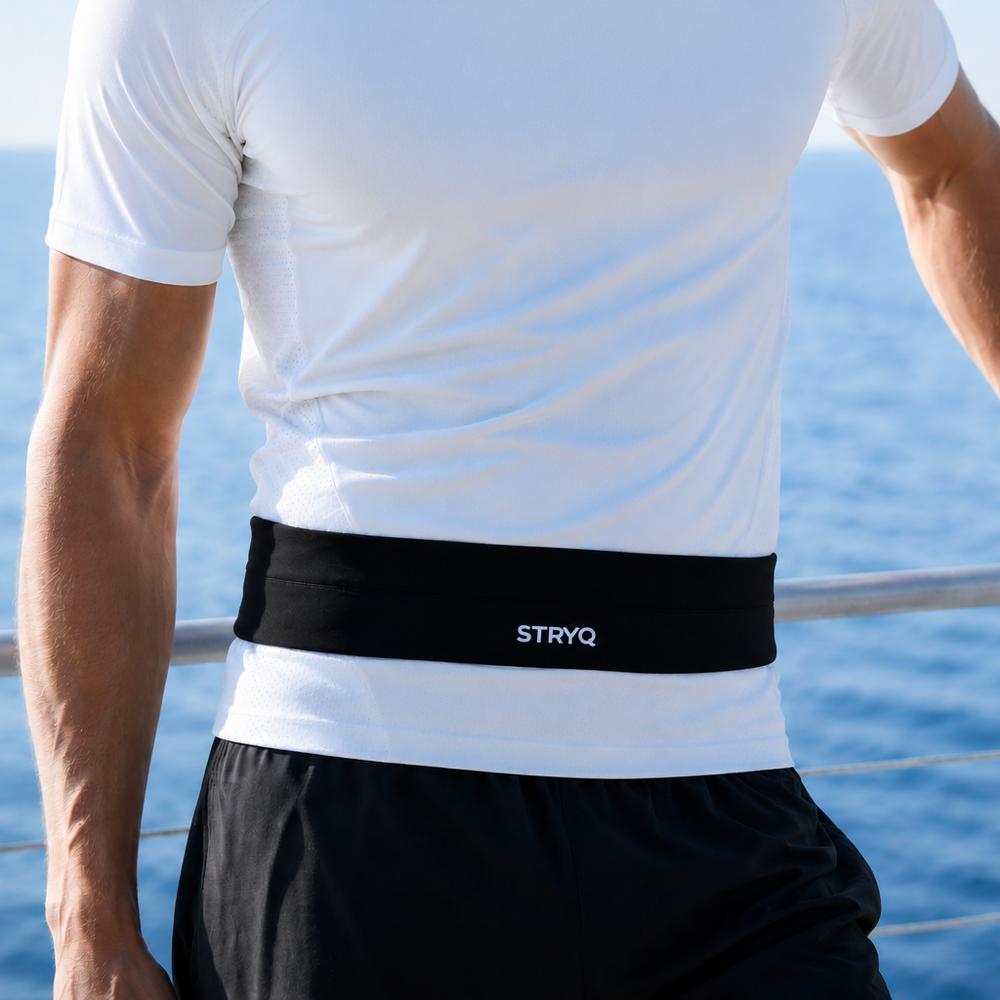
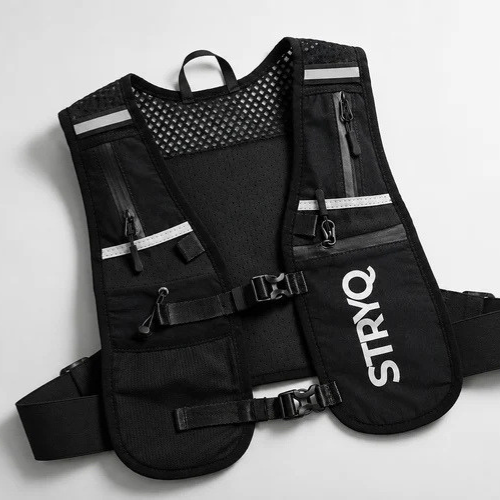
A lightweight hydration vest can make sense if you need more fluid, want space for layers and nutrition, or dislike stopping at busy stations. For a simpler set-up, a secure running belt can carry gels, phone and keys without a pocket bouncing against your hip. The right choice depends on how much you drink, how long you expect to be out and what you have already tested in training.
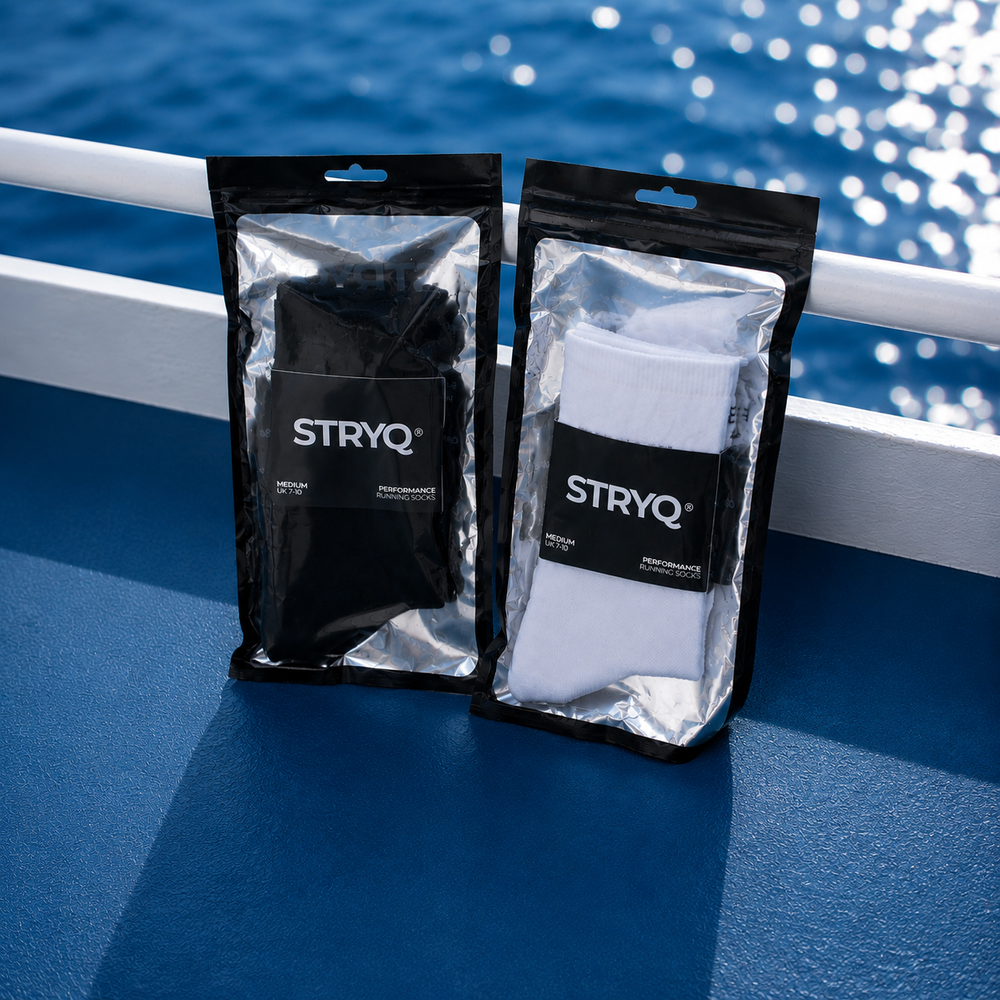
The rule is straightforward: nothing new on race day. That includes gels, socks, anti-chafe products, shoes and carrying kit. A comfortable belt or vest should disappear once you are running. If you are constantly adjusting it during a long run, change the fit or the set-up before the marathon. STRYQ kit is designed around that practical goal: no bounce, no bulk and no distraction from the miles ahead.
Use the final weeks wisely
The taper can make runners nervous. Reduced mileage may leave you feeling restless or convinced you are losing fitness. You are not. The work is already done. Tapering gives your body time to absorb it.
In the final two to three weeks, reduce overall running volume while keeping a little easy pace work or short strides in the plan. Avoid trying to make up missed sessions. One skipped run will not ruin your race. A last-minute hard session, a heavy gym workout or a long day on your feet might.
Prioritise sleep where you can, but do not panic if race-week nerves disrupt one night. A decent routine across the week matters more than perfect sleep the evening before. Eat normal, carbohydrate-focused meals in the days leading up to the race. You do not need to stuff yourself. Add familiar carbohydrate foods to meals, reduce anything that upsets your stomach and keep drinking regularly.
Prepare your kit before race week gets busy
Lay everything out several days before travelling. Race morning is not the time to search for safety pins or discover that your watch has not charged.
Your essentials will vary, but have your shoes, socks, race outfit, layers for the start, bib, timing chip, watch, nutrition, hydration plan and post-race clothes ready. Check the weather forecast, then make a decision close to the day. Brighton can feel cooler at the start than it does once you are moving, and wind can change how exposed you feel.
Choose clothes that have already handled your longest runs. Avoid overdressing. You should feel slightly cool while standing in the start area, because you will warm up quickly after the first mile or two. Disposable layers can help while waiting, but make sure they are easy to remove safely.
Run the race you trained for
Give yourself a controlled opening. Crowds, music and fresh legs can pull you faster than planned, particularly in the first few miles. Let other runners go. Focus on relaxed shoulders, a light grip and your own pacing plan.
Break the race into manageable sections. The first third is about patience and fuelling. The middle is about maintaining rhythm. The final 10K is where you respond to how you genuinely feel, rather than how you hoped to feel at the start. If you have a tough patch, slow slightly, take fuel and keep moving forward. A brief reset is often smarter than fighting until you fade.
If you are using run-walk intervals, start them from the beginning. Do not wait until you are exhausted. Planned walking through drinks stations can also be an effective way to hydrate without choking down water at speed.
The finish is closer when you have prepared the boring details well. Trust the training you completed, follow the routine you practised and leave enough patience for the later miles. That is what gives Brighton the chance to feel like the race you came to run.