Those white rings are dried sweat, mostly salt, mixed with skin residue and sometimes detergent left in the fabric. Brush off loose crystals or rinse the area with cold water, then air the item away from heat. Most marks lift fully once you apply the right method for the fabric.
TL;DR:
- Applying a vinegar-water soak for 15 to 30 minutes effectively loosens set-in salt stains on colorfast fabrics without damage.
- Fresh salt stains should be brushed off or blotted immediately and rinsed with cold water on the reverse side to prevent setting.
- Cold-water washing with minimal detergent and air-drying helps prevent salts from setting and preserves technical fabric finishes.
- Performance gear should be hand-washed with separate cleaning of components like soft flasks and vests, avoiding machine-drying or heat exposure.
- Most salt stains are cosmetic and removable, but persistent or reoccurring marks may indicate fabric breakdown or structural issues.
Table of Contents
- Why sweat leaves salty marks and why some runners see more of them
- Fast spot fixes for fresh salt stains after a run
- Treating set-in stains without damaging technical fabrics
- Washing, drying and storage habits that stop stains returning
- How STRYQ cares for socks, belts and hydration gear
- When a stain is only cosmetic, and when it is not
- Low-maintenance running kit from STRYQ
- FAQ
- Sources
Why sweat leaves salty marks and why some runners see more of them
Sweat composition differs from person to person. Genetics, sweat rate, sodium intake and how well someone is heat-acclimatised all change how much salt ends up on the skin and clothing. Some runners lose far more sodium per session than others, even at the same effort level.
As sweat dries, the water evaporates and the dissolved salt crystallises on the fabric surface, leaving the white or grey rings associated with sweat salt stains on gear. Leftover soap or detergent in the fibres makes this worse, because residue binds with the salt and becomes more visible once dry.

Fabric matters too; understanding the secret power of antimicrobial fabrics can help manage odour and salt stains effectively. Synthetic technical fabrics and the mesh interiors of hydration gear trap salts and odour differently to natural fibres. Research on polyester and cotton after exercise found that synthetic textiles tend to build stronger odour profiles than cotton, linked to fibre properties and the microbial growth each fabric encourages.
Fast spot fixes for fresh salt stains after a run
Treat a fresh salt mark before it sets, and most of it comes straight out.
- Brush or shake off dried crystals first. If the mark is still damp, blot it rather than rubbing, which pushes salt deeper into the fibres.
- Rinse from the reverse side with cold water. On colourfast fabrics, a light spray of diluted vinegar helps lift residue before it dries hard.
- Air the item fully before storing it. Skip the tumble dryer and hot water, since heat sets salt crystals and can damage technical coatings on performance fabrics.
Pro Tip: Keep a small spray bottle of diluted vinegar in your kit bag so you can treat salt marks the moment you get home, before they have time to set.
Treating set-in stains without damaging technical fabrics
Once a salt stain has dried in over several wears, a quick rinse will not shift it. Two methods handle most set-in marks:
- Vinegar-water soak: mix equal parts vinegar and cold water, soak the stained area for 15 to 30 minutes, then hand wash and rinse thoroughly. Maytag’s care guidance recommends this soak time for stubborn sweat stains before washing.
- Baking-soda and hydrogen peroxide paste: effective on white or thoroughly colourfast fabric, but test a small hidden patch first and avoid it on delicate or coated materials.
A soak of 15 to 30 minutes is the window Maytag suggests for a diluted vinegar solution to loosen set-in sweat salt before washing.
Gear needs extra care. Remove soft flasks and valves before cleaning a hydration vest, and hand-clean seams and straps separately. Never machine-wash anything with non-removable foam padding or built-in electronics, since the spin cycle and water exposure can damage both.
Washing, drying and storage habits that stop stains returning
Cold-water washing with a mild or sport-specific detergent protects technical fabrics far better than a hot cycle. Fabric softener and heavy detergent doses leave residue that clogs moisture-wicking fibres, so less is more here.
- Wash technical kit inside out to reduce direct friction on printed logos and coated panels.
- Use a smaller detergent dose than the bottle suggests, since excess product is a common cause of lingering salt residue.
- Air-dry rather than tumble-dry, particularly for any item with reflective trim or conductive threads.
High heat in a dryer can damage finishes and conductive layers. A study on smart fabric care found that washing and drying coated or conductive textiles at high temperatures changes their appearance and function, while air-drying and tailored washing preserve those layers.
Pro Tip: Rinse sweaty kit the moment you take it off, rather than leaving it in a closed bag until laundry day. Damp fabric left in a bag is exactly the humid, delayed-wash condition that lets odour-causing bacteria take hold.

How STRYQ cares for socks, belts and hydration gear
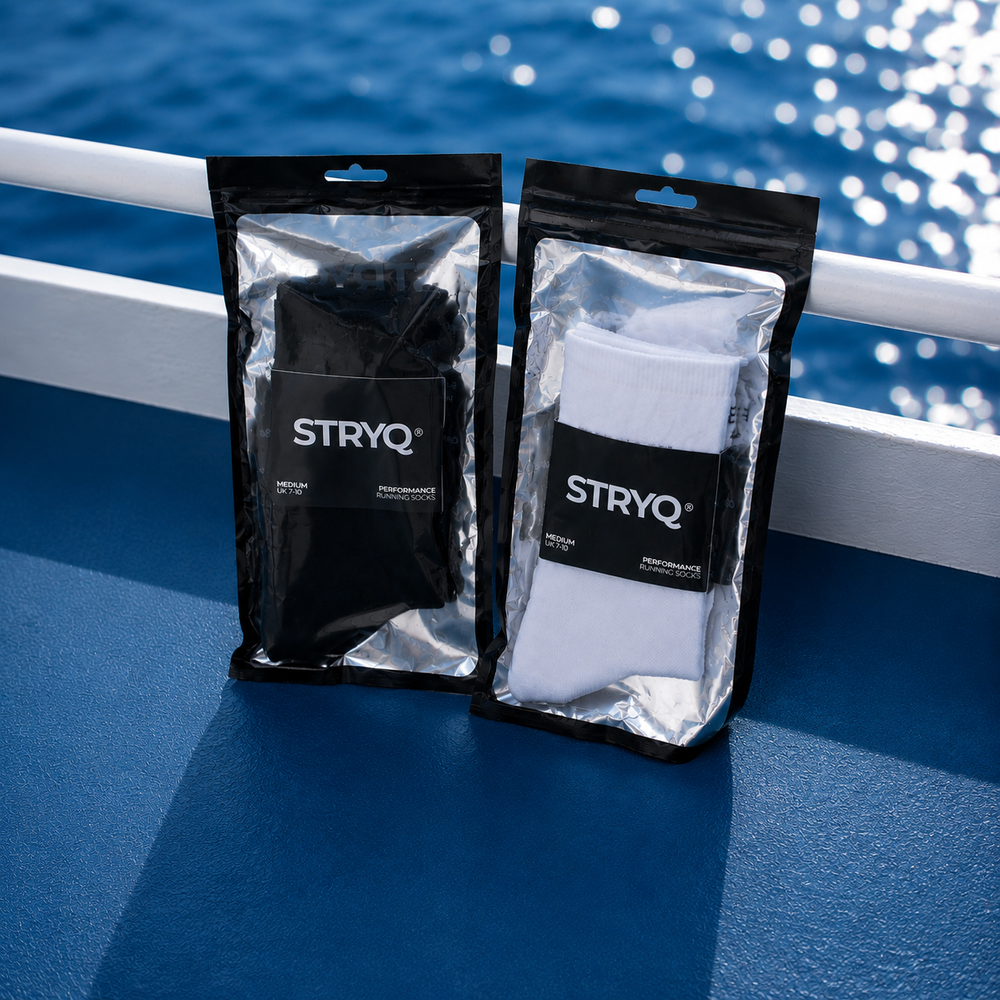
STRYQ recommends a short, cold wash for running socks, with no fabric softener, to protect the cushioning and arch support over repeated wears.
- Turn socks inside out before washing to protect the cushioned sole against abrasion.
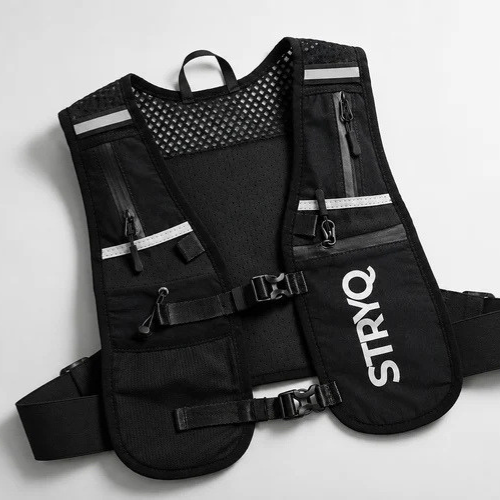
- Remove soft flasks and valves from hydration vests and clean them by hand separately.
- Air-dry belts and vests fully before storing to stop trapped moisture turning into odour.
These steps mirror the fabric-specific care above and extend the life of technical gear rather than just masking the problem.
When a stain is only cosmetic, and when it is not
Most sweat salt stains on gear are cosmetic and will come out with the right method. The exception is a garment that keeps breaking down in the same spot after repeated correct care, which points to a structural fault rather than staining.
Sudden, unusually heavy sweating or skin irritation is worth checking rather than treating as a laundry problem; the NHS page on excessive sweating outlines when it needs attention. Replace gear once it stops performing, rather than persisting with it for appearance alone.
Low-maintenance running kit from STRYQ

A kit that is easy to clean is a kit you actually keep wearing. STRYQ’s running socks, soft flasks and belts follow the same cold-wash, air-dry care covered above, so the routine in this article works straight away with no extra steps.
- STRYQ Running Socks hold their arch support and cushioning through repeated cold washes.
- STRYQ 500ml Running Soft Flasks separate fully for hand cleaning, so salt and residue do not build up in the valve.
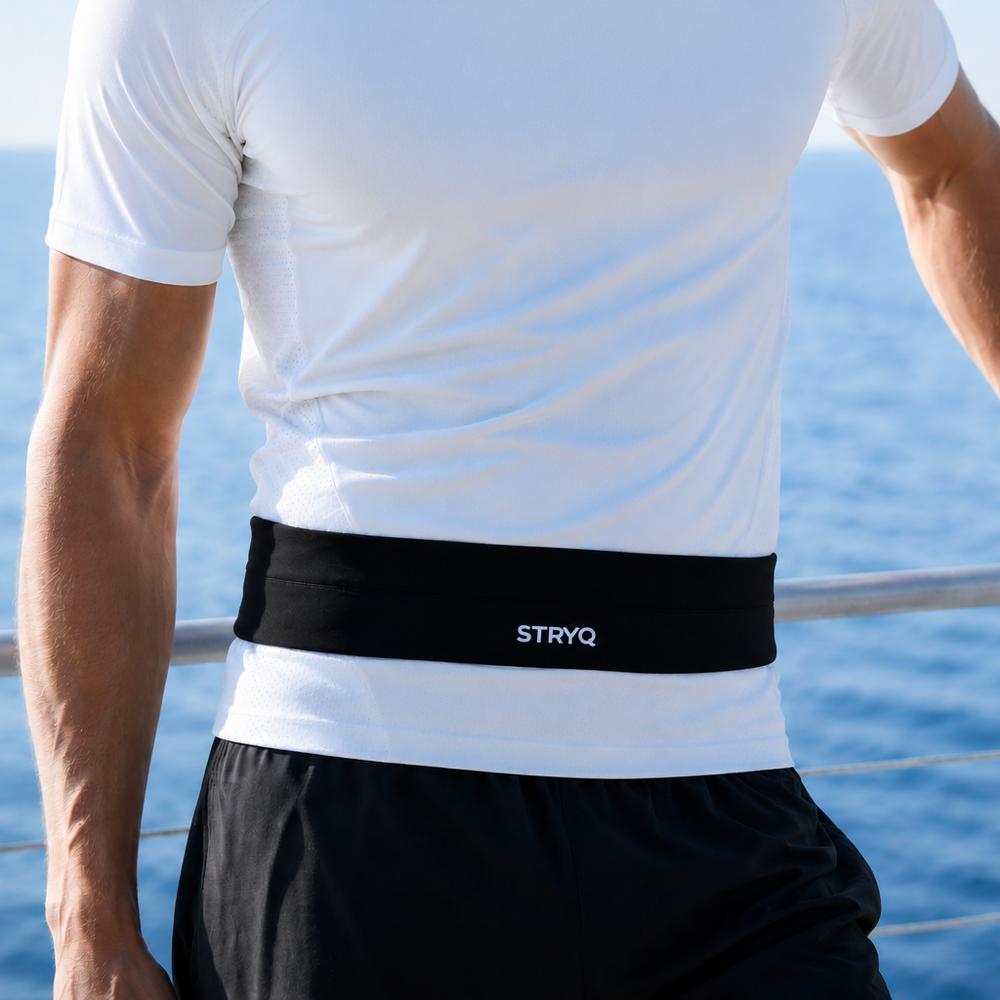
- STRYQ’s running belts, hydration vests and high-vis kit are built for the same quick-rinse, air-dry routine.
FAQ
Why do my clothes have salt stains after sweating?
Sweat contains dissolved sodium chloride among other compounds, and as the moisture evaporates, that salt crystallises on the fabric surface. Leftover detergent residue in the fibres can make the marks more visible once the garment dries.
How do I remove sweat salt stains from clothes?
Rinse fresh marks with cold water, then air the item. For stains that have already set, a vinegar and water soak of 15 to 30 minutes followed by a hand wash lifts most of the remaining residue.
Are salt stains permanent?
Most salt stains are not permanent and respond well to a vinegar soak or a baking-soda and peroxide paste on colourfast fabric. Repeated heat exposure from tumble drying can set stains harder over time, making them tougher to shift later.
Why is my sweat staining my clothes brown?
Brown or yellow tints alongside salt marks usually come from a build-up of body oils, antiperspirant residue or bacterial activity rather than the salt itself. Microbiology research on exercise clothing found that synthetic fabrics in particular develop stronger odour and discolouration profiles after repeated wear without prompt washing.
Sources
- How to remove sweat stains | Maytag
- Microbial odour profile of polyester and cotton clothes after a fitness session