The most reliable way to stop sweat reaching your phone is a secure, low-bounce carrier matched to how much you sweat and how you need to access the phone, not a phone’s built-in water resistance. IP ratings describe lab conditions, not a training run in August. A running belt suits light to moderate sweat with quick access; a sealed pouch suits heavy sweat, rain, or long unsupported runs.
TL;DR:
- Proper fit and closure quality are more important than IP ratings when choosing a sweat protection method for running, with focus on stability and sealing.
- Sealed dry bags with roll-top or taped seams are suitable for heavy rain and extended runs, but tend to slow access and respond stiffly.
- Testing carry solutions before long runs by jumping in place helps identify bounce and gaps, ensuring a secure fit.
- Immediate action after sweat or rain contact, including drying and disconnecting power, reduces moisture damage risk; avoid using heat or rice.
- Prioritize gear that stays still and seals well over simply chasing higher IP numbers, as fit and closure integrity provide genuine protection.
Table of Contents
- Types of sweat protection: pouches, belts, carriers and cases
- Getting the placement, fit and closure right before you run
- What to do the moment sweat or rain reaches your phone
- A quick checklist for choosing the right setup
- Why STRYQ’s product testing and running experience matter here
- Why chasing a higher IP number misses the point
- Carrying gear built with sweat protection in mind
- Sources
- FAQ
Types of sweat protection: pouches, belts, carriers and cases
Each carrying method solves a different exposure problem.
- Sports pouches: armband or clip-on pouches with a clear touch panel, suited to short, low-sweat sessions where quick screen access matters.
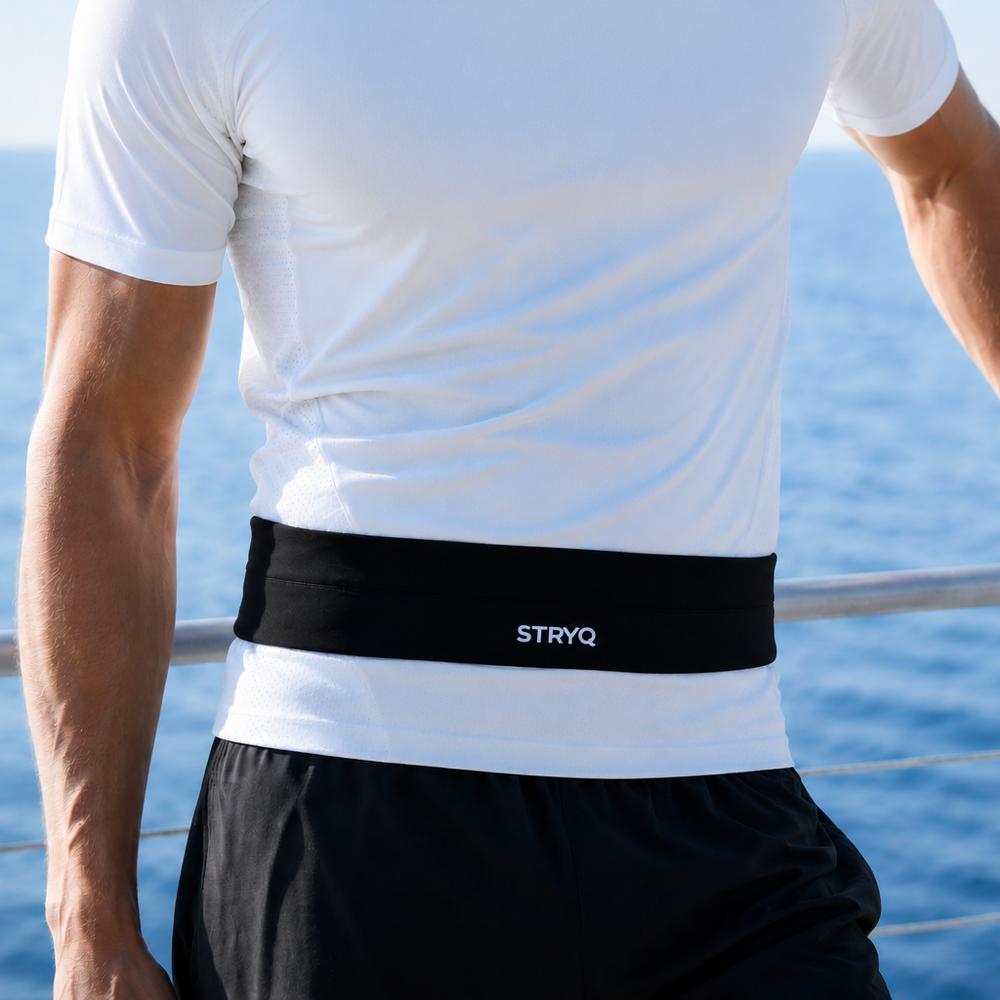
- Running belts: waist-worn pouches, often with a stretch or zip closure, built for stability across 5K to marathon distances.
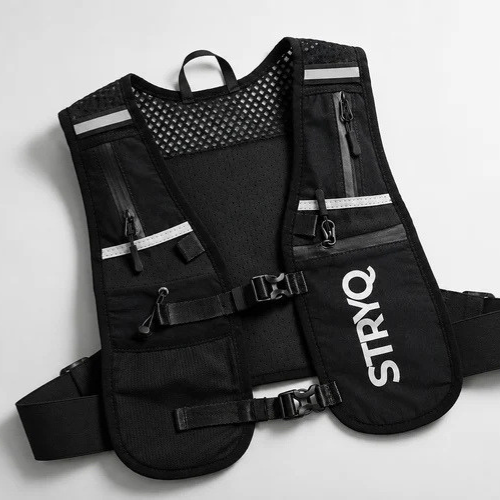
- Chest carriers: harness-style holders that keep the phone still during steady-state runs, useful for larger phones that bounce badly at the waist.
- Sealed dry bags: roll-top or fully taped enclosures rated for submersion, aimed at heavy rain, watersports crossover, or extreme sweat.
- Sweat-resistant cases: a case with a gasket or membrane, offering some splash protection but rarely full immersion resistance.
The trade-off is consistent across all five: better sealing usually means slower access and a stiffer touch response. A vague label like “sweat-proof” on packaging tells you nothing about the actual test method, so check for a stated closure type, a taped seam, or an IP code with a published test report before trusting it on a long run in the rain.
Getting the placement, fit and closure right before you run
Fit and closure quality matter more than the fabric.
- Choose waist placement for runs under 90 minutes at steady pace, since a belt keeps the phone low and stable with minimal bounce.
- Choose a chest carrier for longer steady-state efforts where waist movement is more pronounced, particularly for bigger phones.
- Avoid loose shorts or jacket pockets for anything beyond a short jog, since damp fabric and movement both increase risk.
- Test the closure before you leave the house: zip it fully, tug the seams, and check a roll-top has three full folds if that’s the design.
- Check ventilation needs against exposure, since a fully sealed pouch on a hot day traps sweat against the case itself.
Pro Tip: Do a five-minute jog on the spot in the carrier before a long run; bounce and gaps show up immediately.
A running belt fitted correctly stays flat against the lower back rather than swinging, which is the main sign a size or strap adjustment is needed.

What to do the moment sweat or rain reaches your phone
Act on the phone immediately rather than finishing the run first if you can.
- Unplug any cable and switch off charging before doing anything else.
- Wipe visible moisture off the exterior with a dry, lint-free cloth.
- Orient the charging port downward and gently tap to help liquid drain out.
- Leave the phone in a ventilated spot, ideally in front of a fan, rather than sealing it in a bag.
- Do not use rice, a hairdryer, or compressed air, since heat and forced air can push moisture further in.
Apple recommends waiting at least five hours before cable charging after liquid exposure, and Apple’s own guidance is specific about avoiding a cable connection before that. Samsung gives comparable moisture-handling advice, including drying fully before charging and checking model-specific instructions before attempting to rinse the device. If a moisture warning persists after drying, or sound quality drops through the speaker or microphone, that’s the point to contact the manufacturer rather than keep using the phone as normal.
A quick checklist for choosing the right setup
Match the solution to the run before you match it to the price tag.
- Light, occasional sweat: a breathable belt or armband with a stretch closure covers most 5K and 10K training runs.
- Heavy sweat or long unsupported runs: a sealed pouch or dry bag with a roll-top or taped seam handles marathon-length exposure and unpredictable weather.
- Phone size and case: check the pouch’s internal dimensions against your phone plus its existing case, since a tight fit strains seams over time.
- Access needs: a clear touch panel matters if you use the phone for navigation or music control mid-run; a zipped pocket is fine if it stays untouched.
- Anti-bounce: look for a stretch-fit fabric or a low, wide belt pocket rather than a single narrow strap.
On the IP code itself, IEC 60529 sets out specific, narrow ingress tests, and the code does not cover corrosion, condensation, or repeated chemical exposure from sweat or sunscreen. A technical explainer on IP testing makes the same point: a rating built around jets of water is not the same test as one built around submersion, and neither test says anything about a phone’s tolerance for salt and skin oils accumulating over a training block.
Why STRYQ’s product testing and running experience matter here
STRYQ builds its accessories from direct runner feedback, running multiple sample revisions and testing before a product is approved for sale, which is the same iterative process applied to its belts, vests and soft flasks. Author Martin has carried phones on runs across distances from 5K to marathon and has tested belt and vest placement directly against bounce and sweat exposure, which shapes the practical steps in this article. STRYQ’s approach favours a secure fit and sensible closures over marketing language, treating a phone carrier as gear to be trusted on race day rather than a novelty add-on.

Why chasing a higher IP number misses the point
Most buying advice on this topic fixates on IP numbers, as if IP68 automatically beats IP67 for a runner’s purposes. It rarely does, because neither number was tested against sweat, sunscreen, or hours of repeated flex at the waist. The bigger factor is almost always fit: a loose pouch that bounces and rubs will let moisture in through a seam long before a rated case fails its lab test. Readers should prioritise closure quality and stability first, and treat any IP rating as a secondary, narrow signal rather than a guarantee. The conventional advice to “buy the highest-rated case” skips the part that actually protects a phone on a long run: a carrier that stays still, seals properly, and gets checked before every long session.
— martin
Carrying gear built with sweat protection in mind
STRYQ makes the accessories that sit around a sweat-protection setup rather than the phone carrier itself: a STRYQ Running Belt gives a low, no-bounce base for a phone pouch on shorter runs, while a STRYQ Hydration Running Vest keeps weight distributed on longer efforts where a phone sits alongside water. Runners using a soft flask on a vest often want the phone pocket positioned away from splash zones near the flask itself.

- Check your phone’s dimensions against the belt or vest pocket before buying.
- Try a short, low-impact run first to check fit and bounce before race day.
- Review the returns policy on the running gear collection if sizing feels off.
Browse the STRYQ 500ml Running Soft Flask range to pair hydration with the belt or vest setup that keeps your phone stable and dry.
Sources
- About splash, water, and dust resistance of iPhone 7 and later - Apple Support
- Moisture handling tips for mobile phones | Samsung India
- How IP rating testing works under IEC 60529 | Eurotech
FAQ
Does an IP rating mean my phone is sweat-proof?
No. An IP rating measures specific, controlled ingress tests defined by IEC 60529, and it excludes corrosion, condensation and repeated chemical exposure from sweat or sunscreen. A high IP number is a useful data point, not a guarantee against training-run conditions.
How long should I wait before charging my phone after sweat exposure?
Apple recommends waiting at least five hours before cable charging after liquid reaches the phone, according to Apple’s own guidance. Wipe the exterior, orient the port downward, and let it air-dry in a ventilated spot in the meantime.
What’s the best way to carry a phone on a long run without bounce?
A low, wide waist belt with a stretch-fit pocket generally keeps a phone steadier than an armband or loose pocket over long distances. Testing the closure and fit before the run, as covered in STRYQ’s belt fitting guide, reduces the gap where sweat and moisture get in.
Can I rinse my phone if sweat or sunscreen gets on it?
Only if your model’s own manufacturer guidance says so. Samsung’s guidance notes rinsing may apply to certain conditions and models, so checking model-specific instructions first avoids making the problem worse.
Should I choose a sealed pouch or a breathable belt for regular training?
A breathable belt suits light to moderate sweat on typical training runs, since it avoids trapping moisture against the phone. A sealed pouch or dry bag is better reserved for heavy rain, extreme sweat, or long unsupported runs where access matters less than protection.