You should not have to stop mid-run, wrestle with a pocket or hear gels rattling around your waist. A good running belt for gels keeps your fuel close, secure and easy to grab when your legs are working hard. That matters on a long Sunday run, but it can matter just as much during a 10K where you want to take one gel without breaking rhythm.
The best choice is not always the belt with the biggest storage capacity. It is the one that fits your body, carries the fuel you actually use and stays put when you pick up the pace. No bounce. No bulk. Just the essentials where you need them.
Why carry gels in a running belt?
Gels are small, but they are awkward to carry. A couple may fit in shorts pockets, yet many running shorts have shallow pockets that let packets move about or work their way upwards. Hold one in your hand and it becomes another distraction. Tuck several into a waistband and you risk chafing, rubbing and the occasional lost gel.
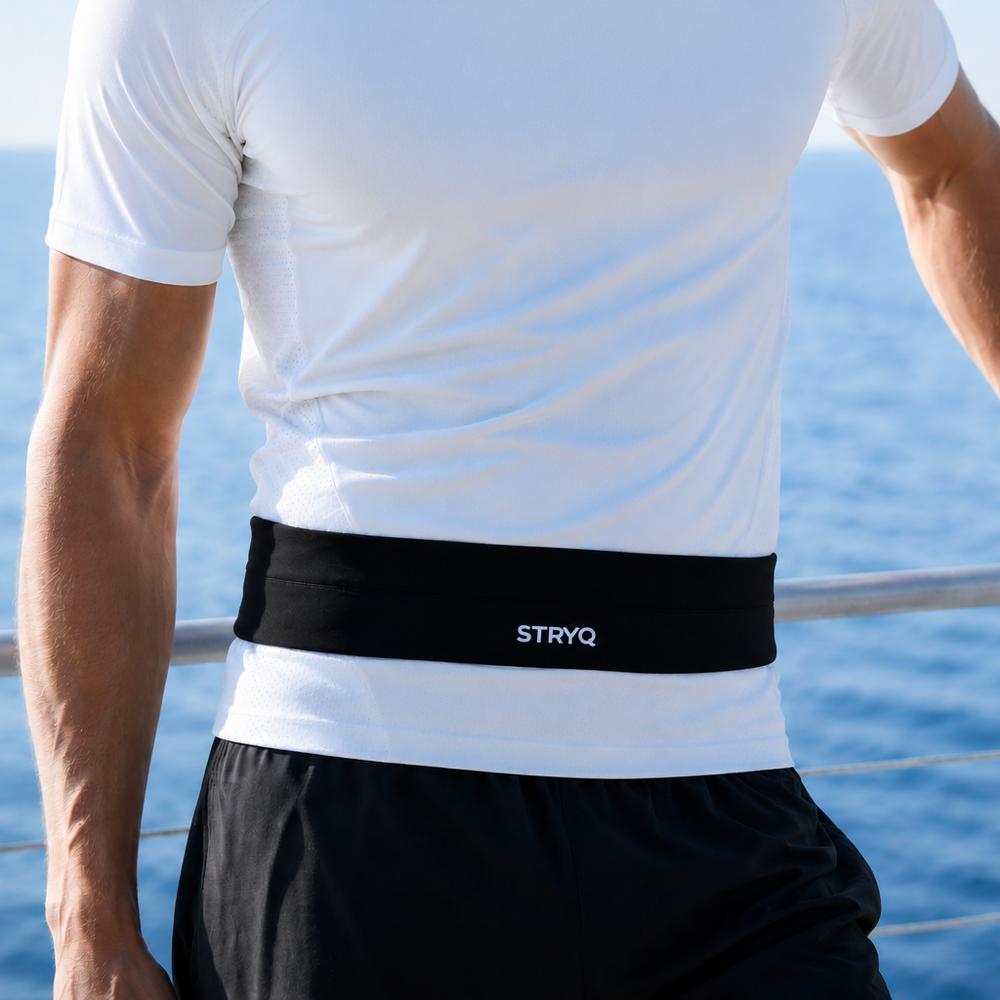
A running belt gives each item a more reliable place. It can carry gels, keys and a phone in one compact layer around the waist. For runners training for a half marathon or marathon, that means less time worrying about what is falling out of a pocket and more attention on pace, breathing and the road ahead.
It is also useful for newer runners. If you are building from Couch to 5K towards longer distances, using a belt early can help you get used to taking water and fuel on the move. You do not need gels for every run, but knowing how to carry them comfortably makes longer training sessions feel more manageable.
What makes a good running belt for gels?
The simple answer is a close, stable fit. But the details make the difference after 90 minutes of running in wind, rain or summer heat.
A snug fit without restriction
A belt must sit close enough to stop items bouncing, but not so tight that it presses into your stomach or affects comfortable breathing. This is particularly noticeable after taking a gel or drinking, when your abdomen can feel a little fuller.
Look for an adjustable design or stretchy material that sits securely around the hips or natural waist. Most runners find that a belt worn lower, around the hips, is more stable than one pulled high around the waist. Your ideal position depends on your shape and the amount you are carrying, so test it on an easy run rather than race day.
If you constantly need to pull a belt down, tighten it a little. If it digs in or rolls over, it may be too tight, too high, or simply too small for the load you are carrying.
Enough storage for your real run
Before choosing a belt, lay out what you normally take. For a steady run of up to an hour, that may be a phone and keys. For a two-hour run, it could be three or four gels, phone, keys, tissues and perhaps a small soft flask.
Do not buy more capacity than you need just because it is available. A large belt packed with a few loose items can move around. Equally, a very small belt can stretch gels into awkward shapes, making them harder to remove. The useful middle ground is storage that holds your essentials firmly while leaving enough room to access them.
For most runners, a belt with a secure main compartment and separate space for smaller essentials is easier to live with than several tiny pockets. You should be able to organise your kit consistently: gels in one place, keys in another, phone protected from sharp edges and sticky wrappers.
Easy access when you are moving
A gel is no use if you cannot reach it at the point you need it. You should be able to take one out with one hand, even when tired. Openings that sit at the top of the belt are often easier to use than pockets hidden underneath layers of fabric.
Think about your preferred fuelling routine too. Some runners carry gels loose in a main pocket. Others place them in order, with the first gel easiest to reach. If you use caffeinated gels later in a race, keeping those separate can prevent a simple but frustrating mix-up.
There is a trade-off here. A very secure zipped pocket protects contents well, but can be slower to open. A stretch pocket is quick to use, but needs a close fit to stop items shifting. For regular training, quick access is usually more valuable. For races, choose the option you can use confidently without looking down.
Fabric that handles sweat and weather
Running belts spend a lot of time against sweaty clothing or skin. Soft, breathable, quick-drying fabric helps reduce discomfort, especially in warmer weather. Flat seams and smooth edges also matter when you are running for hours.
Water-resistant storage is useful for UK conditions, particularly for protecting a phone or paper tissues. It does not mean you can submerge the belt or ignore a heavy downpour. For valuable electronics, a separate protective pouch is still sensible on very wet days.
How many gels can a belt carry?
This depends on the size of the gel, the belt and what else is inside it. As a practical guide, a compact belt may suit two to four gels alongside keys and a phone. A larger running belt can carry more, but adding gels is not the only consideration. The weight of water, a large phone and extra layers can affect comfort far more than the gels themselves.
For a half marathon, many runners only need to carry a small number of gels, especially if they plan around official water stations. Marathon runners may need more, depending on their fuelling plan and what is available on the course. Ultra runners often need a hydration vest rather than relying on a belt alone, particularly when they need soft flasks, food and safety kit.
The key is to train with the amount you intend to race with. A belt that feels fine with two gels can behave differently with six, a phone and a 500ml soft flask.
Belt, pockets or hydration vest?
Each option has a place. Shorts pockets are convenient for a single gel or two, provided they are deep and secure. They are a good solution for short races where you want to carry as little as possible.
A belt is often the better choice when your pockets are limited, you want consistent storage across different outfits, or you need to carry several gels and a phone. It gives you a familiar setup whether you are wearing leggings in January or lightweight shorts in July.
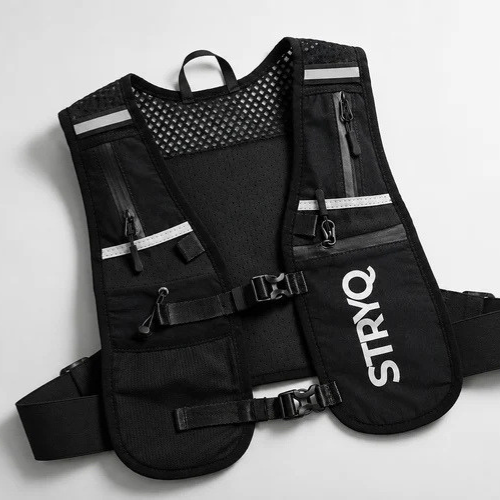
A hydration vest makes more sense for long unsupported runs, trail running and events where you need to carry water, layers and more nutrition. It is not automatically better for every long run. If you only need gels, phone and keys, a vest can feel like more kit than necessary.
At STRYQ, the focus is on solving that everyday carrying problem: keeping essentials close without turning a normal run into an expedition.
Set up your belt before a long run
Do not wait until the start line to work out where everything goes. Pack your belt in the same order each time. Put your first gel where it is easiest to reach, then arrange the rest so they do not fold tightly or press into your back.
Wear the belt for a short easy run first. Jog, speed up, run downhill and take out a gel. Check for movement and any rubbing. Small adjustments at home are much easier than trying to fix a bouncing belt five miles into a long run.
It is also worth practising opening gels while moving. Tear tabs can be fiddly with cold fingers, wet hands or gloves. Some runners partially tear the top before they leave, but take care not to damage the packet or create a sticky leak in the belt.
Common mistakes to avoid
The most common mistake is overtightening. A belt that feels secure while standing can become uncomfortable once you are breathing deeply and your body warms up. Start snug, then make minor adjustments after a few minutes of running.
Another is carrying loose items together. Keys can damage a phone, gels can get crushed and wrappers can make it harder to find what you need. Give each essential a clear place.
Finally, do not assume your race-day belt will work simply because it looks right. Test it fully loaded, with the same gels, phone and clothing you plan to use. Familiar kit removes one more variable when the miles get tough.
A running belt should fade into the background once you set off. When your fuel is secure, accessible and comfortable, you can take the gel, settle back into your stride and get on with the run.