A phone thumping against your hip can spoil an easy 5K. So can a bottle you cannot reach, socks that rub after half an hour, or a key that works its way loose from a shallow pocket. The best running accessories UK runners buy are not about adding more kit. They remove the small distractions that make training feel harder than it needs to.
The right choice depends on your distance, route and what you need to carry. A runner heading out for 30 minutes before work has different needs from someone training for a spring marathon. Start with the problem you want to solve, then choose gear that earns its place on every run.
What the best running accessories UK runners choose actually solve
Good accessories should disappear once you set off. They should stay put, feel comfortable against the skin and let you reach essentials without breaking stride. If an accessory bounces, chafes, leaks or takes two hands to use, it is working against you.
For most runners, the basics come down to secure storage, hydration, foot comfort and visibility. You may not need all of them on every run. But getting these areas right makes wet winter miles, long Sunday runs and race days far simpler.
A running belt for phone, keys and fuel
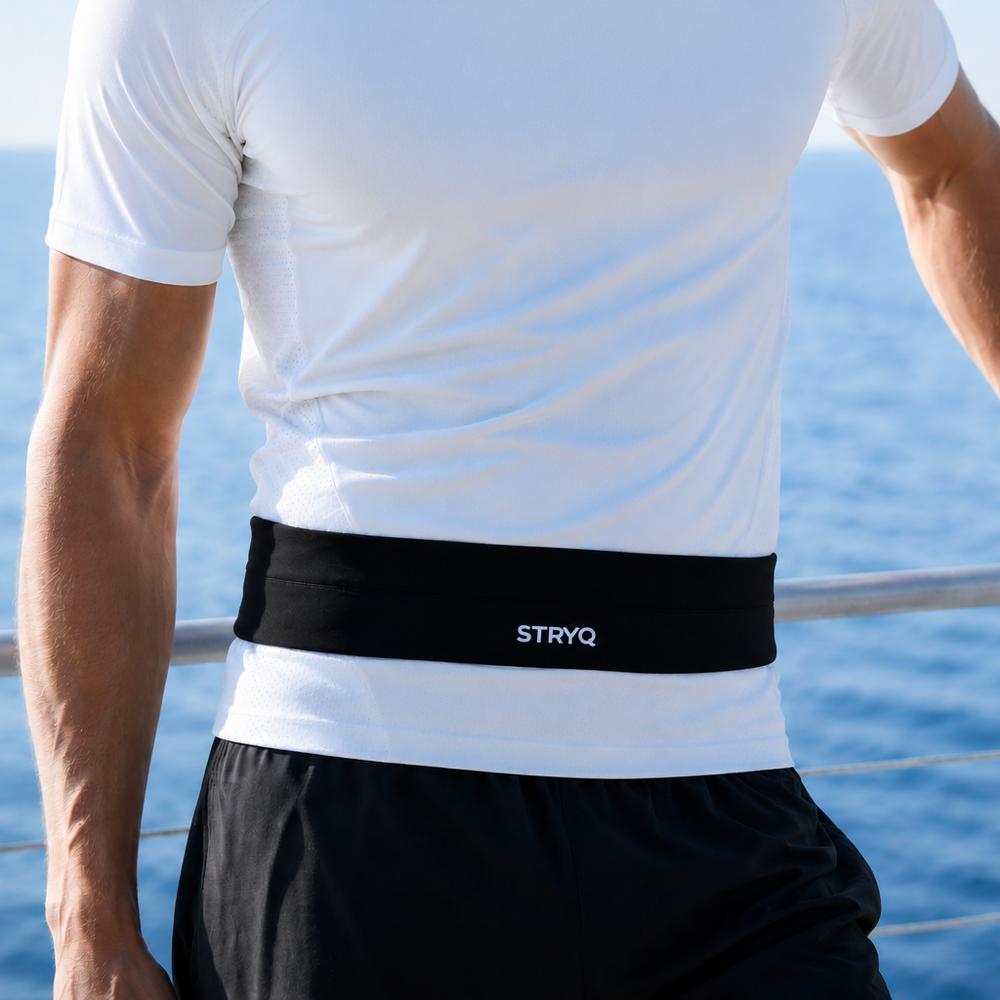
A proper running belt is one of the most useful pieces of kit for everyday training. It gives your phone, keys, gels and card a secure home without filling your hands or weighing down your shorts pockets.
Fit matters more than pocket count. A belt should sit close to the body, usually around the waist or hips, without digging in or rolling up. Look for adjustable sizing and enough stretch to move with your breathing. The goal is no bounce and no constant readjusting at traffic lights.
Consider what you normally carry. For a short run, a phone and keys may be enough. For longer sessions, you may want room for gels, a small soft flask and a lightweight layer. A water-resistant pocket is useful for UK weather, but do not assume it makes electronics fully waterproof in prolonged rain.
Avoid buying a large belt just in case. Extra capacity can tempt you to carry things you do not need, and a loosely packed belt is more likely to move. Choose the smallest option that comfortably holds your regular essentials.
When a belt is better than pockets
Built-in pockets can work well, especially for a single key or gel. They are less reliable for larger phones, heavier items or runs where you need to carry several things. A running belt spreads that load more evenly and keeps it in one predictable place.
For runners moving from Couch to 5K to regular 10Ks, this is often the first accessory that noticeably improves comfort. It also makes it easier to leave the house prepared rather than juggling items in your hands.
Hydration vests and soft flasks for longer runs
Hydration needs change as distance, temperature and time on feet increase. On a cool, easy 5K, you may not need to carry water at all. On a long run, a hilly trail route or a warm day, having fluids with you can protect the quality of your session.
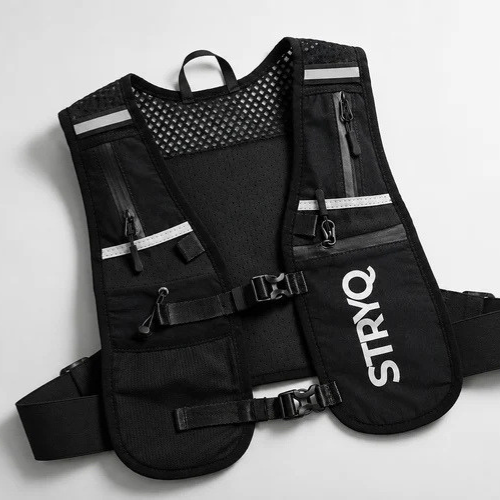
A hydration vest is best when you need to carry more than a small bottle. It keeps water close to the body while providing space for nutrition, a phone, layers and safety essentials. The key is a secure, adjustable fit across the chest and sides. A vest that is too loose will bounce. One that is too tight can restrict comfortable breathing.
Soft flasks are a practical option because they shrink as you drink. That means less sloshing and less spare space than a rigid bottle. Front-mounted flasks also let you monitor how much you have left without stopping. For many runners, two smaller flasks are easier to balance than one large bottle.
Test your hydration setup before race day. Run with it full, partly full and with the food you plan to carry. Small fit issues become far more obvious after an hour. If you are unsure how much to take, plan around the route, weather and available refill points rather than copying another runner's routine.
Running socks that prevent avoidable discomfort
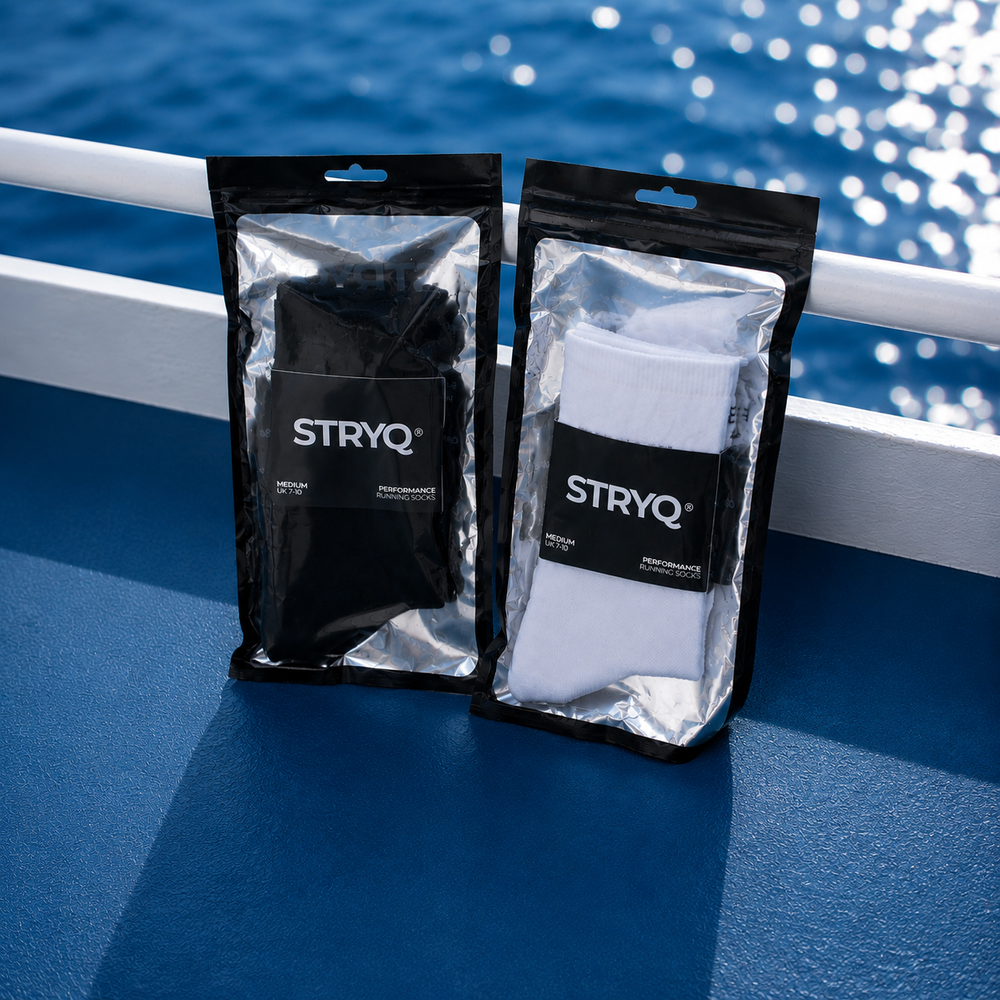
Socks are easy to overlook until a hot spot turns into a blister. A good running sock should manage moisture, fit without bunching and stay in place through repeated strides. This is particularly valuable on longer runs, when a minor seam or damp patch can become painful.
Choose a close-fitting technical fabric rather than everyday cotton. Cotton tends to hold moisture, which increases friction. Cushioning is personal: some runners like a thin, responsive feel, while others prefer a little protection under the heel and forefoot. Neither is universally better. Your shoes, usual routes and tolerance for warmth should guide the decision.
The right sock height is also practical, not just a style choice. Ankle socks suit many road runners, while a slightly higher cuff can help keep grit out on trails and offer a little more protection from shoe collars. If you have suffered blisters before, test socks on a long run rather than judging them on a quick jog.
Lights and reflective kit for darker miles
Dark evenings arrive early for much of the UK running season. Being seen is essential, but being able to see the surface in front of you matters too. Reflective details help drivers and cyclists pick you out in vehicle lights, while a running light helps you spot uneven pavements, puddles and loose ground.
For lit streets, a bright light or clip-on visibility accessory may be enough. For unlit paths, towpaths and country lanes, use a proper head torch with a stable, adjustable strap. Check the battery before every run and carry your phone in case plans change.
Wear visibility gear where it can be seen clearly. A reflective detail hidden under a jacket, backpack or long hair does very little. In heavy rain or fog, slow down as well. Better kit improves your chances of being noticed, but it does not make poor visibility risk-free.
Anti-chafe protection and weather-ready extras
Chafing can appear anywhere there is repeated friction: thighs, underarms, bra lines, waistbands, toes and the back of the neck. It is more common in rain, heat and long sessions, but it can catch out runners at any distance. An anti-chafe balm or protective tape is a small addition that can save several uncomfortable days afterwards.
Apply it before the run, not once irritation has started. If a particular area keeps rubbing, investigate the cause too. A poorly fitting vest, rough sock seam or damp clothing may need changing rather than covering up.
Weather also shapes what you carry. In cold rain, lightweight gloves and a cap can make a bigger difference than an extra thick top. In warm conditions, sunglasses and a cap help with glare, while a small amount of sun protection on exposed skin is sensible. Keep these choices route-specific. Carrying every possible extra on every run creates bulk without adding comfort.
How to build your own running accessory setup
Build gradually. Start with the item that solves the biggest recurring annoyance. If your phone bounces, choose a belt. If long runs leave you thirsty or force you to plan routes around shops, look at soft flasks or a hydration vest. If your feet regularly suffer, improve your socks before buying another pair of trainers.
Then test each item in ordinary training. Wear it on an easy run, a session and a long run if relevant. Make small adjustments to fit, packing and placement. Race day is not the time to find out a gel is difficult to reach or a vest rubs once it is wet.
STRYQ focuses on the practical parts of running that are easy to underestimate: carrying essentials securely, drinking without fuss and staying comfortable when the miles add up. The best setup is rarely the biggest or most expensive one. It is the one you trust enough to stop thinking about it.
Before your next run, pick one irritation you have been tolerating and fix that first. A calmer, more comfortable run is often built from these small decisions.