

Long run guide: how far, how fast, and how often
A long run is the single weekly session that is clearly longer than everything else you do, designed to build endurance, glycogen tolerance, and mental resilience. The practical rule of thumb, backed by coach consensus, is to keep it at roughly 20–30% of your total weekly mileage, or aim for a continuous 60–120 minutes depending on your ability and goal.
Two quick examples make this concrete:
- A 30 km week: long run target of roughly 6–9 km (or 30–50 minutes for a beginner)
- A 40 km week: long run target of roughly 8–12 km (or 50–75 minutes for a recreational runner)
The Cambridge English Dictionary defines “long run” as a long period of time in general English, but in running it carries a specific, session-level meaning: the weekly endurance run that sits clearly above your other sessions in duration. That distinction matters when you are building a plan, because the long run has a different physiological purpose from your easy recovery jogs or interval sessions. It builds glycogen tolerance, musculoskeletal loading capacity, and mental resilience in ways that shorter, faster work simply cannot replicate.
Key takeaways
| Point | Details |
|---|---|
| Definition and rule of thumb | The long run is your longest weekly session: aim for 20–30% of weekly mileage or 60–120 minutes continuous running. |
| Pace it easy | Run most long runs at conversational pace (Zone 1–2); add race-pace segments only 2–3 times in a full training cycle. |
| Build gradually | Increase long-run distance by roughly 10% per week (beginners can use 15–20%), with a cutback week every 3–4 weeks. |
| Recovery is non-negotiable | Refuel with protein and carbohydrate within 60 minutes; keep the day after easy or rest. |
| Stryq kit for long runs | Stryq running belts, soft flasks, and cushioned socks are practical kit developed and tested by UK runners for multi-hour sessions. |
Table of Contents
- How far should your long run actually be?
- What pace should you run your long runs at?
- What are the main types of long run?
- How often should you do long runs, and how do they fit into your plan?
- How to structure your long run on the day
- Sample long-run workouts from beginner to marathon
- Recovery after long runs and red flags to watch for
- Coach tips and kit for long runs
- What long runs have taught me about running
- Stryq kit worth having on your long runs
- Sources
How far should your long run actually be?
Distance and time targets depend on where you are in your running life and what you are training for.
The upper boundary matters as much as the lower one. Keeping your long run below roughly 30–35% of weekly mileage protects you from disproportionate recovery cost.
Two worked examples:
At an easy 6:30/km pace, that is roughly 39–58 minutes. A beginner running three times a week sits comfortably here.
At a comfortable 5:30/km pace, that is 55–82 minutes. A recreational runner building towards a half-marathon fits this range well.
If you train by time rather than distance, which suits treadmill runners or those with variable terrain, the same logic applies: your long run should be noticeably longer than your other sessions, generally lasting about one to two hours for many runners. Time-based training also removes the pace pressure that can push runners too hard on long days.
What pace should you run your long runs at?
Most long runs should feel easy. That is not a vague instruction; it is a specific physiological target. The primary pacing options, in order of intensity, are:
- Conversational/easy (Zone 1–2): You can hold a full sentence without gasping. Heart rate sits at roughly 60–70% of maximum. For many runners this is approximately 60–90 seconds per kilometre slower than their current 5 km pace, though this is an approximation and varies by fitness level. This is the default for the majority of long runs.
- Progression/fast-finish: Start at conversational pace and gradually increase effort over the final 20–30% of the run. Heart rate climbs into Zone 3 by the end. Useful during a build phase to add aerobic stress without a full tempo session.
- Race-pace segments within an easy long run: Short blocks (for example, 3 × 10–15 minutes at goal half-marathon or marathon pace) embedded inside an otherwise easy run. Practises running at target effort under fatigue, which is the closest simulation of race conditions you can do in training.
- Steady tempo long run: The entire run at a comfortably hard effort (Zone 3). Used sparingly, typically once every 2–3 weeks at most during a specific race-prep phase.
Quick cheat sheet for choosing your pace:
- Base phase: conversational only
- Build phase: mostly conversational, one progression run per fortnight
- Peak/race-prep phase: conversational long runs plus 2–3 race-pace segment sessions across the cycle
- Recovery week: conversational, shorter than usual
The most common mistake is running long runs too fast. If you cannot hold a conversation, you are working too hard and accumulating fatigue that bleeds into the rest of your week.
What are the main types of long run?
Not every long run looks the same. Varying the format across a training cycle keeps adaptation happening and prepares you for different race demands.
| Type | Effort / structure | Best used when |
|---|---|---|
| Easy/conversational long run | Steady Zone 1–2 throughout | Base building, recovery weeks, beginners |
| Aerobic endurance long run | Steady easy, slightly longer than recovery pace | General aerobic development, mid-cycle |
| Progression/fast-finish long run | First 60–75% easy, final 20–30% progressively quicker | Build phase, 4–8 weeks before a target race |
| Race-pace long run | Easy run with 3–4 blocks at goal race pace (e.g. 3 × 10–15 min at marathon pace) | Specific race prep, 2–3 times in a full cycle |
| Back-to-back long runs | Two consecutive days of medium-long runs (e.g. 16 km Saturday, 14 km Sunday) | Advanced marathon and ultra preparation only |
Outside Online’s RUN coaching guidance recommends including goal-pace miles at the end of a long run, for example the final 4–6 miles at marathon pace, as one of the most effective ways to practise running under fatigue. This format is particularly useful in the 6–10 weeks before a target race.
Back-to-back long runs are an advanced tool. Running on tired legs from the previous day forces adaptation that a single long run cannot replicate, but the recovery demand is significant. Most runners below marathon level have no need for them.
How often should you do long runs, and how do they fit into your plan?
For the vast majority of runners, once per week is the right frequency.
Building long runs across a training cycle:
- Choose your long-run day and protect it. Sunday works well for most UK runners because it allows a rest or easy day on Monday.
- Set your starting long-run distance or time based on your current weekly volume and the 20–30% rule.
- Increase gradually. The widely cited 10% weekly increase rule is a reasonable default, but RunDida’s progressive plan guidance notes that beginners can safely use larger relative increases (15–20%) because absolute load is small, while intermediate runners should stay closer to 10% and advanced runners should use smaller jumps.
- Schedule a cutback week every 3–4 weeks, reducing long-run distance by 20–30% to allow full adaptation and reduce injury risk.
- Taper in the final 2–3 weeks before a target race. Reduce long-run volume and intensity; keep one short race-pace reminder session rather than a full long effort.
Weekly planning checklist:
- Confirm your long-run day and mark it in your diary like an appointment.
- Set the target time or distance consistent with your current weekly volume (20–30% rule).
- Plan the day before as easy or rest, and the day after as easy or rest.
- Schedule a cutback week every 3–4 weeks.
- In race-prep weeks, decide whether the long run is easy, progression, or race-pace segments.
How to structure your long run on the day
Getting the logistics right makes the difference between a productive session and a miserable one.
Warm-up and cool-down
A brief 5-minute walk or very easy jog before settling into your long-run pace is usually enough. Lengthy warm-up routines are largely unnecessary for purely aerobic long runs; your body will find its rhythm in the first 10–15 minutes. At the end, slow to a walk for 3–5 minutes and do light dynamic stretching for the hips, calves, and hamstrings.
Fuelling timetable
For runs under 60–75 minutes at easy effort, water alone is usually sufficient. Beyond that threshold, carbohydrate replacement becomes important:
- Before: A light carbohydrate snack 60–90 minutes before the run (porridge, a banana, toast with peanut butter).
- During: Start taking on fuel at around 45–60 minutes, not when you feel hungry. Aim for 30–60 g of carbohydrate per hour from gels, chews, or real food. In the UK, café stops and convenience stores on popular routes make mid-run fuelling straightforward on longer efforts.
- Hydration: Drink to thirst rather than to a rigid schedule. In cool UK conditions, 400–600 ml per hour is a reasonable guide; in summer heat, increase accordingly.
Pro Tip: Carry a soft flask in a running belt rather than relying on road fountains, which are scarce on most UK routes. A 250–500 ml soft flask gives you flexibility without the weight of a full hydration vest on runs under two hours.
Kit and safety for UK conditions
UK weather is unpredictable. A lightweight, packable layer is worth carrying on runs over 90 minutes, particularly in autumn and winter. Moisture-wicking base layers prevent the chill that sets in when you slow down in the final miles.
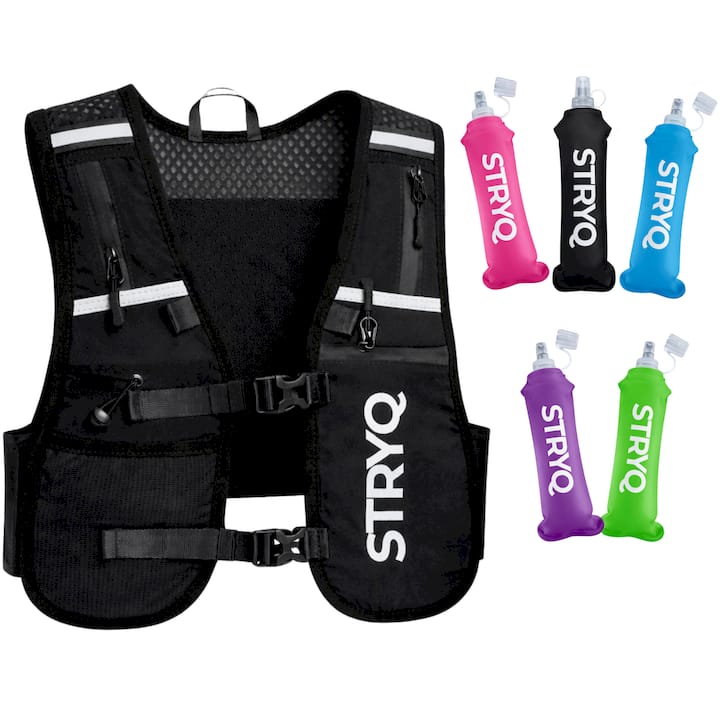
For low-light conditions, which are common on early-morning or evening runs in the UK from October through March, a safety light clipped to your belt or vest makes you visible to drivers. Reflective kit is a practical minimum; an active light is better.
Safety basics for any long run:
- Tell someone your route and expected return time.
- Carry your phone and a form of ID.
- Plan your route around known landmarks or loops so you can cut short if needed.
- On trails, download the route offline in case of poor signal.
Sample long-run workouts from beginner to marathon
These templates are practical starting points. Adapt the distances or times to your current fitness.
-
Beginner run/walk long run (30–40 min): 2 minutes running, 1 minute walking, repeated continuously. Progress to 3:1, then 5:1 over successive weeks until you can run 30–45 minutes continuously. This run/walk progression is an evidence-based method for taking new runners to continuous running.
-
Easy continuous long run (45–60 min): Steady conversational pace throughout. No pace targets; effort is the guide. Suitable for runners who can already run 30 minutes without stopping.
-
Progression long run (75–90 min): First 50–55 minutes at easy conversational pace, final 20–30 minutes progressively quicker, finishing at a comfortably hard effort. Do not sprint the last kilometre; the increase should feel gradual.
-
Long run with race-pace blocks (90 min total): 30 minutes easy warm-up, then 3 × 10 minutes at goal half-marathon or 10 km pace with 3 minutes easy between each block, then 10–15 minutes easy cool-down. Use this format 2–3 times in a training cycle, not every week.
-
Marathon prep long run (24–32 km): 18–24 km at easy aerobic pace, final 6–8 km at goal marathon pace. This is a demanding session; schedule it with 2 easy days either side and use it no more than 2–3 times in a full marathon cycle.
-
Back-to-back medium-long runs (advanced): Saturday 16–18 km easy, Sunday 12–14 km easy. Total volume is high; use only when weekly mileage is already above 60–70 km and recovery is well managed.
When to use each template by phase:
- Base phase: templates 1, 2
- Build phase: templates 2, 3, 4
- Peak/race-prep phase: templates 5, 6 (or 7 for advanced runners)
- Taper: template 2 at reduced distance
Recovery after long runs and red flags to watch for
Long runs create more fatigue than any other session in your week. Recovery is not optional.
Immediate recovery checklist:
- Cool down with 3–5 minutes of walking and light stretching.
- Rehydrate: aim to replace fluid lost during the run within the first hour.
- Eat a snack containing both protein and carbohydrate within 60 minutes (for example, a banana with a glass of milk, or a recovery shake with oats).
- Keep the following day easy or rest entirely.
Normal delayed-onset muscle soreness (DOMS) peaks at 24–48 hours and feels like a dull ache in the legs, particularly the quads and calves. It is uncomfortable but not a reason to stop training. Active recovery, such as a 20–30 minute easy walk or gentle cycling, tends to reduce DOMS faster than complete rest.
Signs of overload rather than normal soreness:
- Sharp or localised joint pain (knee, hip, ankle) that does not ease within 72 hours
- A persistent performance drop across two or three consecutive sessions
- Fatigue that is disproportionate to the training load, particularly disrupted sleep
- Mood changes or loss of motivation that last more than a few days
If sharp joint pain persists beyond a week, seek assessment from a physiotherapist or sports clinician.
Pro Tip: If you feel genuinely unwell, are limping, or experience chest discomfort or lightheadedness during a long run, stop immediately. No training session is worth pushing through those signals. Walk to safety, call for assistance if needed, and seek medical advice before running again.
Red flags for stopping a run immediately:
- Severe or sharp pain anywhere
- Chest tightness or discomfort
- Lightheadedness or dizziness
- A persistent limp that does not resolve after 2–3 minutes of walking
Coach tips and kit for long runs
Mental rehearsal and pacing discipline
The long run is not just a physical session. Coaches consistently highlight its role as psychological preparation: running while fatigued conditions the brain to accept late-stage discomfort as manageable rather than alarming. This is why Outside Online’s RUN coaching advice recommends including goal-pace segments at the end of long runs rather than the beginning. When you practise running at race pace on tired legs, the discomfort of the final miles on race day feels familiar rather than threatening.
Pacing discipline is the other key skill the long run develops. Starting too fast is the single most common error. A useful rule: if your first kilometre feels almost embarrassingly easy, you are probably at the right pace.
Why socks matter on long runs
Blisters and hot spots are almost always a sock problem before they are a shoe problem. On a 90-minute or two-hour run, a poorly fitting sock with inadequate cushioning creates friction that a shorter run would never expose. Cushioned, breathable socks with arch support reduce that friction and manage moisture across the full duration of the session.
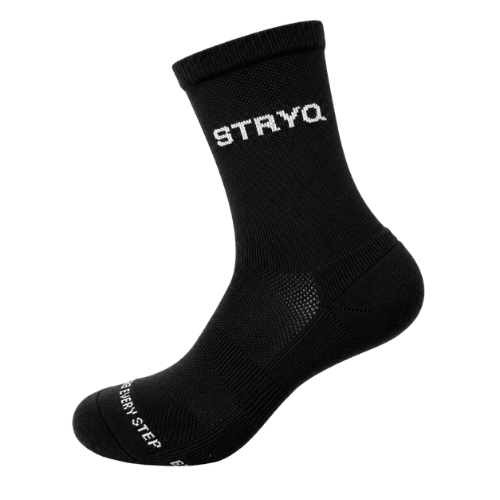
The Stryq Running Socks in Black and Stryq Running Socks in White are built specifically for this: cushioned underfoot, breathable, and fitted to stay in place without bunching. On a two-hour run, a sock that shifts even slightly creates the kind of friction that ends sessions early.
Packing for a 90–120 minute long run
A practical kit list for a typical UK long run of 90–120 minutes:
- Stryq running belt with 360° storage for phone, keys, and two gels
- One 250–500 ml soft flask for water or electrolyte drink
- Cushioned running socks (Stryq Black or White)
- Moisture-wicking base layer plus a packable wind layer for autumn/winter
- Safety light clipped to the belt for low-light conditions
- ID card or phone with emergency contact visible on the lock screen
Pro Tip: Pre-load your soft flask the night before and leave it in the fridge. A cold drink at the start of a summer long run is a small thing that makes the first 30 minutes noticeably more comfortable.
Additional tips for UK conditions:
- Check the weather forecast the evening before and adjust layers accordingly.
- On trail routes, wear trail shoes and carry a fully charged phone with the route downloaded offline.
- Use reflective kit or a safety light on any run starting before 8 AM or after 4 PM between October and March.
- For long-run kit guidance specific to half-marathon and marathon distances, Stryq’s gear checklist covers the full packing list.
What long runs have taught me about running
The long run is where most runners discover what they are actually made of, and it is rarely what they expected. The first time you push past 90 minutes, the physical challenge is almost secondary to the mental one. Your brain starts negotiating with you around the 70-minute mark, and learning to recognise that negotiation for what it is, a normal physiological response rather than a genuine signal to stop, is one of the most transferable skills in running.
The practical tip that has helped more runners stay consistent with long runs than any training plan tweak: schedule it like a non-negotiable appointment, not a session you will do if you feel like it. Sunday at 8 AM, same as every week. Consistency over months is what produces the long-term impact that a single heroic effort never will.
Stryq kit worth having on your long runs
Long runs expose every weakness in your kit. A belt that bounces, socks that bunch, or a flask that leaks are minor irritations on a 5 km but genuine problems on a two-hour run.

Stryq builds kit specifically for this: running belts with 360° storage that sit securely without bouncing, soft flasks for lightweight hydration, and cushioned, breathable running socks in black and white that stay in place across multi-hour sessions. Every product is developed and tested by UK runners, with multiple revisions before launch.
For a full packing guide covering everything you need for a long run, the marathon long run essentials list on the Stryq site covers kit, fuelling, and logistics in detail. Browse the full range at Stryq and pick up what you actually need for your next long run.
Sources
- How to Build Endurance for Running: The Complete Guide
- How Long Should A “Long Run” Actually Be?
- Endurance Building Plan: 12‑Week Progressive Guide | RunDida