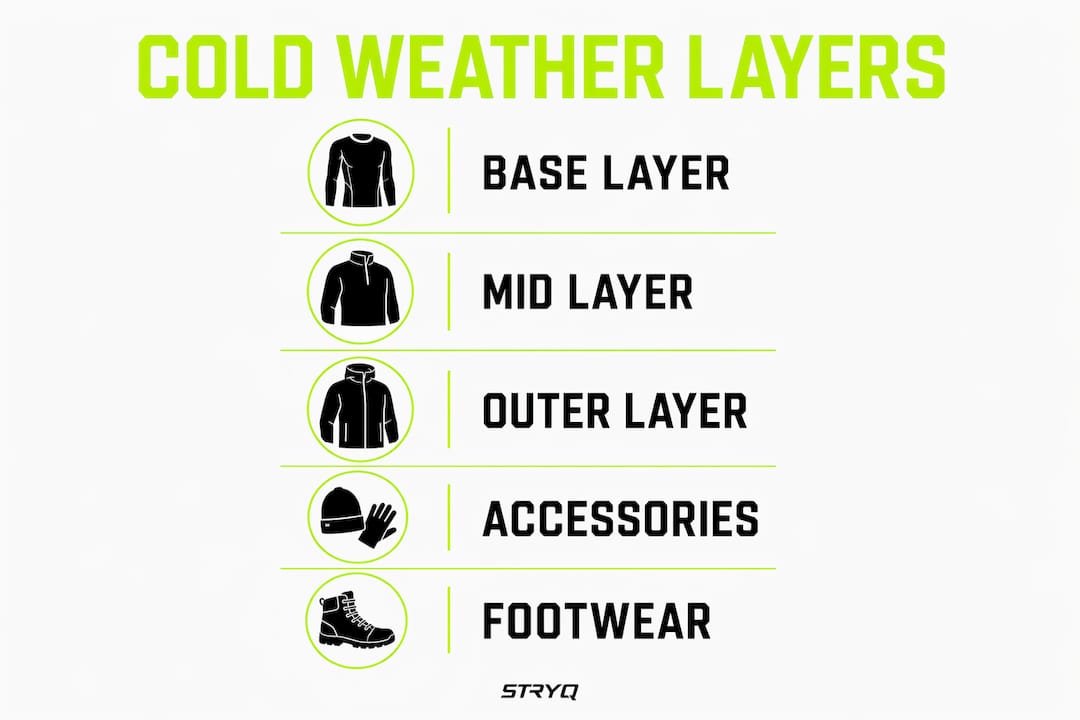
Three layers solve most cold weather running problems. A moisture-wicking base layer sits against your skin, a fleece or merino mid layer traps warmth, and a windproof outer shell blocks the elements. Get those three right, add thermal gloves, a warm beanie, and technical socks, and you can run comfortably through a British winter.
The principle sounds simple, but the execution is where most runners go wrong. They either overdress and soak through their insulation within ten minutes, or they underdress and spend the second half of a run shivering. The key is treating your layers as a system you actively manage, not a fixed outfit you pull on and forget. Cold weather running layers work best when each piece has a clear job: move moisture, retain heat, or block wind and rain.
- Start with a synthetic or merino wool base layer that pulls sweat away from your skin.
- Add an insulating mid layer, typically a lightweight fleece or merino blend, for warmth.
- Finish with a windproof, water-resistant outer shell that still breathes.
- Adjust your layers dynamically as your effort level and the weather change.
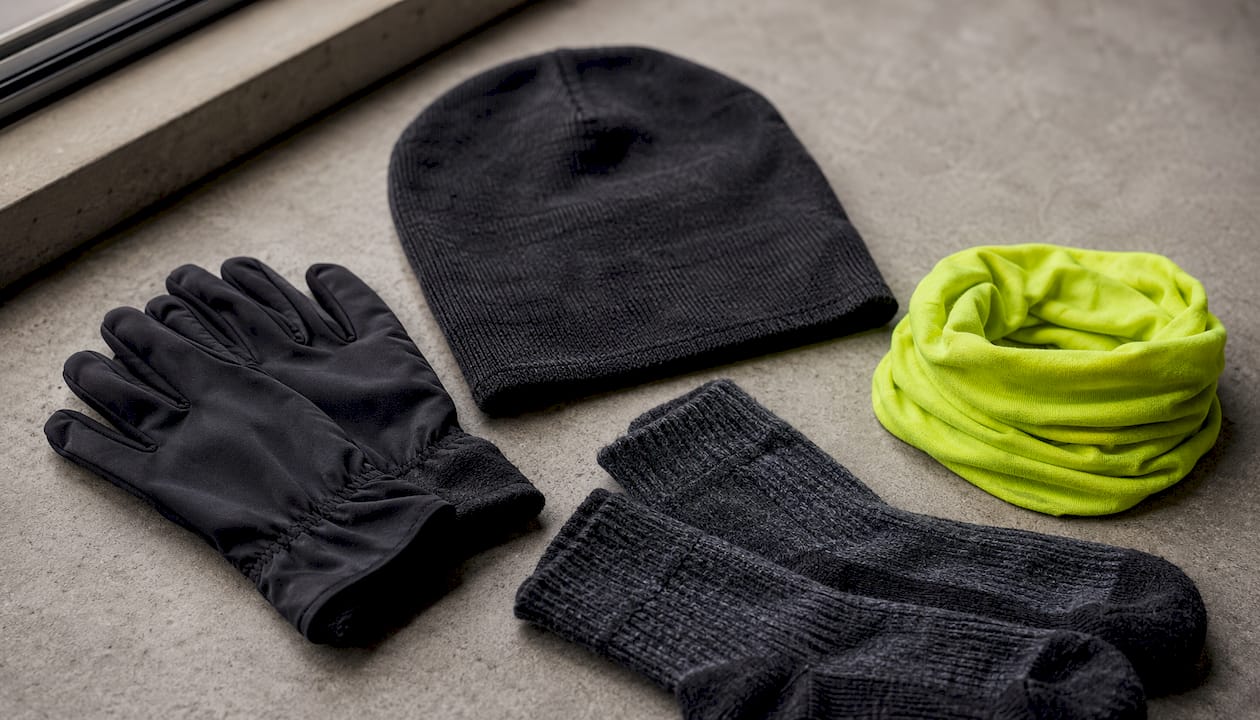
- Protect extremities with thermal gloves, a close-fitting beanie, and moisture-wicking socks.
Table of Contents
- How to choose the right base layer for winter running
- Mid layers: how to stay warm without overheating
- Outer layers: what to look for in a winter running jacket
- Running tights, trousers, and winter footwear
- Essential accessories for cold weather runs
- Expert insights on keeping your core temperature steady
- Choosing winter running gear for UK conditions
- How to care for your cold weather running kit
- Key takeaways
- The case for keeping your winter kit simple
- Stryq running socks and gloves: built for British winters
How to choose the right base layer for winter running
The base layer is the most important garment in your cold weather kit. Its job is to pull sweat away from your skin and allow it to evaporate before it chills you. Merino wool and synthetic fibres both do this well; merino has the added advantage of retaining insulation even when damp, and it resists odour naturally.
Cotton is the one fabric to avoid entirely. It absorbs moisture and holds it against your skin, which turns a manageable chill into a serious cold risk on longer runs.
- Merino wool: Naturally odour-resistant, warm when wet, and softer against skin than most synthetics. Slightly heavier and slower to dry.
- Synthetic (polyester blends): Dries faster than merino, often cheaper, and available in a wider range of weights. Excellent for high-output runs where you sweat heavily.
- Weight: Lightweight base layers suit runs above around 5°C; midweight versions are better for colder days or slower paces.
- Fit: Close to the skin is correct. A loose base layer traps air unevenly and bunches under a mid layer.
- Coverage: Long-sleeved tops with thumb loops keep the cuffs in place and close the gap at the wrist.
Pro Tip: Buy two base layers and rotate them. Technical fabrics need time to fully dry between runs, and a damp base layer from yesterday will not perform today.
Mid layers: how to stay warm without overheating
The mid layer’s job is insulation. It traps the warm air your body generates and holds it close, but it must also allow moisture from the base layer to pass through. Ventilation options like zippers are what separate a good mid layer from a frustrating one. A front zip or underarm zip lets you dump heat quickly when your pace picks up, without having to stop and remove a layer entirely.
Fleece is the most common mid layer material for running. It is light, breathes reasonably well, and dries quickly. Merino wool blends are warmer and softer but tend to cost more. For most UK winter runs, choosing a lightweight fleece is generally sufficient.
- Lightweight fleece (100 weight): Suits temperatures of roughly 5–10°C when worn over a base layer. Compressible and easy to tie around your waist if you warm up.
- Midweight fleece (200 weight): Better for colder days or slower-paced runs. Can feel restrictive under a fitted outer shell.
- Merino mid layers: Excellent for longer runs where odour management matters. Slightly less breathable than fleece at high effort.
- Zippered fronts: A full or half zip gives you precise temperature control without stopping.
- When to remove it: If you are sweating through your mid layer, take it off. Wet insulation provides almost no warmth and adds weight.
Outer layers: what to look for in a winter running jacket
The outer shell is your defence against wind and rain. It does not need to be heavily insulated; its primary role is to block the elements while letting moisture escape from the layers beneath. Gore-Tex and similar breathable membranes achieve this by allowing water vapour to pass outward while blocking liquid water from getting in.
A non-breathable shell will trap sweat and make you just as cold as having no jacket at all. Breathability is not optional.
- Windproofing: The minimum requirement for any UK winter run. Wind chill drops the effective temperature dramatically, especially on exposed routes.
- Water resistance: A durable water repellent (DWR) coating handles light rain. For heavier or sustained rain, a fully waterproof membrane is worth the extra cost.
- Breathability rating: Look for fabrics with a moisture vapour transmission rate (MVTR) suited to active use. Jackets marketed purely as waterproof often sacrifice breathability.
- Ventilation: Pit zips, mesh-lined chest pockets, or a full-length front zip all help you regulate temperature on the move.
- Packability: A jacket that compresses into its own pocket is useful for runs where conditions change mid-route.
- Reflective details: Short winter days mean many UK runners are out in low light. Reflective panels on the outer shell add meaningful visibility.
Running tights, trousers, and winter footwear
Thermal running tights are the standard choice for most UK winter runs. They keep the legs warm, move with you, and dry quickly. For temperatures below about 3°C, or on very exposed routes, a windproof or water-resistant running trouser worn over a base tight adds a useful extra layer of protection.
Footwear is often overlooked until the first wet run of the season makes the problem obvious. Winter running shoes typically feature a more aggressive outsole for grip on wet leaves and muddy paths, and some include a water-resistant upper. They will not keep your feet dry in standing water, but they shed light rain and morning dew effectively.
- Thermal running tights: Look for brushed inner fabrics for warmth and flatlock seams to prevent chafing on longer runs.
- Layering tights: A lightweight base tight under a thermal tight works well below 0°C, though this combination can restrict movement if the fit is not right.
- Windproof trousers: Useful for very cold or exposed conditions. Opt for a slim fit that does not catch the wind or bunch at the knee.
- Winter running shoes: Prioritise grip and a snug fit. A shoe that fits loosely with thick socks will cause blisters.
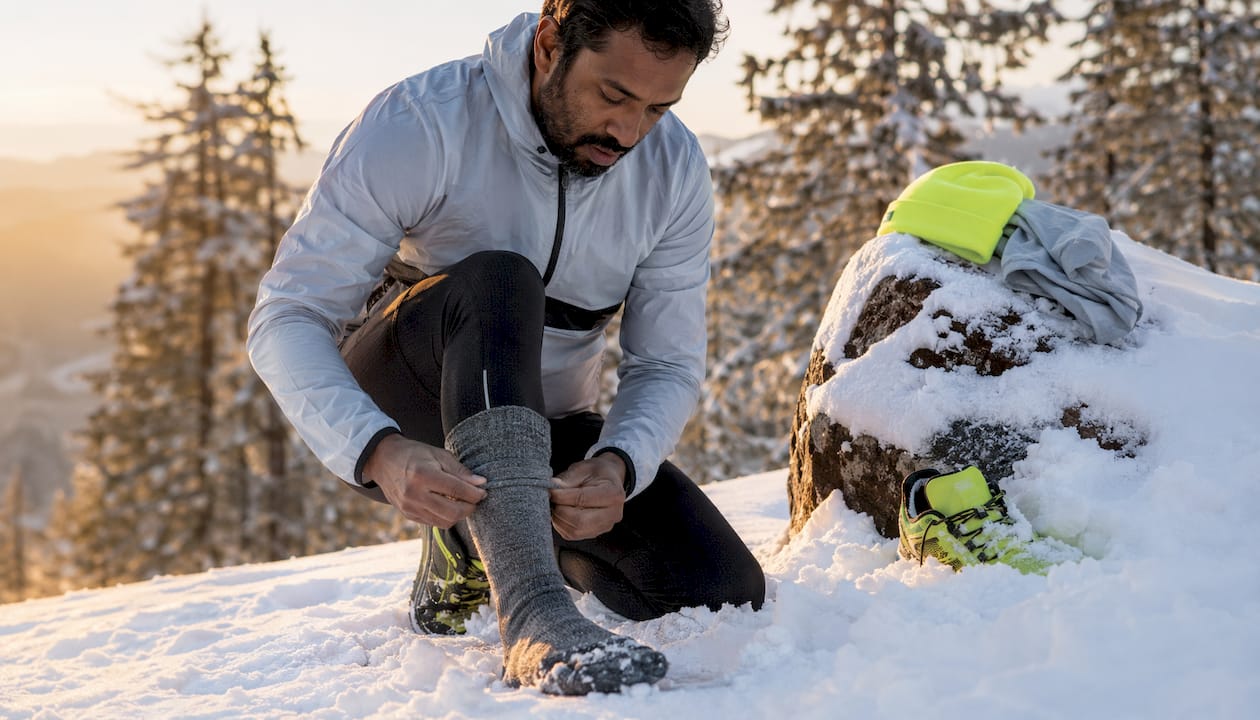
- Technical running socks: Merino wool socks retain warmth even when damp and provide cushioning that reduces fatigue. Avoid thick cotton socks, which bunch and hold moisture.
Pro Tip: If your feet get cold quickly, check your shoe fit before buying specialist footwear. A shoe that is too large creates cold air pockets around the foot that no sock can compensate for.
Essential accessories for cold weather runs
Hands, head, and feet lose heat faster than the rest of the body. Getting these three right can make the difference between a run you enjoy and one you cut short.
Gloves
Lightweight gloves with a windproof overlay and a moisture-wicking liner keep hands warm without causing the clammy overheating that heavier gloves produce. Look for touchscreen-compatible fingertips if you use a GPS watch or phone on runs. For temperatures below about 2°C, a thicker insulated glove or a mitten shell over a liner glove is more effective.
Hats and headbands
Merino wool beanies offer warmth with enough breathability to prevent overheating. A close fit allows the hat to be worn under a jacket hood when conditions worsen. Headbands are a useful alternative for runners who overheat easily; they protect the ears while leaving the top of the head exposed for ventilation.
Neck gaiters and buffs
A neck gaiter or buff protects the face and neck from wind chill and cold air. On very cold days, pulling it up over the nose warms the air before it reaches the lungs, which reduces the sharp chest discomfort some runners feel in sub-zero temperatures.
Socks
Technical running socks with merino wool content provide cushioning, warmth, and moisture management in one garment. Avoid doubling up on cotton socks as a warmth fix; the result is usually blisters and damp feet.
Expert insights on keeping your core temperature steady
The body generates heat as a byproduct of muscle contraction, and running produces a lot of it. Starting a run feeling slightly cool is correct. You will warm up within the first few minutes as your effort builds, and if you dress for comfort while standing still, you will almost certainly be too hot by the time you hit your stride.
Expert runners consistently highlight one principle above all others: dress for the temperature you will be running at, not the temperature you feel standing at the door. Feeling mildly cold for the first two minutes of a run is far preferable to sweating through your insulation by kilometre three.
The practical implication is that your layering decisions should account for effort, not just temperature. A slow recovery run in 4°C needs more insulation than a tempo session in the same conditions. Dynamic effort regulation, adjusting your pace to manage heat output, is as much a part of winter running as the kit itself.
Pro Tip: Carry a lightweight packable layer in a running vest or belt pocket on longer runs. If you slow down significantly or stop, your body temperature drops quickly and having an extra layer to pull on can prevent a cold finish.
Hydration matters in cold weather too, even when you do not feel thirsty. Cold air is dry, and breathing hard through it increases fluid loss. Carry water on runs over 45 minutes, and consider a soft flask that fits easily into a vest pocket so it does not freeze in an exposed hand.
A proper warm-up before cold weather runs is worth the extra five minutes. Dynamic movements such as leg swings, hip circles, and high knees raise your core temperature and increase blood flow to the muscles before you set off. This reduces the risk of muscle strains, which are more common in cold conditions when tissues are stiffer. For a full breakdown of warm-up technique, the pre-run warm-up guide from Stryq covers the essentials.
Choosing winter running gear for UK conditions
British winters are rarely extreme by global standards, but they are persistently awkward. Rain, wind, and temperatures hovering between 2°C and 8°C for weeks at a time create conditions where no single layer is ever quite right. UK winter running gear needs to be versatile above all else.
The bigger challenge is low light. Sunrise after 8AM and sunset before 4PM means a large proportion of UK runners are out in the dark from November through February. Reflective detailing on jackets, tights, and accessories is not a luxury; it is a practical safety requirement on roads and shared paths.
- Reflective gear: Choose outer layers and tights with 360-degree reflective panels, not just a single strip on the back.
- Safety lights: A clip-on rear light adds visibility that reflective fabric alone cannot match in poor conditions. Stryq’s safety lights are designed specifically for this.
- Waterproof versus water-resistant: For most UK runs, a DWR-coated jacket is sufficient. Save fully waterproof shells for sustained rain or trail running in exposed terrain.
- Layering flexibility: A two-layer system (base plus windproof jacket) often works better in mild UK winters than a full three-layer setup, which can be too warm for temperatures above 5°C.
- Route and terrain: Trail runs in the Peak District or Scottish hills demand more insulation and weather protection than a road run in a city. Match your kit to the actual conditions, not a generic temperature guide.
For runners new to training through winter, the beginner winter running guide from Stryq covers the basics of staying safe and consistent through the colder months.
How to care for your cold weather running kit
Technical fabrics lose performance when washed incorrectly. Fabric softener is the main culprit. It coats the fibres of synthetic and merino garments, blocking the microscopic channels that allow moisture to move through the fabric. Avoid fabric softener entirely when washing running kit, and use a specialist sports detergent or a small amount of plain non-bio washing powder instead.
- Washing temperature: 30°C on a gentle cycle is correct for most technical fabrics. Higher temperatures can damage DWR coatings and shrink merino wool.
- Drying: Air dry flat or on a hanger. Tumble drying degrades elastic fibres and can damage waterproof membranes.
- DWR restoration: After several washes, water-resistant jackets may start to wet out (absorb water rather than beading it off). Tumble drying on low heat or using a DWR re-treatment spray restores the coating.
- Storage: Store clean and fully dry. Damp garments stored in a bag or drawer develop mildew and permanent odour.
- Replacement: Replace base layers when they no longer wick effectively (they feel damp and cold during runs). Replace outer shells when the DWR no longer responds to re-treatment and the fabric consistently wets out.
Key takeaways
Effective cold weather running comes down to three layers managed actively: a wicking base, an insulating mid, and a protective outer shell, supported by thermal accessories for the extremities.
| Point | Details |
|---|---|
| Base layer material | Use merino wool or synthetic fabrics; never cotton, which holds moisture against the skin. |
| Mid layer management | Remove or vent your mid layer before you start sweating; wet insulation provides almost no warmth. |
| Outer shell breathability | Choose a windproof, water-resistant shell with ventilation options to prevent moisture build-up. |
| Extremity protection | Thermal gloves, a merino beanie, and technical socks prevent heat loss where the body loses it fastest. |
| Stryq accessories | Stryq running socks, gloves, and safety lights cover the three most commonly underprepared areas of a winter kit. |
The case for keeping your winter kit simple
Most runners overcomplicate cold weather layering. They buy specialist pieces for every temperature band, end up with a wardrobe full of gear they rarely use, and still manage to get the combination wrong on race day. The runners who train consistently through winter tend to own fewer, better pieces and understand exactly how each one performs.
A single quality merino base layer, one versatile mid layer with a zip, and a packable windproof jacket will cover the vast majority of UK winter running conditions. The accessories, gloves, a hat, and good socks, matter more than most runners expect. Hands and feet are the first things to suffer in the cold, and no amount of expensive outerwear compensates for thin gloves and cotton socks.
Individual variation is real. Some runners run hot and need far less insulation than the standard advice suggests. Others feel the cold acutely and need an extra layer even on mild days. The only way to find your personal formula is to experiment systematically, changing one variable at a time rather than overhauling your entire kit at once.
Stryq’s approach to running gear reflects exactly this thinking: practical products built from real runner feedback, without unnecessary complexity or inflated price tags.
Stryq running socks and gloves: built for British winters
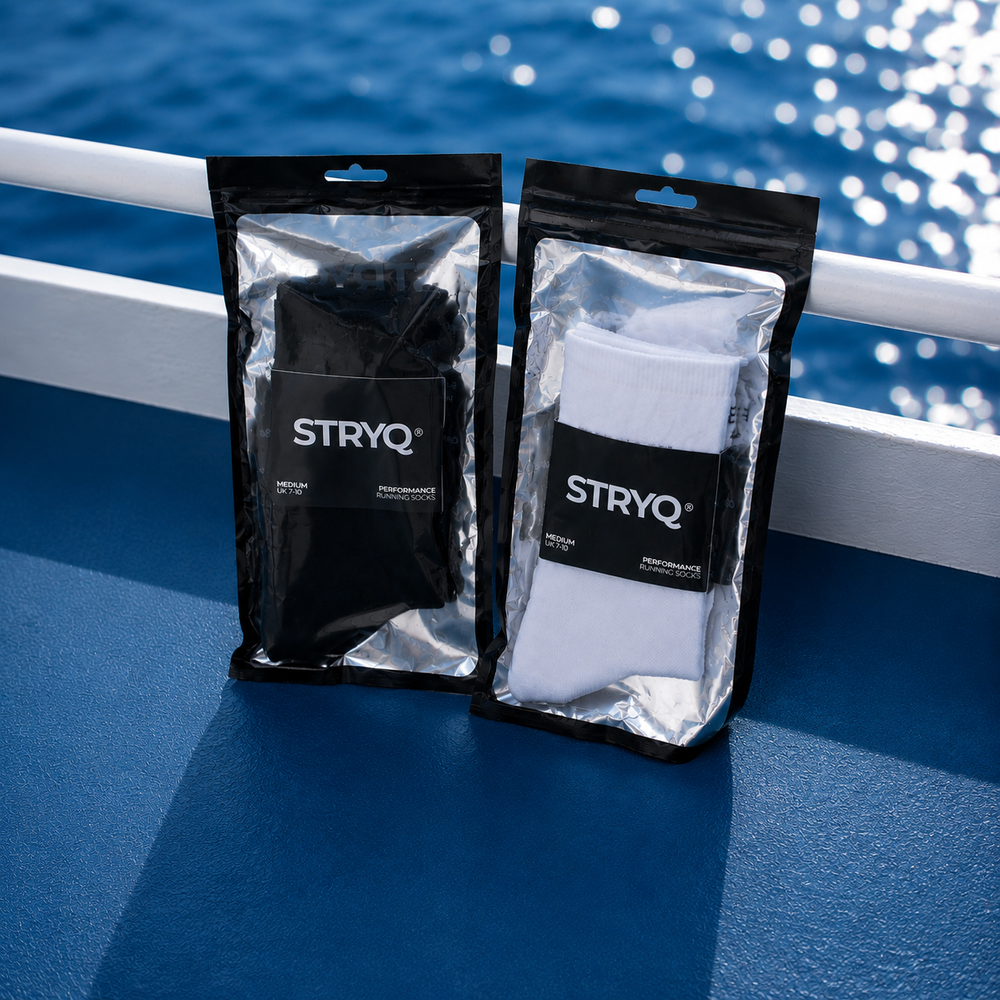
Cold feet and numb fingers end more winter runs early than bad weather does. Stryq’s running socks are engineered for cushioning, breathability, and moisture management through the kind of persistent damp cold that defines a British winter. They sit between the thin, cheap socks that offer no real protection and the heavy specialist options that cost a small fortune.

Stryq running gloves are designed on the same principle: windproof enough to matter, breathable enough to wear at pace, and built to last through a full season of regular use. The brand’s safety lights clip directly onto your kit and add the rear visibility that reflective fabric alone cannot provide on dark roads and shared paths.
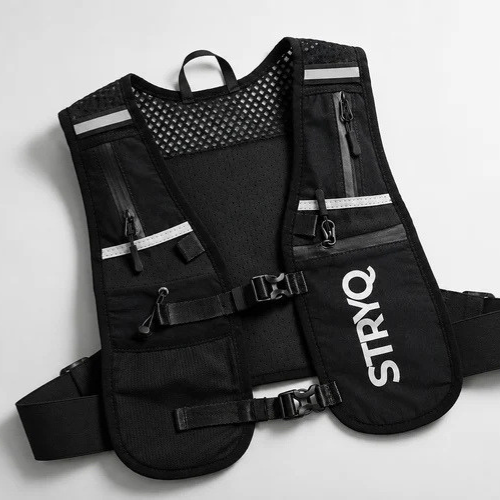
If you are building or refreshing your winter running kit, the Stryq running socks range is a practical starting point. For runners who carry water or kit on longer runs, the hydration vest collection gives you a place to stow extra layers, a soft flask, and your phone without adding bulk. Browse the full range at stryq.co.uk and pick up the pieces your current kit is actually missing.