

Half marathon winter training gear list: 2026 guide
A half marathon winter training gear list is defined by one principle: layering moisture-wicking clothing over reliable footwear, supported by safety and anti-chafe accessories, to maintain performance in cold conditions. Get this wrong and you face chafing, overheating, or a dangerous post-run chill. Get it right and winter training becomes one of the most rewarding periods of your running year. This guide covers every category you need, from base layers to traction devices, with budget guidance and fabric advice drawn from expert sources.
1. What layering system works best for half marathon winter training?
A layering wardrobe of multiple versatile, overlapping pieces outperforms any single “everything” garment for managing temperatures from above 15°C down to below 2°C. The system mindset is the foundation of any cold weather running kit.
The three layers explained:
- Base layer: Direct contact with skin. Choose moisture-wicking synthetic fabrics or merino wool. Both pull sweat away from skin, preventing the clammy feeling that leads to rapid chilling. Merino wool adds natural odour resistance for longer sessions.
- Mid layer: A heavyweight quarter-zip fleece or thermal long-sleeve sits over the base. This traps warmth and gives you the option to unzip or remove it as your body temperature rises mid-run.
- Outer layer: A windproof, water-resistant jacket handles rain and wind. Breathability here is non-negotiable. A jacket that blocks wind but traps vapour will leave you soaked from the inside out.
The real value of this system is flexibility. On a 5°C morning, you might wear all three layers for the first mile, then tie the outer layer around your waist as you warm up. Race-morning temperatures can vary by up to 20 degrees across a training block. A system of removable pieces adapts safely to that range.
Pro Tip: Pack a lightweight gilet rather than a full jacket for runs above 8°C. It protects your core from wind without overheating your arms, and folds into a pocket when you no longer need it.
For a broader overview of what to pack across all conditions, the half marathon gear checklist on the Stryq blog covers every runner’s essentials.
2. Which footwear and traction gear keep you safe in winter conditions?
Footwear is the single most important category in your cold weather running kit. The wrong shoes on an icy path cause falls. The right shoes, paired with traction devices, keep your training consistent through the worst of winter.
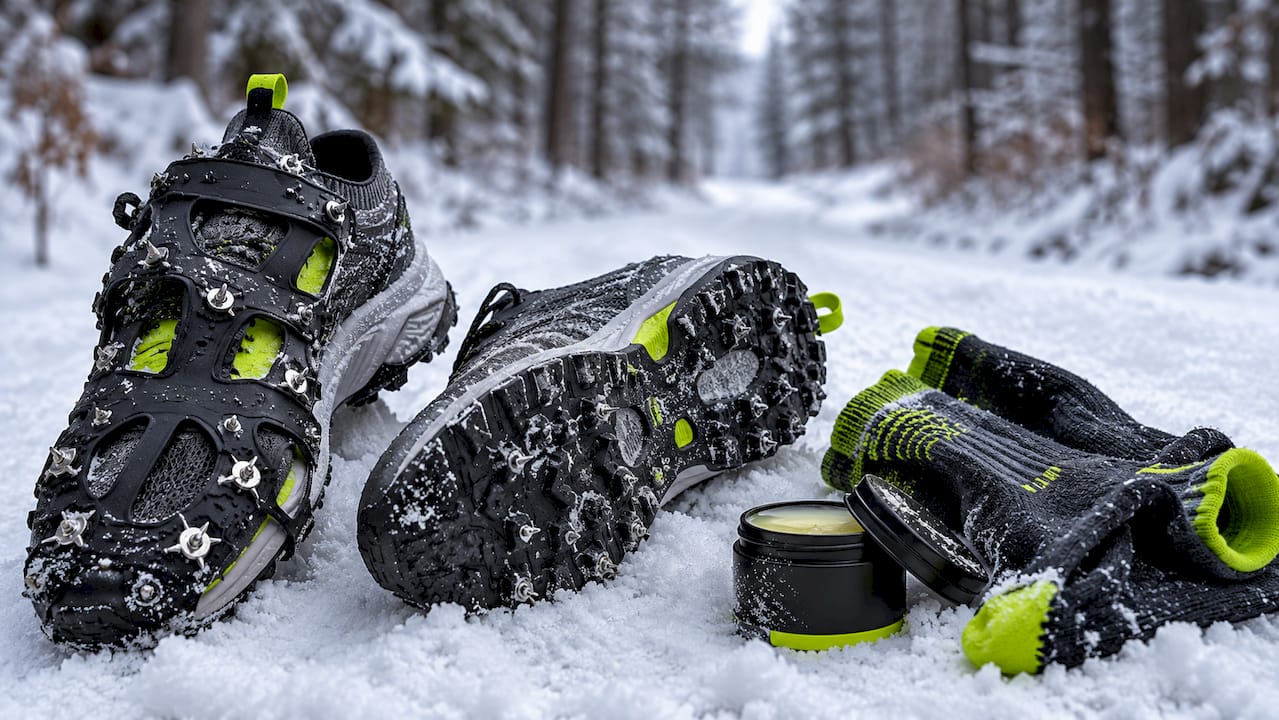
Budget for winter running shoes: Expect to spend £150–£250 per pair for a shoe with adequate grip, weather resistance, and cushioning. That price range reflects the cost of durable outsole compounds and protective uppers that handle wet roads and light trail.
Traction devices: On icy mornings, traction devices like Yaktrax Pro cost £30–£50 and fit over your existing shoes. They are not needed every day, but on genuinely icy surfaces they prevent the kind of fall that ends a training block. Keep a pair by the door and use them without hesitation.
Shoe rotation: Rotating two pairs of running shoes extends the life of both. Foam midsoles need 24–48 hours to decompress fully after a run. Rotation also lets wet shoes dry properly between sessions, which prevents the breakdown of materials and reduces odour.
Pace adjustment: On icy terrain, reduce your pace by 30–45 seconds per kilometre. This is not a weakness. It is a training decision that protects your joints and keeps you upright.
Socks: Choose moisture-wicking fibres with cushioning in the heel and forefoot. Thin cotton socks hold moisture against skin, which accelerates blister formation on long runs. Wool-blend or synthetic running socks solve this directly.
Pro Tip: Reflective safety lights and vests cost £20–£40 and are non-negotiable for early morning or evening winter runs. Drivers see you far later than you think.
3. How to prevent chafing, cold extremities, and overheating
Chafing in winter is worse than in summer. Sweat mixes with salt and sits against skin longer because cold air slows evaporation. The result is raw, painful skin at friction points: inner thighs, underarms, nipples, and anywhere a seam crosses skin repeatedly.
Anti-chafe balms cost £5–£12 and are one of the highest-return purchases in your kit. Apply them before moisture builds up, targeting every skin-to-skin and skin-to-fabric contact point. Do not wait until you feel discomfort. By then, the damage is already done.
Fabric and fit choices that reduce friction:
- Moisture-wicking synthetic fabrics and merino wool pull sweat away from skin. Cotton holds it there.
- Flatlock seams lie flat against skin rather than creating a raised ridge. Check seam construction before buying base layers and tights.
- Compression tights protect the inner thighs on long runs. They also support muscle groups and reduce post-run soreness.
Managing cold extremities: Hands and ears lose heat fastest. Running gloves with a liner-plus-shell system give you two levels of warmth. Wear the liner alone above 5°C and add the shell below that. A thermal beanie or headband covers ears without overheating your head. A neck gaiter or buff protects the throat and lower face on very cold days and pulls down easily when you warm up.
Avoiding overheating under layers: Windproof jackets must have directional breathability to prevent moisture build-up inside. A jacket that blocks wind but traps heat causes rapid cooling the moment you stop running. Look for venting panels under the arms or across the back.
Pro Tip: Apply anti-chafe balm to your feet as well as the obvious friction points. The heel counter and toe box of a new shoe create friction that balm reduces significantly on long training runs.
4. What specialist accessories and safety gear enhance winter training?
Clothing and shoes form the core of your kit. Accessories complete it. The right additions make the difference between a run you cut short and one you finish strong.
Hydration in cold weather: Thirst perception drops in cold air. Runners underestimate fluid loss because they sweat less visibly. A hydration vest or running belt keeps fluid accessible without breaking stride. Soft flasks work well in vests because they collapse as they empty, reducing slosh and weight. For runs over 90 minutes, a vest with front pockets also carries gels, a phone, and an emergency layer.
For guidance on choosing the right vest capacity, the half marathon running vest guide on the Stryq blog covers distances and load requirements in detail.
Visibility and lighting: Active lighting is more effective than passive reflective strips alone. A chest-mounted or head-mounted LED light makes you visible from a greater distance and illuminates the path ahead. Pair active lighting with reflective elements on your jacket and shoes for full coverage.
Gaiters and thermal socks for snow and slush: Low-cut trail gaiters prevent snow and debris from entering your shoes on off-road routes. They add minimal weight and protect your socks from soaking through on slushy paths.
Glove layering strategy: A thin liner glove worn under a windproof shell glove gives you two options mid-run. Remove the shell when you warm up. Keep the liner on to protect fingers from wind chill. This approach costs less than a single premium glove and performs better across a wider temperature range.
Testing gear before race day: Testing all winter gear well before race day is the single most important preparation step. Untested equipment causes discomfort and, in serious cases, race abandonment. Every item on your kit list should complete at least two long training runs before you rely on it in a race.
For a full race day preparation checklist, the marathon race day gear checklist on the Stryq blog covers everything from kit bag to start line.
Key takeaways
A half marathon winter training gear list built on a layering system, tested footwear, and proven anti-chafe products gives you the best chance of consistent, injury-free winter training.
| Point | Details |
|---|---|
| Layering system over single garments | Use base, mid, and outer layers to adapt to temperature swings of up to 20 degrees. |
| Budget for footwear and traction | Spend £150–£250 on winter shoes and £30–£50 on traction devices for icy conditions. |
| Anti-chafe products are non-negotiable | Apply balm costing £5–£12 before every long run, targeting all friction points proactively. |
| Test all gear before race day | Every item must complete at least two long training runs before you rely on it in a race. |
| Accessories complete the kit | Hydration vests, active lighting, and glove layering extend comfort and safety in cold conditions. |
What I have learned from building a winter running kit
The case for buying less and testing more
Most runners buy too much gear at once and test none of it properly. I have made that mistake. You end up with a drawer full of base layers you wore once and a race-day kit that has never been through a genuine long run in cold rain.
The items that actually changed my winter training were not the expensive ones. A good pair of cushioned running socks and a £10 pot of anti-chafe balm solved more problems than any premium jacket. Base layers and socks are the two categories where quality pays back immediately and consistently.
The conventional wisdom says to invest in your outer layer first. I disagree. The base layer is what touches your skin for 13.1 miles. If it holds moisture, you will be cold, chafed, and miserable regardless of what sits on top of it.
My other hard-won lesson: never buy traction devices the week before a race. Yaktrax Pro and similar devices need to be fitted, worn, and tested on the surfaces you actually run on. The fit varies between shoe models and the sensation underfoot is unfamiliar the first time. Use them on three or four training runs before you need them in anger.
Spend strategically. Buy one quality base layer and one pair of quality socks before anything else. Build the rest of the system around those two items over the course of a training block. That approach costs less and produces a kit you actually trust.
— martin
Stryq gear worth adding to your winter kit
Winter training puts more demand on your kit than any other season. The gear you choose needs to hold up across wet roads, cold mornings, and long runs that push past 90 minutes.

Stryq’s cushioned running socks are built for exactly these conditions. Moisture-wicking fibres and targeted cushioning in the heel and forefoot reduce blister risk on long winter runs. The lightweight running belts carry your phone, gels, and keys without bounce, and the hydration vests keep fluid accessible on runs where stopping is not an option. Every Stryq product goes through multiple sample revisions and real-world testing before it reaches you.
FAQ
What is the most important item on a winter half marathon gear list?
A moisture-wicking base layer is the most critical item. It manages sweat directly against skin, preventing the chilling and chafing that undermine every other layer above it.
How do I stop chafing during cold weather long runs?
Apply an anti-chafe balm costing £5–£12 to all friction points before you start running. Choose base layers with flatlock seams and moisture-wicking fabrics to reduce both friction and moisture accumulation.
Do I need traction devices for winter half marathon training?
Traction devices like Yaktrax Pro are necessary on genuinely icy surfaces. Budget £30–£50 and test them on at least two training runs before relying on them in a race or on a high-mileage day.
How many layers should I wear for a winter half marathon training run?
Three layers work for temperatures below 5°C: a moisture-wicking base, a thermal mid layer, and a windproof outer. Above 8°C, a base layer and a gilet are usually sufficient.
When should I start testing my winter running gear?
Start testing all gear at least four to six weeks before your target race. Every item, including traction devices and hydration accessories, needs at least two long training runs to confirm fit and comfort.