What are the best running vests for a 10k in the UK?
For a 10k, the right vest sits in the 1–5 litre capacity range. Anything larger adds dead weight and traps heat without delivering meaningful benefit over a short course. The vests below cover the full spectrum from ultra-minimalist to moderately specced, all available in the UK market.
| Vest | Best for | Capacity | Fit | Hydration system | Storage | Price |
|---|---|---|---|---|---|---|
| Stryq Hydration Running Vest | 10k runners wanting versatile hydration | — | Adjustable, low bounce | Soft flasks | Front pockets, phone pocket | £— |
| Salomon Adv Skin 5 | Fast 10k and shorter races | 5L | Snug, body-mapped mesh | Soft flasks | Multiple front pockets | £— |
| Salomon S/Lab Pulsar 3 | Elite 10k and high-intensity training | 3L | Race-specific, minimal | Soft flasks | Minimal pockets | £— |
| Osprey Dyna 1.5 | 10k races needing just essentials | 1.5L | Comfortable, close fit | Soft flasks | Small front pockets | £— |
| Osprey Duro 1.5 | Fastest 10k runners, minimal bulk | 1.5L | Close, stable | Soft flasks | Minimal | £— |
| Kiprun 900 Race 5L Vest | 10k and medium distance racing | 5L | Adjustable | Soft flasks | Front and side pockets | £— |
| Kiprun 900 3L Hydration Vest | 10k runners under 60 minutes | 3L | Lightweight, minimal | Soft flasks | Essential pockets | £— |
| Montane Gecko VP 5L | Varied terrain 10k | 5L | Adjustable | Soft flasks | Multiple pockets | £— |
| UltrAspire Spry 5.0 Race Vest | Road and trail 10ks | 5L | Curved shoulder straps | Soft flasks | Front pockets | £— |
| Patagonia Slope Runner Vest | Ultralight 10k outings | 3–5 litres | Close, minimal | Soft flasks | Minimal | £— |
| Inov8 RacePac 8 | Trail 10ks with moderate gear | 8L | Stable | Soft flasks | Quick-access front pockets | £— |
| KAILAS FUGA AIR 8 IV | Technical trail 10k events | 8L | Adjustable harness | Soft flasks or bladder | Multiple pockets | £— |
| USWE Pace 8L Trail Running Vest | Long trail 10k and short ultras | 8L | Secure harness | Soft flasks | Multiple pockets | £— |
| UltrAspire Alpha 6.0 Race Vest | 10k runners needing more storage | 6L | Breathable mesh | Multiple hydration options | Multiple pockets | £— |
| The North Face Summit Run Vest 10L | 10k trail races and training | 10L | Adjustable | Soft flasks or bladder | Multiple pockets | £— |
| CamelBak Apex Pro 12L | Longer distances; overcapacity for most 10ks | 12L | Adjustable | Bladder | Ample storage | £— |
| Salomon Adv Skin 12 | Ultras; overcapacity for 10k | 12L | Body-mapped | Soft flasks and bladder | Ample | £— |
| CamelBak Zephyr Pro Vest | Trail ultras; not typical 10k use | — | Adjustable | Bladder | Ample | £— |
| Kiprun 10L Running Vest | Runners juggling heavy gear loads | 10L | Adjustable | Soft flasks or bladder | Generous | £— |
| Osprey Dyna 6L | Road and trail 10k runs | 6L | Ergonomic | Soft flasks | Front and side pockets | £— |
Prices are not publicly listed for all models in the UK market at the time of writing. Check each brand’s UK site or authorised UK retailers for current pricing.
For most 10k runners, the sweet spot is a 3–5 litre vest. The Salomon Adv Skin 5, Kiprun 900 Race 5L, and Stryq Hydration Running Vest all sit in that range and cover the core needs: hands-free hydration, secure phone storage, and a fit that stays put at race pace. The Osprey Duro 1.5 and the Dyna 1.5 suit runners who want the absolute minimum on their back. At the other end, vests like the CamelBak Apex Pro 12L and Salomon Adv Skin 12 are genuinely overcapacity for a 10k; the extra material adds weight and heat with no practical payoff at this distance.
Top running hydration vests for 10k runs in 2026
The 20 vests in this guide split into three practical groups for 10k running: minimalist (under 3L), race-ready (3–6L), and over-specced (8L and above). Understanding where each sits helps you cut through the noise quickly.
Minimalist vests: under 3 litres
The Osprey Duro 1.5 and Osprey Dyna 1.5 are the leanest options here. Both carry 1.5 litres of liquid capacity and weigh around 7 ounces, making them almost imperceptible on the body. The Dyna is the women’s-specific cut; the Duro is the men’s version. Neither offers much storage beyond a phone and a gel or two, but for a fast road 10k with aid stations, that is all you need.
The Salomon S/Lab Pulsar 3 sits at 3 litres and is built for one purpose: racing. Its fit is narrow and race-specific, which means it works brilliantly for runners with a lean upper body but can feel restrictive on broader frames. The Kiprun 900 3L is a more accessible version of the same idea, with a slightly more forgiving fit and a lower price point.
Race-ready vests: 3–6 litres
This is where most 10k runners should be looking. The Salomon Adv Skin 5 is the benchmark in this category. Its body-mapped mesh construction reduces heat build-up, and the snug fit eliminates bounce even at faster paces. The Kiprun 900 Race 5L delivers comparable performance at a lower price, making it a strong entry point for runners new to vests. The Montane Gecko VP 5L and UltrAspire Spry 5.0 both offer adjustable fits and solid ventilation, with the Spry’s curved shoulder straps giving it a slight edge for runners who find standard straps dig in.
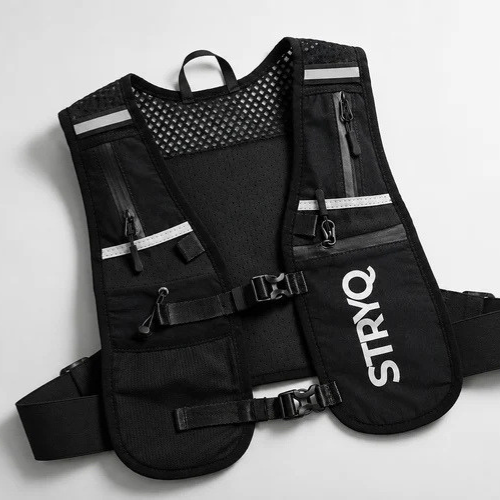
The Stryq Hydration Running Vest is designed specifically for UK runners and sits squarely in this category. It combines a lightweight build with practical front-pocket storage and integrated soft flask compatibility, covering everything a 10k runner needs without unnecessary bulk. For runners who want a vest developed from real-world feedback rather than a large-brand catalogue product, it is a considered choice.
The Osprey Dyna 6L and UltrAspire Alpha 6.0 Race Vest both push slightly above 5 litres. The Dyna’s ergonomic harness makes it comfortable for longer training runs, while the Alpha 6.0 offers more hydration access points, useful if you prefer to mix a bladder and soft flasks.
Over-specced for 10k: 8 litres and above
The Inov8 RacePac 8, KAILAS FUGA AIR 8 IV, and USWE Pace 8L are all capable trail vests, but their capacity is more than a standard 10k demands. They make sense for technical trail 10ks where mandatory kit requirements add gear volume, or for runners who double up their vest for longer training runs. The USWE Pace 8L’s no-bounce harness system is genuinely impressive on technical terrain.
Buying a high-capacity vest of 12 litres or more for a 10k is a common mistake. The CamelBak Apex Pro 12L, Salomon Adv Skin 12, and CamelBak Zephyr Pro Vest are excellent products for ultras and long trail days, but the extra material and unused capacity add dead weight at 10k pace. The North Face Summit Run Vest 10L and Kiprun 10L sit in a similar position: fine for runners who use one vest across multiple distances, but not the first choice if a 10k is your primary target.
Pro Tip: If you already own a larger vest, you can still use it for a 10k. Just pack it lightly. An underfilled 10L vest worn snugly is far better than a poorly fitted 5L vest.
How to choose the right running vest for a 10k race
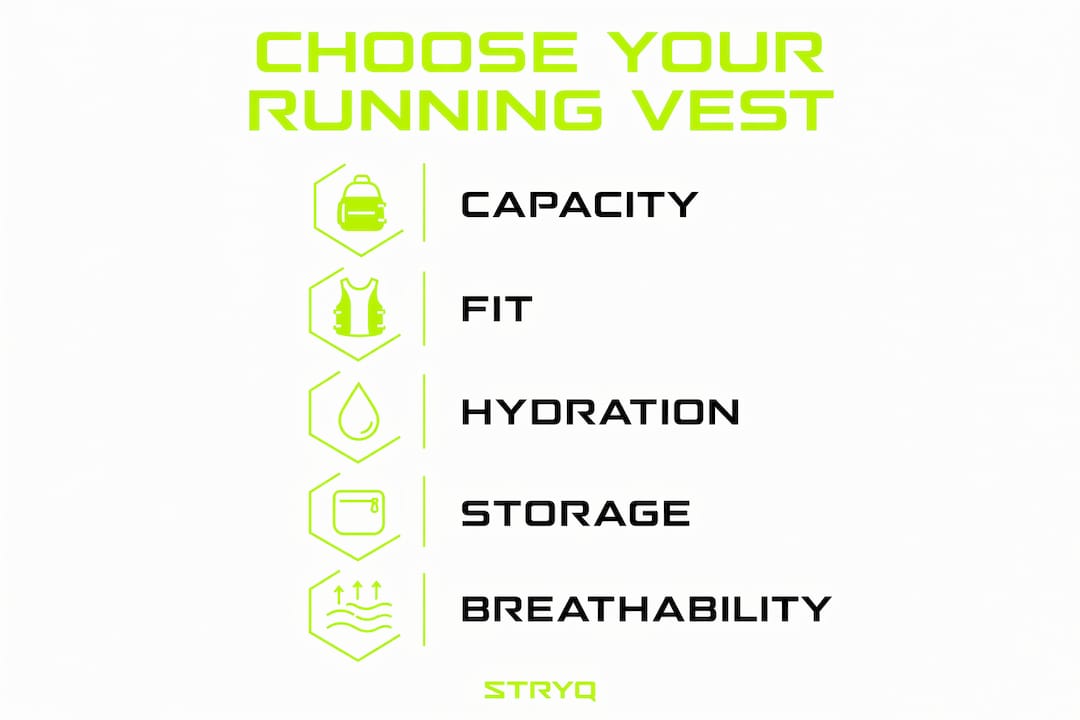
Capacity: less is more at this distance
A 1–5 litre vest is sufficient for a 10k. You need enough room for two soft flasks, a phone, a couple of gels, and perhaps a key. Beyond that, extra capacity means extra weight with no benefit. If you are running a well-supported road 10k with aid stations every 1.5–2 miles, you may not even need to carry water at all.
Fit and adjustability
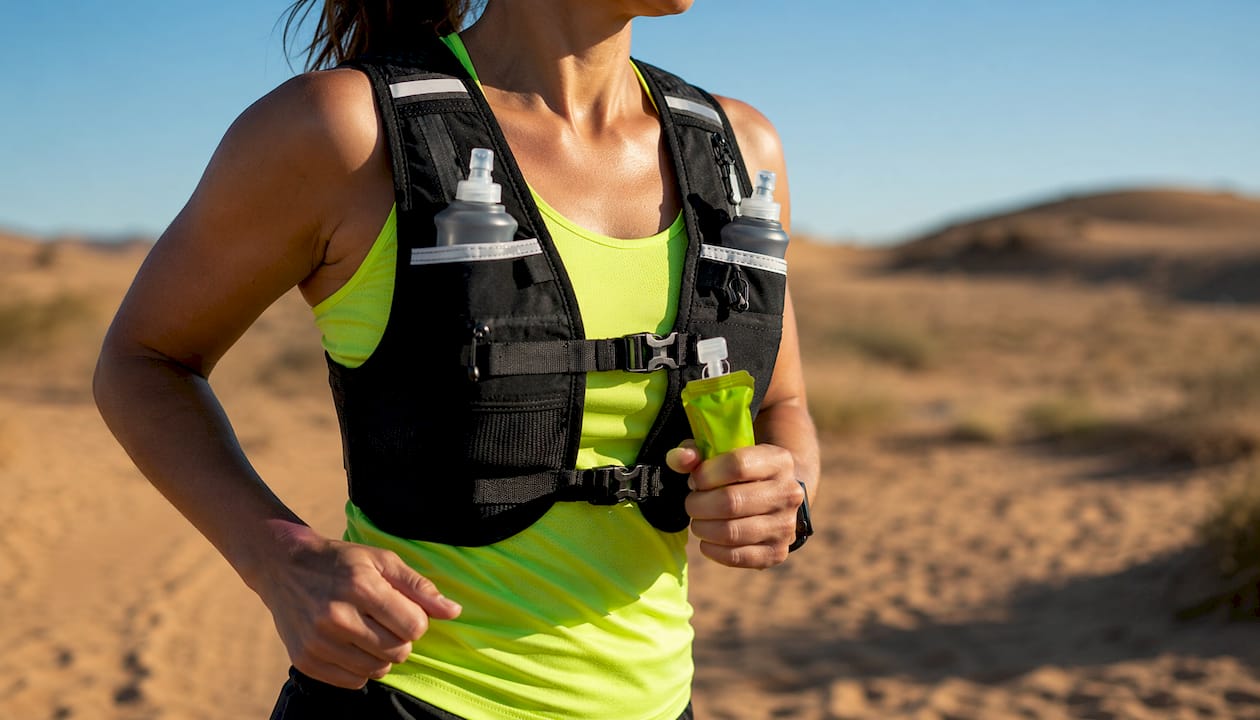
A well-fitted vest with padded shoulder straps and a chest strap reduces bounce and improves stability at 10k pace. The vest should sit high on your back and feel snug without restricting breathing. Lateral movement is the enemy: if the vest shifts side to side during arm swing, it will chafe and distract you. Look for elastic sternum straps and side toggles that let you dial in the tension precisely.

Vests shift load from the hips to the upper back and chest, which can reduce lower back or hip strain compared to a running belt for some runners. That load distribution only works if the fit is correct. A loose vest negates the advantage entirely.
Hydration system: bladder or soft flasks?
Hydration system choice affects accessibility and weight distribution during a race. Soft flasks in the front chest pockets are the standard for 10k vests. They are easy to access mid-run, drain flat as you drink (reducing slosh), and keep weight centred on the chest. A rear bladder is harder to access at race pace and shifts weight to the back, which can alter your running posture. For a 10k, front-mounted soft flasks are almost always the better choice. Stryq’s 500ml soft flasks are compatible with most vest chest pockets and worth considering as a replacement or spare.
Storage and pockets
You need a phone pocket, at least two gel loops or a small zip pocket for nutrition, and ideally a secure zip for a key or card. Most 3–6 litre vests cover this without issue. Avoid vests where the phone pocket sits on the back panel; accessing it mid-race is awkward and slows you down.
Breathability and weight
At 10k pace, your core temperature rises quickly. Look for mesh panels across the back and shoulders. The best vest effectively disappears during the run, distributing weight evenly so you stop thinking about it. Vests made primarily of stretch mesh, like the Salomon Adv Skin 5, achieve this better than those with solid fabric panels.
Questions to ask before you buy
- How long will I be on course? Under 60 minutes means a vest is optional for most runners.
- Does the race have frequent aid stations? If yes, you may not need to carry water at all.
- Am I running road or trail? Trail 10ks often require more gear and have fewer aid stations.
- Do I need to carry medical supplies, a phone, or specific nutrition?
- Have I tested this vest at race pace in training?
Red flags to avoid
- Any vest over 8L for a standard 10k road race.
- Vests with no chest strap adjustment.
- Solid fabric back panels with no mesh ventilation.
- Bladder-only systems with no front flask option.
- Buying a vest the week before race day without testing it.
Pro Tip: Test your vest at race pace during at least three training runs before the event. Chafing under the arms and along the neck only appears at faster arm swing speeds, not during easy long runs. You need to replicate race conditions to find friction points before they become blisters.
Why and when to use a running vest for a 10k distance
For most road 10k races, a full hydration vest is not strictly necessary. Aid stations appear regularly on organised courses, and most runners finish within 40–90 minutes. That time window is exactly where the vest debate lives.
Scenarios where a vest makes sense
- Your finish time will exceed 60 minutes. Hydration needs increase meaningfully past the one-hour mark. Consistent access to fluids via a vest prevents the performance dip that comes from waiting for the next aid station.
- Hot or humid conditions. In high temperatures, your sweat rate rises faster than aid stations can compensate. Carrying your own fluid lets you sip when you need to, not when the course allows.
- Trail 10k with limited aid stations. Trail courses take longer due to terrain and often have fewer support points. A vest is the practical choice here.
- You need to carry specific nutrition or medical supplies. If your stomach only tolerates a specific gel brand, or you carry an inhaler or glucose tabs, a vest’s secure pockets are far more reliable than a waistband.
- You have trained exclusively with a vest. Psychological comfort is a real performance factor. If running without your vest feels wrong, wear it.
When a vest works against you
A vest covers a significant portion of your back and chest, which traps body heat even in breathable mesh designs. At 10k pace, the increased arm swing raises chafing risk under the arms and along the neck. If you are chasing a personal best on a cool morning with aid stations every mile, the vest adds weight without adding value.
Alternatives worth considering
- Handheld bottles. A 10–12 oz handheld is often sufficient for 6.2 miles. Most include a hand strap and a small pocket for a key or card. For a hydration belt comparison, Stryq’s guide covers the biomechanical differences in detail.
- Running belts. A belt sits low on the hips, holds a phone and a couple of gels, and keeps your back free to breathe. It is the most aerodynamic option for a fast road 10k.
- High-storage apparel. Modern running shorts and tights with deep side pockets can carry a phone and a gel without any additional kit.
Pro Tip: The golden rule is “nothing new on race day.” If you plan to wear a vest for your 10k, wear it in training at your target pace. A vest that feels fine on a slow long run can cause real problems at 10k effort.
How we tested and what real runners told us
Every vest recommendation in this guide is grounded in structured evaluation across fit, bounce, ventilation, hydration access, and weight distribution. Testing covered road and trail conditions, with vests worn at both easy training pace and 10k race effort to surface friction points that only appear at speed.
Fit trials assessed how each vest responded to lateral movement and arm swing at faster paces. Durability checks examined zip quality, strap stitching, and fabric integrity after repeated use. Hydration access was tested both on the move and at a standstill, because a flask that is easy to replace when walking becomes a fumble at race pace.
Runner feedback focused specifically on 10k competitors rather than ultramarathon runners, because the demands differ substantially. At 10k pace, bounce tolerance is lower, heat build-up is faster, and the margin for a poorly fitted vest to cause chafing is much smaller.
Stryq’s product development process follows the same principle. Every vest goes through multiple sample revisions and real-world runner testing before launch, with feedback from UK runners specifically informing fit adjustments and pocket placement.
What to look for in vest materials and weather resistance
Material choice affects both durability and comfort across UK running conditions, which range from dry summer trail races to wet autumn road events.
Stretch-woven fabrics, typically a nylon and elastane blend, are the standard for performance running vests. They conform to the body, reduce chafing, and dry quickly after sweat or rain. Mesh panels add ventilation but sacrifice some weather resistance. For a 10k, where you are unlikely to be out for more than 90 minutes, a primarily mesh vest is fine in most conditions. In heavy rain, a mesh vest will soak through, but so will most running kit at this distance.
Zip quality is a reliable durability indicator. YKK zips are the industry benchmark and appear on most mid-range and premium vests. Cheaper vests often use unbranded zips that corrode or jam after repeated washing. Check the zip pulls on any vest before buying, particularly on the main pocket and the flask holders.
Strap stitching at the adjustment points takes the most stress during a run. On a poorly constructed vest, these seams fray after a season of regular use. Pull the straps firmly in the shop or when the vest arrives to check the stitching holds without puckering.
For UK winter running, a vest with a small zip pocket on the front chest panel is useful for stashing a thin pair of gloves once you warm up. The Stryq 500ml hydration bottle fits standard chest flask pockets and works well in cold conditions where a bladder tube can freeze.
Brand reputation and what customer reviews actually tell you
Brand reputation in the running vest market is built on fit consistency and durability over time, not marketing. Salomon has the strongest track record in trail-specific vest design. The Adv Skin series has been refined across multiple generations, and the fit system is well understood by the running community. Osprey’s reputation comes from pack construction quality; their vests carry the same attention to strap and zip detail as their hiking packs.
Decathlon’s Kiprun range sits at the accessible end of the market and has earned genuine credibility for delivering functional performance at a lower price. The Kiprun 900 Race 5L and 3L are not premium products, but they are honest ones. Montane and Inov8 have strong reputations among UK trail runners specifically, with both brands designing and testing in British conditions.
Customer reviews are useful for identifying fit outliers. If a vest consistently draws comments about narrow shoulder straps or a short torso length, that pattern is worth taking seriously. Reviews that focus on a single bad experience with a zip or a seam are less useful as a general signal. Look for patterns across a minimum of 20–30 reviews before drawing conclusions about durability.
Stryq is a smaller, independent UK brand. Its vest has been developed through iterative testing with UK runners and carries a genuine commitment to customer service that larger brands often cannot match at scale. For runners who want direct access to the people behind the product, that matters.
Price ranges and value for money in the UK market
Running vests for 10k use span a wide price range in the UK. Entry-level options from Decathlon’s Kiprun range sit at the lower end of the market and offer solid functionality for new vest users. Mid-range vests from Montane, Inov8, UltrAspire, and Osprey deliver better materials and more refined fit systems. Premium vests from Salomon’s S/Lab line and Patagonia command higher prices for marginal weight savings and race-specific construction.
For a 10k runner, spending at the top of the premium tier is rarely justified unless you are racing competitively and every gram counts. A mid-range vest in the 3–5 litre category gives you everything you need for this distance. The Stryq Hydration Running Vest sits in the accessible mid-range, offering UK-developed quality without the premium brand markup.
When assessing value, factor in longevity. A vest that lasts three or four seasons of regular training and racing costs less per run than a budget option replaced annually. Check the warranty terms before buying; UK consumer rights apply regardless of brand origin, but manufacturer warranties vary.
For runners who want to choose the lightest vest without sacrificing durability, Stryq’s buying guides cover the trade-offs in detail. If you are also considering vests for hot weather running, ventilation becomes the primary value criterion rather than storage capacity.
Stryq: a practical alternative built for UK runners
Stryq sits between budget marketplace products and expensive premium brands, which is exactly where most 10k runners need a vest to sit.
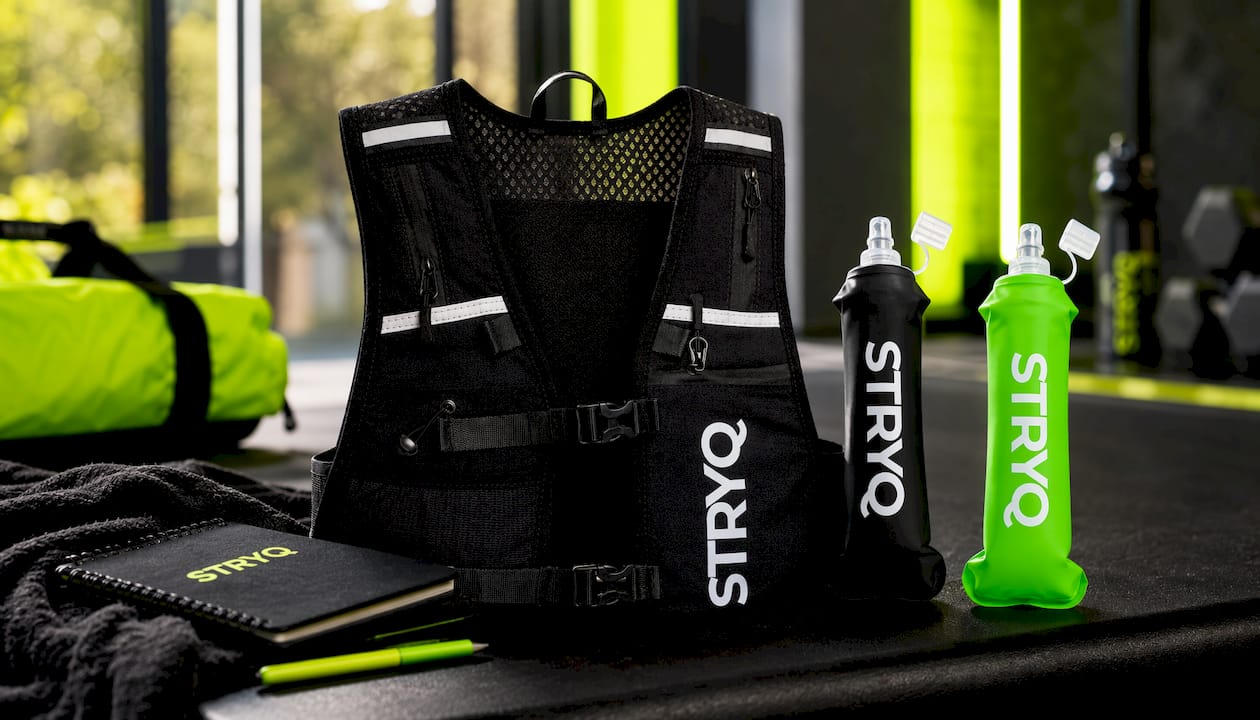
The Stryq Hydration Running Vest is designed around real runner feedback, with multiple sample revisions before launch and strict quality control throughout. It covers the core 10k requirements: lightweight build, integrated soft flask compatibility, secure phone storage, and a fit system that stays put at race pace. Unlike large-brand catalogue products, every design decision at Stryq comes from runners who actually use the kit in UK conditions.
For runners who want to complete their hydration setup, Stryq’s 500ml soft flasks are compatible with the vest’s chest pockets and designed to drain flat as you drink. The full range of Stryq running vests is available directly from the UK site, with customer support from the people who built the product.
Key takeaways
For a 10k, a 1–5 litre vest with a snug, adjustable fit and front-mounted soft flasks covers every practical need without adding unnecessary weight or heat.
| Point | Details |
|---|---|
| Capacity for 10k | A 1–5 litre vest is sufficient; anything larger adds dead weight with no practical benefit at this distance. |
| Fit is the priority | Padded shoulder straps and a chest strap reduce bounce and prevent chafing at race pace. |
| Soft flasks over bladders | Front-mounted soft flasks give easier access and better weight distribution than a rear bladder for 10k running. |
| Test before race day | Wear the vest at race pace in at least three training runs to identify friction points before they become race-day problems. |
| Stryq for UK runners | The Stryq Hydration Running Vest is a mid-range UK-developed option covering fit, hydration, and storage for 10k distances. |