A good ultra race packing example is not about carrying every item you own. It is about knowing what you will need before the next checkpoint, keeping it easy to reach, and making sure your kit still feels comfortable after six hours on the trails. The right setup should let you run without bounce, rummaging or second-guessing.
For a UK trail ultra, weather can turn, aid stations can be further apart than expected, and food that sounded appealing at registration may be the last thing you want at mile 30. Pack for the course, the forecast and your own habits. Then test the whole system in training.
Ultra Race Packing Example: A 50km Trail Race
This example suits a typical 50km UK trail race with checkpoints every 10 to 15km, mixed terrain, and mandatory kit including a waterproof jacket, spare warm layer, hat, gloves, phone, emergency blanket, whistle and basic first aid supplies. Always follow your event's own kit list. Mandatory kit is not a suggestion, and organisers may specify waterproof ratings, taped seams or a minimum water capacity.
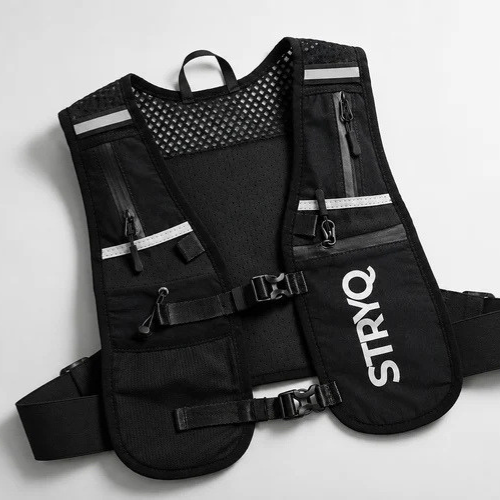
Start with a hydration vest that sits close to the body when full and when nearly empty. A vest that fits well matters more than extra pockets you will not use. If it moves around on your shoulders or ribs during a steady run, it will feel worse when you are tired, wet and descending.
Carry two 500ml soft flasks in the front pockets. Fill both at the start if the first checkpoint is more than an hour away, it is warm, or the route has exposed sections. If water is readily available and temperatures are low, one flask may be enough for the opening leg. The aim is to avoid carrying unnecessary weight without starting underprepared.
Keep your most-used fuel in the front. For a runner expecting to finish in five to seven hours, that might mean six to eight gels, chews or bars, plus one savoury option such as small salted potatoes, a wrap or crackers in a sealed bag. You do not need to eat all of it before the first checkpoint. Carry enough to cover the section ahead, with an emergency reserve in case you are delayed.
A practical front-pocket layout could look like this:
- Left pocket: 500ml soft flask, two gels and electrolyte tablets.
- Right pocket: 500ml soft flask, two gels, phone and race map if needed.
- Lower pockets: gloves, buff, used wrappers and a small emergency snack.
- Rear storage: waterproofs, warm layer, mandatory safety kit and remaining food.
Pack the Rear Compartment in the Right Order
The mistake many runners make is putting kit into a vest in the order they think of it. Pack according to when you are likely to need it.
Put your waterproof jacket near the top or in an outer pocket. If rain starts halfway up a ridge, you want to get it on quickly before you become cold. A waterproof trouser, if required, can sit beside it. Roll each item rather than folding it flat. Rolled kit usually fits more neatly and is easier to remove.
Place your spare warm layer, such as a long-sleeved top or lightweight insulated layer, lower down. Keep it dry in a waterproof bag. A simple freezer bag can do the job, though a tougher dry bag is more reliable for repeated use. This is one of the small details that can make a real difference if you are stuck walking in wind and rain.
Your emergency blanket, whistle, small first aid kit and any required head torch can go at the bottom. They are essential, but hopefully you will not need them. Check the head torch before race day, and pack spare batteries if the event requires them. Do not assume a torch that worked during winter training still has a full charge.
If the course includes evening running or poor visibility, move the torch somewhere easier to reach. The best packing arrangement depends on the race rather than a fixed rule.
Plan Food by Time, Not Just Distance
Distance can be misleading on hilly, muddy or technical routes. A 10km section might take 50 minutes, or it might take two hours. Pack nutrition based on how long you expect to be out between aid stations, then add a buffer.
Most runners do well by taking in regular carbohydrates from early in the race. A useful starting point is 40 to 60 grams per hour, though some experienced runners can tolerate more after practising in training. Your stomach, pace and fuel choice will determine what works. There is no prize for forcing down a gel that makes you feel sick.
For this 50km example, carry enough food for roughly two to three hours at a time. At each checkpoint, refill flasks, top up fuel, and reassess what you need for the next section. If it is colder than expected, take an extra snack. If the route has become slow and muddy, carry more than your original plan suggests.
Keep one food item you genuinely look forward to eating. Sweet gels are convenient, but after several hours a savoury snack can feel far more useful. Test this during long runs. Race day is not the time to find out that a particular bar is impossible to chew when you are breathing hard.
Keep Waterproofs, Phones and Fuel Dry
Rain does not need to be heavy to cause problems over a long race. Wet gloves become uncomfortable, paper maps turn to pulp, and damp food wrappers are harder to open with cold hands.
Use separate waterproof bags inside your vest. One can hold warm kit and safety items. Another can hold food. Keep your phone in a waterproof pouch, even if your vest pocket is labelled water-resistant. You may need it for navigation, emergency contact or a photograph at the finish, and a soaked phone is no help to anyone.
This approach also makes checkpoint stops quicker. Instead of emptying your whole vest to find a jacket, you know exactly where everything is.
Check Fit With a Full Load
An empty vest can feel excellent in the shop or on a short jog. A loaded vest is what matters. Before race day, fill it with the same flasks, food and mandatory kit you plan to carry. Then run for at least 90 minutes, ideally on similar terrain.
Look for movement at the shoulders, rubbing around the ribs and pressure points from flasks or zips. Adjust the chest straps so the vest stays stable but does not restrict breathing. If you need to pull it tighter every few kilometres, the fit or load distribution needs attention.
A close-fitting running vest and soft flasks are often more comfortable than carrying hard bottles in hand, particularly on uneven ground. The goal is simple: secure storage, accessible hydration and as little distraction as possible. STRYQ running accessories are designed around that practical balance, with no bounce and no unnecessary bulk.
What to Leave Out
Overpacking is common, especially before a first ultra. It usually comes from understandable nerves, but extra weight adds up over long climbs. Leave out duplicate items unless the rules require them or conditions justify them.
You probably do not need three types of pain relief, a full-sized pack of wipes, a large power bank for a daytime 50km race, or enough food to cover the entire event when there are well-stocked checkpoints. Equally, do not cut required safety kit to save a few grams. The right question is not, “Could I possibly use this?” It is, “Is this required, or is it likely to solve a real problem on this course?”
Final Race-Morning Check
Lay everything out the night before, then check it again against the organiser's mandatory kit list. Charge your phone and watch. Fill flasks shortly before you leave. Pin your race number where it will not block pockets or rub against your vest straps.
On the start line, your kit should feel familiar. You should know which pocket holds your next gel, where your jacket is, and how much water you have. That confidence saves energy when the race gets hard. Pack with purpose, test it properly, and let your gear fade into the background while you focus on the miles ahead.