Your socks are a small part of your kit, right up until a hot spot appears at mile four or cold, wet feet spoil a winter long run. Merino versus synthetic running socks is not just a question of fabric preference. It affects comfort, temperature control, drying time and how your feet feel when the run gets longer than planned.
The best choice depends on your usual distance, weather and how much you sweat. Neither material wins every run. What matters is choosing a pair that stays put, manages moisture and does not create extra problems when you should be thinking about your pace.
Merino versus synthetic running socks: the main difference
Merino wool is a natural fibre from Merino sheep. In running socks, it is usually blended with nylon, polyester and elastane rather than used on its own. The wool helps regulate temperature and resist odour, while the synthetic fibres add strength, shape and a closer fit.
Synthetic running socks are normally made from polyester, nylon, polyamide, polypropylene or a mix of these fibres, often with elastane. They are designed to move sweat away from the skin, dry quickly and hold their shape over repeated use.
The practical difference is simple. Merino tends to feel more comfortable across changing conditions and copes well with odour. Synthetic tends to dry faster, feel lighter when wet and stand up well to frequent hard use. The quality of the knit, padding and fit matters just as much as the fibre on the label.
When merino running socks make sense
Merino is a strong option for runners who train through a British winter, head out early in cool weather or spend a long time on the trails. Wool fibres can absorb a useful amount of moisture vapour before they feel clammy. This helps your feet feel less damp when temperatures are low or conditions change during the run.
Better temperature control in changeable weather
Merino insulates even when it is damp, which makes it particularly useful for cold mornings, wet trails and long runs where you may slow down for stops. It also regulates heat well enough for mild days. That does not mean it is automatically the coolest choice in a heatwave, but it is more versatile than many runners expect.
For a winter marathon build-up, a pair of merino-blend socks can take the edge off cold feet without the bulk of a thicker hiking sock. Look for a running-specific pair rather than assuming any wool sock will do. A running sock needs a secure cuff, shaped heel and enough stretch to avoid bunching inside the shoe.
Useful if odour is a problem
Merino naturally resists odour better than most synthetics. If you run on consecutive days, commute home after a session or travel for an event with limited washing options, that is a genuine benefit. It does not remove the need to wash socks, but they are less likely to smell unpleasant after one hard run.
A softer feel for sensitive feet
Many runners find merino blends feel softer and less plasticky against the skin. This can be helpful if your feet are prone to rubbing, although softness alone does not prevent blisters. A sock that slips, folds or is too large can still cause friction regardless of its material.
Where merino has limits
Merino socks usually cost more than basic synthetic pairs, and they can take longer to dry after a soaking. That matters if you are running several days in wet conditions, washing kit in a hotel sink or need a pair ready again by the next morning.
Pure or high-merino socks may also wear through sooner around the heel and forefoot, especially if your shoes have rough internal seams or you run high mileage. This is why a blend is often the sensible middle ground. Nylon reinforces high-wear areas, while elastane helps the sock recover its shape.
For hot, humid runs, some runners simply prefer the lighter, faster-drying feel of synthetic. If your feet run very warm and sweat heavily, a thin synthetic sock may be the more comfortable choice.
When synthetic running socks are the better choice
Synthetic socks are the dependable everyday option for plenty of runners. They are usually lighter, quicker to wash and dry, and more resilient over high weekly mileage. They are also widely available in thin, cushioned, ankle and crew styles, making it easier to match a sock to your shoe and running conditions.
Fast drying for wet runs and regular training
Synthetic fibres do not absorb as much water as wool. They move moisture through the fabric and dry quickly once you are out of the rain. After a sodden run, they may still feel wet, but they are less likely to feel heavy.
This is useful for runners training four or five times a week, especially when kit has to be washed and dried quickly. It also suits warm-weather running, where a thin synthetic sock can feel less insulating and more breathable.
Strong, consistent fit
A good synthetic sock holds its shape well. That can mean less movement at the heel and toes, which is valuable for blister prevention. Compression through the arch can also make the sock feel more secure, though it should not be so tight that it leaves deep marks or makes your toes feel restricted.
For shorter road runs, interval sessions and parkrun efforts, synthetic socks are often the simplest answer. They are light, practical and ready for repeated use.
Often better value over high mileage
Synthetic socks are not always cheap, but they tend to offer good durability for the price. If you get through a lot of training miles, a few reliable synthetic pairs can be easier on the budget than replacing delicate socks more often.
Their main downside is odour. Once bacteria build up in the fabric, synthetic socks can hold onto smells more readily than merino. Washing them promptly and avoiding fabric conditioner can help, as conditioner may coat fibres and reduce their ability to move moisture.
Blisters are about more than material
No sock fabric can compensate for a poor fit. Most running blisters happen because repeated friction creates heat and damage to the skin. Dampness can make the skin softer and more vulnerable, but the usual cause is movement between your foot, sock and shoe.
Choose socks that fit snugly without compression around the toes. The heel should sit in the heel cup rather than halfway up your ankle, and there should be no loose fabric at the forefoot. If you are between sizes, follow the manufacturer’s size guide rather than automatically sizing up.
Padding is personal. Light cushioning can improve comfort on long road runs, while thinner socks offer a more direct feel and may suit tighter-fitting shoes. More cushioning also takes up more room. If your trainers already feel close around the toes, a thick sock may create pressure rather than comfort.
Seams deserve attention too. Flat or low-profile toe seams reduce a common rubbing point, particularly on longer runs and descents. Test new socks on an easy run before wearing them for a half marathon, marathon or trail event.
How to choose for your next run
Start with the conditions you run in most, not the conditions you wish you ran in. A runner doing three short road runs each week may get the best value from durable synthetic socks. Someone preparing for a winter trail race may appreciate a merino blend for warmth and comfort over several hours.
A small rotation works well for many runners: thin synthetic socks for warm days and faster sessions, plus one or two merino-blend pairs for cold, wet or long runs. This is not about owning more gear for the sake of it. It is about having the right option when wet feet, heat or rubbing could otherwise derail a session.
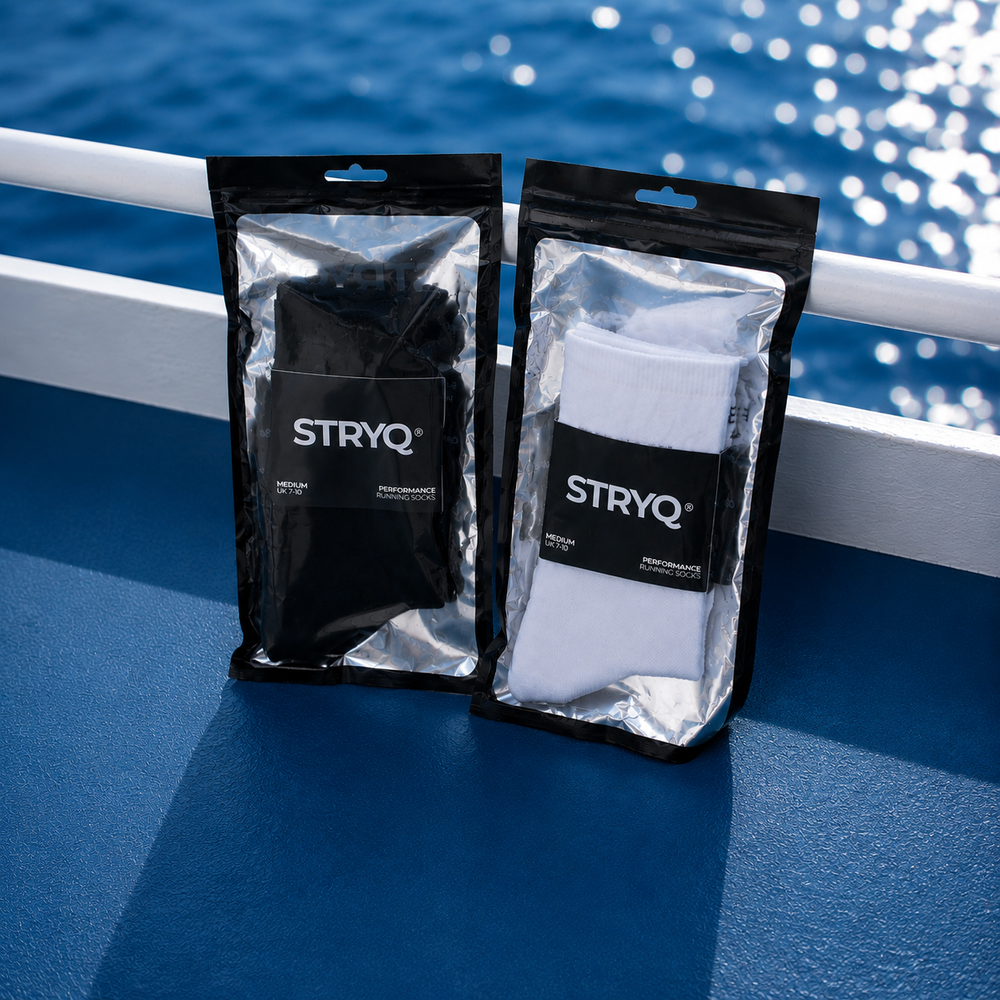
At STRYQ, the focus is on the details runners notice after a few miles: a secure fit, breathable fabric, comfortable cushioning and no unnecessary bulk. Those details matter more than a dramatic material claim.
Wash running socks inside out at a moderate temperature and avoid high heat in the tumble dryer where possible. High heat can shorten the life of elastane and affect the fit. Replace pairs when the heel thins, the cuff slips or the fabric loses its shape. A sock that has done its job for hundreds of miles does not need to become a race-day gamble.
The right sock is the one you forget about once you start running. Try both materials across your normal routes, pay attention to how your feet feel after an hour, and let that experience decide the next pair you reach for.