A marathon can expose every small issue in your kit. A waistband that rubs, a gel that is hard to reach, or a sock that slips by a few millimetres can become a serious distraction after 20 miles. This marathon socks review focuses on what genuinely matters: blister control, fit, moisture management and comfort that lasts beyond the first few miles.
The right pair will not make the training easier, but it can stop your feet becoming the limiting factor. For most runners, that is the point. No fuss, no bunching, no need to think about your socks while you are trying to hold pace.
Marathon socks review: what matters most
A good marathon sock should stay in position, manage sweat and protect high-friction areas without feeling thick or restrictive. Those three jobs sound simple, but the balance is where many socks fall short.
Too thin, and the sock may offer little protection when your feet swell late in a run. Too padded, and it can make a shoe feel tight, trap heat and alter a fit that was comfortable over shorter distances. The best choice depends on your shoes, how much you sweat and whether you are prone to blisters.
It is also worth separating comfort from softness. A very soft sock can feel excellent while standing in the kitchen, then lose its shape once wet. Marathon comfort comes from a close, stable fit and well-placed cushioning, not just a fluffy fabric.
Fit comes before fabric
If a sock moves, it creates friction. Friction creates hot spots, and hot spots can quickly become blisters. Look for a shaped left and right fit where available, a supportive arch section and a cuff that stays put without digging into your calf.
The heel is especially important. A loose heel pocket can fold or creep down inside the shoe, while one that is too small may pull the sock forward and tighten around the toes. Neither is ideal at mile 18.
Try marathon socks with the shoes you actually plan to race in. A pair that feels secure in a roomy daily trainer may feel cramped in a lower-volume racing shoe. Do not assume your usual shoe size tells the whole story.
Moisture management is blister management
Sweat is not the problem on its own. The issue is prolonged dampness combined with movement. Wet skin is softer and more vulnerable to rubbing, particularly around the toes, heel and ball of the foot.
Technical fibres help move moisture away from the skin and dry faster than basic cotton. Merino blends can work well in cooler conditions because they feel comfortable across a range of temperatures and resist odour. Synthetic performance blends are often lighter, quicker drying and a better choice for runners who know their feet run hot.
There is no single winning fabric for every runner. If you train through a wet British winter, a sock that stays comfortable when damp may matter more than one that feels exceptionally airy on a dry summer morning. Test both conditions before committing to race day.
Cushioning should match your shoes and stride
Targeted cushioning under the heel and forefoot can reduce the harsh feel of repeated road impact. It is useful for runners in firmer shoes, heavier runners, or anyone whose feet feel battered after long runs. The trade-off is warmth and reduced room inside the shoe.
Lighter cushioning suits runners who prefer a more direct feel, wear close-fitting shoes or race in warmer weather. It can also be a sensible option if your feet swell noticeably over longer distances. A slim sock leaves more space, but it needs to fit precisely to avoid movement.
Rather than asking whether a padded or thin sock is better, ask what is already happening inside your shoe. If your toes feel cramped, add no more bulk. If the sole of your foot feels sore and your shoes have a firm ride, a little extra cushioning could help.
What to look for in marathon running socks
A useful sock does not need a long list of claims. It needs a few details that solve real running problems.
A seamless or low-profile toe construction reduces the chance of rubbing across the front of the foot. This matters most if you have had toenail pressure, toe blisters or discomfort during descents. A reinforced heel and toe can also be worthwhile, as these areas take the most wear during regular training.
Arch support should feel gentle, not restrictive. It is there to hold the sock in place rather than act as medical support. If it leaves a deep mark or causes tingling, the size or construction is wrong for you.
Cuff height is personal, but it has practical consequences. No-show socks can be cool and unobtrusive, yet may allow shoe collars to rub at the ankle. Quarter-length socks offer a little more protection and are a dependable choice for many road runners. Crew socks can help prevent chafing from trail debris and provide extra lower-leg coverage in poor weather, although they may feel warmer.
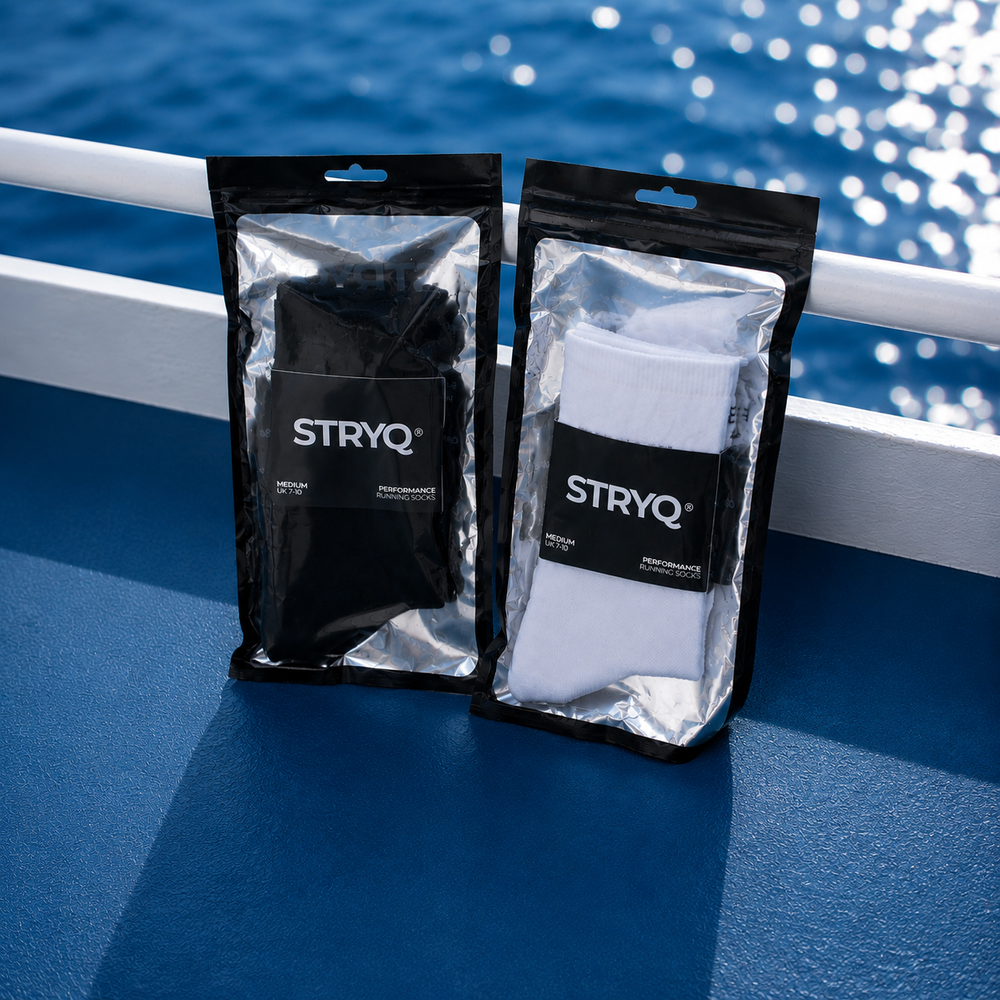
STRYQ running socks are designed around these everyday needs: a secure fit, practical cushioning and materials that stay comfortable when the miles build. The goal is simple - fewer distractions from your kit.
How to test socks before your marathon
Do not save new socks for the start line, even if they are the same model you have worn before. Manufacturing batches, washing and small changes in fit can all affect how a pair feels.
Use your long runs to test the full combination of shoes, socks, lacing, lubrication and any toe protection you normally use. Start with a steady run of 60 to 90 minutes, then wear the same set-up on at least one longer session. Check your feet straight afterwards, not just the following day.
Look for red patches, softened skin, rubbing around the Achilles and pressure at the toe box. These are useful clues. You may need a different sock thickness, a larger shoe for long runs, or a change in lacing rather than a completely different sock.
Wash the socks as directed after each run. Dirt, dried sweat and fabric conditioner can affect how technical fabric performs. Avoid high heat if the care label advises against it, as it can reduce stretch and shorten the life of elastic fibres.
Common marathon sock mistakes
The most common mistake is wearing cotton. Cotton absorbs sweat and holds it close to the skin, which is rarely a good plan for several hours of running. It may be fine for everyday wear, but it is not built for a marathon effort.
The next is doubling up socks to stop blisters. This can work in specific cases, but it also changes shoe volume, traps heat and may create more bunching. Solve the cause first: poor fit, damp feet, a worn shoe lining or socks that are too large.
Another mistake is choosing a sock based on colour or a quick try-on. Your socks need to work at 10 miles, not just feel nice for 10 seconds. Keep the race-day pair in your training rotation until you trust them.
Finally, do not overlook wear. Socks with thinning heels, loose cuffs or fabric that has lost its recovery are more likely to shift. A marathon is not the day to squeeze another long run from an old pair.
Are expensive marathon socks worth it?
They can be, but price alone does not guarantee comfort. A premium sock is worth paying for if it fits your foot properly, survives regular washing and solves a specific issue such as heel slip, toe rubbing or excessive sweat. It is not worth it if the extra padding makes your trusted shoes feel too tight.
For marathon training, owning several pairs of the same dependable sock is often more useful than owning one costly pair you only wear occasionally. It gives you consistency across wet runs, recovery days and your biggest training weeks. You will also know exactly how the fit changes after washing.
If you are unsure where to start, choose a technical quarter-length sock with a close fit, low-profile toe seam and moderate cushioning. It is the safest middle ground for most road runners. From there, adjust based on what your feet tell you on long runs.
Your marathon socks should disappear from your thoughts once you leave the start pen. Test them properly, replace them when they are worn, and let your feet get on with the job.