

The UK runners' guide: community, events and training
Most UK runners find their community, events and training plans through a handful of well-established resources: parkrun, local athletics clubs, r/UKRunners on Reddit, Runner’s World UK, and the NHS Couch to 5K programme. UK Athletics (British Athletics) sets the standards for affiliated clubs and coaching. The single most useful first step you can take today is to register for your nearest parkrun, which is free, weekly, and open to all abilities.
Where to start right now:
- Register at parkrun.org.uk for a free barcode and find your nearest weekly 5K event
- Join r/UKRunners on Reddit for route tips, kit questions and local race recommendations
- Download the NHS Couch to 5K app if you are new to running
- Search the England Athletics RunEvents calendar for licensed races near you
- Check UK Athletics (British Athletics) for affiliated clubs with qualified coaches
Table of Contents
- Where do UK runners meet: clubs, online hubs and weekly meet-ups?
- How do you find races and running events across the UK?
- What training plans do UK runners actually use?
- What gear do UK runners actually need?
- Common injuries UK runners face and how to prevent them
- A practical 4–8 week starter plan for new runners in the UK
- British runners worth following for inspiration
- Key takeaways
- What the running community gets wrong about getting started
- Stryq kit worth considering when you are ready for a small upgrade
- Useful UK running resources
Where do UK runners meet: clubs, online hubs and weekly meet-ups?
The running community in the UK is genuinely accessible, whether you want a coached track session or a casual jog with strangers who become regulars. parkrun is the most common entry point: free, every Saturday morning, and built on volunteers. Thousands of runners show up weekly at hundreds of locations, making it the easiest way to meet people without any commitment.
Local athletics clubs sit a step up in structure. Most offer a mix of interval sessions, social runs and occasional coached evenings. Membership typically costs a modest annual fee, though this varies by club and region. UK Athletics (British Athletics) is the national governing body; clubs affiliated with them meet minimum coaching and safeguarding standards, which is worth checking before you join. You can search for affiliated clubs directly through the British Athletics website.
Informal groups fill the gap between parkrun and a full club. Running cafés, Strava clubs, and Facebook groups organised around a local park or route are common in most UK cities. These tend to be lower commitment and more socially focused, which suits runners who want company without a training programme.
For online discussion, r/UKRunners is the most active UK-specific forum. Threads cover everything from which trail shoes handle Welsh mud to how to pace a first half marathon. It is community-sourced, honest and updated daily.
Pro Tip: Before paying club membership, attend one free trial session. Most UK clubs welcome visitors. Use that session to check whether the pace suits you, whether the coach talks to beginners, and whether the culture feels welcoming. One session tells you more than any website.
How do you find races and running events across the UK?
The UK has one of the densest race calendars in the world, ranging from free weekly parkruns to ballot-entry city marathons. Knowing where to look saves time and avoids missing entry windows.
Event types and typical costs:
- parkrun: Free, every Saturday, 5K, all abilities. No entry fee, ever.
- Local 5K/10K: Typically £5–£20 entry. Often charity-organised or council-supported.
- Half marathons: Usually £20–£50. Popular events such as the Great North Run sell out months in advance.
- Marathons: Marathon entry fees vary but tend to be higher than shorter races. The London Marathon ballot opens annually and places are heavily oversubscribed.
- Trail and fell races: Entry fees vary widely; many smaller fell races cost under £10 through affiliated clubs.
- Charity runs: Entry often free or subsidised in exchange for a fundraising pledge.
The England Athletics RunEvents calendar is the most reliable source for officially licensed road and multi-terrain events in England. It lets you filter by distance, region and date. For Scotland, Wales and Northern Ireland, the respective national athletics bodies maintain their own listings.
Popular large events, including the Great North Run and most major city marathons, open entries months ahead and close quickly. Smaller local 5Ks and 10Ks often take entries up to race week. If you have a target event, check the organiser’s site in January for the year’s schedule.
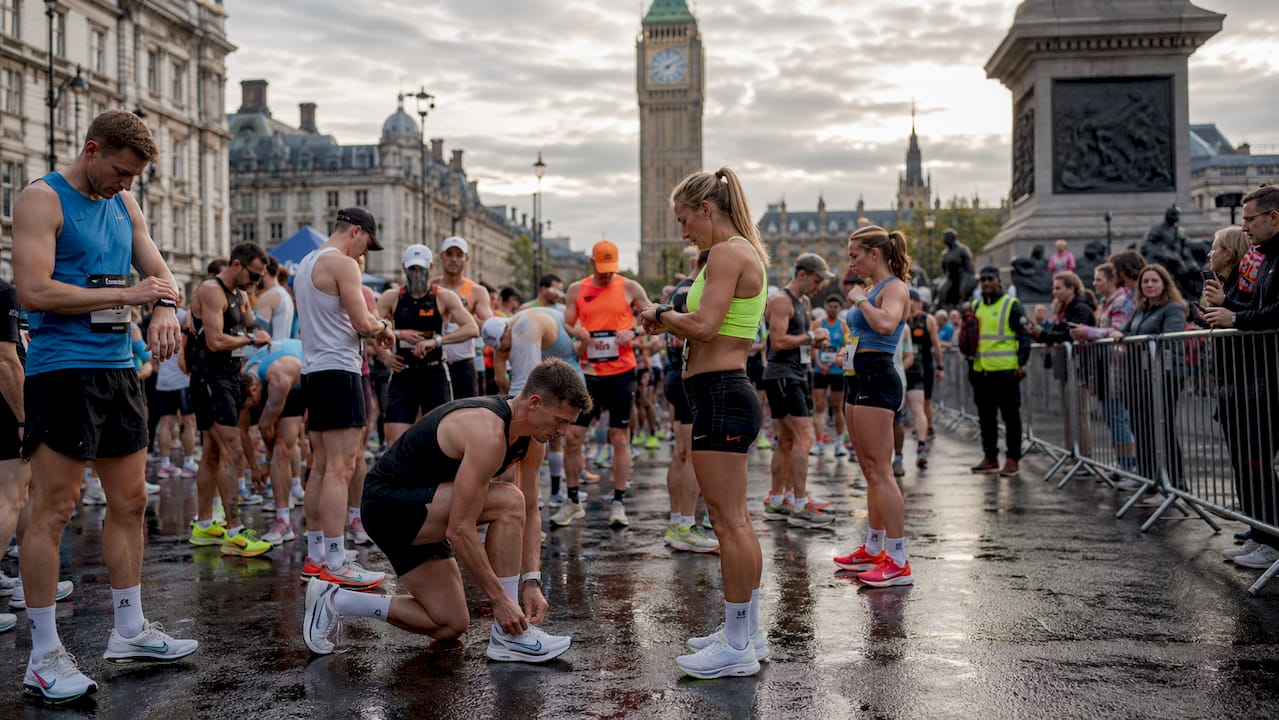
For half marathon ideas, the best half marathons for UK runners in 2026 is a useful starting point for picking an approachable first race.
What training plans do UK runners actually use?
Choosing the right plan comes down to three things: your current fitness, how many weeks you have, and how much time you can commit each week. Runners choose training plans based on their goal, time available, and weekly commitment, with plan lengths and number of weekly runs increasing for longer race distances.
The NHS Couch to 5K programme is the most widely used beginner plan in the UK. It runs over approximately nine weeks, uses a run/walk structure, and requires no prior fitness. The app guides each session with audio cues, which removes the guesswork from pacing.
For marathon training, the official London Marathon 16-week beginner plan is a well-structured free resource. It defines easy, steady, tempo and long runs clearly, and stresses practising your fuelling and race kit on long runs before race day. The London Marathon training page also links to the Coopah app for personalised adaptive coaching.
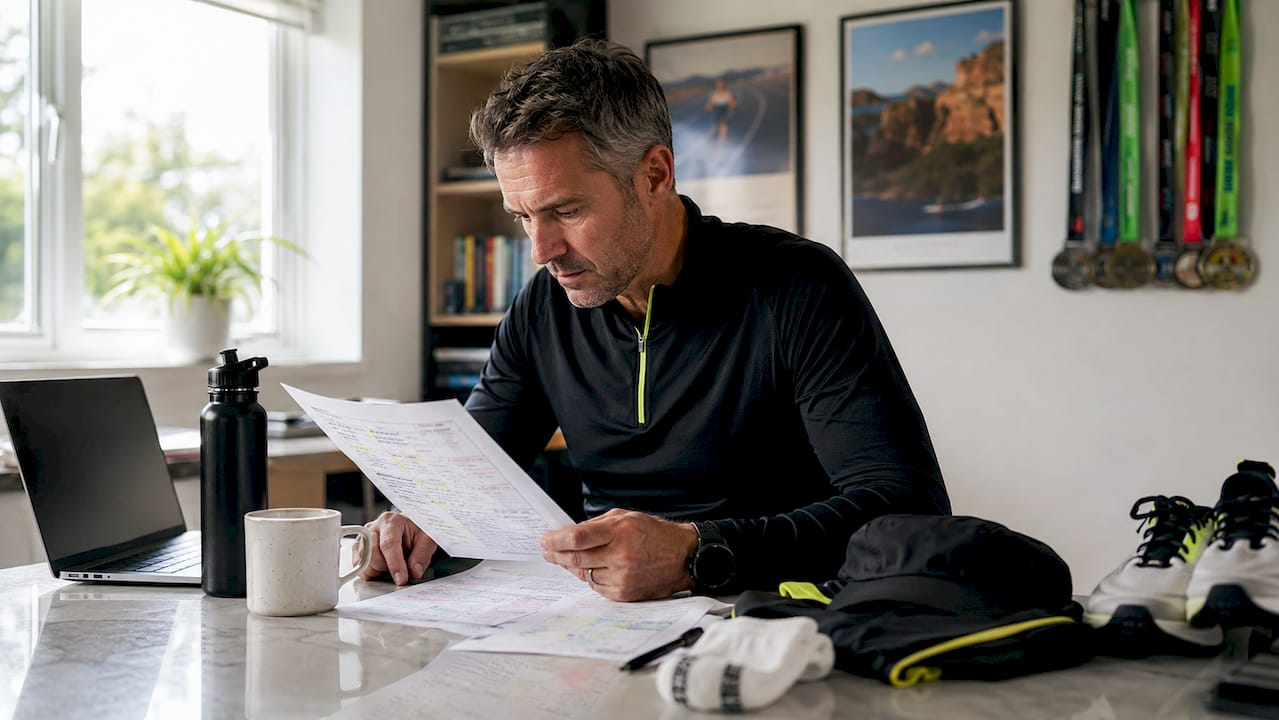
Coaches and the London Marathon plan both flag that beginners commonly hit a motivation dip around weeks 6–8. Scheduled rest days are the practical fix, not pushing through fatigue. For more on why rest matters, the Stryq guide on rest days in running explains the physiology clearly.
For half marathon-specific advice, first-timer half marathon tips covers race-day preparation in practical detail.
What gear do UK runners actually need?
The priority order matters here. Buy shoes first, everything else second.
Core kit list:
- Running shoes: The single most important purchase. Fit and terrain suitability matter more than brand. A shoe selection guide covering gait analysis and terrain-specific choice is worth reading before you spend.
- Moisture-wicking socks: Cheap cotton socks cause blisters on longer runs. Purpose-made running socks with arch support and cushioning make a measurable difference.
- Moisture-control base layer: A technical top that moves sweat away from skin. Essential for UK weather year-round.
- Hi-vis vest or safety light: Non-negotiable for winter running in the UK, where daylight hours are short and roads are wet.
- Hydration: A soft flask or lightweight running vest for runs over an hour.
Shoe testers consistently note that the best running shoe is subjective. What works for one runner’s gait and foot shape may not suit another. A wear test in-store, or a short trial run, is more useful than any review. Rotating between two pairs, one for daily miles and one for faster sessions, also reduces repetitive stress on the same structures.
Pro Tip: Before any race or long event, do a full kit shakedown on a long training run. Wear your vest, socks, belt and shoes together for at least 90 minutes. Chafing, bounce and hot spots show up in training, not on race day, if you test properly. Shoe rotation benefits are well documented for injury prevention.
Common injuries UK runners face and how to prevent them
Most running injuries are overuse injuries, not accidents. They develop gradually when training load increases faster than the body adapts.
The five most common problems:
- Shin splints: Pain along the shin bone, usually from sudden mileage increases on hard surfaces.
- IT band syndrome: Outer knee pain, often linked to weak glutes and excessive downhill running.
- Plantar fasciitis: Heel and arch pain, frequently caused by worn footwear or a rapid jump in weekly mileage.
- Achilles tendinopathy: Stiffness and pain at the back of the ankle, aggravated by speed sessions without adequate base fitness.
- Runner’s knee (patellofemoral pain): Pain around the kneecap, common in beginners increasing volume quickly.
The 10% rule is a useful rough guide: do not increase your weekly mileage by more than 10% from one week to the next. It is a guideline, not a guarantee, but it prevents the most common cause of overuse injury.
Clinical pointer: For most overuse injuries, the evidence-based approach is relative rest (reduce load, do not stop entirely), followed by guided strengthening of the affected area. For Achilles and plantar issues, calf-raise progressions are commonly prescribed. If pain persists beyond two weeks, or if you have swelling, sharp pain or cannot weight-bear, seek assessment from a chartered physiotherapist. The NHS and Versus Arthritis both provide guidance on finding qualified physiotherapy support in the UK.
Strength work for glutes and calves, two or three times per week, reduces injury risk across all these conditions. It does not need to be complicated: single-leg squats, calf raises and hip bridges cover the basics.
A practical 4–8 week starter plan for new runners in the UK
- Week 1: Three sessions of 20–25 minutes using a run/walk structure (1 minute running, 90 seconds walking). Register for parkrun and attend as a walker or slow jogger.
- Week 2: Extend run intervals to 90 seconds, walk intervals to 2 minutes. Three sessions. Begin 5 minutes of calf raises and glute bridges after each run.
- Week 3: Run 3 minutes, walk 2 minutes. Three sessions. Attend parkrun on Saturday.
- Week 4: Run 5 minutes, walk 2 minutes. Aim for three sessions. Check your shoes for wear.
- Week 5–6: Follow NHS Couch to 5K weeks 5–6. Aim to run 20 minutes continuously by the end of week 6.
- Week 7–8: Run 25–30 minutes three times per week. Enter a local 5K or 10K as a target event.
Starter checklist:
- Register for a free parkrun barcode at parkrun.org.uk
- Download the NHS Couch to 5K app
- Buy or borrow a pair of running shoes (visit a specialist running shop for a basic fit check)
- Wear a safety light or hi-vis for any run in low light
- Carry your phone or a form of ID on every run
- Keep a simple log: date, distance, how you felt
For a detailed first-week breakdown, the Stryq first week running guide is a practical companion to the above. Cost-wise, parkrun is free, and starting with shoes and a pair of performance socks keeps initial outlay low.
UK safety note: Run facing oncoming traffic on roads without pavements. In winter, assume drivers cannot see you unless you are wearing hi-vis or a flashing light. Carry a charged phone. Tell someone your route if you are running alone.
British runners worth following for inspiration
- Keely Hodgkinson: Olympic 800m champion. Her progression from club running to the international stage is well documented and shows what consistent club-based development looks like over years, not months.
- Phoebe Gill: Middle-distance specialist, 800m and 1500m. Started at St Albans Athletic Club under coach Deborah Steer at age 11. At 17, she became British 800m Champion and competed at the Paris Olympics. After recovering from consecutive fibula stress fractures, she returned in May 2026 to win the 1500m at the BMC Trafford Grand Prix. Her athlete site documents her training structure and comeback in detail.
- Emile Cairess: Bradford-born long-distance runner and European road 10-mile record holder. Finished fourth in the marathon at the 2024 Paris Olympics, the highest position for a British marathon runner in over 20 years. His progression from university athletics to elite marathon racing is a useful model for runners thinking about longer distances.
- Rose Harvey: Her personal site documents the staging of training increases and the decision points involved in moving from hobby running to elite performance, useful for anyone balancing running with work or family.
- Sophie Power: Ultramarathon runner and advocate for running as a practical life tool rather than a discipline requiring perfect conditions. Her approach to consistency is particularly relevant for parents or anyone with a demanding schedule.
What to look for in any athlete’s feed: how they structure easy versus hard days, how they handle injury setbacks, and what kit they actually use in training rather than just in sponsored posts.
Key takeaways
The most effective starting point for any UK runner is parkrun: free, weekly, and the fastest route into a local running community.
| Point | Details |
|---|---|
| Start with parkrun | Free, weekly 5K events across the UK; register once and attend any location. |
| Use a structured plan | NHS Couch to 5K for beginners; half marathon and marathon plans typically 16 weeks or more. |
| Prioritise shoes and socks | Correct footwear and purpose-made running socks reduce blisters and injury risk from day one. |
| Safety in UK conditions | Wear hi-vis or a safety light in low light; carry your phone; run facing traffic on roads. |
| Stryq for practical kit | Stryq running socks, soft flasks and safety lights are tested by UK runners for durability and fit. |
What the running community gets wrong about getting started
The most common mistake new runners make is treating the first few weeks as a fitness test rather than a habit-building phase. The NHS Couch to 5K programme works not because the intervals are scientifically optimal, but because they are short enough to finish without dreading the next session. That psychological architecture matters more than the physiology at the start.
The second mistake is over-investing in kit before understanding what you actually need. A £200 GPS watch does not make you a better runner in week one. Shoes that fit and socks that do not cause blisters do. The beginner runner advice on the Stryq blog reflects this: start with the basics, add kit as your training demands it.
The third, and most overlooked, point is that the UK running community is unusually welcoming. parkrun’s volunteer culture, the trial-session norm at most clubs, and the frankness of r/UKRunners all lower the barrier to entry. The infrastructure is already there. The only step that requires any effort is the first one.
Stryq kit worth considering when you are ready for a small upgrade
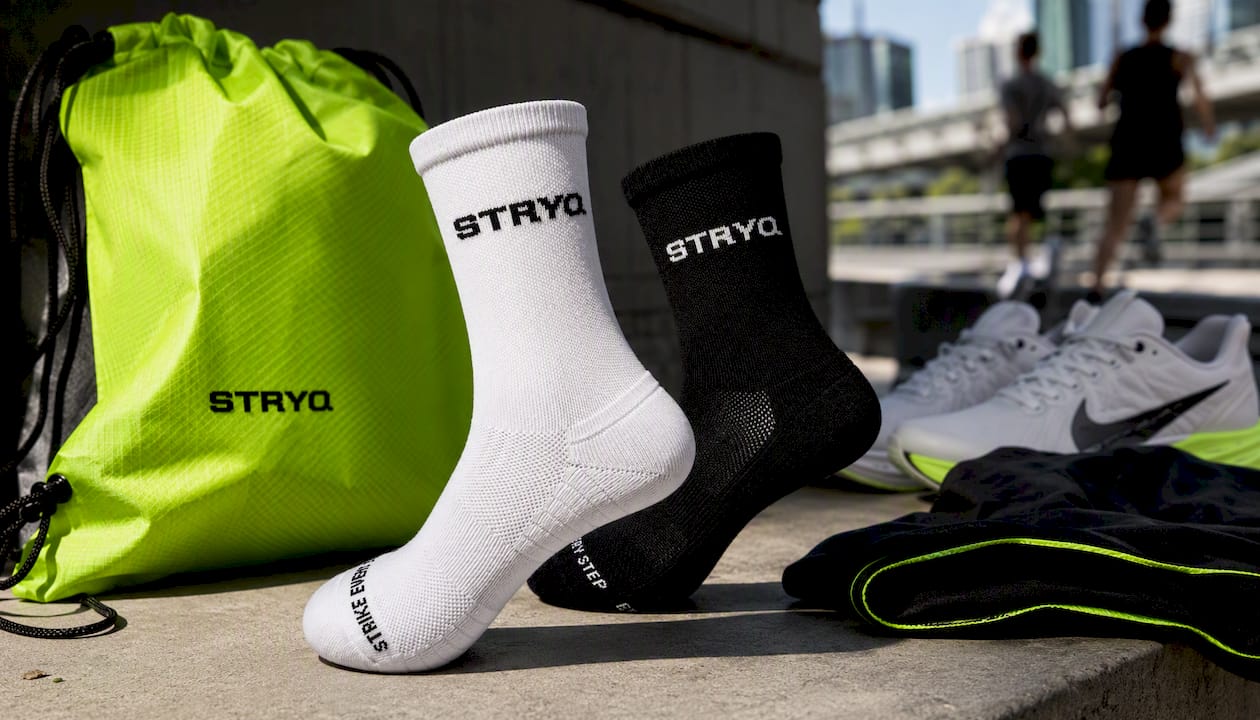
Stryq sits between budget marketplace products and expensive premium brands, with every product developed from runner feedback and tested before launch. For runners who have the basics covered and want accessories that hold up over months of training, two products stand out.
The Stryq performance running socks are built with arch support and cushioning specifically for longer runs. They are available in white and black, and the construction is designed to reduce hot spots and blisters on runs where cheap cotton socks would fail by mile three.
For hydration, Stryq soft flasks are lightweight and compatible with most running vests, making them a practical addition once you are running beyond an hour regularly.
Browse the full range and order directly at stryq.co.uk.
Useful UK running resources
- parkrun: Free weekly 5K events across the UK. Register at parkrun.org.uk.
- NHS Couch to 5K: Free app-based beginner programme, available on iOS and Android.
- England Athletics RunEvents: Official licensed race calendar for England. Filter by distance, region and date.
- London Marathon training plans: Free 16-week beginner, improver and advanced plans available at londonmarathonevents.co.uk.
- UK Athletics / British Athletics: National governing body for affiliated clubs and coaching standards. Search for accredited clubs at britishathletics.org.uk.
- Runner’s World UK: Training advice, shoe reviews and event guides at runnersworld.com/uk.
- r/UKRunners: Active Reddit community for routes, kit and race discussion.
- Stryq: Practical running accessories developed and tested by UK runners. Shop at stryq.co.uk.