

Fitness for beginners: your simple UK plan
Fitness means regular movement that raises your heart rate, builds muscular strength, and maintains mobility. The NHS recommends at least 150 minutes of moderate activity per week, plus two strength sessions. Start today with a 20–30 minute brisk walk, a short home circuit, or an easy run.
Where to begin right now:
- 20–30 minutes of brisk walking, cycling, or a beginner home circuit counts as one moderate session
- Two strength sessions per week, targeting all major muscle groups
- Runners: well-fitted kit reduces friction from the first session; Stryq running socks and running belts are built for exactly this
Key takeaways
Consistent, moderate activity across the week, structured around the NHS 150-minute target and two strength sessions, is the most reliable foundation for long-term fitness.
| Point | Details |
|---|---|
| NHS weekly target | Aim for 150 minutes of moderate activity or 75 minutes vigorous, plus two strength sessions. |
| Beginner strength benchmark | Choose a weight or resistance that tires the muscle after 12–15 reps; one set per exercise is enough to start. |
| Progress safely | Increase total weekly activity by no more than around 10% per week to reduce injury risk. |
| Start today | A 20–30 minute brisk walk or home circuit counts as one full moderate session. |
| Stryq for runners | Stryq running socks and belts are UK-tested to reduce blisters, bounce, and friction from the first session. |
Table of Contents
- Why does regular exercise matter for your health?
- How much exercise do you actually need each week?
- What types of exercise should you include?
- Practical home circuits and beginner workout templates
- How to build a realistic weekly fitness plan
- How should you structure your workouts for best results?
- Staying safe: warm-up, warning signs, and when to see a GP
- Where can you exercise and find support in the UK?
- A practical philosophy for sustainable fitness
- Stryq running socks and belts for UK runners
- Sources
Why does regular exercise matter for your health?
Regular physical activity produces measurable changes across almost every system in the body. The cardiovascular benefits alone make a strong case: the heart becomes more efficient, resting blood pressure tends to fall, and lung capacity improves with sustained aerobic work. Bone density increases with weight-bearing activity, and muscular strength reduces the risk of falls, particularly as you age.
The mental health picture is equally clear. Exercise raises levels of mood-regulating neurotransmitters, improves sleep quality, and builds resilience to everyday stress. Cognitive sharpness, including memory and concentration, also responds positively to regular movement, according to Harvard Health’s research summaries on exercise and brain function.
Physical benefits at a glance:
- Stronger heart and improved circulation
- Better lung function and aerobic capacity
- Increased muscular strength and endurance
- Higher bone density and reduced fall risk
- Improved metabolic function and blood-sugar regulation
Mental and emotional benefits:
- Reduced symptoms of anxiety and low mood
- Better sleep onset and quality
- Lower perceived stress
- Sharper concentration and memory
The key insight: small, consistent sessions produce measurable gains. A 20-minute walk five days a week meets the NHS weekly target and delivers real health returns without requiring a gym membership or specialist equipment.
How much exercise do you actually need each week?
The NHS target is straightforward: 150 minutes of moderate activity per week, or 75 minutes of vigorous activity, or an equivalent combination of both. Moderate means you can talk but not sing; vigorous means conversation becomes difficult.
Strength training sits alongside aerobic work, not instead of it. Work all major muscle groups at least twice weekly. Mayo Clinic guidance recommends choosing a resistance level that tires the target muscles after 12–15 repetitions, and notes that a single set per exercise can deliver initial health benefits for many beginners.
| Weekly target | Moderate activity | Vigorous activity | Combination |
|---|---|---|---|
| NHS minimum | 150 minutes | 75 minutes | e.g. 75 min moderate + 75 min vigorous |
| Active health goal | 150 minutes | 150 minutes | Mix freely across the week |
| Strength sessions | 2 per week | 2 per week | All major muscle groups |
Activity examples by intensity:
- Moderate: brisk walking, steady cycling, recreational swimming, water aerobics, doubles tennis
- Vigorous: jogging, running, fast cycling, HIIT, aerobics classes, singles tennis, football
Splitting sessions across the week works just as well as longer blocks. Three 50-minute walks, five 30-minute sessions, or ten 15-minute bursts all count toward the 150-minute target.
What types of exercise should you include?
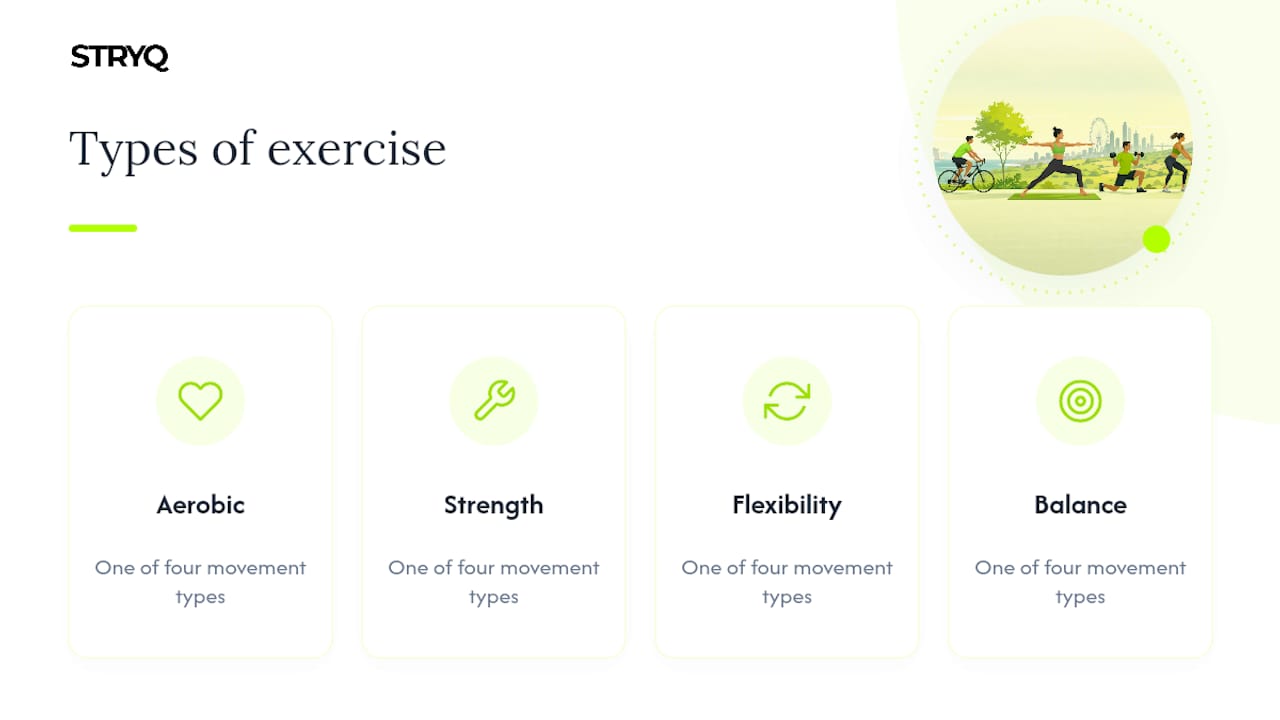
A complete fitness routine covers four types of movement. MedlinePlus describes these as aerobic, strength, flexibility, and balance work, each serving a distinct purpose.
Aerobic exercise
Raises heart rate and trains the cardiovascular system. Examples: brisk walking, jogging, cycling, swimming, dancing, aerobics classes.
Sample 10-minute starter session: 2-minute easy walk, 6-minute brisk walk or light jog, 2-minute easy cool-down walk.
Strength training
Builds and maintains muscle mass, supports bone density, and improves metabolic function. Examples: bodyweight squats, press-ups, lunges, glute bridges, dumbbell rows.
Sample 10-minute session: 3 exercises (squats, press-ups, glute bridges), one set of 12–15 reps each, rest 60 seconds between exercises.
Flexibility work
Reduces injury risk and maintains range of motion. Examples: dynamic leg swings before a run, standing quad stretch, seated hamstring stretch, shoulder rolls.
Sample 5-minute routine: leg swings (10 each side), hip circles (10 each direction), upper-back rotation (8 each side), standing calf stretch (30 seconds each).
Balance training
Particularly valuable from middle age onwards. Examples: single-leg stand, heel-to-toe walking, standing on one leg while brushing teeth.
Sample 5-minute routine: single-leg stand (30 seconds each side, 3 rounds), heel-to-toe walking (10 steps forward and back).
Pro Tip: To make a walking session moderate rather than easy, increase your pace until you can speak in short sentences but cannot hold a comfortable conversation. Add a hill or carry a light rucksack to push it toward vigorous.
Practical home circuits and beginner workout templates
No equipment is needed to build a solid base. The following circuit works for week one and scales as you progress.
Full home circuit (no equipment):
- Bodyweight squats: 10–15 reps
- Press-ups (knees down if needed): 8–12 reps
- Glute bridges: 12–15 reps
- Standing lunges: 10 reps each leg
- Plank hold: 20–30 seconds
- Mountain climbers: 20 reps (10 each side)
Rest 60–90 seconds between exercises. Complete one round in week one, two rounds in week two, three rounds by week four.
Progression table:
| Week | Sets per exercise | Reps / duration | Rest between sets |
|---|---|---|---|
| 1 | 1 | 10–12 reps / 20 sec | 90 seconds |
| 2 | 2 | 12–15 reps | 75 seconds |
| 3–4 | 2–3 | 15 reps / 30 sec | 60 seconds |
| 5–8 | 3 | 15–20 reps | 20–30 seconds |
The NHS Couch to 5K programme applies the same logic to running: alternate walking and jogging intervals, extending the running portions week by week until you can run 5K continuously. It is free, app-based, and one of the most effective beginner running structures available in the UK.
Pro Tip: Follow the 10% rule: never increase your total weekly activity volume by more than around 10% from one week to the next. This single habit prevents the majority of overuse injuries that derail beginners.
The BuiltWithScience full-body routine makes a strong case for training the whole body three times per week rather than splitting muscle groups across five days. For beginners with limited training days, this approach builds frequency and motor patterns faster.
How to build a realistic weekly fitness plan
Three templates cover the most common goals. Choose the one that fits your current schedule, not the one that sounds most impressive.
Template 1: Maintain general health (3 sessions per week)
- Monday: 30-minute brisk walk or steady cycle
- Wednesday: 20-minute home circuit (strength focus)
- Friday: 30-minute walk, swim, or aerobics class
Template 2: Improve fitness and body composition (4–5 sessions)
- Monday: 30-minute aerobic session (jog or cycle)
- Tuesday: Strength circuit (30 minutes)
- Thursday: 30-minute aerobic session
- Saturday: Strength circuit or fitness class
- Optional Sunday: 20-minute active recovery walk
Template 3: Run-focused (building toward 5K or 10K)
- Monday: Easy run or Couch to 5K session (20–30 minutes)
- Wednesday: Strength circuit (bodyweight or gym)
- Friday: Run session (slightly longer or with intervals)
- Sunday: Cross-training (cycling, swimming, or yoga)
Micro-workout tactics for busy days:
- Split a 30-minute session into two 15-minute blocks (morning and lunch)
- Replace a lift with stairs for 10 minutes of incidental moderate activity
- A 10-minute bodyweight circuit at home counts toward your weekly strength target
Pro Tip: Track minutes, not perfection. Log total active minutes each week alongside one or two simple performance markers, such as how far you walked in 30 minutes or how many press-ups you completed. Progress on those numbers is the signal that the plan is working.
Incorporating movement into daily life, rather than treating it as a separate task, significantly improves long-term adherence, according to Mayo Clinic’s fitness guidance. Short sessions woven into the day add up faster than most people expect.
How should you structure your workouts for best results?
Structure routines by movement patterns and apply progressive overload. Rather than thinking “I’ll do legs today,” think: push, pull, squat, hinge, carry. This approach, highlighted in Men’s Health’s full-body programming guidance, builds balanced strength across the whole body and avoids the common pitfall of overtraining some muscles while neglecting others.
Beginner session template (movement-pattern approach):
- Push: press-ups (10–12 reps)
- Pull: resistance band row or dumbbell row (10–12 reps)
- Squat: bodyweight squat (12–15 reps)
- Hinge: glute bridge or Romanian deadlift (12 reps)
- Carry: farmer’s carry with shopping bags or dumbbells (20 metres)
Intermediate session template:
- Push: dumbbell shoulder press (3 × 10)
- Pull: bent-over row (3 × 10)
- Squat: goblet squat (3 × 12)
- Hinge: kettlebell deadlift (3 × 10)
- Carry: loaded carry (3 × 30 metres)
Progressive overload means adding a small challenge each week: one more rep, a slightly heavier weight, or a shorter rest period. Without it, the body adapts and progress stalls.
Pro Tip: One set per exercise is enough to start. Mayo Clinic notes that a single set of 12–15 reps can deliver meaningful strength gains for beginners. Add sets as the single set becomes easy.
Staying safe: warm-up, warning signs, and when to see a GP
Warm-up template (5 minutes before any session):
- 2 minutes easy walking or marching on the spot
- Leg swings (10 each side)
- Arm circles (10 forward, 10 back)
- Hip circles (10 each direction)
- 5 bodyweight squats at slow tempo
Cool down with 3–5 minutes of easy walking and static stretches held for 20–30 seconds each.
Common beginner mistakes and corrections:
- Doing too much too soon: follow the 10% weekly increase rule; soreness that lasts more than 48 hours signals overload
- Skipping warm-up: cold muscles are less pliable and more prone to strain; never skip it
- Poor form under fatigue: reduce reps or weight before form breaks down, not after
- Ignoring rest days: muscles repair and grow during rest; two rest or active-recovery days per week is the minimum
Stop exercising and seek medical advice if you experience:
- Chest pain or tightness during or after exercise
- Severe breathlessness disproportionate to effort
- Dizziness, lightheadedness, or fainting
- Unusual pain in the jaw, neck, or left arm
- Heart palpitations that do not settle quickly after stopping
If you have a chronic condition such as heart disease, type 2 diabetes, or osteoporosis, speak to your GP before starting a new programme. For most people without known conditions, starting gradually and building slowly is safe. MedlinePlus provides clear guidance on when to seek medical help during exercise, and the NHS offers free resources for getting started safely.
Where can you exercise and find support in the UK?
Practical options across the UK:
- Parkrun: free, weekly, timed 5K events at hundreds of UK locations every Saturday morning; welcoming to all abilities and a strong community entry point
- NHS home workout videos: free, structured sessions available on the NHS website for all fitness levels
- Local council leisure centres: subsidised gym and pool access, often with beginner classes; check your council’s website for low-cost membership schemes
- Running clubs: most UK towns have a free or low-cost running club; many follow Couch to 5K-style progressions for new members
- Online home workout programmes: YouTube channels such as the NHS’s own content, plus structured apps, offer guided sessions with no equipment required
- Community fitness classes: council-run yoga, aerobics, and circuit classes are often cheaper than private gym alternatives
When choosing between options, weigh cost, travel time, class times, and whether you prefer solo or group activity. A free parkrun or home circuit removes cost as a barrier entirely. A leisure centre class adds structure and instructor feedback.
Pro Tip: Before committing to a paid class or gym, use the free trial period. While testing a new activity, also check your kit: blisters and chafing from poor socks or a bouncing phone in your pocket are the most common reasons people cut sessions short. Stryq’s running socks and running belts are designed and tested by UK runners to remove exactly those friction points from day one.
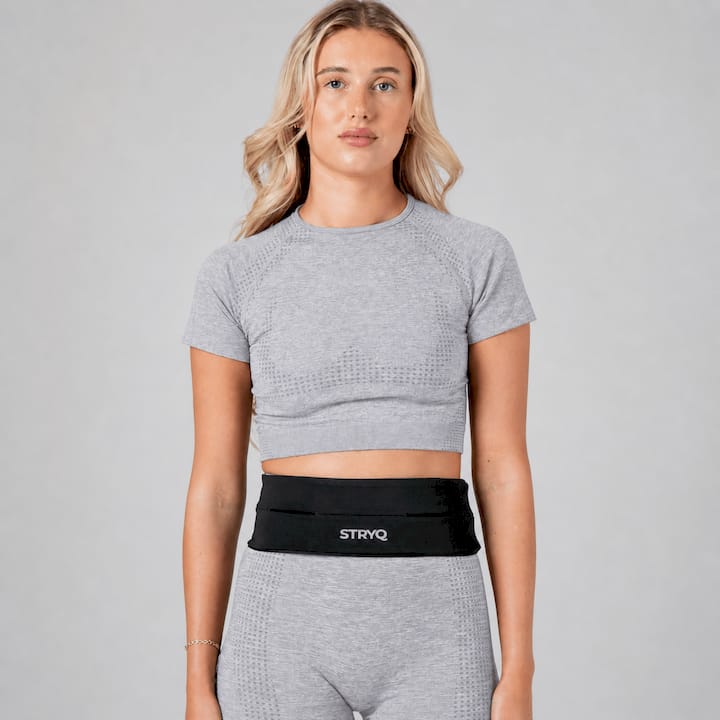
For runners integrating movement into daily life, well-fitted accessories make a measurable difference to consistency. A secure belt means your phone and keys stay put; cushioned, arch-supporting socks reduce blister risk on longer sessions. See Stryq’s running gear guide for practical kit choices that support consistent training.
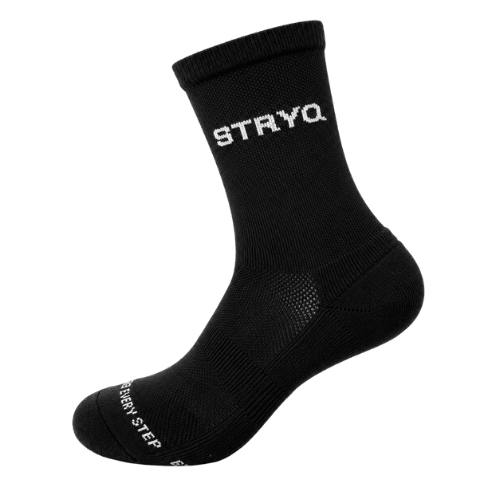
Dance-based workouts are another accessible option for people who find traditional circuits uninspiring. Dance N’ Tone sessions combine movement and music in a format that removes the gym-floor self-consciousness many beginners feel.
A practical philosophy for sustainable fitness
Most people abandon fitness plans not because they lack motivation, but because the plan was built for an idealised version of their week rather than the real one. The templates and guidelines in this article are designed to flex: three sessions or five, home or gym, running or swimming. What matters is accumulating minutes and applying gradual progression.
The movement-pattern approach is worth adopting early. Push, pull, squat, hinge, carry covers the body completely and transfers directly to daily life, from carrying shopping to climbing stairs. It also makes programming decisions simple: if a session has one of each, it is balanced.
For runners specifically, the practical details matter more than most guides acknowledge. Socks that bunch, belts that bounce, and hydration that sloshes are not minor inconveniences; they are the reasons sessions get cut short. Stryq builds its products around exactly these problems, tested by UK runners across real training conditions. The running essentials guide is a useful starting point for anyone building a kit list alongside a training plan.
Start with 20–30 minutes today. Log it.
Stryq running socks and belts for UK runners
Runners who train consistently share one habit: they remove friction before it becomes a reason to stop. Stryq’s performance running socks deliver arch support, targeted cushioning, and moisture control built specifically for UK training conditions, whether that is a parkrun on a wet Saturday or a Couch to 5K session on a Tuesday evening.
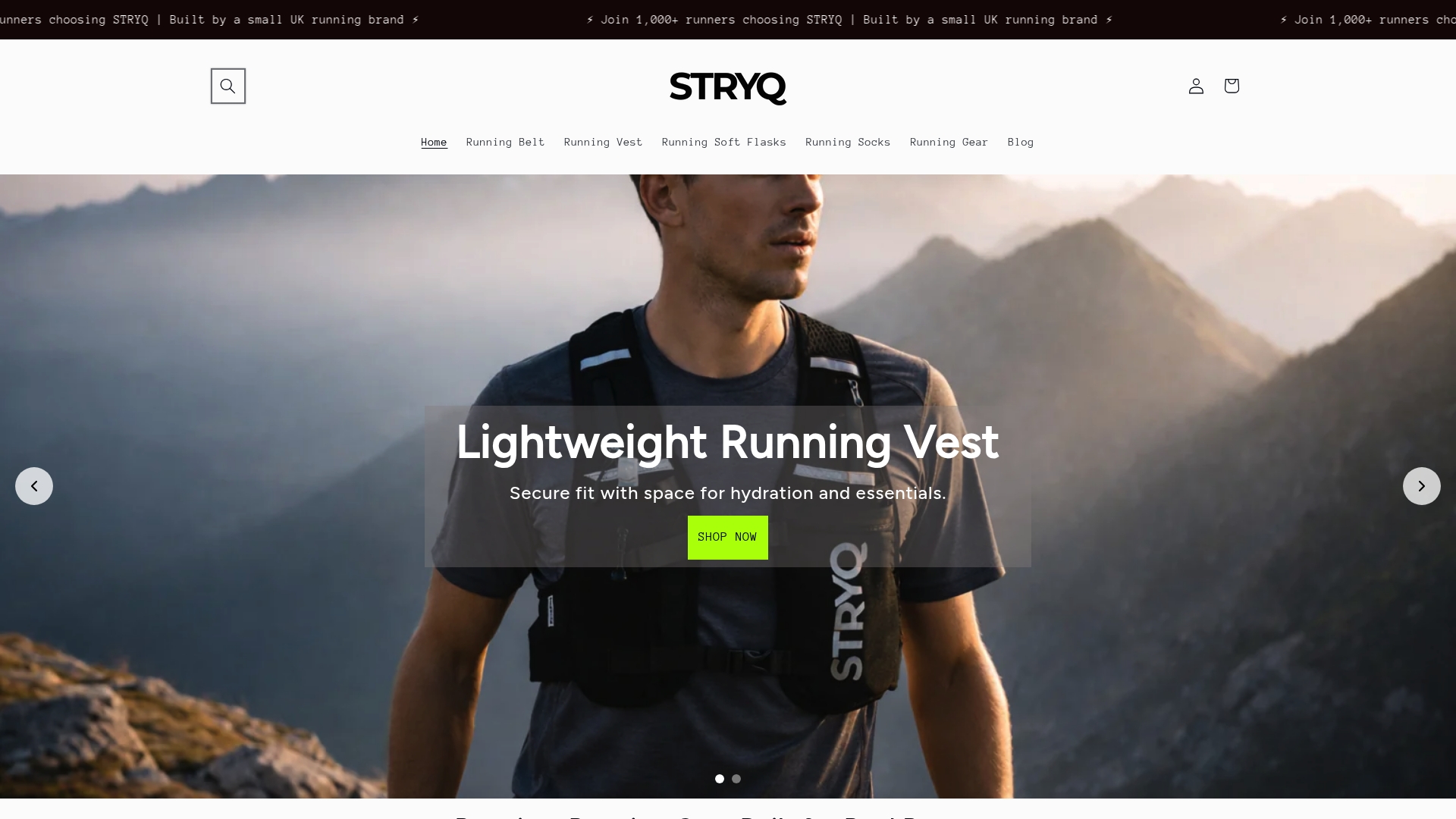
The STRYQ Running Socks in Black and STRYQ Running Socks in White are designed to reduce blisters and hotspots from the first kilometre. Pair them with a Stryq running belt for secure, bounce-free storage of your phone, keys, and gels, and you have removed the two most common kit complaints in one step. Every product is developed from real runner feedback and tested before launch. Browse the full range at Stryq and pick up the socks that fit your training.
This article is general information, not a substitute for advice from a qualified doctor. Consult a qualified healthcare professional about your own circumstances before acting on anything here.
Sources
- Fitness program: 5 steps to get started - Mayo Clinic
- Home workout videos - NHS
- Indoor fitness routine: MedlinePlus Medical Encyclopedia
- The 4-Week Full-Body Workout Program for Balanced Fitness Gains
- The PERFECT Full Body Workout Routine (3x/Week: 6 Exercises + 1 Bonus)