

Running for beginners: start safely and stay healthy
Running is locomotion with a brief aerial phase between each stride, meaning both feet leave the ground simultaneously. That single mechanical fact separates it from walking and makes it one of the most efficient ways to build cardiovascular fitness, strengthen bones and improve mood. Research published on PubMed confirms that even modest weekly running is associated with lower all-cause mortality.
The single best first step: lace up a pair of well-fitted shoes and complete a 20-minute walk–run session today, alternating 1 minute of easy jogging with 2 minutes of brisk walking.
Starting gradually is not a compromise. It is the method. Runners who begin with walk–run intervals build aerobic capacity while keeping injury risk low, and that foundation is what allows consistent training over months and years.
- Start with 20–30 minute sessions, three times per week.
- Alternate walking and jogging rather than running continuously from day one.
- Progress the run fraction slowly, adding no more than 10% extra load per week.
- Wear shoes fitted to your foot shape and gait, not just your size.
Safety note: If you have a heart condition, joint problems, or have been inactive for a long time, speak to your GP before starting. Healthy adults with no known conditions can begin gradually without a medical check, but any chest pain, dizziness or sharp joint pain during a session is a reason to stop and seek advice.
Pro Tip: Before your first session, walk the planned route at a brisk pace. You will learn the terrain, gauge effort, and arrive at your first run already knowing what to expect.
Key takeaways
Running is one of the most evidence-supported forms of exercise for cardiovascular health, mood and cognition, and beginners who start with walk–run intervals, proper shoes and consistent strength work give themselves the best chance of staying injury-free and building a lasting habit.
| Point | Details |
|---|---|
| Start with walk–run intervals | Begin with 1 min run / 2 min walk, three times per week, for the first two weeks. |
| Progress load slowly | Increase total session time or run fraction, not both in the same week. |
| Shoes and socks first | Fit shoes in a specialist shop; use performance socks from session one to prevent blisters. |
| Add strength work | Three short sessions per week targeting glutes, hips and core reduces injury risk significantly. |
| Stryq for starter kit | Stryq running socks and lightweight belts cover the two most practical gear needs for new runners. |
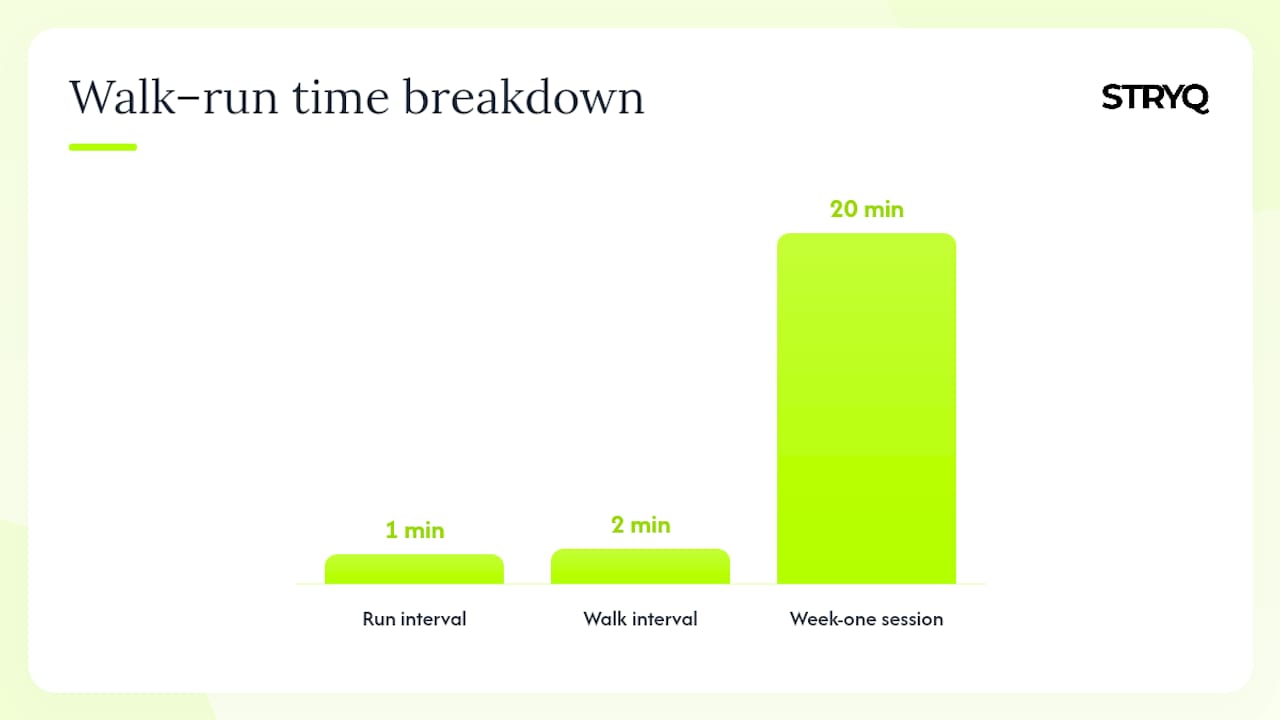
Your next step: complete the week-one session from the sample plan above. Twenty minutes, walk–run intervals, today or tomorrow.
Table of Contents
- What actually happens when you run?
- What are the health benefits of running regularly?
- How do you start running safely as a beginner?
- How do you prevent the most common running injuries?
- Which gear should you prioritise as a new runner?
- How do you choose the right training plan for your goal?
- What should runners eat and drink to support training?
- What running trends are shaping the sport right now?
- What does the evidence actually say about running?
- A practical perspective on getting started
- Stryq starter kit for new runners
- Sources
What actually happens when you run?
Understanding the mechanics of a single stride helps you spot poor technique before it causes problems. Wikipedia’s overview of running describes the gait cycle in phases, and knowing them gives you a practical mental model.
The running gait cycle
Each stride passes through six phases:
- Float (flight): Both feet are off the ground. This is what distinguishes running from walking.
- Footstrike: The foot makes initial contact with the ground. Where it lands relative to your centre of mass matters for load distribution.
- Absorption: The ankle, knee and hip flex to absorb impact forces. Weak hips and glutes make this phase harder to control.
- Midstance: Your full body weight passes over the stance foot. This is the highest-load moment of the cycle.
- Propulsion: The calf and hip extensors drive you forward and upward. Cadence and stride length are both shaped here.
- Swing: The leg swings forward to prepare for the next footstrike. Hip flexor strength and mobility affect how efficiently this happens.
Footstrike types
Three patterns are common: heel strike, midfoot strike and forefoot strike. Heel striking is the most prevalent among recreational runners, particularly at slower paces. Midfoot and forefoot striking tend to shift load from the knee toward the ankle and calf. Neither is universally superior. Gait retraining carries its own injury risk if done too quickly, so unless a physiotherapist has identified a specific problem, focus on gradual load management rather than forcing a strike change.
Cadence and posture
Cadence, the number of steps per minute, typically falls in a certain moderate range for many adult recreational runners. A cadence below 160 often correlates with overstriding, where the foot lands well ahead of the hips and braking forces increase. Posture cues that help: keep your head level, shoulders relaxed and away from your ears, arms swinging forward and back rather than across your body, and a slight forward lean from the ankles rather than the waist.
Pro Tip: On your next easy run, count your right-foot strikes for 30 seconds and multiply by four. If the number is below 160, try shortening your stride slightly and see whether the effort feels lighter. Small adjustments on easy runs are safer than overhauling your form mid-race, according to running coaches.
What are the health benefits of running regularly?
Running improves cardiovascular fitness, supports bone density, lifts mood and sharpens cognition. These are not marginal gains. Population studies and controlled trials consistently show meaningful effects across all four domains.
Heart and longevity
Longitudinal research on PubMed shows that regular running is associated with lower all-cause mortality, with benefits accruing even at modest weekly volumes. You do not need to run marathons. A few short sessions per week appear sufficient to shift cardiovascular risk in a meaningful direction.
Brain and mood
Harvard Health summarises evidence that moderate aerobic exercise improves memory and thinking skills in adults. A PubMed review of controlled trials links structured aerobic exercise to improvements in cognitive function and memory tasks. The practical implication is straightforward: a 20-minute run before a demanding afternoon has a measurable effect on focus and recall, not just on fitness. For a deeper look at the psychological side, the Stryq guide on running and mental health covers the mechanisms in plain language.
Calorie expenditure
A commonly cited estimate, drawn from Wikipedia’s running overview, puts energy expenditure at roughly 100 calories per mile for an average adult. Individual variation is significant: body weight, pace, terrain and running economy all shift the actual figure. Treat this as a rough order of magnitude rather than a precise target.
Calorie context: The 100-calories-per-mile figure assumes an average adult at a moderate pace on flat ground. Heavier runners burn more; lighter runners burn less. Hilly terrain and faster paces both increase the number. Use it as a starting point, not a precise calculation.
Bone density and joint health
Running is a weight-bearing activity, which means it applies mechanical stress to bones and stimulates density improvements over time. The joint-damage concern is common but largely overstated for recreational runners. Harvard Health addresses this directly, noting that running alone is not a primary cause of arthritis. A PubMed review confirms that while running increases mechanical joint load, it does not inevitably cause osteoarthritis for most recreational runners. Load management and recovery are the key variables.
Key evidence-backed benefits at a glance:
- Reduced risk of cardiovascular disease and lower all-cause mortality
- Improved memory, focus and mood
- Stronger bones through weight-bearing mechanical load
- Better sleep quality in regular exercisers
- Reduced symptoms of anxiety and mild depression
How do you start running safely as a beginner?
The single best approach for new runners is structured run–walk intervals, three times per week, starting with sessions of 20–30 minutes. Runkeeper’s beginner strategy recommends building a foundation before any race-specific training, keeping easy miles genuinely easy and logging every session. Better Health Channel’s guidance reinforces starting with brisk walking and progressing gradually, with pre-exercise checks for older or less active beginners.
Sample 8-week beginner plan
The structure below follows a Couch-to-5K style progression. Each session is 20–30 minutes. Rest or walk on non-running days.
Progression rules
- Increase total session time or run fraction, not both in the same week.
- Add no more than 10% extra load per week across the programme as a whole.
- If a session feels hard rather than manageable, repeat the previous week before moving forward.
- Keep two of your three weekly sessions at a conversational pace. You should be able to speak in short sentences while running.
- Rest days are not optional. Adaptation happens during recovery, not during the run itself.
Tracking progress
Simple methods work well at this stage. A notes app or a paper log recording date, session duration, how the run felt on a 1–10 scale, and any niggles is sufficient. Wearables such as Garmin or Apple Watch add heart rate and pace data, which become more useful once you are running continuously. The Stryq first-week running guide gives a practical week-one breakdown if you want a more detailed day-by-day structure. For habit formation and early-week tips, starting running tips from Stryq covers the psychological side of building consistency.
How do you prevent the most common running injuries?
The most important prevention principle is controlled load progression combined with consistent strength work. Most overuse injuries, shin splints, IT band syndrome, Achilles tendinopathy and runner’s knee, develop when training load increases faster than the body can adapt. A detailed injury prevention guide from Stryq covers each condition with specific exercises and management steps.
Common injuries and their causes
- Shin splints (medial tibial stress syndrome): Too much too soon, particularly on hard surfaces. Reduce mileage, add rest days, and strengthen the calf and tibialis anterior.
- IT band syndrome: Weak hip abductors and glutes allow the knee to track inward. Lateral hip strengthening is the primary fix.
- Achilles tendinopathy: Sudden increases in speed work or hill running. Eccentric heel drops are the most evidence-supported rehabilitation exercise.
- Runner’s knee (patellofemoral pain): Often linked to weak quads and hip stabilisers. Reduce downhill running and add single-leg strength work.
- Plantar fasciitis: Tight calves and a rapid increase in mileage. Calf stretching and gradual load reduction usually resolve early cases.
Strength exercises that reduce injury risk
Three sessions of 15–20 minutes per week is enough at the beginner stage:
- Glute bridges: Lying on your back, feet flat, drive hips upward and hold for two seconds. Three sets of 12.
- Single-leg deadlifts: Develops hip stability and proprioception. Three sets of 8 per side.
- Calf raises (eccentric): Rise on two feet, lower on one. Three sets of 12 per side.
- Side-lying clamshells: Targets hip abductors directly. Three sets of 15 per side.
- Dead bugs: Core stability without spinal loading. Three sets of 10 per side.
Soft tissue work also plays a role. Enhanced Chiropractic’s guide to soft tissue therapy for runners explains how improving range of motion through targeted therapy can reduce injury recurrence.
Red flags — stop running and seek medical advice if you experience: sharp or sudden joint pain during a run; pain that persists more than 48 hours after a session; swelling, bruising or significant tenderness over a bone; chest pain, palpitations or dizziness at any point.
Pro Tip: When a niggle appears, reduce your next session by 50% rather than skipping it entirely. This approach helps maintain consistency and supports gradual tissue adaptation.
Which gear should you prioritise as a new runner?
Shoes are the single most important purchase. Everything else is secondary. RTINGS’ tested shoe reviews highlight cushioning, durability and fit as the primary selection criteria, and recommend professional fitting over buying on brand name alone.
Shoes
Visit a specialist running shop for a gait assessment. Staff will watch you walk or run briefly and recommend shoes suited to your foot shape and strike pattern. Key criteria:
- A thumb’s width of space between your longest toe and the shoe’s end
- No heel slippage when laced normally
- Adequate cushioning for your primary surface (road, trail or treadmill)
- Replace shoes every 400–500 miles, or when the midsole feels compressed
Socks
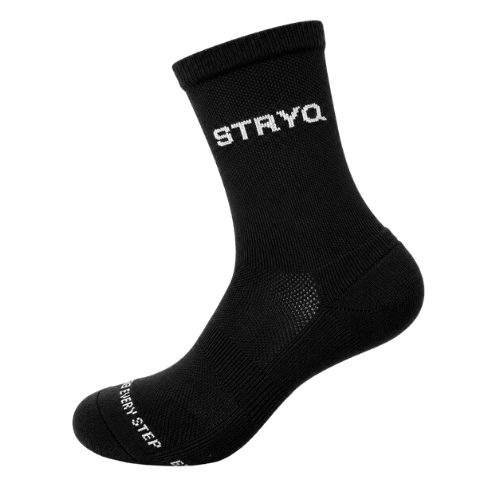
Socks are the most underrated piece of kit for beginners. A cotton sock holds moisture, creates friction and causes blisters within a few miles. A performance running sock with arch support, cushioned zones and moisture-wicking fabric eliminates most of that friction before it starts. Stryq’s running socks in black and running socks in white are built specifically for this: arch support, cushioning at the heel and ball of the foot, and breathable construction that keeps feet dry across the full session.
Clothing
Moisture-wicking fabrics in any colour work well. Avoid cotton. For colder months, a lightweight base layer and a wind-resistant gilet cover most conditions without overheating. High-visibility colours or a clip-on safety light matter for early morning or evening runs. The Stryq guide on what to wear when running covers layering by season in practical detail.
Hydration and storage
For runs under 45 minutes in mild weather, water beforehand is usually sufficient. Beyond that, a lightweight running belt carrying a small soft flask solves the problem without bouncing or chafing. Stryq’s belts are designed with 360° storage and a secure fit, so nothing shifts mid-run.
What to buy first
| Item | Priority | Why |
|---|---|---|
| Running shoes | Immediate | Injury prevention and comfort from session one |
| Running socks | Immediate | Blister prevention; cheap relative to the benefit |
| Moisture-wicking top | Week 1–2 | Comfort on longer or warmer sessions |
| Running belt or soft flask | Week 3–4 | Needed once sessions exceed 45 minutes |
| Safety light | Week 1 if running in low light | Visibility for road safety |
How do you choose the right training plan for your goal?
Choose the plan that matches your current available weekly time, not your ideal finish time. A plan that fits your schedule consistently beats a theoretically superior plan you cannot sustain.
Plan types by goal
- 5K (12 weeks): 3 sessions per week, 15–25 miles total weekly volume by the final weeks. Suitable for anyone completing the 8-week beginner plan above.
- 10K (10–12 weeks): 3–4 sessions per week, building to 25–35 miles per week. Requires a base of comfortable 5K running first.
- Half marathon (16 weeks): 4 sessions per week, long run building to 10–12 miles. Introduce one easy recovery run and one tempo session per week from week 8.
- Marathon (18–20 weeks): 4–5 sessions per week, long run building to 18–20 miles. Not suitable as a first-year goal for most beginners.
Pacing basics
The most common beginner mistake is running every session at the same moderate-hard effort. Easy runs should feel almost embarrassingly slow. That is correct. The aerobic base built at low intensity is what allows harder sessions to produce adaptation without injury.
When to seek a coach or group
A running club or structured group session adds accountability and technique feedback that no app can replicate. UK Athletics-affiliated clubs are listed on the England Athletics website. A one-to-one running coach is worth considering when you plateau, when an injury keeps recurring, or when you are preparing for your first half or full marathon.
What should runners eat and drink to support training?
The single most useful rule: eat a balanced meal containing carbohydrate and protein within an hour of completing a hard session. That window supports muscle repair and glycogen replenishment when the body is most receptive. The Stryq nutrition guide covers pre- and post-run meals in practical detail.
Pre-run
- Eat a light carbohydrate-based snack 60–90 minutes before a run if the session exceeds 45 minutes. A banana, a slice of toast with peanut butter or a small bowl of porridge all work well.
- Avoid high-fat or high-fibre foods in the two hours before running. They slow gastric emptying and cause discomfort mid-session.
- For early morning runs under 30 minutes, many runners perform fine in a fasted state. Experiment to find what suits you.
Hydration
- Drink 400–600ml of water in the two hours before a run.
- For sessions under 45 minutes in cool weather, water beforehand is sufficient. Carry fluid for anything longer.
- In warm weather or on runs exceeding 60 minutes, an electrolyte drink or tablet helps replace sodium lost through sweat.
Post-run recovery
- Aim for 20–30g of protein alongside carbohydrate within an hour of finishing. Greek yoghurt with fruit, eggs on toast or a milk-based smoothie all meet this target.
- Rehydrate: weigh yourself before and after a long run if you want a precise figure, but drinking to thirst works for most recreational runners.
Sleep and rest
Sleep is the most underused recovery tool. Seven to nine hours per night supports hormonal recovery, tissue repair and mood regulation. Cutting sleep to fit in extra training sessions is counterproductive. If your schedule is tight, reduce session frequency before reducing sleep.
Supplements
Most recreational runners do not need supplements beyond a balanced diet. Vitamin D is worth considering for UK runners training through autumn and winter, given limited sunlight exposure. Iron levels are worth monitoring for women running high mileage. Creatine has emerging evidence for endurance performance but is not a priority at the beginner stage. Speak to a GP or registered dietitian before adding any supplement.
What running trends are shaping the sport right now?
Participation in running has grown steadily in the UK over the past decade, with mass-participation events and free community formats drawing in runners who would never have considered a traditional road race.
- Parkrun remains the most significant community running phenomenon in the UK. Free, timed, 5K every Saturday morning at hundreds of locations. It is the single best entry point for a new runner who wants structure, community and accountability without a race entry fee.
- Trail running is growing faster than road running among recreational participants. Off-road surfaces reduce repetitive impact stress and the format suits runners who find road running monotonous.
- Virtual events expanded during 2020–2021 and have retained a segment of participants who prefer self-directed challenges. They suit runners in areas without local races or those with unpredictable schedules.
- Wearable technology has shifted from a niche tool to a standard training aid. Garmin, Apple Watch and Polar devices now provide running dynamics data (cadence, ground contact time, vertical oscillation) that was previously available only in laboratory settings.
- Carbon-fibre plated shoes have moved from elite racing to recreational use. They improve running economy at race pace but are not necessary for training, and some evidence suggests they may mask fatigue in ways that increase injury risk for less experienced runners.
- Strength and conditioning for runners has moved from an optional extra to a mainstream recommendation. Most UK running coaches now include at least one strength session per week in beginner programmes.
For beginners, the practical takeaway is simple: start with Parkrun, ignore carbon plates until you are running consistently, and treat a wearable as a useful tool rather than a necessity.
What does the evidence actually say about running?
The evidence base for running is unusually strong compared with many health interventions. Safety and benefits are well supported by epidemiology and exercise physiology trials across multiple populations.
| Evidence area | Finding | Source |
|---|---|---|
| Cardiovascular health | Regular running associated with lower all-cause mortality; benefits accrue at modest weekly volumes | PubMed |
| Cognitive function | Aerobic exercise linked to improvements in memory and thinking tasks in controlled trials | PubMed |
| Joint health | Running does not inevitably cause osteoarthritis; load management is the key variable | PubMed |
| Arthritis risk | Exercise benefits outweigh joint-damage fears for most recreational runners | Harvard Health |
| Mood and memory | Short, regular runs improve mood and focus; effect is measurable in everyday adults | Harvard Health |
| Beginner safety | Gradual progression, pre-exercise checks and proper shoe fitting reduce early injury risk | Better Health Channel |
What the evidence means in practice
- Begin with run–walk intervals rather than continuous running. The evidence on overuse injury consistently points to load spikes as the primary cause.
- Include strength work from week one. Glute and hip strength reduce knee and IT band injury risk in ways that mileage alone cannot.
- Do not avoid running out of fear of arthritis. The evidence does not support that concern for most recreational runners.
- Short runs count. Even two or three 20-minute sessions per week produce measurable cardiovascular and cognitive benefits.
- Track your sessions. Runners who log their training identify load spikes earlier and manage them before they become injuries.
This article is for general information only. It is not a substitute for medical advice. If you have a health condition or have been inactive for a long period, consult your GP before starting a running programme.
A practical perspective on getting started
The most common mistake new runners make is not starting too slowly. It is abandoning the plan after two weeks because the early sessions feel unimpressively easy. That feeling is the point.
The walk–run method feels like a compromise only until you understand what it is actually doing. Those first weeks are not about fitness. They are about teaching connective tissue, tendons and bones to tolerate load. Cardiovascular fitness adapts in weeks. Tendons take months. The runners who skip the walk–run phase and go straight to continuous running are the ones who end up with shin splints by week four.
On kit: the temptation is to buy everything before the first session. Resist it. Shoes and socks are the only non-negotiable items at the start. A good pair of running socks prevents blisters that would otherwise end your first month before it begins. Everything else, the belt, the vest, the GPS watch, earns its place once you are running consistently.
Habit formation matters more than motivation. Motivation is unreliable. A fixed time slot, a planned route and a training log are more durable. Three sessions per week at the same time, logged in a notebook or an app, builds a pattern that survives the weeks when motivation is absent.
The evidence on injury prevention points clearly to strength work as the most underused tool available to recreational runners. Most beginners skip it because it feels unrelated to running. It is not. Fifteen minutes of glute and hip work three times per week changes the injury trajectory of a first year of running more than any shoe upgrade.
Stryq starter kit for new runners
When you are ready to buy your first running gear, keep it simple. Two items make the biggest difference in the first eight weeks: shoes (fitted in a specialist shop) and performance socks.
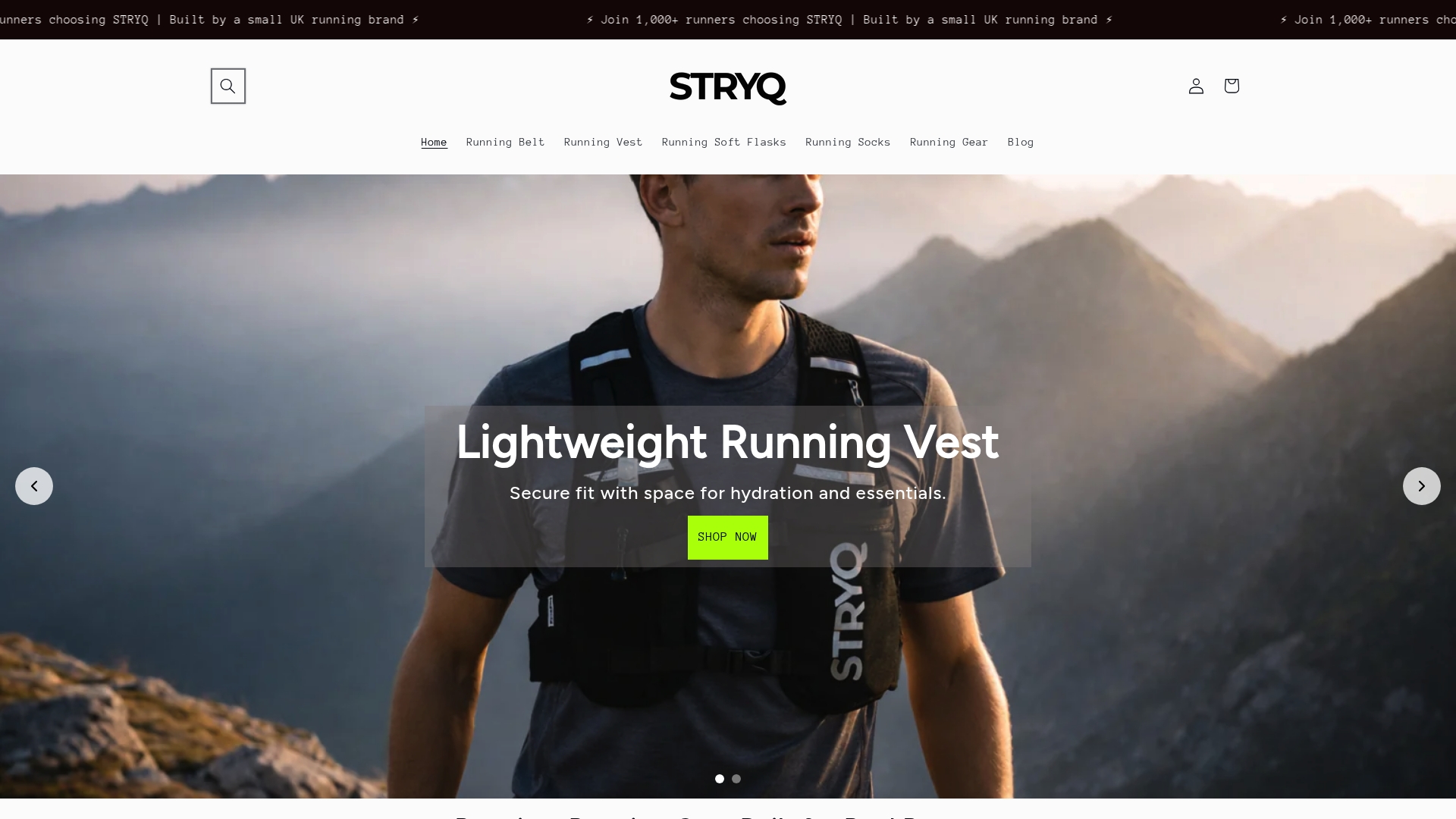
Stryq’s running socks in black and running socks in white are built for everyday runners, not elite athletes. Arch support, cushioned heel and forefoot zones, and moisture-wicking construction mean your feet stay dry and blister-free across the full session. They sit between budget market socks and expensive specialist brands: the quality is real, the price is not inflated by marketing.
Once your sessions extend beyond 45 minutes, a lightweight running belt solves the storage and hydration problem without bouncing or chafing. Stryq’s belts carry a phone, keys and a soft flask securely, with 360° storage designed around how runners actually move.
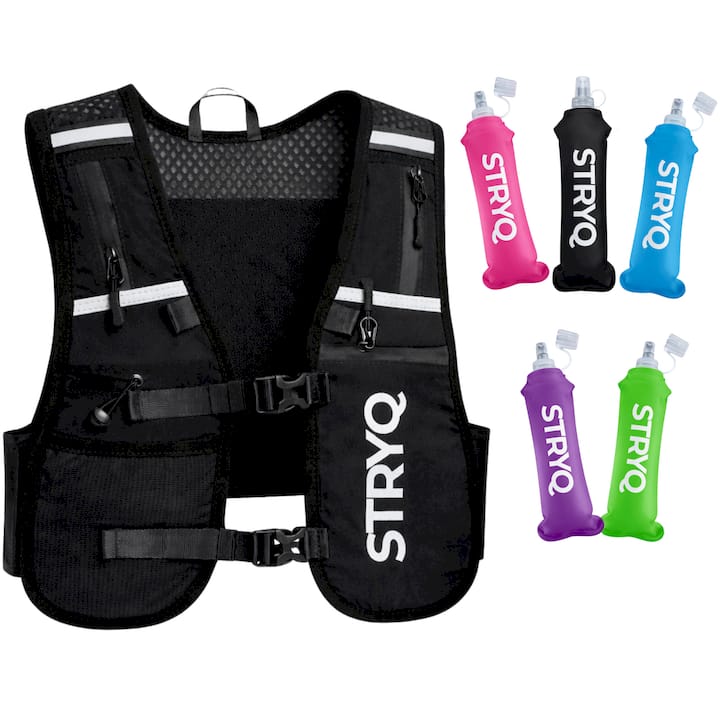
Every Stryq product is developed from runner feedback, revised through multiple sample rounds and tested before launch. Browse the full running socks range to find your size and colour, or check the gear upgrades guide for a broader look at what is worth buying and when.
Sources
- Pubmed
- Pubmed
- Health
- Six Simple Strategies to Succeed as a Beginner Runner - ASICS Runkeeper
- Rtings
- Running