

How to build a running habit as a complete beginner
Start with a 15 to 20 minute run-walk session at a conversational pace, three to four times a week, and use the two-day rule to protect your consistency: never let two days pass without lacing up. Building a running habit for beginners is less about willpower and more about repetition. Research from Runners Connect puts the median time to form an exercise habit at around 59 to 66 days, with four sessions a week for six weeks marking a practical threshold where running starts to feel automatic rather than optional.
You don’t need a training plan today. You need two things done before tomorrow morning:
- Lay out your kit tonight: shoes by the door, socks paired, water sorted.
- Put the session in your calendar as a fixed appointment, not a hope.
That’s the whole brief for day one. Everything else in this guide builds on it.
Key Takeaways
Building a lasting running habit depends on starting slow, protecting consistency with simple rules, and matching your kit to the stage of your plan.
| Point | Details |
|---|---|
| Start with run-walk intervals | Begin at 1 minute run, 2 minutes walk, three times weekly, and progress gradually over six to eight weeks. |
| Expect roughly 59 to 66 days | That’s the median time for a routine to feel automatic, with four sessions a week for six weeks as a practical threshold. |
| Use the two-day rule | Never let two consecutive days pass without a session, even a short one, to protect your streak. |
| Run at a conversational pace | Use the talk test: if you can’t speak in full sentences, slow down. |
| Kit for the stage you’re at | Socks and a belt cover month one; a Stryq hydration vest and soft flask suit sessions past 30 minutes. |
Table of Contents
- Your six to eight week run-walk starter plan
- What makes running stick when motivation fades
- How hard should a beginner actually run?
- The kit that actually matters in month one
- Tracking your progress without overcomplicating it
- Why STRYQ built its kit around beginner problems
- The right kit for showing up on the hard days
- Sources
Your six to eight week run-walk starter plan
A run-walk approach is the safest on-ramp for anyone building a running habit from zero, and it’s backed by more than just tradition. Cult of Running’s review of the science found that structured run-walk progressions protect beginners from injury and improve adherence compared with plans that push continuous running too early. The logic is simple: walking breaks let your joints and connective tissue adapt while your cardiovascular system still gets trained.
Here’s a week-by-week structure that works for most beginners starting from little or no running background:
- Weeks 1 to 2: Run 1 minute, walk 2 minutes. Repeat for 20 minutes total, three times a week. Focus purely on showing up.
- Weeks 3 to 4: Run 2 minutes, walk 2 minutes. Repeat for 24 to 28 minutes, three to four times a week. Add a fourth session once week 3 feels manageable.
- Weeks 5 to 6: Run 4 minutes, walk 2 minutes. Repeat for 28 to 30 minutes, four times a week. This is roughly where the habit threshold research suggests routine starts to click.
- Weeks 7 to 8: Run 8 minutes, walk 2 minutes, for two or three cycles. By the end of week 8, most beginners can run continuously for 20 to 25 minutes.
A sample week at the four-session stage might look like this: Monday run-walk intervals, Wednesday rest or a short walk, Thursday run-walk intervals, Saturday a slightly longer session, Sunday complete rest. That rhythm gives your body 48 hours between running days early on, which matters more than people expect when tendons and calf muscles are adapting to new load.
If a progression feels hard, don’t push through it. Repeat the same week again rather than advancing, and if that’s still tough, drop back one stage. There’s no penalty for spending an extra week at 2 minutes run, 2 minutes walk. The only mistake is quitting the plan entirely because one week didn’t go to script. If pain (not fatigue, but sharp or localised pain) shows up, stop and read Stryq’s guide on how to prevent running injuries before your next session, and give yourself extra rest days drawn from Stryq’s notes on what a rest day actually does.
What makes running stick when motivation fades
Motivation gets you out the door once. Habit design is what gets you out the door on the days you’d rather not. The most reliable beginner runners aren’t the most driven ones. They’re the ones who’ve removed as many decisions as possible from the process.
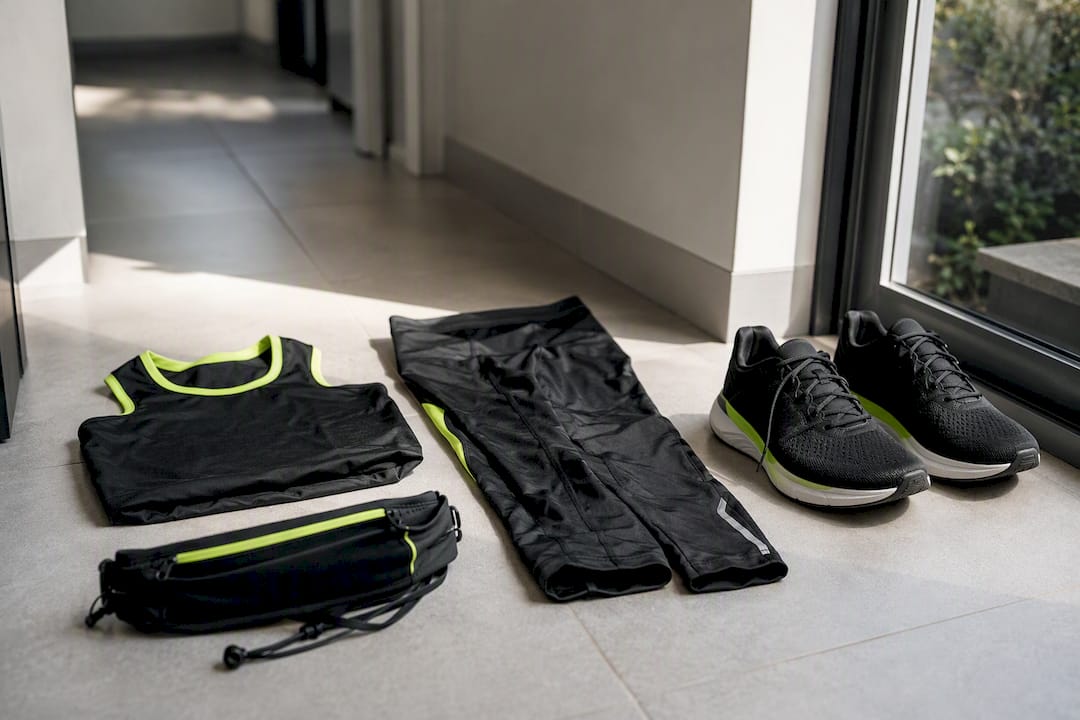
Environmental cues do a lot of the heavy lifting here. Habit stacking, attaching your run to something you already do daily, works because it borrows an existing trigger instead of relying on memory or mood. Put your running shoes next to the kettle. Set your kit out the night before. Small friction reductions like this measurably increase the chance you actually show up, because the decision gets made the night before, when you’re motivated, rather than at 6am, when you’re not.
Identity matters more than most beginners realise. Telling yourself “I’m trying to run” keeps the behaviour optional. Saying “I’m a runner who trains three times a week” makes skipping a session feel like breaking a personal rule rather than just changing plans.
- Choose a fixed cue: same time, same route, same pre-run ritual.
- Use the two-day rule: never allow two consecutive days without a run, even a short one.
- Tell one other person your weekly target, so missing it has a small social cost.
- Track streaks, not distance, in the first six weeks. Consistency beats mileage early on.
Cornell’s behavioural research on motivation found that immediate, small rewards close the gap between intention and action far more effectively than distant goals. A five-minute-mile improvement in three months doesn’t motivate a Tuesday morning. A coffee you only allow yourself after a run does.
Pro Tip: Pair your run with something you already crave, not something you’re trying to earn as a reward. If you always have coffee at 7am, move your run to 6.30am and make the coffee the full stop at the end of it.
How hard should a beginner actually run?
Run slower than you think you should. That’s the single most common correction coaches give new runners, and it’s backed by physiology, not just opinion.
The talk test is the simplest gauge available: if you can hold a full conversation in complete sentences while running, you’re at the right pace. Chalk Talk Sports’ breakdown of conversational pace explains why this matters for adherence. Beginners who run too hard early convert what should be enjoyable into something dreaded, and dread is what kills habits. The talk test isn’t just a rough rule of thumb either. It correlates closely with ventilatory threshold, the point where breathing shifts from easy to laboured, which makes it a genuinely reliable, equipment-free intensity check.
Load management is where most avoidable injuries happen.
Quick stat: Cult of Running’s review of injury data found that a run exceeding your recent longest distance by more than 30% substantially raises injury risk, a practical ceiling worth checking before you extend any long run.
- Increase total weekly running time by no more than roughly 10% week to week.
- Never chase a big single-session distance jump to “catch up” after a missed week.
- Add strength or cross-training on rest days rather than more running, since gradual conditioning lowers injury risk.
- Rest completely, and speak to a doctor before starting, if you have a significant heart, joint, or respiratory condition. Cleveland Clinic’s guidance on starting safely is worth reading if that applies to you.
The kit that actually matters in month one
You don’t need much to start running, but a few choices genuinely change whether month one feels comfortable or miserable. Shoes come first: fit and comfort beat brand name, and a shoe that feels right in the shop at minute one usually still feels right at mile three.
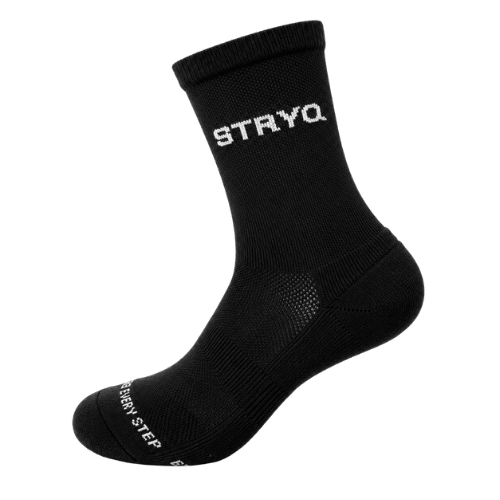
Socks are the most underrated purchase a new runner makes. Cheap cotton socks bunch, trap moisture, and cause the blisters that quietly end more beginner habits than shin splints do. A pair built with arch support and cushioning, like Stryq’s running socks in black or white, reduces friction where it counts and is worth replacing every few hundred miles as the cushioning wears thin.
For sessions under 30 minutes, water usually isn’t necessary. Once you’re regularly running past 30 to 40 minutes, carrying fluid stops being optional in warm weather. A running belt handles keys and a phone without bounce for shorter runs, while longer sessions call for a proper hydration vest paired with a soft flask.
- Reflective strip or clip-on light for anything before sunrise or after sunset.
- Kit laid out the night before, every time, without exception.
- One spare pair of socks in your bag if you’re prone to blisters early on.
Pro Tip: Buy running socks before you buy running shoes if your budget forces a choice. Blisters end more first-month habits than worn-out trainers do.
Tracking your progress without overcomplicating it
Logging your runs doesn’t need an app full of graphs. Three numbers, written down for two minutes after each session, tell you almost everything worth knowing:
- Time and distance covered, so you can see the plan actually progressing week to week.
- Perceived effort, on a simple scale of one to five, to catch overtraining before it becomes an injury.
- Mood before and after, because the pattern of “dreaded it, felt better afterwards” is the strongest evidence your habit is working.
Do a five-minute weekly review each Sunday: look back at the week, note what worked, and set one micro-goal for the next seven days rather than a distant target three months out. Signing up for a local Parkrun or a virtual 5K gives your six-week plan a natural finish line, and the accountability of a booked event does more for consistency than any app notification.
Small rewards work better than big ones here too. A new pair of socks after two consistent weeks, a rest day guilt-free after a tough one, or simply marking an X on a paper calendar all give your brain the immediate payoff that distant fitness goals can’t.
Why STRYQ built its kit around beginner problems
Most beginner running problems aren’t fitness problems. They’re friction problems: socks that rub, nowhere to put a key, no water on a warm 40-minute run. Stryq’s product range was built by testing against exactly those complaints rather than chasing marketing trends.
The socks carry arch support and cushioning specifically because blister prevention was the most repeated frustration in early runner feedback. The running belt uses 360° storage so a phone and key don’t bounce on interval sessions. The hydration vest and its soft flasks, including the green 500ml bottle and blue collapsible flask, exist for the point in the plan, around week 6 or 7, when sessions stretch past 30 minutes and water stops being optional.
A beginner’s first month rarely fails because of low fitness. It fails because of a blister, a bouncing phone, or a run cut short for water that should have been in hand.
For a first-month kit: socks first, a belt for short interval sessions, then a vest and flask once your longest run crosses the half-hour mark.
A note from Martin
I’ve spent years watching beginners overthink the start and underthink the follow-through. The plan above works precisely because it asks so little of you on day one. Try it for six weeks, log the three numbers each session, and see where you land. I’d genuinely like to know how it goes.
— martin
The right kit for showing up on the hard days
Comfort is what keeps you running once motivation dips, and that’s the gap Stryq was built to close for beginners specifically. Rather than guessing at sizing or durability, every product goes through multiple sample revisions and testing rounds with real runners before it reaches the shop, which is a longer road than most budget accessory brands bother with.
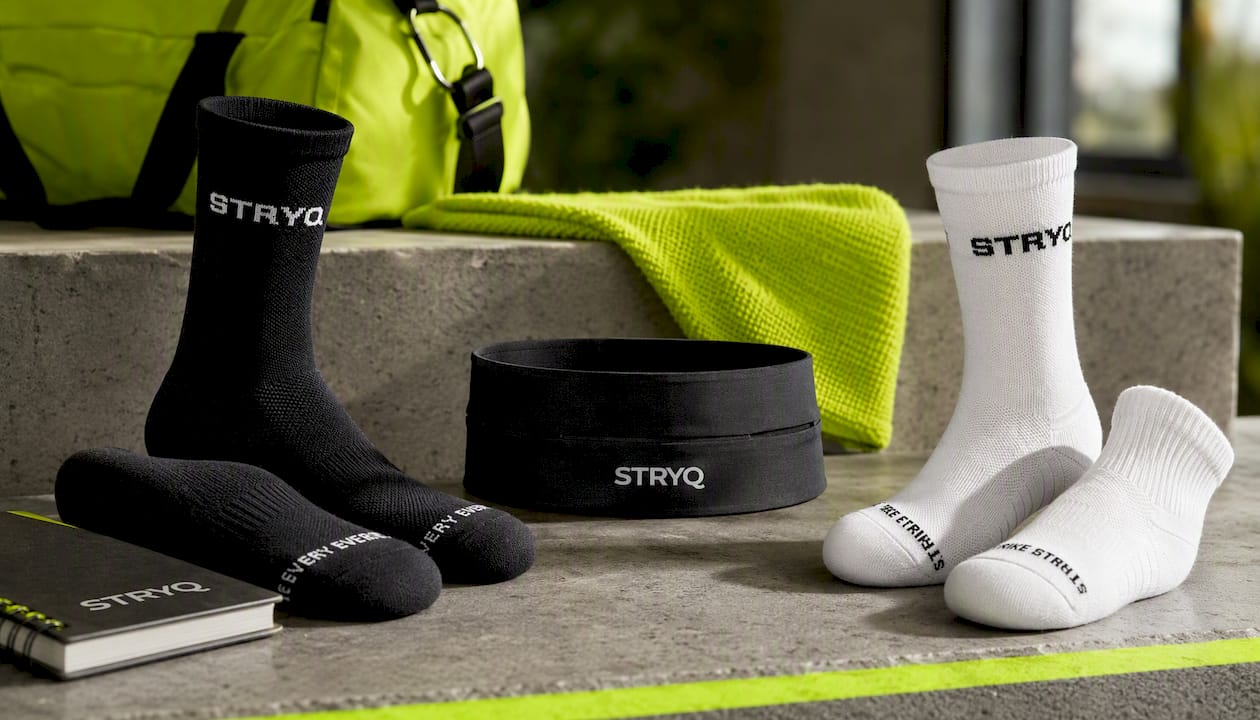
If blisters or a bouncing phone have ever cut a run short, start with Stryq’s running socks and a running belt for your first month, then add a hydration vest once your sessions push past half an hour. Every purchase is covered by Stryq’s warranty, so there’s no risk in kitting out properly from week one. Prices across the range sit in £, with the socks and belt both realistic first purchases for a beginner. Pick your size, place the order, and have it ready before your next scheduled session.
Sources
- How to Build a Running Habit: 66-Day blueprint for consistency that sticks - Runners Connect
- How to Start Running: What the science actually says - Cult of Running
- The runner’s guide to mastering conversational pace - Chalk Talk Sports
- How to start a running programme safely - Cleveland Clinic