

Your complete guide to running a 5K in the US
A 5K is a road race of five kilometres, approximately 3.1 miles, and it is widely considered the most accessible common race distance. Your immediate next step: find a local event and sign up, or start a nine-week beginner training plan today.
- Distance: 5 kilometres, roughly 3.1 miles
- Common finish times: a typical finish time for beginners aiming for a solid benchmark; a respectable time for walkers and new runners
- Training route: Couch to 5K (C25K), a nine-week run/walk plan, three sessions per week
- Course standard: Many US road 5Ks run on USATF-certified courses, meaning the distance is independently measured and verified
- Next step: Search a race directory, pick an event eight to ten weeks out, and register before it sells out
Key takeaways
A 5K is five kilometres (3.1 miles), and a nine-week run/walk plan is the most reliable route from no running background to a confident finish.
| Point | Details |
|---|---|
| Distance and distance only | A 5K covers 5 km (3.1 miles); USATF-certified courses verify this independently. |
| Realistic finish times | 30 minutes (9:40/mile) is a solid beginner benchmark; 40 minutes (12:54/mile) is equally respectable. |
| Nine-week training plan | Three sessions per week using run/walk intervals, building to 25–30 minutes continuous by Week 8. |
| Finding and registering | Use national directories or official event pages; register early as popular events sell out quickly. |
| Stryq kit for race day | Cushioned running socks, a no-bounce running belt and a soft flask cover the essentials for training and racing. |
Table of Contents
- What does a typical US 5K event look like?
- How long does a 5K take, and what are realistic finish times?
- How do you train for a 5K as a beginner?
- Where do you find and register for 5K races in the United States?
- What should you expect on race day?
- What gear do you need for training and race day?
- Your race-day countdown checklist
- Why 5Ks are worth doing more than once
- Stryq running kit for your 5K training and race day
- Sources
What does a typical US 5K event look like?
5K events in the United States cover a wide range of formats, from small neighbourhood charity runs to large city-centre races with thousands of participants.
Common formats include:
- Community and charity runs: Low-key, often free or low-cost, organised by local clubs, schools or nonprofits
- Mass-participation city 5Ks: Formal events with wave starts, corrals, chip timing and finisher medals; the Boston 5K, run by the Boston Athletic Association, is one well-known example
- Race-weekend 5Ks: Events attached to a larger race, such as the Abbott Chicago 5K, which runs alongside the Chicago Marathon and includes packet mailing, corral placement by projected pace and a course cut-off for official finish times
- City spectacle 5Ks: Fast, flat, traffic-free courses designed for personal bests and atmosphere, such as the Run Mag Mile® 5K in Chicago, which features course closures, music and themed medals
- Parkrun-style free events: Weekly, volunteer-led, free-to-enter 5Ks held in parks across the country, ideal for beginners building race experience without registration pressure
Most organised 5Ks share a set of standard features: packet pick-up (in person or by post), mile markers on the course, start corrals grouped by expected pace, wave starts to manage crowding, and a finish-line area with water, medals and results timing.
How long does a 5K take, and what are realistic finish times?
There is no embarrassing 5K finish time. The Mayo Clinic notes that a 30-minute 5K, roughly 9:40 per mile, is a common beginner benchmark, while a 40-minute 5K, about 12:54 per mile, is a respectable result for many new runners and walkers. Both are worth aiming for depending on your starting fitness.
The table below converts pace to finish time across three broad ability levels.
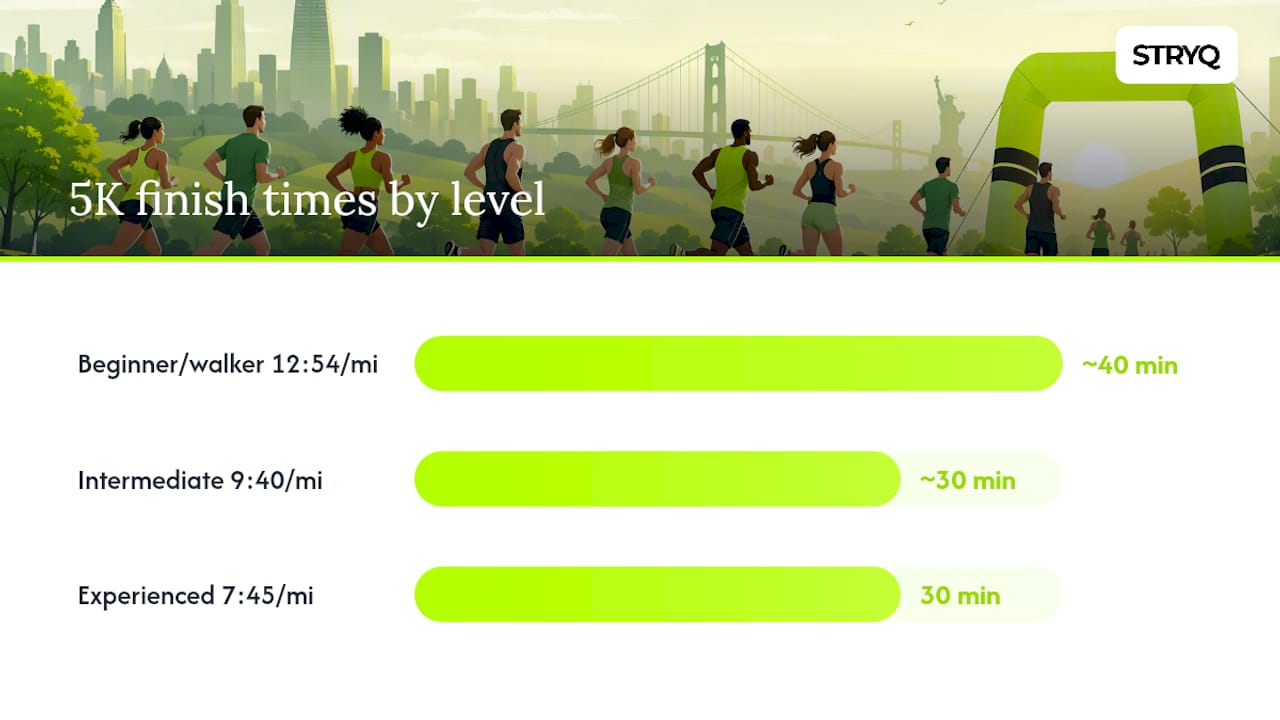
| Level | Pace per mile | Finish time |
|---|---|---|
| Beginner / walker | 12:54 | ~40 minutes |
| Intermediate | 9:40 | ~30 minutes |
| Experienced | 7:45 | 30 minutes |
For more detail on what these paces feel like in practice, the Stryq guide on good 5K pace breaks down effort levels by experience. The key point for beginners: aim for completion first. A 40-minute finish at your first event is a genuine achievement, and most runners improve naturally with each race.
A useful frame: run the first kilometre slower than feels necessary. Starting too fast is the single most common beginner mistake, and it costs far more time in the final kilometre than the seconds saved at the start.
How do you train for a 5K as a beginner?
The Active uses run/walk intervals three times per week, building progressively to 25–30 minutes of continuous running by Week 8. The Couch to 5K programme follows the same structure and is widely used because it lowers the psychological barrier: sessions start short, intervals are predictable, and you can repeat a week if needed.
Sample training weeks:
| Week | Session structure | Goal |
|---|---|---|
| Week 3 | Run 1.5 minutes, walk 1.5 minutes, run 3 minutes, walk 3 minutes (×2) | Build first continuous runs |
| Week 7 | Run 25 minutes continuously | Consolidate aerobic base |
Training tips for beginners:
- Warm up with five minutes of brisk walking before every run
- Use perceived effort (RPE) rather than pace: aim for a level where you can speak in short sentences
- Rest days matter as much as run days; do not add extra sessions in the first four weeks
- If a week feels too hard, repeat it rather than pushing forward
- Consult a clinician before starting if you have any cardiovascular, joint or respiratory concerns
Pro Tip: Run your easy days genuinely easy. Most beginners run their slow runs too fast and arrive at their hard sessions already fatigued. Slowing down on recovery days is what makes the hard sessions productive.
For a week-by-week breakdown of the early phase, the Stryq guide on what to expect in the first four weeks covers common sticking points in detail.
This training information is general guidance only. Consult a qualified health professional before beginning a new exercise programme, particularly if you have existing health conditions.
Where do you find and register for 5K races in the United States?
Registration fees vary considerably. Free community runs and parkrun events cost nothing to enter, while major city 5Ks typically charge a registration fee. Some events also charge a separate fee to have your race bib mailed rather than collected in person.
Primary ways to find events:
- Search national race directories such as Running USA, RunSignUp or Active.com’s event search
- Check official city marathon or race-weekend pages, which often list an associated 5K
- Visit your local running club’s calendar or social pages
- Search parkrun’s US location finder for free weekly options
- Follow official event pages for major races (Boston, Chicago, Run Mag Mile®) directly
Registration checklist:
- Deadlines: Popular city 5Ks sell out weeks or months in advance; register early
- Packet pick-up: Confirm whether pick-up is in person only or whether a mailed bib option exists (and its fee)
- Refund policy: Most events are non-refundable; check whether a deferral or transfer option is available
- Corral placement: Many events ask for a projected finish time at registration to assign your start corral
- Cut-off times: Some events enforce a course cut-off; the Abbott Chicago 5K is one example where this affects official finish-time recording
Pro Tip: When registering, enter a realistic projected finish time rather than an optimistic one. Starting in the correct corral means you run with people at your pace, which makes the race more enjoyable and reduces the risk of going out too fast.
What should you expect on race day?
Arriving prepared removes most race-day stress. Most organised 5Ks follow a similar sequence.
- Arrive 45–60 minutes before the start to allow time for parking, bag drop and warm-up
- Collect your bib at packet pick-up if you did not receive it by post
- Warm up with ten minutes of easy walking or light jogging
- Find your corral and position yourself honestly within it
- Cross the start line and run your own race; ignore the crowd pace in the first 400 metres
Race-morning checklist:
- Bib attached with safety pins or a race clip
- Shoes and kit you have already trained in (race day is not the time for new gear)
- Water or a small soft flask if the course is warm and water stations are sparse
- Phone or GPS watch if you want to track pace
- A light weather layer if conditions are cold at the start
Accessibility note: Major events such as the Boston 5K publish adaptive programmes and wheelchair/para participant options on their official event pages. Check the specific event page for details, as provision varies significantly between races. Course cut-off times also vary; confirm these before race day so you can plan accordingly.
What gear do you need for training and race day?
Kit does not need to be expensive, but a few items have a disproportionate effect on comfort.
- Running shoes: The single most important item; visit a specialist running shop for a gait assessment if you are new to the sport
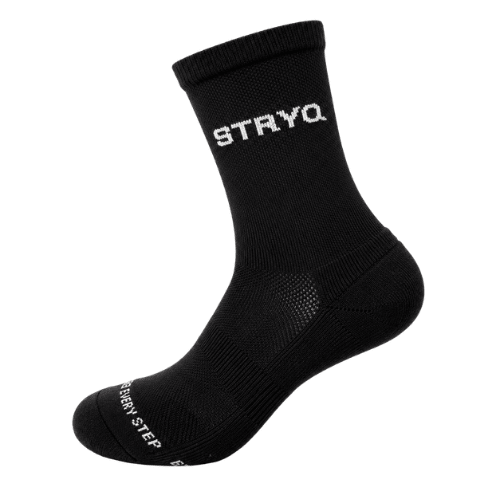
- Technical socks: Moisture-wicking socks with arch support and cushioning reduce blisters significantly; Stryq’s running socks in black and white are built for exactly this
- Moisture-wicking top and shorts or leggings: Cotton holds sweat and causes chafing; technical fabric does not
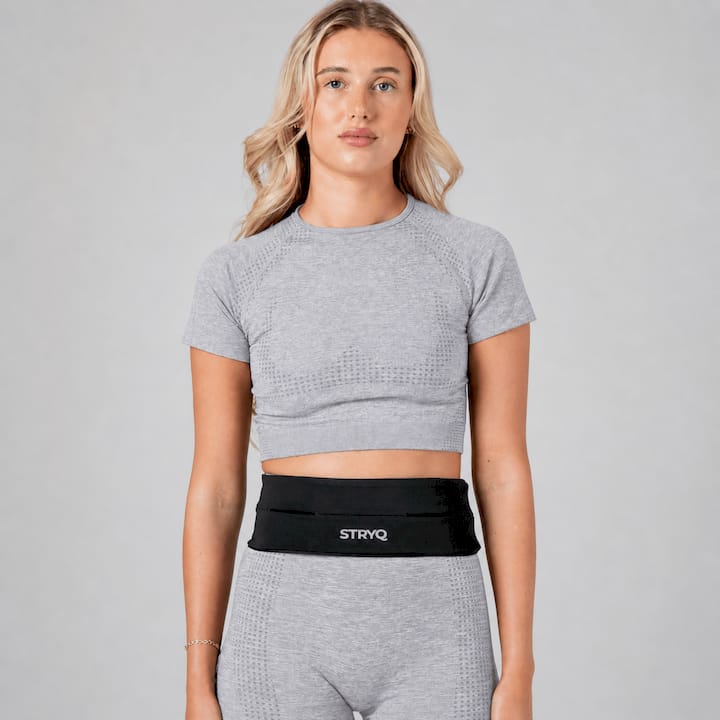
- Race belt or running belt: Carries your phone, gels and keys without bouncing; Stryq’s running belts are a practical option for both training and race day
- Soft flask: Useful for longer training runs and warm-weather races where you want hydration between water stations
- Safety light: If you train in low light, a clip-on safety light is worth carrying
Pro Tip: Wear your race-day socks and shoes on at least two training runs before the event. Blisters from untested kit on race day are avoidable and surprisingly common.
Your race-day countdown checklist
- Nine or more weeks before: Register for your chosen event and begin your training plan
- Weeks 1–7: Follow the run/walk schedule three times per week; repeat weeks as needed
- Week 8: Reduce training volume slightly (taper); keep two short, easy runs
- Race week: Confirm packet pick-up logistics, lay out your kit and check the weather forecast
- Race morning: Eat a light, familiar breakfast two hours before the start; arrive early
If illness or injury prevents you racing: Contact the event organiser as soon as possible. Many events offer a deferral to the following year or a transfer to another participant, though policies vary. Do not attempt to race through a significant injury.
Why 5Ks are worth doing more than once
The 5K gets underestimated. Runners who move up to 10Ks and half marathons often stop entering them, which is a mistake. The distance is short enough to race frequently, long enough to require real fitness, and forgiving enough that you can run one on three weeks of training and still finish feeling good.
For beginners, the value is obvious: a defined goal, a clear training plan, a finish line and a medal. But the 5K is also one of the best tools for experienced runners to maintain speed, test fitness and stay connected to the running community. Parkrun alone has built an entire social infrastructure around the distance.
The finish time does not define the experience. Completion after following a Couch to 5K training plan represents a genuine physical transformation. Set a second goal after your first race, whether that is a faster time, a different event, or joining a local running club through a community like NRTH that supports group training and challenges.
Stryq running kit for your 5K training and race day
Comfort on race day starts in training. Stryq’s performance running socks in black and white are cushioned, breathable and built to reduce blisters during both long training runs and race day. Pair them with a Stryq running belt for secure, bounce-free storage of your phone and keys, and a soft flask for hydration on warm training days.
Every Stryq product is developed from runner feedback and tested through multiple revisions before launch. The range sits between budget marketplace options and expensive premium brands, giving you practical, durable kit at an accessible price. View the full range at Stryq and pick up what you need before your first training session.
Sources
- 5K run
- Mayo Clinic
- Active
- Boston 5K - Boston Athletic Association
- Event Information - Chicago 5K
- Run Mag Mile® 5K