People ask this a lot. whats a fast time for a 5k depends on your age, training, and course. For many new runners, breaking 30 minutes feels fast. For improving runners, 20 to 25 minutes is a strong goal. Club runners chase sub 20. Elites run much faster.

Benchmarks You Can Use
Use these ranges as a guide. Pick the band that matches your current fitness, then move up one band at a time.
- New to running. 30 to 35 minutes on a flat course.
- Building consistency. 25 to 30 minutes with weekly training.
- Improving runner. 22 to 25 minutes with speed work and long runs.
- Club competitive. 18 to 21 minutes with structured plans.
- National level. Under 18 for women, under 16 for men on fast courses.
Hills, heat, wind, and tight turns slow times. Cool weather and flat courses help you run faster.
How To Get From Your Time To Your Next Time
Choose a single target. For example, from 29 minutes to 27 minutes. Give yourself 6 to 8 weeks. Train three to four days each week.
- One interval day. Examples. 6 by 400 m at 5K effort with 2 minutes very easy jog. Or 4 by 800 m at 10K effort.
- One tempo day. 15 to 20 minutes at a steady effort. You should talk in short phrases only.
- One long easy run. 40 to 60 minutes at a relaxed pace.
- Optional strides. After an easy run, do 4 to 6 strides of 10 to 20 seconds. Walk back to recover.
Pacing That Works On Race Day
Start a touch easy for the first kilometre. Settle by kilometre two. Hold even splits until the last kilometre. Then kick. Avoid the first 500 metres sprint that ruins the middle of the race.
Strength, Mobility, and Recovery
Two short strength sessions each week help times. Squats, lunges, calf raises, planks, and hip work. Ten to fifteen minutes is enough. Add basic mobility after runs. Sleep, hydration, and easy days improve your next 5K more than one extra hard workout.
Fuel and Warm Up
Eat a light meal two to three hours before you run. Sip water. For a 5K, no gels are needed. Warm up for 10 to 15 minutes. Add three short pickups to wake the legs. You will feel calmer at the start line and your opening kilometre will be smoother.
Course Choice And Conditions
Flat paths and light bends are faster. Park paths with sharp turns and steep ramps slow you down. Cool dry days are ideal. If it is windy, tuck in behind a small group and share the work.
Gear That Helps Without Getting In The Way
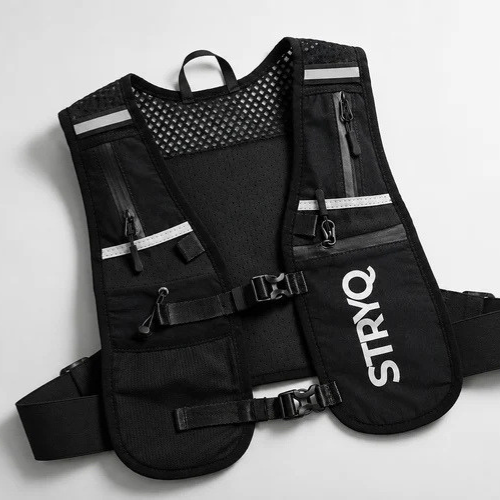
Carry only what you need. Use a secure belt for keys and phone so your hands stay free and your pace stays even. Try the STRYQ Running Belt. For longer warm ups or cool downs, hydrate with the STRYQ Hydration Vest. See more options in Running Gear and Accessories.
Example 8 Week Plan To Break A Barrier
Weeks 1 to 4. Build routine. One interval, one tempo, one long run, one or two easy runs. Weeks 5 to 7. Nudge paces and keep volume steady. Week 8. Taper. Cut volume by 30 to 40 percent. Keep a few short pickups.
FAQs
What is a good beginner 5K time. Many beginners finish between 30 and 35 minutes. Consistent training brings that down.
Is 25 minutes fast for a 5K. For many adult runners, 25 minutes is a strong result. With speed work, sub 25 is a common target.
whats a fast time for a 5k. For club level, sub 20 is often the goal. Fast courses and cool weather help.
How often should I race a 5K. Every 3 to 4 weeks is enough. Use the races as checkpoints, not weekly tests.
Further Reading
- parkrun UK events and results
- Runner’s World UK training advice
- World Athletics 5,000 m records and lists