

Road running: a practical starter for new runners
Road running means racing or training on measured courses over public tarmac, distinct from the oval predictability of a track or the uneven footing of trail. If you are starting today, pick a distance (5K is the sensible entry point), follow a progressive weekly plan, and get four basics sorted before your first session.
- Choose your starting distance: 5K for most beginners
- Follow a structured, gradual weekly build rather than winging it
- Sort shoes, socks and visibility gear before mileage builds up
- Find a local event or club so you have a date and people to run with
Most road races welcome every ability. Wave starts, run-walk options and generous time limits mean you will rarely be the slowest person out there.
Key Takeaways
Road running success comes down to picking a realistic distance, building mileage gradually, sorting shoe and sock fit early, and practising race-day fuelling before you need it.
| Point | Details |
|---|---|
| Start with 5K | Choose a beginner-friendly distance and follow an 8 to 10 week progressive plan. |
| Build load by 10% | Increase weekly mileage gradually to avoid overuse injuries like plantar fasciitis. |
| Add strength sessions | Two short weekly sessions improve running economy alongside endurance training. |
| Fuel only what you have practised | Test gels, fluids and pre-race meals in training before relying on them in a race. |
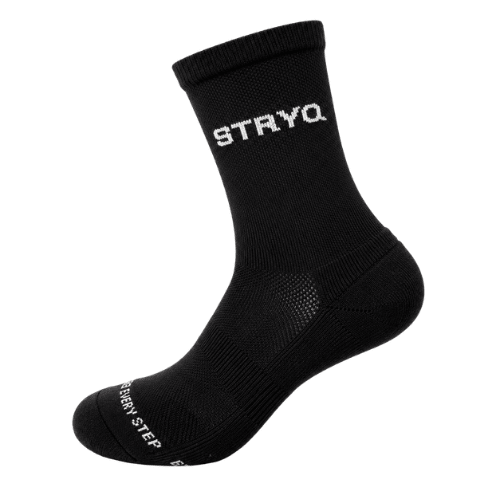
| Sort shoes and socks first | Well-fitted shoes and supportive socks such as STRYQ Running Socks reduce blister and impact risk. |
Table of Contents
- What is road running and what distances will you race?
- How do you start training for road running as a beginner?
- Where can you find road races near you?
- What gear do you actually need for road running?
- What should you eat and drink before and during a race?
- How do you avoid injury and stay safe on the road?
- Should you join a running club or hire a coach?
- Does strength training actually improve your running?
- Why patience matters more than pace in road running
- Buy fewer things, but buy the right things
- Where to read more about road running
- Frequently asked questions about road running
- Sources
What is road running and what distances will you race?
Road running covers any run on established paved routes rather than a stadium track or off-road trail. That single difference in surface and format shapes everything else: pacing, shoe choice, even how injuries develop over months of training.
World Athletics and AIMS recognise a defined set of road distances, and knowing them helps you set a realistic first goal:
- One mile and 5K, the classic entry points for new runners
- 10K, a natural second step once 5K feels comfortable
- 15K and 10 miles, less common but useful stepping stones
- Half marathon (21.098 km), the most popular “big goal” distance
- Marathon (42.195 km), 50K and 100K for experienced or ultra-curious runners
You will see this play out at your local Saturday morning event, a city 10K, or a major marathon with thousands of entrants. Nearly all of them include wheelchair categories and walkers alongside runners chasing personal bests.
How do you start training for road running as a beginner?
Consistency beats ambition every time.
A sensible eight to ten week build to your first 5K looks like this:
- Weeks 1 to 2: alternate one minute running with two minutes walking, three sessions a week
- Weeks 3 to 4: stretch running intervals to three or four minutes, walk breaks shorten
- Weeks 5 to 6: run for 10 to 15 minutes continuously, with one longer session at the weekend
- Weeks 7 to 8: run 20 to 25 minutes without stopping, building toward a full 5K
- Weeks 9 to 10: race week; taper mileage slightly and rest properly beforehand
A typical training week once you have your base includes one easy run, one cross-training session (cycling or swimming), a rest day, an interval or tempo session, and a longer weekend run. Warm up with five minutes of brisk walking plus dynamic drills like leg swings and high knees; cool down with an easy walk and light stretching, particularly for calves and hip flexors, which take the brunt of road impact.
Pro Tip: Once 5K feels routine, add ten minutes to your long run every other week rather than every week. Your joints adapt to road surfaces more slowly than your lungs do.
For race day itself, start slightly slower than your target pace. Aiming for even or negative splits (running the second half faster than the first) protects you from the classic beginner mistake of blowing up at halfway.
Where can you find road races near you?
Race directories, USATF’s road running resources, parkrun’s free weekly 5K events, and your local running shop’s noticeboard are all reliable starting points.
Before entering, check a handful of details:
- Distance and terrain: a hilly 10K plays out very differently to a flat one
- Cut-off times: make sure your expected finish sits comfortably inside the limit
- Entry fee and field size: bigger races often mean more crowd energy but longer bag-drop queues
- On-course support: water stations roughly every two to three miles are standard for anything over 10K
If you care about an official, record-eligible time, look for course certification, which confirms the distance has been independently measured. Joining a local club or a novice training group also adds accountability and a built-in safety net for early long runs.
What gear do you actually need for road running?
Shoes come first, always. Fit matters more than brand reputation, and most running specialists recommend replacing shoes every 300 to 400 miles as cushioning breaks down long before the outsole looks worn.
- A properly fitted pair of road running shoes, ideally checked with a gait assessment if you are unsure of your foot type
- Well-made running socks that manage moisture and reduce blister risk, such as STRYQ Running Socks, which add arch support and cushioning without bulk
- Breathable, moisture-wicking clothing suited to the season
- Visibility gear: a reflective vest or armband for anything run before sunrise or after dusk
- A simple hydration option, a handheld bottle or a small belt, for runs over 45 minutes
Shop for shoes later in the day when feet have naturally swollen slightly, which gives a truer fit. Resist the urge to buy every gadget on the market before you have even run your first 5K.
Pro Tip: Layer thin, breathable fabric over a moisture-wicking base rather than one thick top. It is easier to regulate temperature mid-run, and reflective detailing on the outer layer does double duty for safety.
What should you eat and drink before and during a race?
Eat a practised, carbohydrate-focused meal two to four hours before any event, and never trial a new food or gel on race morning.
- For anything under 90 minutes, plain water and your normal pre-race meal are usually enough
- For efforts beyond 2.5 hours, higher in-race carbohydrate intake, particularly a mix of glucose and fructose, can improve fuel oxidation, but only if you have practised it in training first
- Aim to replace obvious sweat losses and avoid losing more than 2 to 3% of body mass in hot conditions
- For shorter, harder efforts, even rinsing a sports drink in your mouth without swallowing can give a small performance boost
Build a simple race-day checklist: confirm your pre-race meal, plan any gels or fluids by the mile, and decide your electrolyte approach if the forecast is warm.
How do you avoid injury and stay safe on the road?
The most common road running injuries, IT band pain, Achilles tendinopathy, plantar fasciitis and calf strains, nearly all trace back to load increasing faster than the body can adapt.
- Increase weekly mileage gradually and build in a lighter recovery week every third or fourth week
- Add two short strength sessions weekly to support tendons and joints under repeated impact
- Run against traffic where there is no pavement, and choose well-lit, familiar routes when running early or late
- Wear a headlamp or reflective vest in low light, and treat drivers as if they have not seen you
- Rotate two pairs of shoes and replace each around 300 to 400 miles
Pro Tip: Sharp, persistent pain that changes how you move is your body telling you to stop, not push through. A missed session costs far less than eight weeks sidelined by a stress injury.
Should you join a running club or hire a coach?
A local club gives you structured sessions, people to pace with, and insider knowledge of which local races are worth your entry fee. The Road Runners Club of America supports thousands of community clubs and coaches across the country, and its member groups are a solid first port of call.
- Search RRCA and USATF directories for clubs and certified coaches near you
- Group coaching suits runners who want structure and company; one-to-one coaching suits those training for a specific time goal
- Certified courses matter if you ever want a time that counts for records or age-group rankings
- Most clubs offer a free trial session before you commit to membership
Does strength training actually improve your running?
Yes, and the effect is more measurable than most beginners assume. A 12-week controlled trial comparing strength-only, endurance-only and combined training found that runners doing concurrent training, running-specific strength work plus endurance sessions on non-consecutive days, saw broader gains than either method alone, including improvements in running economy, VO2max and strength markers.
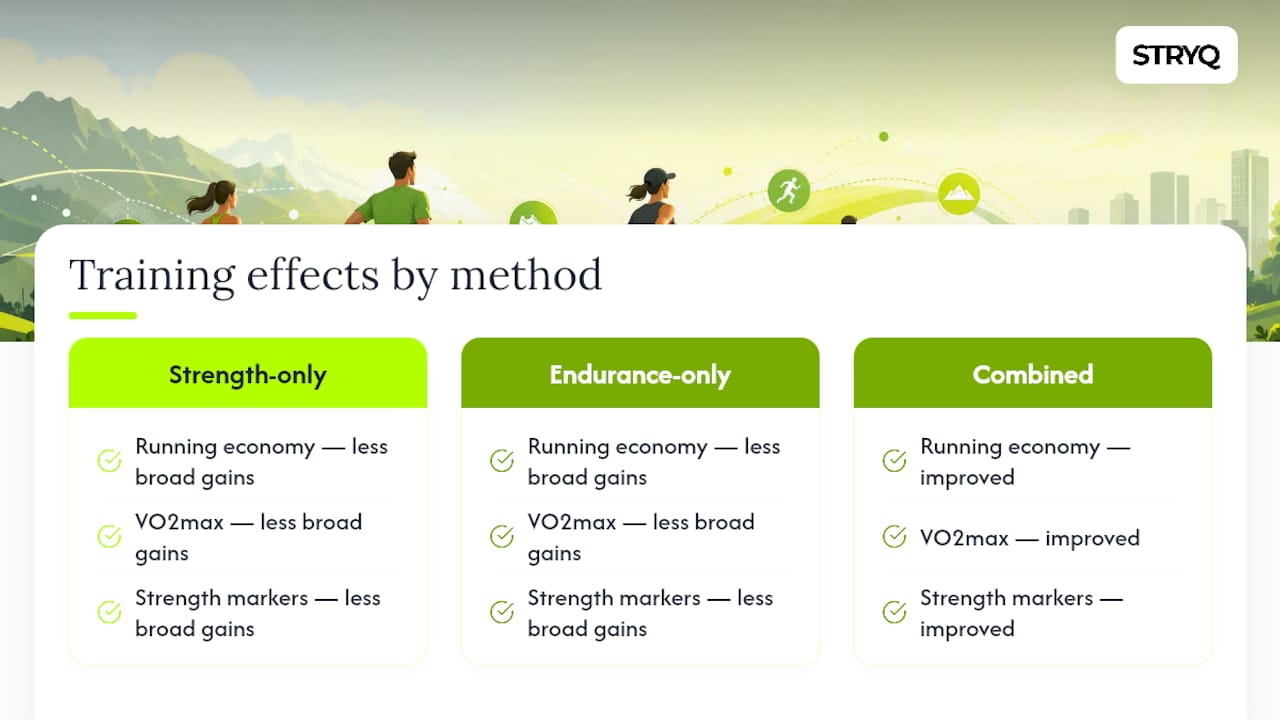
The practical takeaway is straightforward. Add one or two short strength sessions a week, focused on squats, lunges, calf raises and core stability, on days separate from your hard running efforts. You do not need a gym membership or complicated programming. Twenty minutes twice a week, done consistently over months, tends to matter more than any single long run.
Why patience matters more than pace in road running
Road running rewards patience far more than talent. Most new runners want to skip straight to a marathon medal, but the ones who stick with the sport for years are the ones who built slowly and let their bodies catch up with their ambition.
At Stryq, that philosophy shapes how we think about kit too: fewer, better-tested essentials rather than a drawer full of gadgets you never use. If you want more on progressing from 5K towards longer distances, the Stryq blog has practical guides written for exactly this stage of the journey.
Buy fewer things, but buy the right things
Most new runners overspend on gadgets before they have sorted the basics. Shoes come first, always, but socks are the accessory most people underrate until blisters or arch fatigue force the issue mid-run.
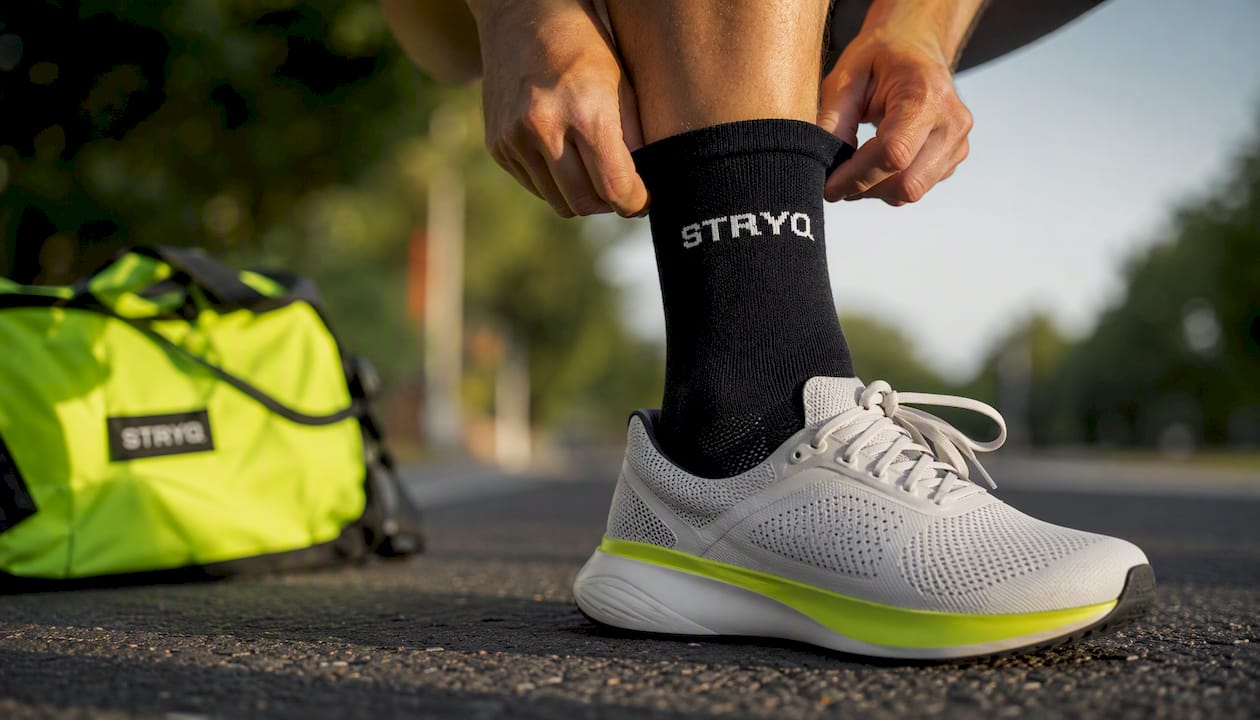
The STRYQ Running Socks were developed with arch support and targeted cushioning specifically for the repeated road impact discussed throughout this guide, tested by UK runners rather than designed on a spreadsheet. They are not a substitute for good shoes; think of them as the second decision you get right, not the first. If you have your shoes sorted and want one reliable, well-tested accessory to add next, the product page has full sizing and fit details ready when you are.
Where to read more about road running
- The concurrent training study offers the full data behind the strength training recommendations above
- USATF’s road running resources explain course certification and how to find sanctioned events
- RRCA lists member clubs and coaching programmes across the country
- AIMS World Running’s records page confirms official distances and world-best times
Frequently asked questions about road running
What is the difference between road running and trail running? Road running takes place on paved, measured courses like streets and closed roads, while trail running covers unpaved terrain such as forest paths or mountain routes. Road surfaces are more predictable, but the constant impact places different demands on joints than uneven trail footing.
How many miles a week should a beginner road runner run? Consistency across weeks matters more than any single big mileage jump.
Do I need special shoes for road running? Yes. Road shoes are built with cushioning and tread suited to hard, flat surfaces, unlike trail shoes designed for grip on loose or uneven ground. A proper fit, checked against your foot type and gait, matters more than the shoe’s price tag.
How often should I replace running shoes? Most runners should replace shoes every 300 to 400 miles, since cushioning breaks down well before the outsole visibly wears out. Rotating two pairs can extend the useful life of each and reduce repetitive impact on the same pressure points.
Is it safe to run on roads without pavements? Run facing oncoming traffic where there is no pavement, so you can see and react to vehicles. Wear reflective or bright clothing, avoid headphones at high volume, and choose well-lit, familiar routes whenever running before sunrise or after dusk.
Sources
- World records — AIMS World Running
- Effects of running-specific strength training, endurance training, and concurrent training on recreational endurance athletes’ performance — PMC
- Road Running | USA Track & Field
- Road Runners Club of America